

Key Takeaways
- Integrate coordination challenges with strength training for functional fitness
- Prioritize proper form over intensity to prevent injuries
- Use progressive difficulty adjustments to match your ability level
- Combine static balance with dynamic movements for comprehensive benefits
Why Coordination and Strength Matter After 40
Fitness exercises that enhance coordination and strength become increasingly vital as we age. After 40, the body naturally experiences declines in muscle mass, joint flexibility, and neuromuscular communication, increasing vulnerability to injuries and chronic conditions. Integrating targeted movements that challenge balance, stability, and muscular engagement helps preserve functional independence. According to the National Institute on Aging, maintaining physical capacity through combined coordination and resistance training reduces fall risk by up to 30% in adults over 50 while supporting cognitive health through improved brain-body connectivity.

Maintaining Balance and Mobility
Age-related declines in proprioception—the body’s ability to sense spatial positioning—begin around age 40 and accelerate by 5-15% per decade. This affects balance during everyday tasks like climbing stairs or carrying groceries. Research published in the Journal of Aging and Physical Activity shows that dual-task exercises (e.g., balancing while performing upper-body movements) stimulate neural pathways critical for maintaining mobility. Adults who incorporate balance drills into strength routines preserve ankle dorsiflexion range and hip stability, key components for navigating uneven terrain safely.
Preventing Age-Related Muscle Loss
Sarcopenia, the progressive loss of skeletal muscle mass, accelerates after 40 at a rate of 3-5% per decade. Strength training combats this by stimulating muscle protein synthesis, but adding coordination challenges enhances results. A 2022 meta-analysis in Frontiers in Physiology found that participants over 40 who performed integrated exercises (e.g., squat-to-press combinations) gained 12% more lean mass than those using isolated resistance training. Multi-joint movements recruit more muscle fibers simultaneously, promoting both hypertrophy and neuromuscular efficiency.
Reducing Fall Risk Through Integrated Training
Falls account for 80% of injury-related hospitalizations in adults over 65, according to the CDC. Training programs that merge strength with dynamic balance reduce fall incidence by improving reactive agility—the ability to recover from stumbles. For example, lateral band walks with shoulder presses train hip abductors (critical for lateral stability) while challenging postural control under resistance. This dual focus prepares the body to handle real-world scenarios like catching oneself on icy surfaces.
Best Coordination-Boosting Strength Exercises
Single-Leg Balance with Arm Reach
This foundational exercise trains ankle stability and core engagement. Stand on one leg while reaching the opposite arm across the body (e.g., right leg grounded, left arm sweeps right). Hold for 20 seconds per side, progressing to 45 seconds as balance improves. For safety, perform near a wall or sturdy chair. Studies show that adding upper-body motion to single-leg stances increases activation of the gluteus medius by 30%, directly correlating with reduced knee valgus risk during walking.
Lateral Band Walks with Dumbbell Press
Place a resistance band above the knees and assume a partial squat position. Step sideways 10 times while maintaining tension, then perform alternating dumbbell shoulder presses. This combination targets hip abductors and core stabilizers while challenging overhead strength mechanics. Physical therapists recommend this movement pattern to improve landing mechanics in athletes over 40, as demonstrated in a 2021 study in the Clinical Journal of Sports Medicine.
Medicine Ball Slams with Squat Integration
Hold a 4-8 lb medicine ball, squat deeply, then explode upward to slam the ball into the ground. Catch it on the rebound and repeat. This plyometric drill enhances power transfer between lower and upper body while training eccentric control during the catch phase. Research from McMaster University indicates that explosive movements like slams preserve type-II muscle fibers better than slow resistance training alone, particularly beneficial for maintaining climbing and lifting capacity.
Kettlebell Swing to Overhead Press
Using a kettlebell (8-15 lbs for beginners), perform a two-handed swing to chest height, then transition into a single-arm press while stabilizing the core. This movement trains posterior chain strength through hip hinging while challenging shoulder stability under momentum. A 2020 study in the Journal of Strength and Conditioning Research found that kettlebell sequences improved grip strength and dynamic balance in middle-aged adults more effectively than traditional dumbbell routines.
How to Safely Build a Routine
Creating an effective program requires strategic progression to avoid overtraining. Adults over 40 should follow three principles: joint protection through warm-ups, gradual intensity increases, and prioritization of recovery. The American College of Sports Medicine emphasizes that improper progression leads to 40% of training-related injuries in this demographic, making structured programming essential.
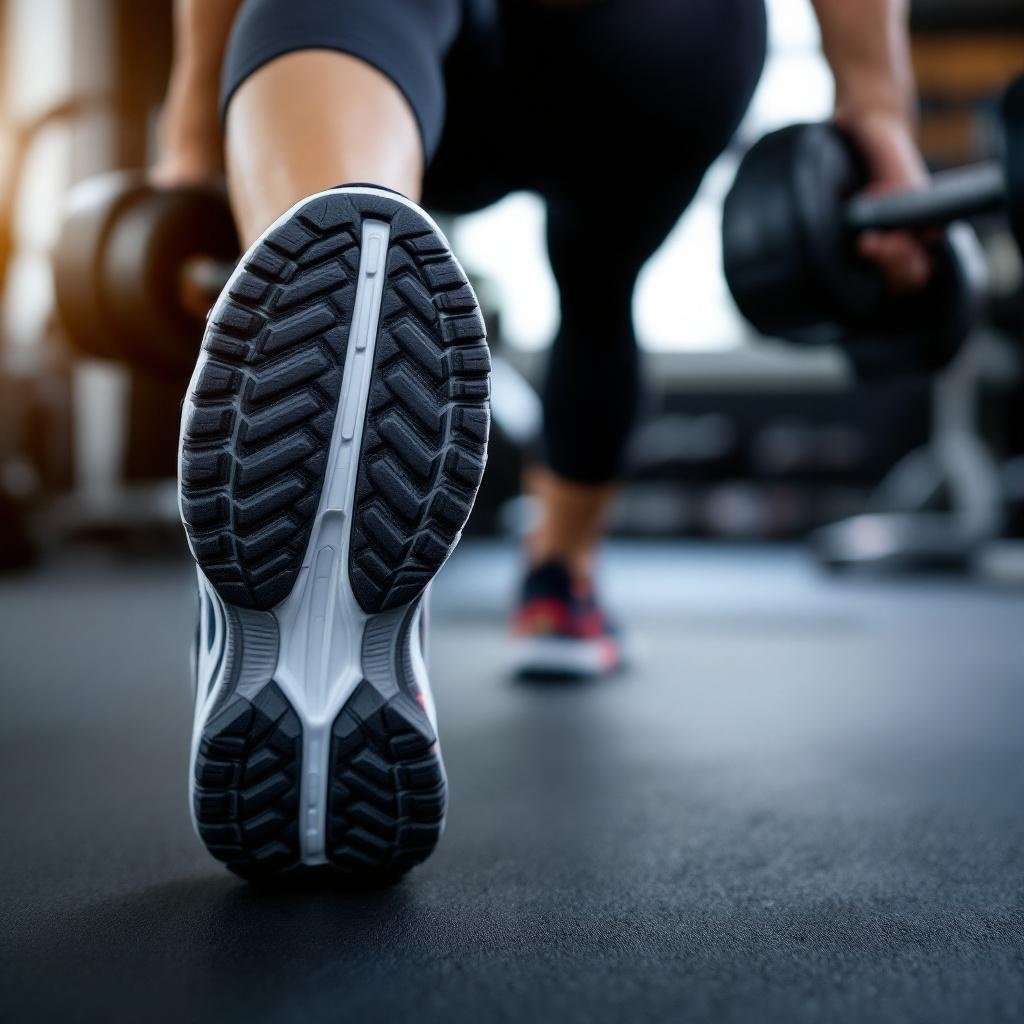
Warm-Up Essentials for Joint Protection
Begin with 5-10 minutes of dynamic mobility work targeting major joints: shoulder dislocations with a broomstick, hip circles, and ankle alphabet drills. This increases synovial fluid production and prepares connective tissues for load-bearing movements. For those with knee concerns, mini-band lateral walks activate the VMO (vastus medialis oblique) to stabilize the patella before squats or lunges.
Progressive Overload Principles
Apply the 10% Rule: increase weights, reps, or complexity by no more than 10% weekly. For example, progress from bodyweight squats to goblet squats with a 5% heavier kettlebell after mastering form. Track variables like time under tension—holding single-leg balance positions longer rather than adding external resistance prematurely reduces injury risk.
Recovery and Form Prioritization
Schedule 48 hours between strength sessions targeting the same muscle groups. Use foam rolling and diaphragmatic breathing post-workout to enhance lymphatic drainage. If form deteriorates mid-set, reduce weight by 20-30% and focus on tempo control. Prioritize neuromuscular efficiency over maximal effort; studies show that controlled eccentric phases (e.g., 3-second kettlebell lowering phases) improve tendon resilience in middle-aged populations.
Tracking Progress and Staying Motivated
Measurable Milestones for Coordination
Test single-leg balance monthly: record duration with eyes open/closed, aiming for 60 seconds per leg by 3 months. Track improvements in complex movements like lateral band walks with presses—measuring increased range of motion or smoother motion transitions. Apps like Strava or Fitbit can log weekly performance metrics for visual progress tracking.
Strength Gains Through Periodic Testing
Every 6 weeks, assess 1-rep max (1RM) for key lifts at 80% effort, extrapolating results to avoid joint strain. A 2023 study in Strength and Conditioning Journal validated that 6-8RM testing combined with velocity-based training predicts 1RM safely for middle-aged lifters. Look for increases in work capacity—performing more sets with the same weight in week 4 versus week 1—before boosting load.
Creating Accountability Partnerships
Join group classes or virtual coaching platforms focused on functional fitness for adults over 40. A 2022 Harvard T.H. Chan School of Public Health review found that social accountability increased adherence by 55% in this demographic. Consider working with a NASM- or ACSM-certified trainer for form corrections, especially during complex movements like medicine ball slams.
Frequently Asked Questions
How often should I train for coordination and strength?
Aim for 2-3 weekly sessions, allowing recovery days between. Balance training frequency with your body’s adaptation capacity while prioritizing proper form.
Are special equipment needed for these exercises?
Basic equipment like resistance bands, light dumbbells, or a stability ball may help. Many exercises can be modified using household items or bodyweight.
Can I do these exercises with joint issues?
Modify movements as needed and consult a professional. Focus on low-impact variations while maintaining neuromuscular engagement through controlled motions.
How long before seeing improvements?
Noticeable changes typically appear in 4-6 weeks with consistent practice. Individual results may vary based on starting fitness level and training adherence.
Disclaimer: This article is for informational purposes only and does not constitute medical advice. Always consult a qualified healthcare provider before making changes to your health regimen.