
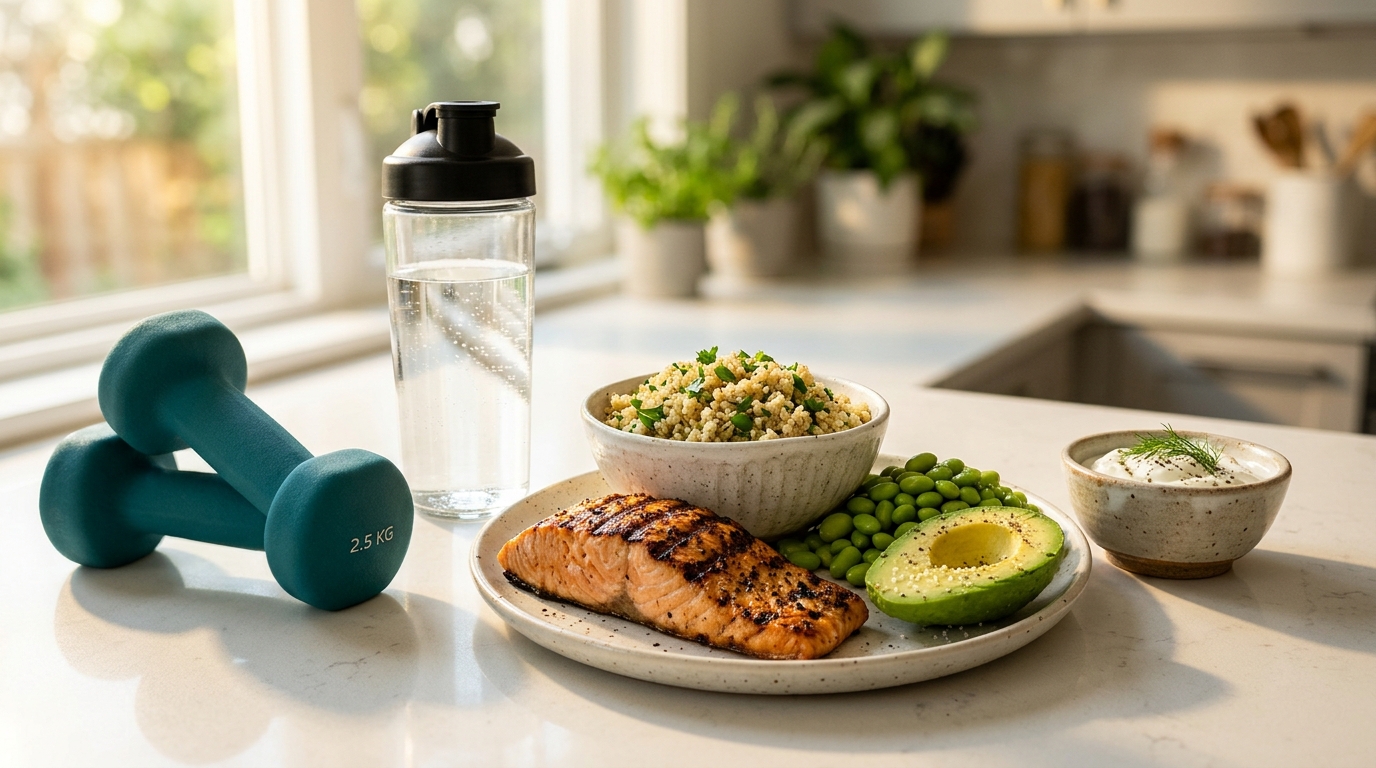
EDITOR’S 1-MINUTE BRIEFING · METABOLIC MUSCLE DEFENSE PROTOCOL
💪 Protecting Skeletal Muscle During GLP-1 Weight Loss: 3 Clinical Rules
- The Sarcopenia Risk After 40: Landmark DEXA body-composition sub-analyses from the STEP-1 (semaglutide) and SURMOUNT-1 (tirzepatide) trials reveal that 25% to 39% of total weight lost without structured intervention comes from lean soft tissue and skeletal muscle—accelerating resting metabolic rate decline by 150–250 kcal/day.
- Daily Protein Target by Ideal Weight: To overcome age-related anabolic resistance on a suppressed appetite, consume 1.4 to 1.8 grams of protein per kilogram of ideal body weight daily (0.65–0.82g per lb), hitting at least 30–35g of protein (containing ≥3.0g of leucine) at your very first meal.
- Non-Negotiable Mechanical Stimulus: Pairing 3 weekly 35-minute progressive resistance sessions with 5 grams of daily Creatine Monohydrate cuts lean mass loss from ~35% down to under 8%–10% while preserving hip and lumbar bone mineral density.
Losing 30 pounds on the bathroom scale feels like a victory—until a DEXA scan reveals that 11 of those 30 pounds came straight from your glutes, quads, shoulders, and postural core muscles. For adults over 40 using GLP-1 or dual GIP/GLP-1 receptor agonists (such as semaglutide or tirzepatide), appetite suppression is so potent that daily caloric intake frequently drops below 1,100 kcal without conscious effort. When a steep caloric deficit collides with midlife anabolic resistance, your liver and muscles break down contractile proteins for amino acids, leading to “GLP-1 facial hollowing,” loose skin, joint instability, and rapid weight regain if the medication is ever paused.
Fortunately, skeletal muscle loss on GLP-1 therapy is not caused by the medication molecule itself—it is caused by inadequate protein pacing and zero mechanical tension on muscle fibers. Use the weight-based protein calculator table and 4-step clinical muscle defense protocol below to ensure 90%+ of your weight loss comes purely from visceral and subcutaneous fat.
1. Daily Protein, Leucine & Hydration Targets by Goal Body Weight (Table #1)
Do not calculate protein based on your starting weight if you have 40+ pounds to lose, as that overestimates requirements. Instead, anchor your daily intake to your Target / Ideal Body Weight (IBW) at 1.5 to 1.7 g/kg/day, split evenly across 3 meals and 1 compact protein shake.
| Target / Ideal Body Weight | Daily Protein Target (1.6 g/kg Ideal Weight) | Per-Meal Breakdown (3 Meals + 1 Shake) | Minimum Daily Electrolyte Water |
|---|---|---|---|
| 130 lbs (59 kg) | 95 – 105 grams / day | 3 meals × 27g + 1 shake (20g) | 2.2 Liters (75 oz) + 500 mg Na |
| 155 lbs (70 kg) | 112 – 122 grams / day | 3 meals × 32g + 1 shake (24g) | 2.6 Liters (88 oz) + 500 mg Na |
| 180 lbs (82 kg) | 130 – 142 grams / day | 3 meals × 37g + 1 shake (28g) | 3.0 Liters (100 oz) + 750 mg Na |
| 205+ lbs (93+ kg) | 150 – 165 grams / day | 3 meals × 42g + 1 shake (32g) | 3.3 Liters (112 oz) + 1,000 mg Na |
2. 4-Step Clinical Protocol to Lock In Lean Muscle on GLP-1
Because GLP-1 medications slow gastric emptying, eating huge steak dinners will cause bloating and nausea. The secret is high-leucine density in low-volume meals combined with structured mechanical loading.
STEP 01 · The “Protein-First” Plate Sequence
Eat Your 30–35g Protein Source First Before Touching Fiber or Starches
Eat Your 30–35g Protein Source First Before Touching Fiber or Starches
On GLP-1 therapy, fullness signals arrive within 8 to 12 minutes of your first bite. If you start your meal with salad, bread, or soup, your stomach will reach capacity before you finish half your protein. Always eat your dense protein portion during the first 5 minutes of every meal—such as 2 whole eggs + 1/2 cup liquid egg whites, 170g of 0% Greek yogurt, or 4 oz of wild salmon—to guarantee you cross the 3.0-gram leucine threshold required to trigger mTOR muscle protein synthesis after age 40.
STEP 02 · 3x/Week Progressive Resistance Training
Prioritize Heavy Compound Lifts Over Excessive Endless Cardio
Prioritize Heavy Compound Lifts Over Excessive Endless Cardio
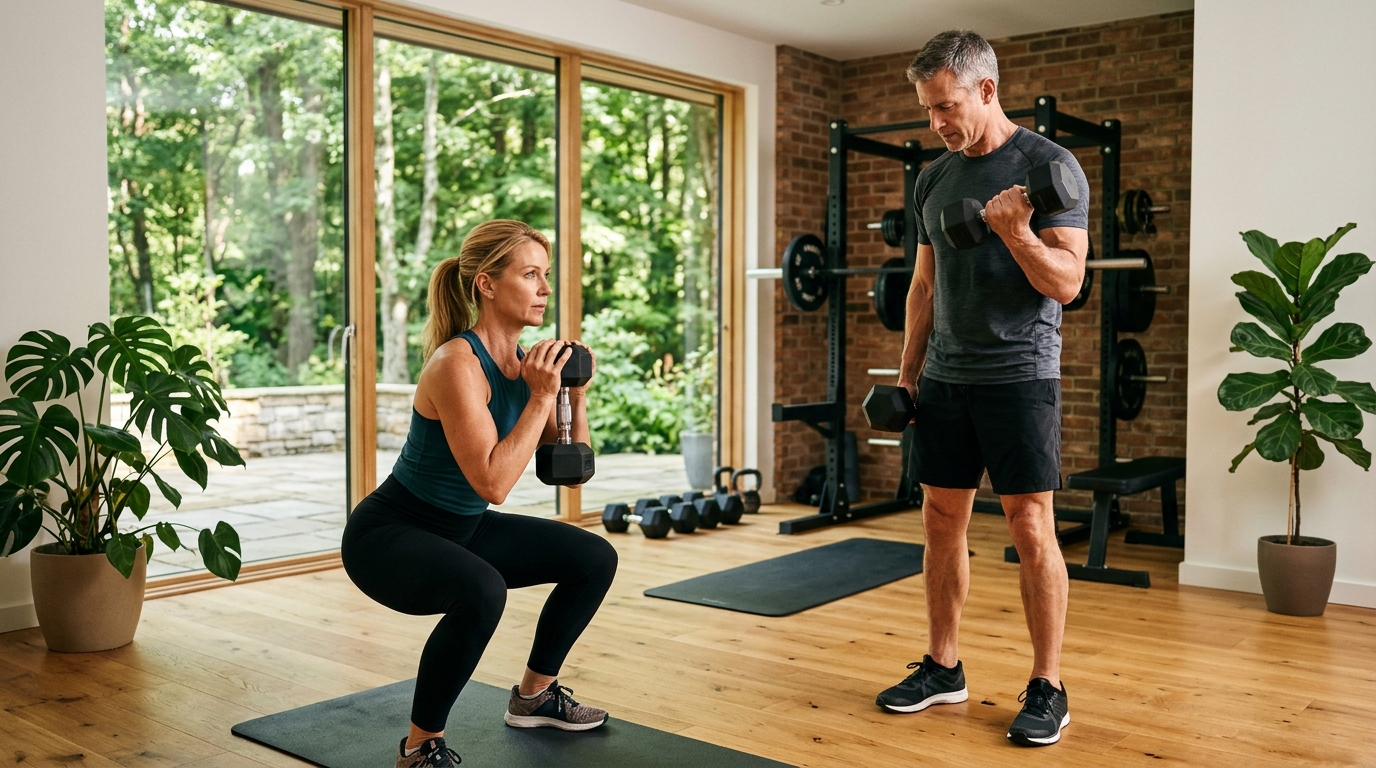
Walking 8,000 steps is fantastic for cardiovascular health, but walking alone does not prevent upper-body and type-II muscle fiber atrophy during rapid weight loss. Schedule three 35-minute full-body home or gym strength workouts per week (Monday, Wednesday, Friday) focusing on 4 foundational patterns: 1) Squat/Lunge (Goblet Squat or Split Squat), 2) Hinge (Romanian Deadlift), 3) Push (Push-up or Dumbbell Overhead Press), and 4) Pull (Single-Arm Dumbbell Row) for 3 sets of 8–12 reps within 2 reps of muscular fatigue.
STEP 03 · Low-Volume Liquid Bridge on Injection Days
Use Clear Whey Isolate + Essential Amino Acids (EAAs) During Peak Suppression
Use Clear Whey Isolate + Essential Amino Acids (EAAs) During Peak Suppression
During the first 24 to 48 hours after your weekly injection, solid meat or poultry can feel unappealing. Instead of skipping meals and letting your body cannibalize muscle tissue, sip a low-viscosity micro-filtered Whey Protein Isolate (or Pea/Rice blend) delivering 25–30g of protein in 8 oz of cold water, or take 10 grams of free-form Essential Amino Acids (EAAs), which require zero stomach acid digestion and absorb into the bloodstream in 20 minutes.
STEP 04 · Cellular ATP & Bone Co-Support
Add 5g Micronized Creatine Monohydrate + Vitamin D3/K2 + Magnesium
Add 5g Micronized Creatine Monohydrate + Vitamin D3/K2 + Magnesium
Stir 5 grams of unflavored micronized Creatine Monohydrate into your morning water or protein shake every single day. Creatine draws intracellular water into muscle fibers, preserves phosphocreatine ATP strength during a calorie deficit, and supports cognitive memory in adults over 40. Pair this with daily Vitamin D3 + K2 and evening Magnesium Glycinate to protect bone mineral density and prevent GLP-1 constipation.
3. Low-Volume, High-Leucine Protein Sources Ranked for GLP-1 Digestion (Table #2)
When your stomach capacity is reduced by 40%, choosing the right protein source makes all the difference. Compare the top stomach-friendly protein options below ranked by leucine content per calorie.
| Protein Food / Source | Compact Serving Size | Protein & Leucine Yield | GLP-1 Gastric Comfort Rating |
|---|---|---|---|
| Whey Protein Isolate (Cold-Filtered) | 1 scoop (30g powder) in 8 oz water | 27g Protein · 3.1g Leucine (115 kcal) | ★★★★★ Best for post-injection days (lactose-free) |
| 0%–2% Strained Greek Yogurt + Hemp Seeds | 3/4 cup (170g) + 1 tbsp hemp hearts | 21g Protein · 2.2g Leucine (155 kcal) | ★★★★★ Smooth digestion + live probiotics |
| Wild Salmon or Cod Fillet | 4.5 oz (130g) cooked | 30g Protein · 2.5g Leucine (210 kcal) | ★★★★☆ Digestible flaky fibers + Omega-3 EPA/DHA |
| Low-Fat Cottage Cheese (2% Milkfat) | 1 cup (225g) | 26g Protein · 2.7g Leucine (180 kcal) | ★★★★☆ Slow-release casein protects overnight muscle |
4. Critical Warning Signs You Are Losing Muscle Too Fast
⚠️ Slow Down Your Dose Escalation If You Notice These 3 Red Flags
- 1. Losing More Than 1.0% to 1.2% of Total Body Weight Per Week: If a 190-pound adult loses more than 2.0 to 2.2 pounds per week after the first month’s water-weight drop, physiological fat oxidation limits are exceeded and lean muscle tissue is being burned for fuel. Ask your prescribing doctor about holding at your current dose rather than escalating automatically.
- 2. Declining Grip Strength or Struggling with Stairs: Handgrip dynamometer strength and 30-second chair-stand reps should stay stable or improve as you lose weight. If your legs feel shaky climbing stairs, your protein and carbohydrate glycogen intake is too low.
- 3. Hair Shedding (Telogen Effluvium) at Month 3–4: Diffuse hair thinning 90 days into weight loss is a classic clinical marker of protein, iron (ferritin <50 ng/mL), and zinc under-nutrition.
5. Frequently Asked Questions (FAQ)
Q1. Will taking 5g of Creatine Monohydrate stall my weight loss on the scale?
Creatine pulls 2 to 3 pounds of beneficial intracellular water directly inside your muscle cells during the first 10 days—not subcutaneous bloat or fat. Do not let a temporary 2-pound water shift on the scale scare you: that intracellular hydration acts as an anabolic signal that protects muscle fibers while your body continues burning visceral fat at the exact same rate.
Q2. Does Collagen Peptides count toward my 120g daily protein goal for muscle preservation?
No. While 10–15g of hydrolyzed collagen peptides is wonderful for skin elasticity, tendons, and joints during weight loss, collagen is an incomplete protein lacking tryptophan and containing very little leucine (~2.7% vs. ~11% in whey). Count collagen as a bonus skin/joint supplement, not part of your core 1.6 g/kg skeletal muscle protein target.
Q3. What causes “GLP-1 Face” and can high protein prevent it?
Rapid depletion of facial buccal fat pads combined with loss of structural temporalis/masseter muscle tone and dermal collagen creates gaunt facial hollowing. Keeping your weight loss pace at a steady 0.75% to 1.0% of body weight per week, consuming 1.6 g/kg protein, and supplementing 10g marine/bovine collagen + Vitamin C preserves facial volume and skin recoil after 40.
Q4. How often should I measure body composition instead of just scale weight?
Schedule a clinical DEXA Body Composition Scan ($75–$150) or medical-grade InBody 770/970 scan at baseline before starting therapy, and repeat every 12 to 16 weeks. Tracking your Appendicular Lean Mass Index (ALMI) ensures your muscles and bone density remain completely protected.
Medical Disclaimer: This article is for informational and educational purposes only and does not constitute medical advice. Always consult your prescribing endocrinologist, obesity medicine physician, or registered dietitian before adjusting your medication dosage, protein intake (especially if you have chronic kidney disease), or exercise regimen.