

EDITOR’S 1-MINUTE CLINICAL BRIEFING
10 Essential Tips for Integrating Supplements into a Healthy Lifestyle After 40
- Eliminate Nutrient Competition: Taking minerals simultaneously without understanding competitive intestinal transporters (DMT-1) can reduce absorption by up to 70%. Calcium blocks non-heme iron; excess zinc depletes copper; high-dose magnesium accelerates gut motility.
- Circadian Bioavailability Alignment: Fat-soluble vitamins (A, D, E, K2, CoQ10) require a minimum of 5 to 10 grams of dietary lipids for micellar assimilation, making breakfast or lunch ideal. Neuromuscular relaxants (magnesium glycinate, theanine, inositol) belong 60 to 90 minutes before bedtime.
- The 90-Day Biomarker Loop: Supplements should never be taken indefinitely on faith. Baseline blood testing (serum ferritin, 25-OH Vitamin D, RBC magnesium, fasting lipid panel) followed by repeat testing at 12 weeks is mandatory to adjust dosages and prevent toxic accumulation.
When discussing integrating supplements into a healthy lifestyle, most adults over 40 find themselves overwhelmed by kitchen cabinets crowded with half-empty bottles. Many begin with high enthusiasm, purchasing dozen-ingredient longevity stacks recommended on podcasts, only to experience stomach irritation, fatigue, or zero measurable biomarker improvement. The problem is rarely the potency of individual molecules—it is the complete lack of pharmacokinetic coordination and systemic lifestyle integration.
According to consumer safety reports from the NIH Office of Dietary Supplements and clinical pharmacology trials indexed on PubMed, improper timing, drug-supplement interactions, and excessive multivitamin redundancy cost consumers billions while blunting the physiological benefits of whole-food nutrition. Below are the 10 foundational rules to seamlessly optimize your daily supplement regimen.
1. The 10 Essential Integration Rules: Nutrient Interaction Matrix
This clinical integration matrix details the 10 core principles for combining, timing, and cycling supplements to achieve maximum bioavailability without gastrointestinal distress:
| Rule / Strategy | Target Biological Pathway | Synergistic Pairings (Take Together) | Antagonistic Pairings (Separate by 2+ Hrs) | Optimal Circadian Timing |
|---|---|---|---|---|
| 1. Fat-Soluble Lipid Carrier | Bile acid emulsification and chylomicron intestinal transport | Vitamin D3 + Vitamin K2 (MK-7) + Omega-3 Fish Oil | Soluble fiber (Psyllium, Glucomannan) which binds fats | Morning / Midday with a fat-containing meal |
| 2. Mineral Transporter Competition | DMT-1 duodenal carrier saturation | Non-Heme Iron + Vitamin C (Ascorbate increases absorption 300%) | Calcium Carbonate / Citrate, Coffee, Tannin Tea | Alternate days on empty stomach with lemon water |
| 3. Zinc-to-Copper Balance | Intestinal metallothionein enzyme induction | Zinc Picolinate (15-30mg) paired with Copper Bisglycinate (1-2mg) | High-dose phytates, calcium supplements | Post-lunch or post-dinner with food |
| 4. Circadian Neuro-Calming | GABA-A receptor agonism & NMDA receptor modulation | Magnesium Glycinate/L-Threonate + L-Theanine (200mg) + Apigenin | B-Complex, CoQ10, Ginseng (stimulate cellular ATP) | 60 to 90 minutes before bedtime |
| 5. Cellular Energy & Methylation | Mitochondrial oxidative phosphorylation and homocysteine remethylation | Active B-Complex (Methylfolate 5-MTHF, Methyl B12) + CoQ10 | Bedtime dosing (induces vivid dreams and insomnia) | Upon waking with breakfast |
| 6. Prescription Drug Separation | Gastric pH alteration and cytochrome P450 inhibition | Always verify with a clinical pharmacist | Levothyroxine (Synthroid) vs Calcium/Iron (4-hr separation mandatory) | 4-hour separation minimum from medications |
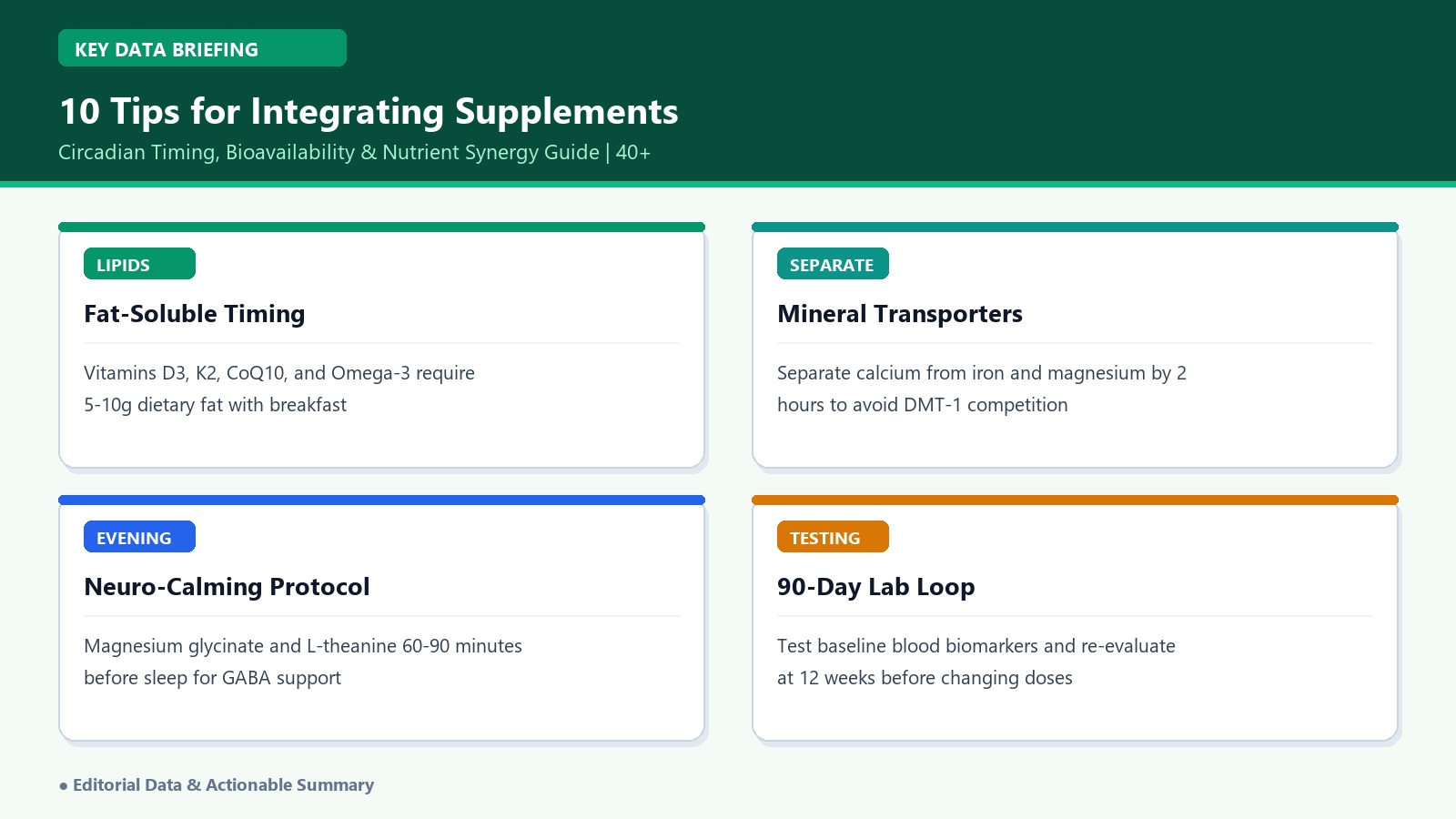
Figure 1: High-resolution clinical roadmap for circadian timing, nutrient synergies, and antagonistic separations.
Integrating Protocol: 2. Deconstructing the 10 Golden Rules for 40+ Adults
To transform integrating supplements into a healthy lifestyle from a chaotic chore into a precision health protocol, apply these concrete guidelines:
- Rule 1: Build on a Whole-Food Foundation: Supplements are designed to fill specific biological gaps, not compensate for a diet rich in refined seed oils, ultra-processed grains, and chronic sleep deprivation. No pill can outwork an inflammatory lifestyle.
- Rule 2: Respect Fat vs. Water Solubility: Water-soluble vitamins (B-complex and Vitamin C) are transient, clearing the bloodstream within 4 to 8 hours. Fat-soluble vitamins (A, D3, E, K2) accumulate in adipose and hepatic tissue; never consume them on an empty stomach or with black coffee alone.
- Rule 3: Beware Multivitamin Megadoses: Off-the-shelf “one-a-day” pills pack competing minerals (calcium, magnesium, zinc, iron) into a single compressed tablet where poor bioavailability ensures you excrete most of the active ingredients. Build targeted, single-ingredient protocols instead.
- Rule 4: Master the 4-Hour Thyroid Separation: Over 12% of women over 40 take levothyroxine (Synthroid). Taking calcium carbonate, iron, or magnesium within 4 hours binds the synthetic hormone in the gut, inducing severe clinical hypothyroidism symptoms.
- Rule 5: Cycle Adaptogens and Botanicals: Herbal extracts like Ashwagandha (KSM-66), Rhodiola rosea, and Tongkat Ali modulate hypothalamic-pituitary-adrenal (HPA) axis receptors. To prevent receptor tolerance or liver enzyme saturation, cycle them: 5 days on, 2 days off or 6 weeks on, 2 weeks off.

Figure 2: Mindful morning routine organizing supplements in a transparent acrylic tray.
3. The Circadian Supplement Schedule (AM / Midday / PM)
Integrate your routine smoothly by aligning each nutrient with your biological circadian rhythms:
🌞 Morning (With Breakfast Containing Dietary Fats)
- Active B-Complex (Methylated): Energizes cellular methylation and adrenal neurotransmitter synthesis.
- Vitamin D3 (2,000–5,000 IU) + K2 MK-7 (100–180 mcg): Fat-soluble; guides calcium directly into skeletal tissue.
- Omega-3 Fish Oil or Algal Oil (1,000–2,000 mg EPA/DHA): Protects vascular endothelium throughout daily oxidative stressors.
- CoQ10 (Ubiquinol 100 mg): Mitochondrial ATP cofactor, essential if taking statin therapy.
🌙 Evening (60 to 90 Minutes Before Sleep)
- Magnesium Glycinate or L-Threonate (300–400 mg elemental): Relaxes vascular smooth muscle and activates parasympathetic GABA tone.
- L-Theanine (100–200 mg): Increases calming alpha brainwaves for deep restorative slow-wave sleep.
- Zinc Bisglycinate (15–30 mg) + Copper (1 mg): Optimizes overnight tissue regeneration and testosterone/growth hormone pulsatility.
4. Quality Standards: Third-Party Certification (CoA)
The dietary supplement industry in the United States operates under the Dietary Supplement Health and Education Act (DSHEA), meaning products are not pre-approved by the FDA before hitting store shelves. To protect your liver, kidneys, and wallet:
- Demand Independent 3rd-Party Verification: Never buy supplements that lack testing from USP (United States Pharmacopeia), NSF International, or Informed-Choice. These seals guarantee that what is on the label is inside the bottle, with zero banned substances or toxic heavy metals.
- Audit the “Other Ingredients” List: Avoid formulas packed with artificial colorings (Red 40, Titanium Dioxide), excessive magnesium stearate flowing agents, or inflammatory maltodextrin fillers.
- Store Fragile Lipids in Dark, Cool Locations: Omega-3 fish oils, krill oil, and probiotics degrade rapidly under ambient heat and ultraviolet light. Keep fish oils in the refrigerator to prevent lipid peroxidation and rancid aldehydes.
5. Frequently Asked Questions (FAQ)
Should I take all my supplements every single day without breaks?
Essential vitamins and minerals that your body cannot synthesize (such as Vitamin D3, B12, and Magnesium) should be taken consistently. However, herbal adaptogens (Ashwagandha, Rhodiola, Berberine) benefit greatly from a “5 days on, 2 days off” or “8 weeks on, 2 weeks off” schedule to prevent physiological receptor desensitization.
Why does taking zinc on an empty stomach cause instant nausea?
Zinc ions are highly astringent and directly irritate the gastric mucosal lining, triggering the vagus nerve vomiting reflex when taken without food. Always ingest zinc (especially bisglycinate or picolinate) in the middle of or immediately following a substantial meal containing protein or carbohydrates.
How frequently should I re-test my blood biomarkers when taking supplements?
A baseline blood test should be followed by re-testing at 12 weeks (3 months). This window allows red blood cell turnover and tissue saturation to stabilize. Once your target biomarker levels are achieved (e.g., Vitamin D >50 ng/mL, Ferritin >50 ng/mL), an annual maintenance checkup is sufficient.