

EDITOR’S 1-MINUTE CLINICAL BRIEFING
Vitamin K2 MK7 vs MK4: The Definitive Clinical Verdict
- #1 Choice for Daily Bone Density & Arterial Decalcification: Choose Menaquinone-7 (MK-7, 90–180 mcg/day). With an exceptional 72-hour serum half-life, a single daily dose maintains steady 24/7 carboxylation of osteocalcin (pulling calcium into bone) and Matrix Gla Protein (MGP, clearing calcium from arterial walls).
- #1 Choice for Severe Osteoporosis & Tissue-Specific Gene Expression: Choose Menaquinone-4 (MK-4, 45 mg/day split into 3 doses of 15 mg). Approved as a pharmaceutical prescription in Japan (Glakay), MK-4 rapidly accumulates in the brain, salivary glands, and pancreas, activating steroid and xenobiotic receptors (SXR) beyond classical carboxylation.
- The Practical Winner for 95% of Adults: MK-7 wins decisively on compliance and cost. Achieving therapeutic systemic tissue saturation requires only 100–200 micrograms once daily, compared to taking 45,000 micrograms (45 mg) of MK-4 three times per day due to its rapid 1.5-hour clearance.
When deciding between vitamin k2 mk7 vs mk4, consumers and clinical practitioners face one of the most frequently misunderstood debates in nutritional biochemistry. Both compounds share a common naphthoquinone ring structure and both activate vitamin K-dependent proteins to prevent soft tissue calcification while reinforcing skeletal mineralization. However, their molecular side chains—a 7-isoprene unit long chain versus a 4-isoprene unit short chain—completely transform their pharmacokinetic half-life, systemic distribution, and daily dosage requirements.
Clinical research published in Blood (Schurgers et al.) and data from the landmark Rotterdam Study (5,000+ subjects tracked over 10 years) revealed that dietary long-chain menaquinones (specifically MK-7) demonstrated a profound 50% reduction in arterial calcification risk and coronary heart disease mortality. Understanding how vitamin k2 mk7 vs mk4 function in the human body is essential before designing any longevity or bone support regimen.
1. Head-to-Head Comparison Matrix: Vitamin K2 MK7 vs MK4
The table below provides a rigorous clinical comparison of chemical origin, serum pharmacokinetics, tissue target affinity, standard dosage, and cost efficiency for vitamin k2 mk7 vs mk4:
| Pharmacological Feature | Vitamin K2 (MK-7 / Menaquinone-7) | Vitamin K2 (MK-4 / Menatetrenone) |
|---|---|---|
| Primary Natural Source | Fermented soybeans (Japanese natto, Bacillus subtilis) & aged hard cheeses | Animal organ meats (liver), grass-fed butter, egg yolks, or synthetic geraniol conversion |
| Serum Elimination Half-Life | ~72 hours (3 full days); sustained plateau in bloodstream | ~1.5 to 3 hours; cleared very rapidly by hepatic enzymes |
| Standard Daily Clinical Dosing | 90 mcg – 180 mcg ONCE daily (microgram range) | 15,000 mcg (15 mg) THREE times daily = 45 mg/day (milligram range) |
| Target Tissue Distribution | Extra-hepatic tissues: Vascular smooth muscle (MGP) & osteoblasts (bone) | Hepatic liver + specialized tissues: Brain, pancreas, arterial wall, pregnant placenta |
| Arterial Calcification Inhibition | Exceptional; constant 24-hr bioactivity prevents arterial stiffness | Effective only at very high pharmacologic doses (45 mg/day) with strict 3x daily dosing |
| Patient Adherence & Convenience | Very High (1 single tiny softgel per day with breakfast) | Low (requires swallowing multiple large capsules with fat 3 separate times daily) |
| Side Effect / Tolerance Profile | Extremely well tolerated (rare reports of mild heart palpitations at >200 mcg in sensitive individuals) | Occasional gastrointestinal upset, nausea, or abdominal distention due to massive 45mg dosage |
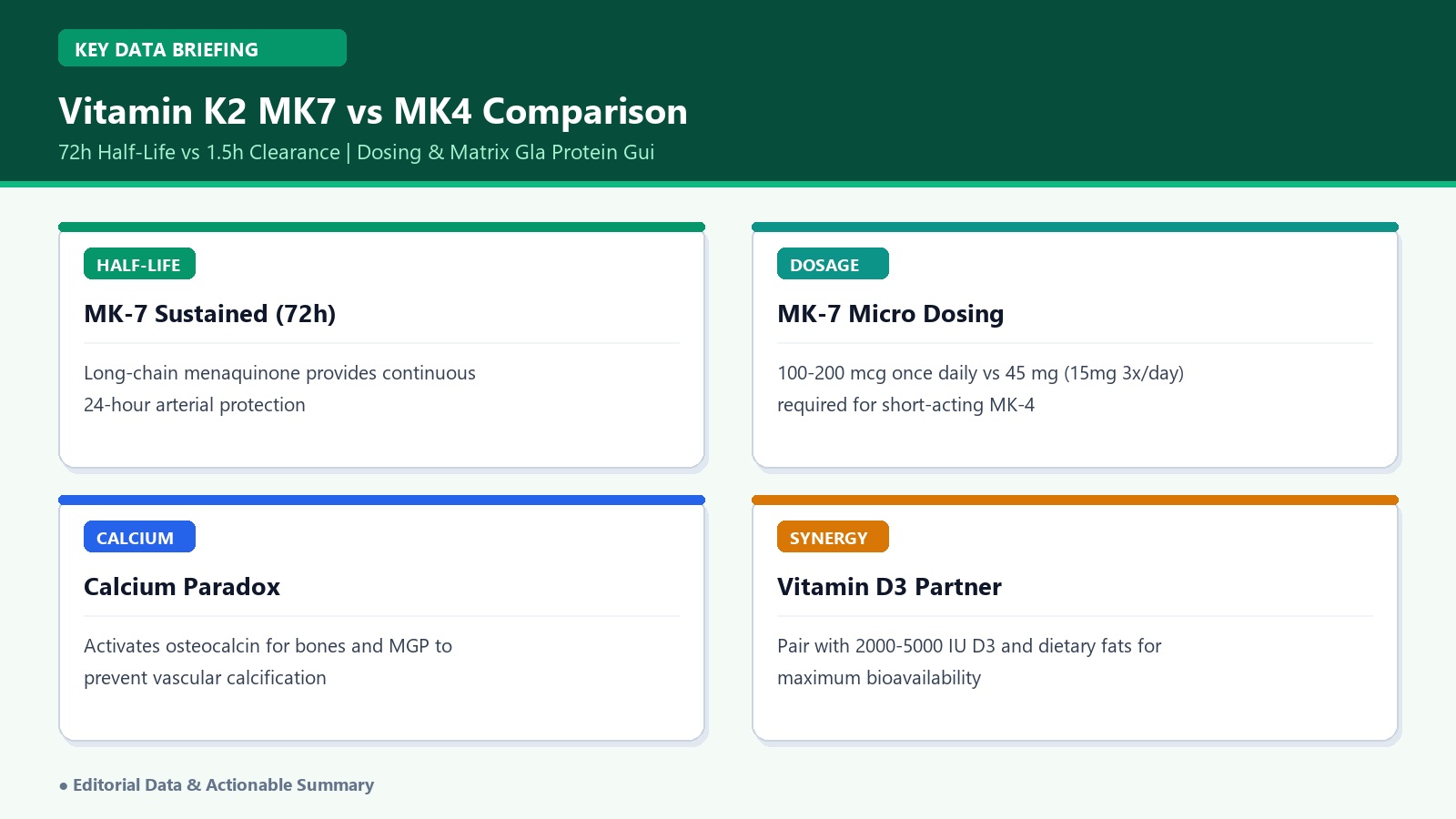
Figure 1: Pharmacokinetic comparison showing 72-hour sustained bioavailability of MK-7 vs. rapid clearance of MK-4.
2. Biological Mechanisms: The Calcium Paradox Solved
The human body requires calcium for bone mineralization, neuromuscular transmission, and cardiac rhythm. However, when calcium is consumed without adequate guidance, it tends to deposit in the medial walls of large arteries—a phenomenon known in cardiovascular medicine as The Calcium Paradox (weak bones accompanied by stiff, calcified arteries).
In the debate of vitamin k2 mk7 vs mk4, both act as mandatory cofactors for the enzyme gamma-glutamyl carboxylase (GGCX). This enzyme carboxylates two critical proteins:
- Osteocalcin: Synthesized by osteoblasts, uncarboxylated osteocalcin cannot trap ionized calcium into hydroxyapatite crystals. Once activated by Vitamin K2, it chemically anchors calcium into skeletal bone trabeculae.
- Matrix Gla Protein (MGP): Produced by vascular smooth muscle cells, activated MGP is the single most potent endogenous inhibitor of arterial calcification known to medical science. Without K2, uncarboxylated MGP (dp-ucMGP) remains inactive, allowing calcium salts to encrust the aorta and coronary arteries.
Why Half-Life Determines Cardiovascular Protection
In clinical pharmacokinetic head-to-head trials, subjects who took a single dose of MK-4 exhibited peak plasma levels within 2 hours, which crashed back to baseline within 8 hours. Because MGP carboxylation in blood vessels takes days of continuous circulating enzyme activation, short-acting MK-4 leaves blood vessels vulnerable for two-thirds of the day unless taken religiously every 8 hours. MK-7, having a 72-hour half-life incorporated into low-density lipoproteins (LDL), circulates continuously, ensuring uninterrupted 24-hour vascular defense.

Figure 2: Morning routine pairing fat-soluble Vitamin K2 with healthy lipids for optimal micellar absorption.
Vitamin Protocol: 3. Clinical Decision Framework: Which One Should You Take?
To choose accurately between vitamin k2 mk7 vs mk4, match your health status to these three clinical profiles:
✅ Profile A: Take MK-7 (90 mcg – 180 mcg Daily) If You Want:
- Comprehensive prevention against arterial plaque calcification and aortic stiffness after age 40.
- A synergistic partner to high-dose Vitamin D3 (2,000 IU to 5,000 IU) to ensure calcium absorption travels safely to bones rather than soft tissues.
- Maximum convenience: a single, micro-sized softgel taken once per day with breakfast.
- Budget efficiency: high-purity natural MK-7 from natto costs less than 20 to 30 cents per day.
✅ Profile B: Take MK-4 (45 mg Daily Split 15 mg x 3) If You Have:
- Diagnosed severe osteoporosis or history of osteoporotic vertebral/hip fractures under physician supervision.
- Sensitivity to fermented soy-derived MK-7 (some individuals report harmless but uncomfortable transient heart palpitations on MK-7 doses exceeding 150 mcg).
- A specific neurological or oncological protocol targeting tissue steroid and xenobiotic receptor (SXR) gene transcription.
4. Critical Safety: Anticoagulant Drug Interactions (Warfarin / Coumadin)
⚠️ Contraindication Alert: Vitamin K Antagonist Medications
If you are taking Warfarin (Coumadin) or any coumarin-based anticoagulant, taking supplemental Vitamin K2 (either MK-7 or MK-4) will directly counteract the medication by recharging clotting factors II, VII, IX, and X in the liver, drastically dropping your International Normalized Ratio (INR) and creating severe risk of blood clots. Always consult your prescribing cardiologist before taking any form of Vitamin K. (Note: Newer direct oral anticoagulants like Eliquis or Xarelto work through Factor Xa inhibition and are generally not influenced by Vitamin K, but medical oversight is still required).
5. Frequently Asked Questions (FAQ)
Can you take MK-7 and MK-4 together in a full-spectrum blend?
Yes, full-spectrum K2 formulations combining 100 mcg MK-7 and 500–1000 mcg MK-4 are popular. While the low dose of MK-4 in commercial blends is far below the 45 mg prescription dose used in Japanese trials, the MK-7 component guarantees 24-hour systemic osteocalcin and MGP activation.
Should Vitamin K2 always be taken with Vitamin D3?
Yes. Vitamin D3 stimulates intestinal calcium absorption and prompts cells to manufacture osteocalcin and MGP in their uncarboxylated (inactive) forms. Without Vitamin K2, these proteins cannot be carboxylated, leaving the absorbed calcium free to accumulate in arterial walls. Pairing D3 with K2 ensures calcium is safely directed into bones.
Why does MK-7 sometimes cause heart palpitations in certain people?
A small percentage of individuals experience benign heart palpitations or a sensation of a racing pulse on high doses of MK-7 (>150–200 mcg). This is believed to relate to shifts in intracellular calcium signaling or mitochondrial electron transport stimulation. Reducing the dose to 45–90 mcg every other day or switching to MK-4 entirely eliminates the symptom.