
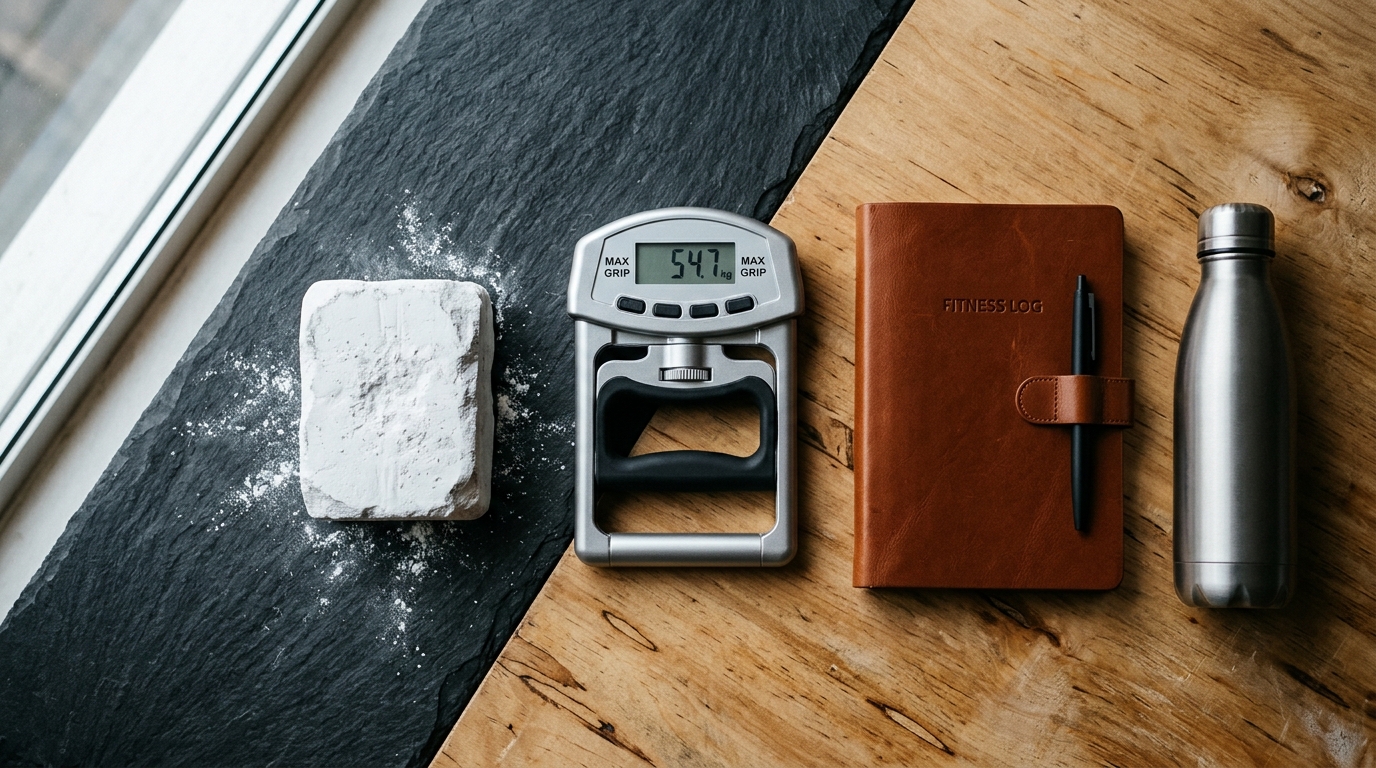
EDITOR’S 1-MINUTE CLINICAL BRIEFING
Good Grip Strength for Women by Age: The Biomarker of Longevity
- The #1 Predictor of Biological Longevity: Clinical research in The Lancet (The Prospective Urban Rural Epidemiology study tracking 140,000 adults) demonstrated that every 5 kg (11 lb) decrease in grip strength is associated with a 16% higher risk of all-cause mortality and a 17% higher risk of cardiovascular death—outperforming systolic blood pressure as a longevity prognosticator.
- The Clinical Cutoff Threshold for Sarcopenia: The European Working Group on Sarcopenia in Older People (EWGSOP2) establishes that any woman registering below 16 kg (35.2 lbs) is clinically at risk for accelerated sarcopenia, physical frailty, and premature loss of independence.
- High Neuro-Muscular Plasticity: Unlike aerobic capacity, neuromuscular forearm motor unit recruitment responds rapidly to targeted load. Incorporating heavy farmer carries, plate pinches, and passive dead hangs increases isometric grip strength by 15% to 25% within 6 to 8 weeks at any age.
Determining what constitutes good grip strength for women by age has transitioned from an athletic novelty into one of the most vital clinical assessments in preventative longevity medicine. While many focus exclusively on cardiovascular endurance or body mass index (BMI), geriatricians and longevity researchers recognize that your hand grip is a direct non-invasive proxy for total body skeletal muscle mass, central nervous system neuromuscular integrity, and cellular mitochondrial health.
According to normative epidemiological data published in The Lancet (Leong et al.) and clinical guidelines from the National Institutes of Health (NIH), women experience an accelerated loss of neuromuscular motor units starting in their late 40s during the perimenopausal transition. Below is the complete normative data chart, testing protocol, and 4-week strength recovery guide.
1. Normative Chart: Good Grip Strength for Women by Age
This clinical benchmark table provides exact hydraulic hand dynamometer scores for women across all age decades, measured in both kilograms (kg) and pounds (lbs) for the dominant hand:
| Age Bracket | Underperforming / Weak (<25th %) | Average Standard (50th %) | Good / Robust Standard (75th %) | Elite Longevity Tier (>90th %) |
|---|---|---|---|---|
| Ages 20 – 29 | < 26 kg (< 57.3 lbs) | 29 – 31 kg (63.9 – 68.3 lbs) | 34 – 37 kg (75.0 – 81.6 lbs) | > 40 kg (> 88.2 lbs) |
| Ages 30 – 39 | < 25 kg (< 55.1 lbs) | 28 – 30 kg (61.7 – 66.1 lbs) | 33 – 36 kg (72.8 – 79.4 lbs) | > 39 kg (> 86.0 lbs) |
| Ages 40 – 49 | < 23 kg (< 50.7 lbs) | 26 – 28 kg (57.3 – 61.7 lbs) | 31 – 34 kg (68.3 – 75.0 lbs) | > 37 kg (> 81.6 lbs) |
| Ages 50 – 59 | < 20 kg (< 44.1 lbs) | 23 – 25 kg (50.7 – 55.1 lbs) | 28 – 31 kg (61.7 – 68.3 lbs) | > 34 kg (> 75.0 lbs) |
| Ages 60 – 69 | < 18 kg (< 39.7 lbs) | 20 – 22 kg (44.1 – 48.5 lbs) | 25 – 28 kg (55.1 – 61.7 lbs) | > 31 kg (> 68.3 lbs) |
| Ages 70 – 79 | < 16 kg (< 35.2 lbs) | 17 – 19 kg (37.5 – 41.9 lbs) | 22 – 25 kg (48.5 – 55.1 lbs) | > 28 kg (> 61.7 lbs) |
| Ages 80+ | < 14 kg (< 30.9 lbs) | 15 – 17 kg (33.1 – 37.5 lbs) | 19 – 22 kg (41.9 – 48.5 lbs) | > 25 kg (> 55.1 lbs) |
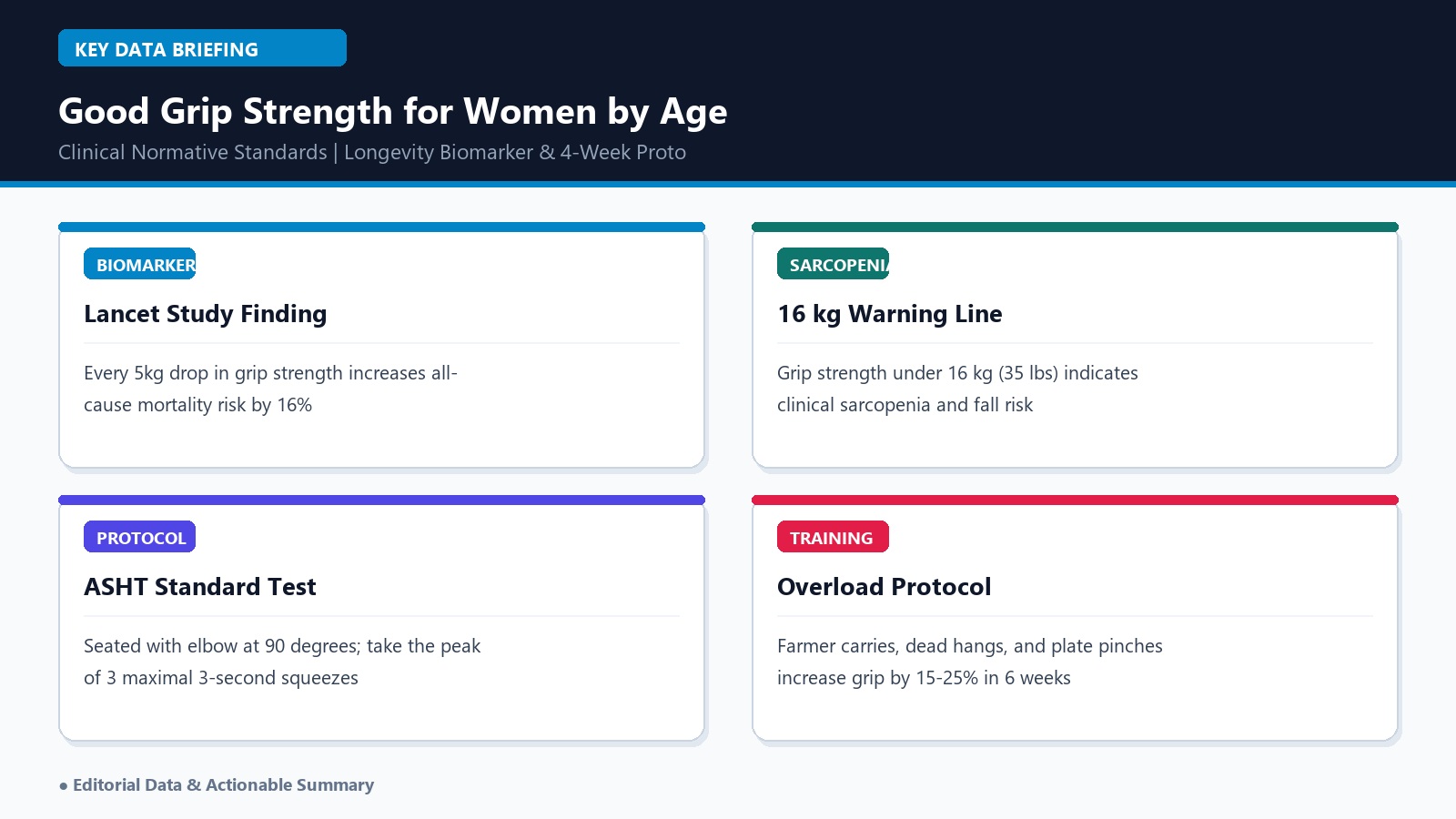
Figure 1: High-resolution clinical chart of age-stratified female grip strength standards and mortality risk thresholds.
2. The Physiology: Why Hand Grip Predicts Whole-Body Aging
Why does squeezing a hand dynamometer correlate so powerfully with longevity, cognitive resilience, and surviving serious illness? While the forearm muscles (flexor digitorum profundus, flexor carpi radialis, and thenar compartment) are small, producing maximal isometric grip force requires the rapid simultaneous firing of high-threshold Type IIx motor units commanded directly from the motor cortex.
When biological aging, systemic chronic inflammation (inflammaging), or insulin resistance impairs mitochondrial ATP production, the fast-twitch motor units in distal limbs are the first to degrade. Therefore, having good grip strength for women by age confirms that:
- Cortical Neurotransmission Is Intact: Clean signal conduction through the corticospinal tract without peripheral neuropathy or myelin loss.
- Rotator Cuff & Scapular Stability Is Preserved: The nervous system uses reciprocal inhibition: it will downregulate hand grip force if your shoulder stabilizers (infraspinatus, subscapularis) are unstable or injured.
- Bone Mineral Density (BMD) Is Protected: Clinical trials demonstrate a direct linear correlation between female grip strength and T-scores at the femoral neck and lumbar spine, mitigating osteoporosis fracture risks.
Clinical Evidence: The 16 kg Sarcopenia Warning Line
According to the European Working Group on Sarcopenia in Older People (EWGSOP2), a grip strength reading below 16 kg (35.2 lbs) in adult women serves as the diagnostic threshold for probable sarcopenia. Women below this line exhibit a 2.8-fold increased hazard ratio for falls, extended hospital stays, and functional dependency within 5 years.
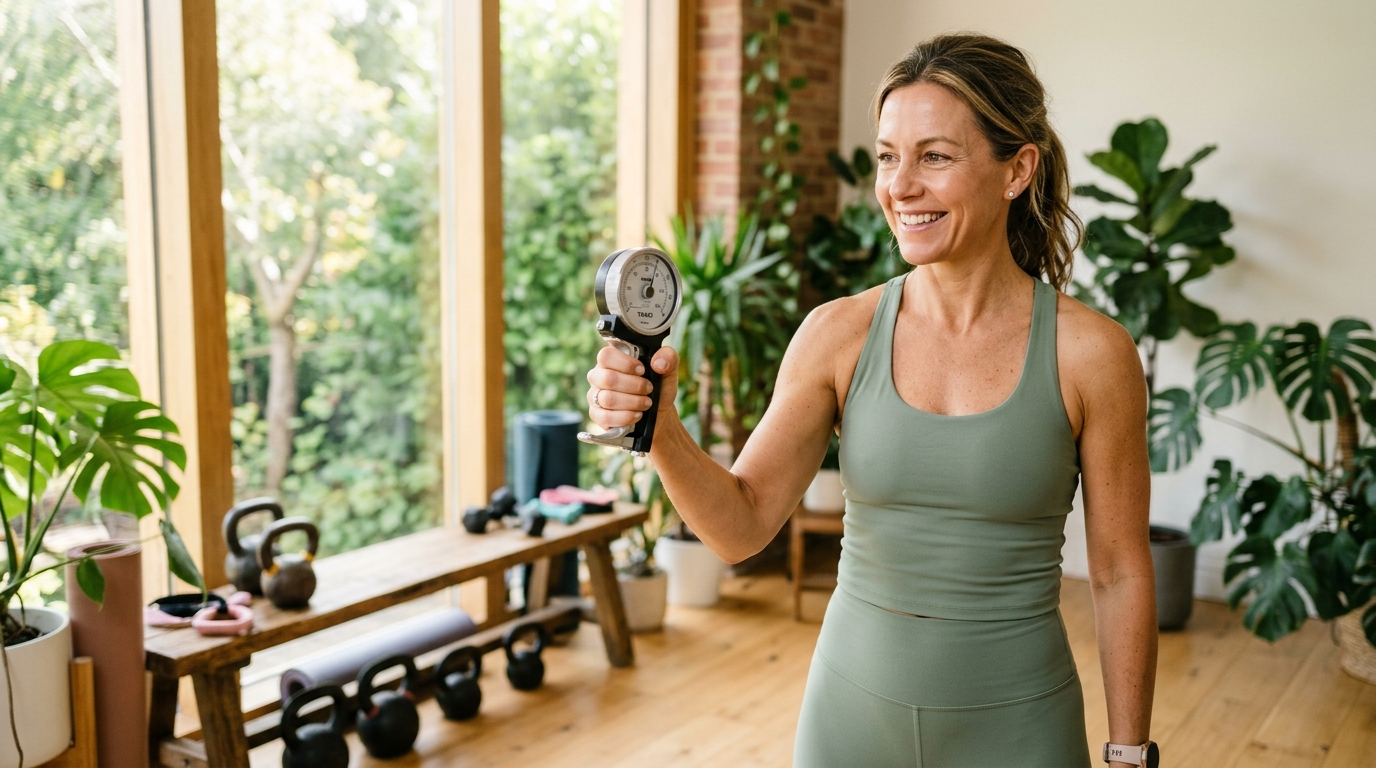
Figure 2: Routine monitoring with a digital dynamometer in a home gym setting.
3. How to Test Accurately: The Standardized Clinical Protocol
To ensure your readings match clinical laboratory norms, follow the standardized American Society of Hand Therapists (ASHT) testing protocol:
📋 The 5-Step ASHT Testing Procedure
- Seated Position: Sit upright in a straight-backed chair with feet flat on the floor, shoulders relaxed and adducted (not shrugged).
- Elbow Flexion: Bend your elbow at an exact 90-degree angle, with the forearm in a neutral rotation position (thumb pointing upwards). The arm must not rest on any table or armrest.
- Handle Adjustment: Set the dynamometer handle to Position 2 (the standard second rung from inside), allowing fingers to wrap comfortably around the grip bar.
- Maximal 3-Second Squeeze: Inhale deeply, exhale, and squeeze the handle as hard as possible for 3 full seconds. Avoid jerking or body swinging.
- Three-Trial Average: Perform 3 alternating trials for each hand with 60 seconds of rest between attempts. Record the highest single peak force.
4. The 4-Week Protocol: How to Build 15–20% Stronger Grip
If your numbers are currently below the “Good” tier for your age, forearm and hand strength responds extraordinarily fast to progressive overload. Integrate these three functional movements 3 times per week:
- Heavy Farmer’s Carries: Pick up two heavy kettlebells or dumbbells (aim for 20% to 25% of your body weight per hand). Walk tall with locked lats and packed shoulders for 40 to 60 seconds. Rest 90 seconds; repeat for 4 sets.
- Dead Hangs from a Pull-Up Bar: Grip an overhead pull-up bar with an overhand (pronated) grip, feet off the floor. Keep shoulder blades active (slightly retracted). Build up to accumulating 60 to 90 seconds total hang time per session.
- Pinch Grip Plate Holds: Take two smooth weight plates (or two 5–10 lb plates with smooth sides facing out), pinch them between your thumb and fingertips, and hold them at your side for 30 seconds. This builds the thenar and adductor pollicis muscles that traditional barbells neglect.
5. Frequently Asked Questions (FAQ)
Can I measure my grip strength at home without a dynamometer?
While a calibrated hydraulic dynamometer (like a Jamar or digital Camry) is the clinical gold standard, you can gauge functional baseline grip at home using a dead hang from a pull-up bar. A healthy woman over 40 should be able to comfortably sustain a passive dead hang for at least 30 to 45 seconds. Being unable to hang for 15 seconds strongly indicates sub-threshold grip power.
Why is the non-dominant hand weaker, and how much discrepancy is normal?
In clinical hand surgery and physical therapy, the “10% Rule” states that the dominant hand is typically 5% to 10% stronger than the non-dominant hand due to daily motor habitual usage. A strength deficit exceeding 15% to 20% warrants evaluation for cervical radiculopathy, carpal tunnel compression, or unilateral rotator cuff pathology.
Does increasing grip strength directly improve longevity, or is it just a marker?
It is both. While grip is a marker of overall muscle mass and neuromuscular health, the act of training your grip (through heavy carries, hanging, and progressive resistance) stimulates systemic bone remodeling, releases anti-inflammatory myokines from skeletal muscle, improves insulin sensitivity, and preserves independence against debilitating falls.