
EDITOR’S 1-MINUTE CLINICAL BRIEFING
Good Grip Strength for Men by Age: The Ultimate Longevity Proxy
- The Gold Standard Mortality Biomarker: In the landmark PURE study published in The Lancet (evaluating 142,861 adults across 17 countries), every 5 kg (11 lb) decrease in male grip strength was independently linked to a 16% higher hazard ratio for all-cause mortality, a 17% higher risk of cardiovascular death, and a 7% higher risk of myocardial infarction—surpassing systolic blood pressure as a cardiovascular predictor.
- The Clinical Sarcopenia Warning Threshold: The European Working Group on Sarcopenia in Older People (EWGSOP2) defines the diagnostic cutoff for probable sarcopenia in adult men as less than 27 kg (59.5 lbs). Falling below this mark indicates severe motor unit loss, hormonal decline, and elevated frailty risk.
- Neuro-Muscular Adaptation Speed: Because forearm flexors and thenar intrinsic muscles possess dense innervation, implementing progressive overload (heavy farmer carries, fat-grip deadlifts, and active dead hangs) boosts isometric grip power by 18% to 30% within 4 to 6 weeks at any age.
Assessing good grip strength for men by age has evolved into one of the most critical diagnostic metrics in modern longevity and sports medicine. While bench press and squat personal records often dominate gym discussions, exercise physiologists and preventative cardiologists look first at isometric hand grip. Why? Because handgrip strength serves as an unvarnished physiological mirror reflecting whole-body skeletal muscle mass, central nervous system firing rate, and vascular endothelial elasticity.
Epidemiological studies published in The Lancet (Leong et al.) and clinical guidelines from the National Institutes of Health (NIH) show that healthy men achieve peak grip strength between ages 25 and 35. After age 40, men face an involuntary decline of 1% to 2% per year if neuromuscular resistance training is neglected. Below is the definitive normative data table, clinical testing protocol, and 4-week strength recovery blueprint.
1. Normative Standards: Good Grip Strength for Men by Age
This comprehensive benchmark matrix provides exact hydraulic hand dynamometer scores for men across every age decade, recorded in both kilograms (kg) and pounds (lbs) for the dominant hand:
| Age Bracket | Underperforming / Weak (<25th %) | Average Standard (50th %) | Good / Robust Standard (75th %) | Elite Longevity Tier (>90th %) |
|---|---|---|---|---|
| Ages 20 – 29 | < 42 kg (< 92.6 lbs) | 46 – 50 kg (101.4 – 110.2 lbs) | 54 – 58 kg (119.0 – 127.9 lbs) | > 64 kg (> 141.1 lbs) |
| Ages 30 – 39 | < 43 kg (< 94.8 lbs) | 47 – 51 kg (103.6 – 112.4 lbs) | 55 – 60 kg (121.3 – 132.3 lbs) | > 65 kg (> 143.3 lbs) |
| Ages 40 – 49 | < 39 kg (< 86.0 lbs) | 43 – 47 kg (94.8 – 103.6 lbs) | 51 – 56 kg (112.4 – 123.5 lbs) | > 61 kg (> 134.5 lbs) |
| Ages 50 – 59 | < 35 kg (< 77.2 lbs) | 39 – 43 kg (86.0 – 94.8 lbs) | 47 – 51 kg (103.6 – 112.4 lbs) | > 56 kg (> 123.5 lbs) |
| Ages 60 – 69 | < 31 kg (< 68.3 lbs) | 35 – 38 kg (77.2 – 83.8 lbs) | 42 – 46 kg (92.6 – 101.4 lbs) | > 51 kg (> 112.4 lbs) |
| Ages 70 – 79 | < 27 kg (< 59.5 lbs) | 30 – 33 kg (66.1 – 72.8 lbs) | 37 – 41 kg (81.6 – 90.4 lbs) | > 46 kg (> 101.4 lbs) |
| Ages 80+ | < 22 kg (< 48.5 lbs) | 25 – 28 kg (55.1 – 61.7 lbs) | 31 – 35 kg (68.3 – 77.2 lbs) | > 40 kg (> 88.2 lbs) |
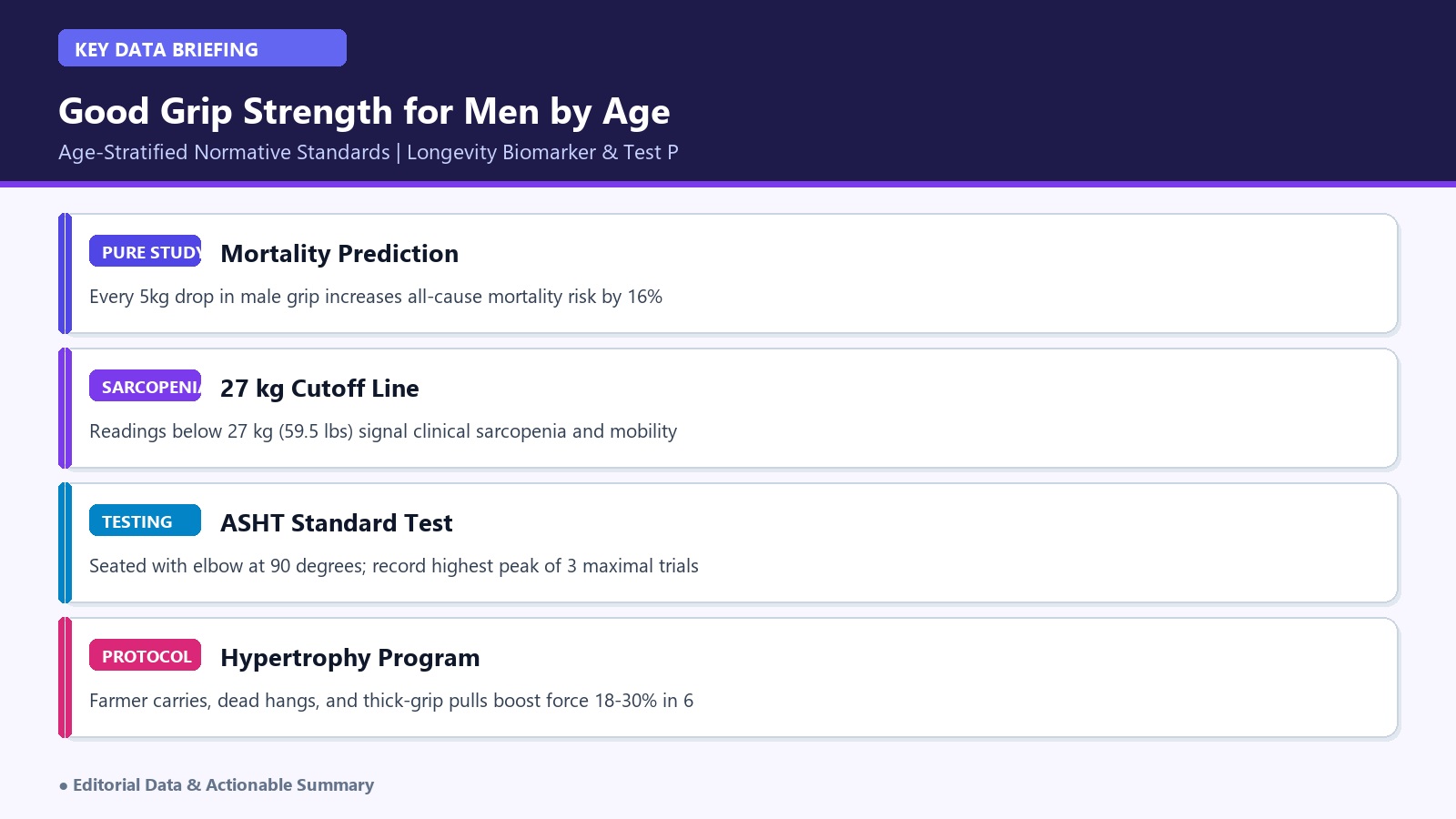
Figure 1: High-resolution sports science overview of age-stratified male grip norms and sarcopenia thresholds.
2. Clinical Physiology: Testosterone, Motor Units, and Longevity
Why is maintaining good grip strength for men by age such a powerful predictor of surviving cardiovascular events, pneumonia, and cancer cachexia? Unlike compound barbell lifts that allow compensatory momentum from torso leverage, a maximal isometric grip squeeze requires the pure, unassisted firing of distal alpha motor neurons commanding 35 individual muscles within the forearm and hand.
In men over 40, three biological mechanisms tie grip strength directly to systemic vitality:
- Free Testosterone & Androgen Receptor Density: The forearm and thenar compartments possess high densities of androgen receptors. Longitudinal urological data show that bioavailable testosterone levels correlate directly with isometric forearm strength, making grip decline an early clinical flag for late-onset hypogonadism.
- Fast-Twitch Type IIx Motor Unit Preservation: Sarcopenia disproportionately atrophies fast-twitch glycolytic fibers before slow-twitch endurance fibers. Maintaining a grip above 50 kg in your 40s and 50s confirms that your spinal cord still recruits high-threshold motor units effectively.
- Rotator Cuff & Neural Irradiance: Squeezing your hand activates Sherrington’s Law of Irradiation—muscular tension radiates up the kinetic chain, stabilizing the supraspinatus, subscapularis, and latissimus dorsi. Weak grip almost always heralds shoulder impingement and cervical nerve root compression.
The 27 kg Sarcopenia Diagnostic Cutoff (EWGSOP2)
In clinical geriatrics and endocrinology, registering under 27 kg (59.5 lbs) on a calibrated dynamometer meets the consensus criteria for probable sarcopenia in men. Men below this line experience a 3.1-fold higher hazard ratio for functional mobility loss and double the rate of postoperative complications.
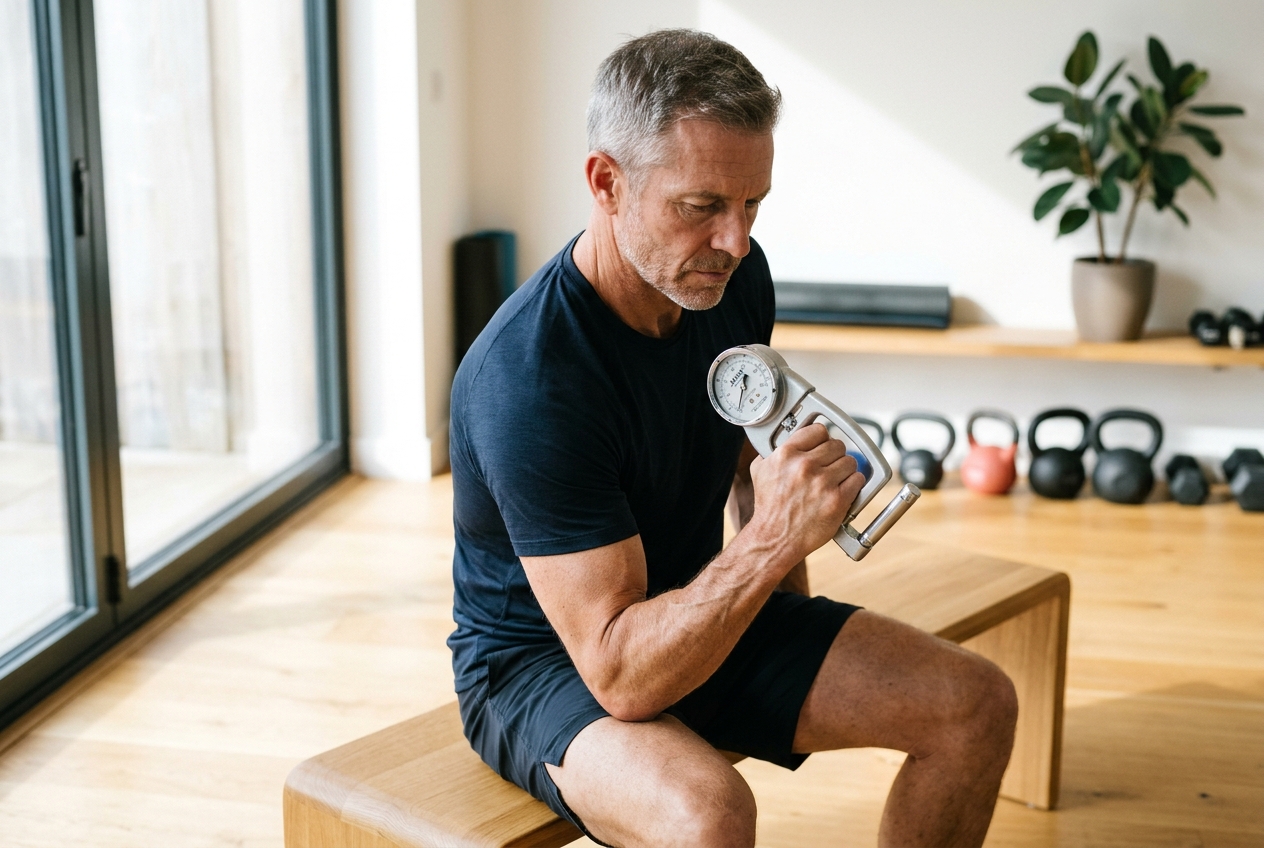
Figure 2: Morning isometric testing in a dedicated home gym setup.
3. Testing Protocol: The Gold Standard ASHT Method
To ensure accurate, lab-comparable readings, follow the American Society of Hand Therapists (ASHT) standardized testing protocol:
📋 The 5-Step ASHT Testing Procedure for Men
- Upright Seated Position: Sit in a stable chair with back supported and feet firmly planted. Keep shoulders relaxed and elbows tucked near the ribcage.
- 90-Degree Elbow Angle: Flex your elbow to an exact 90 degrees, with the wrist in neutral extension (0 to 30 degrees) and forearm resting freely without contacting the thighs or armrests.
- Grip Handle Setting: Standardize the dynamometer handle to Position 2 (the second notch from the center), which clinical literature identifies as optimal for maximal force generation in male hands.
- Maximal Explosive Squeeze: Exhale forcefully and crush the handle with maximal effort for 3 continuous seconds. Maintain posture without jerking or leaning sideways.
- Record Highest Peak: Perform 3 alternating attempts per hand with 60 seconds of recovery between trials. Your highest peak value is your baseline score.
4. The 4-Week Male Grip Hypertrophy Protocol
If your current numbers fall in the “Average” or “Weak” categories, forearm tendons and motor units adapt swiftly when subjected to high tension. Execute this 3-exercise routine 3 days per week after your primary strength workout:
- Heavy Farmer’s Walks (Crush & Support Grip): Pick up two heavy dumbbells or kettlebells totaling 50% to 75% of your body weight (e.g., 40–50 lbs per hand for a 180 lb man). Walk with proud posture and retracted shoulder blades for 45 to 60 seconds. Rest 2 minutes; repeat for 4 sets.
- Active Dead Hangs (Tensile Strength): Hang from an overhead pull-up bar using a double overhand (pronated) grip. Keep shoulder blades active and lats engaged. Accumulate 90 to 120 seconds of total hang time per workout across 3 to 4 sets.
- Thick-Grip / Towel Pulls (Motor Unit Recruitment): Wrap a thick gym towel or silicone Fat Gripz around dumbbells or a pull-up bar. The increased 2-inch diameter prevents fingers from locking into mechanical hooks, forcing maximal recruitment of the flexor digitorum sublimis and thumb adductors.
5. Frequently Asked Questions (FAQ)
What is considered an elite grip strength for an adult man?
In sports science norms, registering above 60 kg (132 lbs) in your 30s or 40s, or above 50 kg (110 lbs) past age 60 places a man in the top 10th percentile (Elite tier). This degree of grip power is consistently correlated with negligible cardiovascular event rates, high bone mineral density, and superior neurocognitive resilience into late life.
Can I use a dead hang test if I don’t own a dynamometer?
Yes. While a calibrated hydraulic dynamometer provides precise kilogram readouts, a straight-bar passive dead hang is an excellent functional alternative. A healthy man under 50 should easily hold a bodyweight dead hang for at least 60 seconds. Dropping off the bar in under 30 seconds strongly correlates with sub-threshold isometric grip strength.
Does grip strength training increase forearm tendonitis risk?
Only if volume is increased too abruptly without balancing extensor muscles. The hand flexors require balance from finger extensor training (such as wrapping a thick rubber band around the outside of your fingers and opening your hand against resistance). Pairing flexion with extension protects the medial and lateral epicondyles from tendinopathy.