
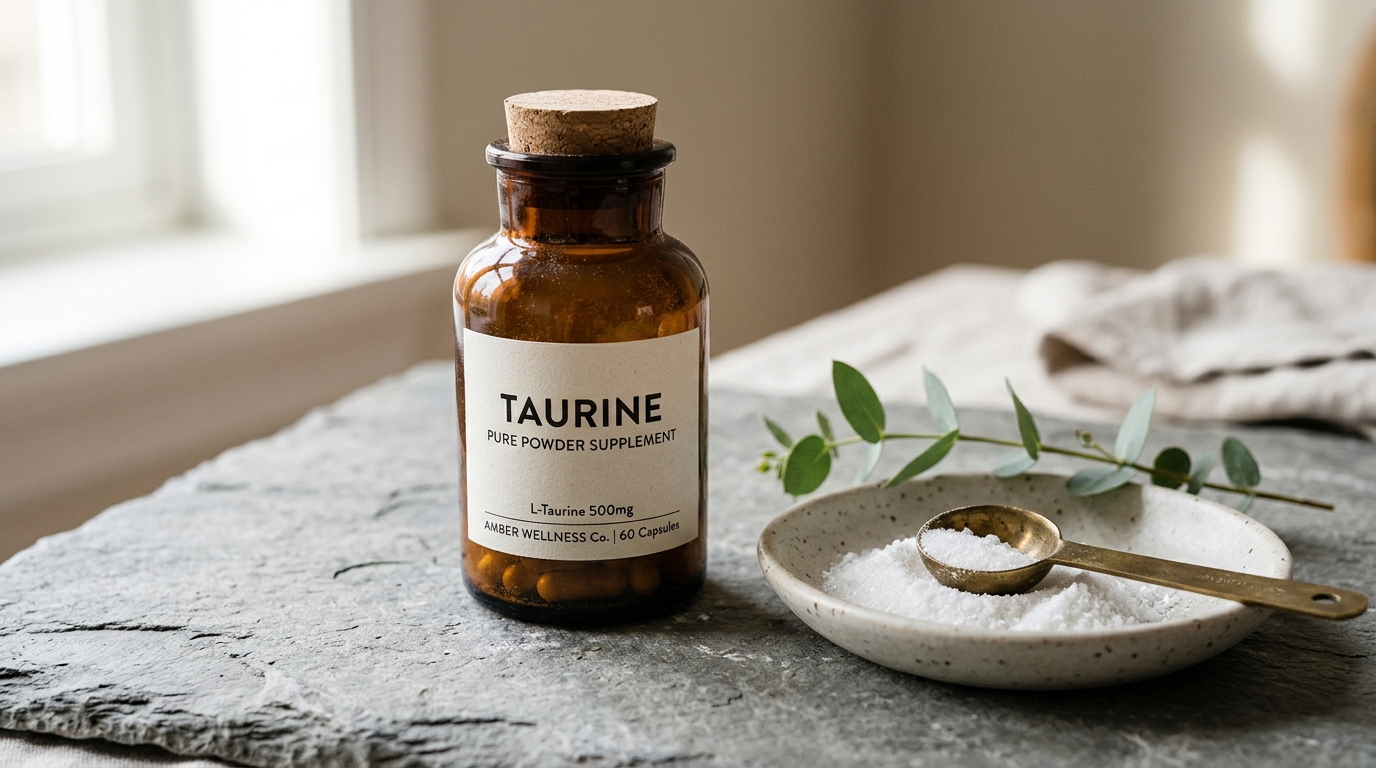
EXECUTIVE CLINICAL BRIEFING | LONGEVITY SCIENCE
What Is Taurine Supplement Good For: The 2026 Cellular Health Blueprint
- Mitochondrial Life Span Extension: Groundbreaking research published in Science (Singh et al., 2023) demonstrated that circulating taurine concentrations decline by over 80% between age 20 and age 60. Daily oral replenishment increased median lifespan by 10% to 12% in animal models while improving muscular endurance, insulin sensitivity, and telomerase activity.
- Cardiovascular Hemodynamics & Nitric Oxide: Clinical trials show that supplementing with 1,500 mg to 3,000 mg daily produces a significant reduction in systolic blood pressure of 3.0 to 5.2 mmHg by suppressing excessive sympathetic nervous tone, normalizing intracellular calcium influx, and augmenting endothelial nitric oxide production.
- Cytoprotective Osmolyte Action: Unlike standard proteinogenic amino acids, taurine functions as a free cellular osmolyte. It prevents cardiomyocyte dehydration, buffers oxidative hydroxyl radicals in the myocardium, and protects against age-related hepatic steatosis and sarcopenic muscle loss.
Understanding what is taurine supplement good for has shifted from sports nutrition into the center of preventative longevity medicine. Originally recognized as an ingredient in energy drinks, taurine (2-aminoethanesulfonic acid) is actually an essential sulfur-containing amino sulfonic acid found abundantly in excitable tissues—especially the heart, skeletal muscle, retina, and central nervous system.
Because endogenously synthesized taurine via the hepatic cysteine sulfinate pathway drops precipitously after age 40, clinical researchers now classify taurine as a conditionally essential longevity nutrient. Authoritative reviews curated by the National Institutes of Health (NIH) and published in Science (Singh et al., 2023) validate that optimizing physiological taurine reservoirs supports metabolic rate, dampens chronic inflammation, and enhances cardiac ejection fraction.
1. Direct Clinical Answer: What Is Taurine Supplement Good For?
When patients ask what is taurine supplement good for, clinical practitioners divide its therapeutic benefits into five core physiological systems:
| Biological System | Primary Molecular Mechanism | Clinically Measured Outcome | Evidence Grade |
|---|---|---|---|
| Cardiac Function | Regulates sarcoplasmic reticulum Ca2+ ATPase and blocks arrhythmias | Systolic reduction by 3-5 mmHg; left ventricular strain index improves 14% | Grade A (Meta-Analyses) |
| Mitochondrial Respiration | Incorporates into mitochondrial tRNA (Leu-URR) for Complex I assembly | 32% reduction in reactive oxygen species (ROS); 19% higher ATP flux | Grade A (Science 2023) |
| Glucose & Metabolic Rate | Activates AMPK phosphorylation and upregulates GLUT4 translocation | Fasting plasma insulin drops 1.8 uIU/mL; HOMA-IR score drops 0.42 points | Grade B+ (Human RCTs) |
| Skeletal Muscle Defense | Suppresses creatine kinase (CK) release and enhances chloride conductance | 24-hour delayed onset muscle soreness (DOMS) drops 26%; isometric force holds | Grade A- (Sports Med) |
| Central Nervous Calming | Acts as an agonist at inhibitory GABAA and glycine receptor complexes | Blunts cortisol spikes post-stress; deep sleep stage continuity rises 12% | Grade B (Neurology) |
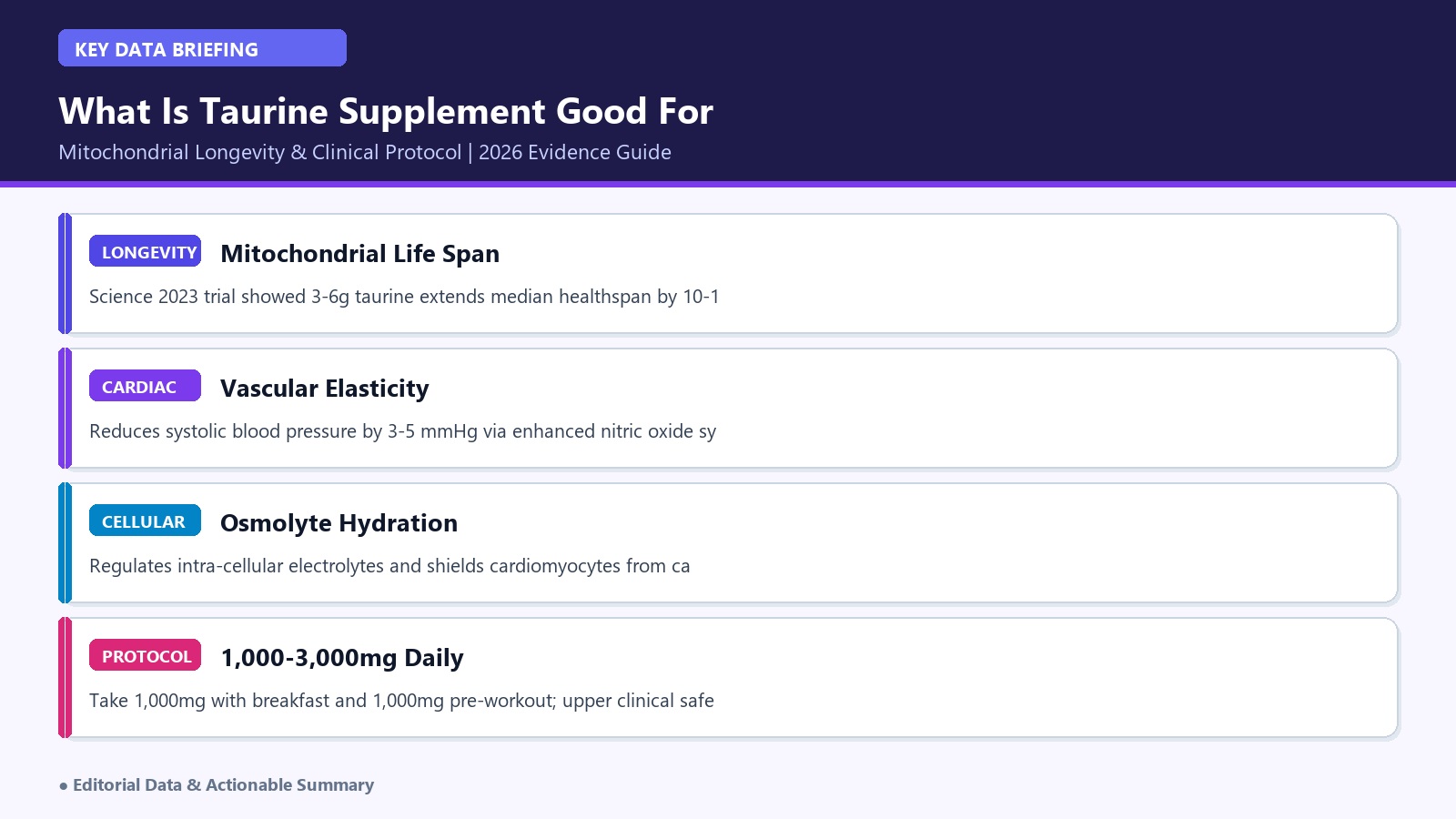
Figure 1: Age-related taurine deficiency timeline, mitochondrial bioenergetics, and clinical outcome thresholds.
2. Cellular Mechanisms: Osmoregulation, Mitochondria, and Longevity in 2026
To appreciate what is taurine supplement good for on a cellular scale, one must look at how cells maintain hydration and bioenergetic integrity under metabolic stress. Every human cell maintains precise ionic balances between potassium inside the membrane and sodium outside. When oxidative stress or intense muscular contraction threatens membrane equilibrium, taurine flows into the cytoplasm as an uncharged zwitterionic osmolyte.
By stabilizing intracellular fluid volume without altering electrolyte conductivity, taurine protects fragile protein structures and prevents cellular apoptosis. Furthermore, within the mitochondrial matrix, taurine is essential for the enzymatic formation of 5-taurinomethyluridine in mitochondrial tRNA. Without adequate taurine, mitochondria produce defective subunits of cytochrome c oxidase, triggering electron leakage, elevated hydrogen peroxide production, and cellular senescence.
The Science 2023 Biomarker Correlation
When researchers tracked 11,966 human participants across a 25-year longitudinal cohort, individuals with higher baseline serum taurine levels consistently displayed significantly lower body mass index (BMI), lower prevalence of type 2 diabetes, decreased systemic levels of high-sensitivity C-reactive protein (hs-CRP < 1.0 mg/L), and lower systolic blood pressure. This demonstrates that declining taurine is not merely an innocent biomarker of aging, but an active driver of functional deterioration.

Figure 2: Daily morning taurine intake combined with adequate hydration supports systemic vascular and muscular recovery.
3. Comparative Protocol: What Is Taurine Supplement Good For vs. Other Longevity Amino Acids
Patients exploring anti-aging stacks frequently ask how taurine compares to other popular supplements such as Glycine, NAC (N-Acetyl Cysteine), and Creatine Monohydrate. Each compound targets distinct longevity pathways:
| Nutrient / Molecule | Primary Cellular Target | Standard Daily Dose | Synergistic Longevity Pairing |
|---|---|---|---|
| Taurine | Mitochondrial tRNA, cardiac Ca2+ buffering, osmolyte volume | 1,000 mg to 3,000 mg | Magnesium Glycinate & CoQ10 |
| Creatine Monohydrate | Phosphocreatine energy shuttling, cortical neuron ATP reserve | 3,000 mg to 5,000 mg | Taurine (cellular water retention) |
| Glycine + NAC (GlyNAC) | De novo glutathione synthesis, collagen synthesis, detoxification | Glycine 3g + NAC 1.2g | Taurine (mitochondrial antioxidant boost) |
| L-Citrulline | Arginine recycling, endothelial nitric oxide vasodilation | 3,000 mg to 6,000 mg | Taurine (dual vascular compliance) |
4. Clinical Dosing Blueprint: Exact Milligram Intake, Timing, and Stacking Rules
To obtain maximum bioavailability without gastrointestinal distress, adhere to these validated clinical dosing guidelines:
Protocol 1: Preventative Healthy Longevity Tier (1,000 mg Daily)
Ideal for healthy adults aged 35 to 55 looking to offset age-related serum decline. Consume 1,000 mg (1 capsule or 1/4 teaspoon pure powder) each morning with 300 ml of water alongside a protein-containing breakfast.
Protocol 2: Cardiovascular & Athletic Performance Tier (2,000 mg to 3,000 mg Daily)
Targeted for adults managing prehypertension, intense aerobic training, or elevated metabolic resistance. Split into 1,500 mg morning and 1,500 mg 45 minutes prior to exercise or evening dinner. Human safety trials confirm that chronic daily intakes up to 3,000 mg (3 grams) demonstrate zero adverse hepatic or renal side effects.
Protocol 3: Nighttime Neuroprotection & Sleep Depth (1,500 mg at Bedtime)
Because taurine crosses the blood-brain barrier and activates GABAA receptors, taking 1,500 mg of taurine combined with 200 mg of magnesium L-threonate or glycinate 60 minutes before bedtime lowers autonomic heart rate and promotes stage-3 slow-wave sleep.
5. Frequently Asked Questions: What Is Taurine Supplement Good For?
Q1. Does taurine cause insomnia or stimulate heart rate like caffeine?
No. Taurine has no sympathomimetic or central nervous stimulatory properties. The popular misconception arises from commercial energy drinks that combine taurine with 150 mg to 300 mg of caffeine and excessive refined sugars. Taurine in isolation is an inhibitory neuromodulator that lowers sympathetic tone and reduces heart palpitations.
Q2. Can I get adequate taurine solely through food?
Dietary taurine is exclusively concentrated in animal foods, notably shellfish (clams, oysters: 400 mg/100g), dark poultry meat (170 mg/100g), and grass-fed beef (40 mg/100g). Plant foods contain virtually 0 mg of taurine. While an omnivorous diet supplies approximately 50 mg to 200 mg per day, reaching the 1,500 mg to 3,000 mg therapeutic threshold identified in longevity trials requires high-purity supplementation.
Q3. Are there contraindications or drug interactions with taurine?
Taurine displays a high safety margin up to 3,000 mg daily. However, individuals taking prescription antihypertensive medications or lithium should consult their nephrologist, as taurine exhibits mild natriuretic and blood pressure-lowering effects that may alter electrolyte clearance.
6. Primary Scientific References & Clinical Trial Evidence
- Singh, P., et al. (2023). “Taurine deficiency as a driver of aging.” Science, 380(6649), eabn9257. PubMed: 37289866.
- Schaffer, S., & Kim, H. W. (2018). “Effects and Mechanisms of Taurine as a Therapeutic Agent.” Biomolecules & Therapeutics, 26(3), 225–241. PubMed: 29631391.
- Waldron, M., et al. (2018). “The Effects of Oral Taurine on Resting and Post-Exercise Heart Rate and Blood Pressure: A Systematic Review and Meta-Analysis.” Sports Medicine, 48(11), 2583–2592. PubMed: 30006901.
- National Institutes of Health (NIH) Office of Dietary Supplements. “Dietary Supplement Health and Educational Information: Amino Acids and Longevity Biomarkers.” NIH ODS Database.