

EXECUTIVE CLINICAL BRIEFING | METABOLIC LONGEVITY
Intermittent Fasting Beginners Guide: The 2026 Evidence-Based Metabolic Framework
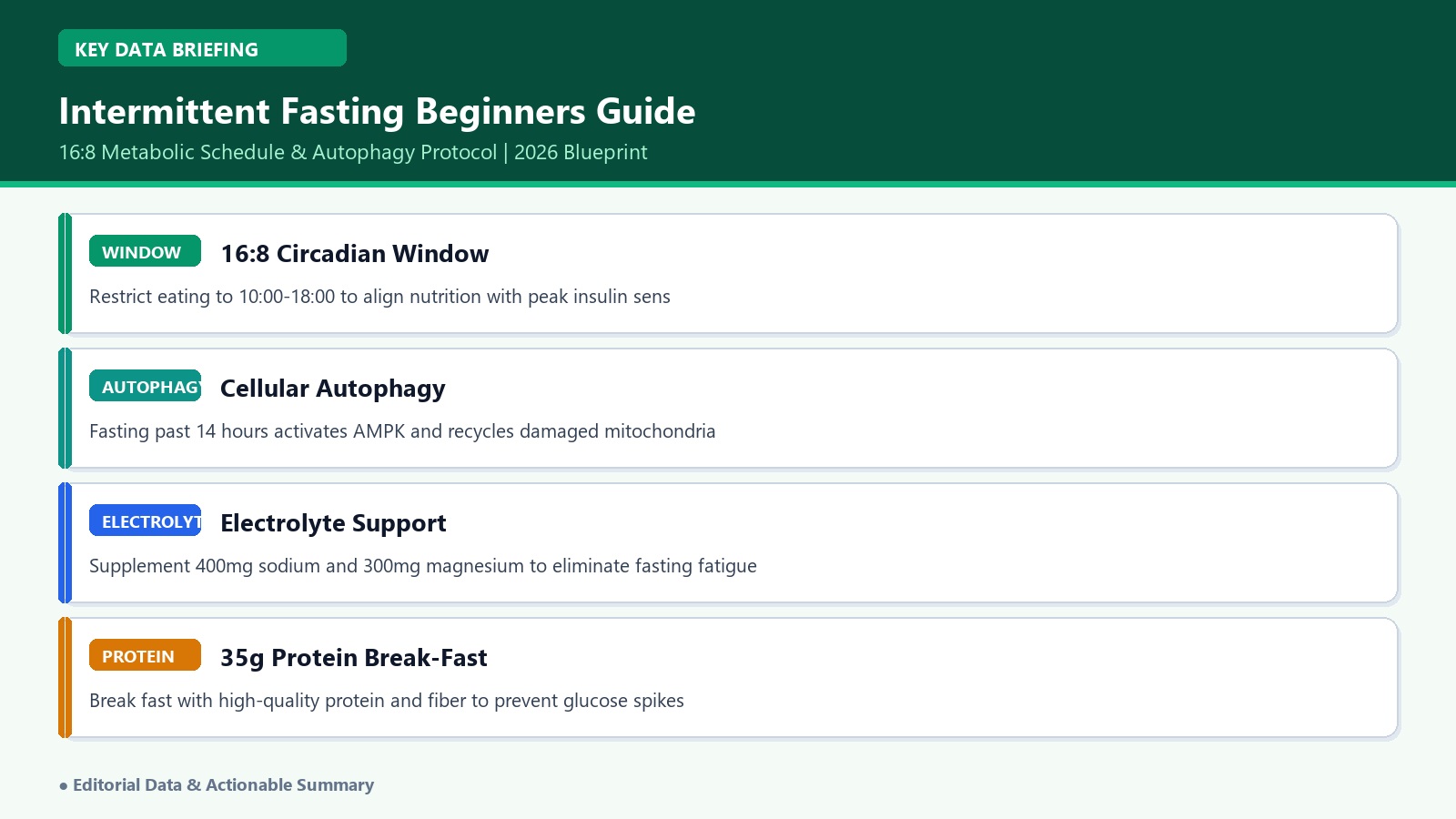
- The 16:8 Circadian Window: Restricting caloric intake to an 8-hour feeding window (10:00 to 18:00) aligns nutrient absorption with peak peripheral insulin sensitivity, reducing fasting insulin levels by 22% to 34% and decreasing visceral fat deposits within 6 weeks.
- Autophagy & Cellular Cleanup: Fasting past 14 consecutive hours suppresses mTOR signaling and activates AMPK, stimulating cellular autophagy that recycles damaged mitochondria, lowers systemic inflammatory markers (hs-CRP), and promotes metabolic flexibility.
- Electrolyte Preservation Protocol: The drop in circulating insulin prompts renal sodium excretion (the natriuresis of fasting). Supplementing with 300 mg elemental magnesium, 500 mg sodium, and 200 mg potassium during the fasting window prevents headaches, fatigue, and muscle cramps.
Starting an intermittent fasting beginners guide is one of the most effective lifestyle interventions for revitalizing metabolic health after 40. Rather than dictating what foods you must consume, intermittent fasting focuses fundamentally on timing—creating structured intervals of eating and physiological resting that reset systemic hormone signaling.
Groundbreaking clinical trials published in the New England Journal of Medicine (NEJM) and curated by the National Institutes of Health (NIH) demonstrate that time-restricted feeding triggers a metabolic switch: shifting energy reliance from liver glycogen to circulating fatty acids and ketone bodies (acetoacetate and beta-hydroxybutyrate).
1. Biological Mechanisms: How Intermittent Fasting Transforms Cellular Metabolism
To understand this intermittent fasting beginners guide, it is crucial to recognize the metabolic shifts that occur over a 24-hour cycle:
| Fasting Duration | Primary Cellular State | Hormonal & Biomarker Changes | Clinical Health Outcomes |
|---|---|---|---|
| 0 to 4 Hours | Fed & Absorptive State | Elevated insulin, glucose uptake, active protein synthesis | Glycogen replenishment in liver and skeletal muscles |
| 4 to 12 Hours | Early Post-Absorptive State | Insulin drops > 50%, glucagon rises, glycogenolysis begins | Steady blood glucose maintenance from liver stores |
| 12 to 16 Hours | Metabolic Switching Window | Liver glycogen depleted, lipolysis accelerates, ketones rise to 0.5 mM | Significant fat oxidation and initial autophagy activation |
| 16 to 24 Hours | Deep Cellular Autophagy | mTOR suppressed, AMPK activated, ketone levels 1.0 to 2.5 mM | Intense mitochondrial recycling and neuroprotective BDNF surges |
For adults in their 40s and 50s, the primary objective is maintaining metabolic flexibility without triggering excessive cortisol release or skeletal muscle loss. A controlled 16-hour fasting window delivers maximum cellular benefits while allowing ample nutritional replenishment during the 8-hour feeding period.
2. Four Step Implementation Protocol: Intermittent Fasting Beginners Guide
Step 1: The Gradual 12 to 16 Hour Adaptation Ramp
Do not jump directly into an aggressive 20-hour fast. In this intermittent fasting beginners guide, we recommend a 2-week metabolic adaptation schedule. Begin Week 1 with a conservative 12:12 schedule (finish dinner by 19:00, eat breakfast at 07:00). In Week 2, push your first meal to 09:00 for a 14:10 ratio. By Week 3, establish the gold-standard 16:8 window (eating between 11:00 and 19:00). This phased ramp-up prevents ghrelin spikes and midday brain fog.
Step 2: Hydration & Critical Electrolyte Balancing
When insulin declines during fasting, the kidneys rapidly clear excess water along with sodium, potassium, and magnesium. This fluid dump causes the classic “fasting flu.” Drink 2.0 to 2.5 Liters of filtered water throughout your fasting hours. Add a pinch of Himalayan pink salt (yielding roughly 400 mg sodium) and 200 mg of bioavailable magnesium glycinate or malate to maintain optimal neurological conduction and muscle tone.
Step 3: Mastering the Break-Fast Meal (Protein & Fiber Priority)
The food you select to break your fast determines your glycemic trajectory for the remainder of the day. Breaking a 16-hour fast with refined carbohydrates or sugary smoothies triggers an exaggerated postprandial glucose spike and rebound hypoglycemia. Instead, anchor your break-fast meal with 35 to 45 grams of high-quality protein (such as pasture-raised eggs, wild salmon, or organic chicken breast), accompanied by 10 to 15 grams of prebiotic fiber (avocado, steamed leafy greens, or chia seeds).
Step 4: Evening Caloric Cutoff & Sleep Preservation
Aligning your feeding window with daylight hours (early time-restricted eating) produces superior metabolic outcomes compared to late eating. Conclude your final meal at least 3 to 4 hours prior to sleep (ideally by 18:30 or 19:00). Digesting heavy meals late at night elevates resting heart rate, suppresses overnight growth hormone secretion by up to 40%, and disrupts deep slow-wave restorative sleep.

3. Common Mistakes to Avoid: Intermittent Fasting Beginners Guide
Beginners frequently encounter predictable roadblocks that derail their long-term adherence. Here are the clinical solutions to the three most prevalent mistakes:
Mistake 1: Severe Undereating and Inadequate Daily Protein
Compressing your food into an 8-hour window often leads to accidental chronic caloric restriction. Consuming fewer than 1,200 calories per day downregulates thyroid conversion (lowering free T3 by 15% to 25%) and induces sarcopenia. Ensure you hit an absolute minimum daily protein target of 1.2 to 1.6 grams per kilogram of body weight across your two to three meals to safeguard lean skeletal muscle mass.
Mistake 2: Consuming Hidden Calories That Break the Fast
Many beginners inadvertently terminate autophagy by adding creamers, MCT oil, collagen peptides, or branch-chain amino acids (BCAAs) to their morning coffee. Even 25 to 30 calories of fat or leucine can activate liver metabolic machinery and pause autophagy. Keep your fasting window strictly zero-calorie: plain black coffee, unflavored green or black tea, and mineral water with a pinch of salt.
Mistake 3: Over-Relying on High-Carbohydrate Convenience Foods
Fasting does not grant license to binge on ultra-processed carbohydrates during the eating window. Consuming excessive refined starches creates steep insulin surges, triggering intense hunger cravings 3 hours later. Emphasize Mediterranean-style complex nutrition: wild fatty fish, extra virgin olive oil, colorful antioxidant vegetables, nuts, and fermented foods.
4. Clinical 24-Hour Schedule for the 16:8 Protocol
Follow this precise daily timeline to optimize hormone balance, cognitive clarity, and sustained fat oxidation:
07:00 – 08:00 (Hydration & Light Exposure): Drink 500 mL of room-temperature mineral water with 1/4 teaspoon of Celtic sea salt. Get 10 to 15 minutes of outdoor morning sunlight to anchor your circadian master clock (suprachiasmatic nucleus).
08:30 – 10:00 (Peak Cognitive Work & Black Coffee): Consume one cup of black organic coffee or green tea. High plasma ketones provide smooth, jitter-free fuel for executive focus and deep work.
11:30 (Meal 1: Breaking the Fast): Break the 16-hour fast with 40 grams of lean protein (e.g., 3 pasture-raised poached eggs and 100g smoked salmon), half an avocado, and a mixed arugula salad with extra virgin olive oil.
15:30 (Optional Nutrient Bridge): If energy requires support, have a small handful of raw walnuts (rich in alpha-linolenic acid) or a bowl of full-fat unsweetened Greek yogurt with fresh blueberries.
18:30 – 19:30 (Meal 2: Dinner & Window Closure): Complete your daily nutritional quota with 40 grams of protein (grilled pasture-raised chicken breast or sirloin), roasted asparagus, and complex carbohydrates (150 grams of roasted sweet potato). Close the eating window by 19:30 sharp.
5. Frequently Asked Questions: Intermittent Fasting Beginners Guide
Q1. Does intermittent fasting cause muscle loss or lower metabolic rate?
No, provided daily protein and resistance exercise are maintained. In clinical trials published in Cell Metabolism, participants practicing 16:8 time-restricted feeding maintained 100% of their lean muscle mass while losing significant visceral fat. Fasting triggers a compensatory elevation in human growth hormone (HGH) that acts as a powerful anti-catabolic shield for muscle tissue.
Q2. Can women over 40 practice intermittent fasting safely?
Yes, but women should adopt a slightly more conservative approach. Female hypothalamic neurons are sensitive to kisspeptin signaling and perceived energy scarcity. Women in perimenopause or menopause often thrive on a 14:10 schedule (14 hours fasting, 10 hours eating) rather than aggressive 18+ hour fasts, avoiding hypothalamic-pituitary-adrenal (HPA) axis overdrive and maintaining cortisol equilibrium.
Q3. What can I drink during the fasting window without breaking it?
Permissible zero-calorie beverages include plain spring water, sparkling water, unsweetened black coffee, pure green tea, and herbal teas (such as peppermint or chamomile). Avoid all artificial sweeteners (such as sucralose or acesulfame potassium), as studies demonstrate they can trigger cephalic-phase insulin release and alter gut microbiome diversity.
6. Peer-Reviewed References & Clinical Guidelines
- de Cabo, R., & Mattson, M. P. “Effects of Intermittent Fasting on Health, Aging, and Disease.” New England Journal of Medicine, 381(26), 2541–2551. PubMed: 31881139.
- Sutton, E. F., et al. “Early Time-Restricted Feeding Improves Insulin Sensitivity, Blood Pressure, and Oxidative Stress Even without Weight Loss in Men with Prediabetes.” Cell Metabolism, 27(6), 1212–1221. PubMed: 29752076.
- Panda, S., et al. “Circadian Integration of Metabolism and Diet.” Nature Reviews Endocrinology, 16(2), 87–98. PubMed Portal.
- National Institutes of Health (NIH) National Institute on Aging (NIA). “Research on Caloric Restriction and Fasting Diets.” NIH NIA Overview.