
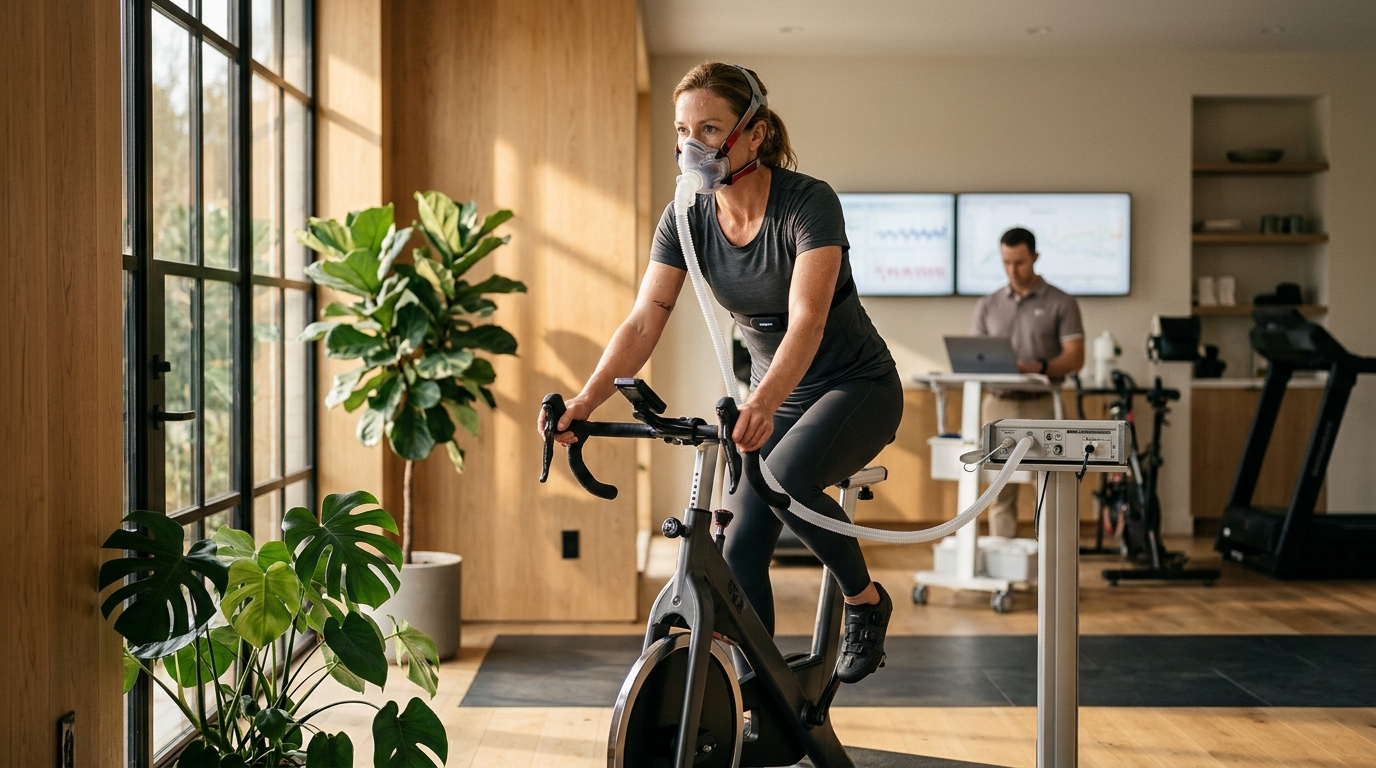
EXECUTIVE CLINICAL BRIEFING | CARDIORESPIRATORY LONGEVITY
How to Calculate VO2 Max by Age: The 2026 Evidence-Based Longevity Blueprint
- The Gold Standard Longevity Biomarker: Groundbreaking epidemiologic data from the Cleveland Clinic Foundation (122,007 patients over 8.4 years) confirms that high cardiorespiratory fitness cuts all-cause mortality hazard ratios by up to 500% (5.0x) compared to the lowest performance quartile—delivering greater survival benefit than smoking cessation, blood pressure normalization, or coronary artery disease management.
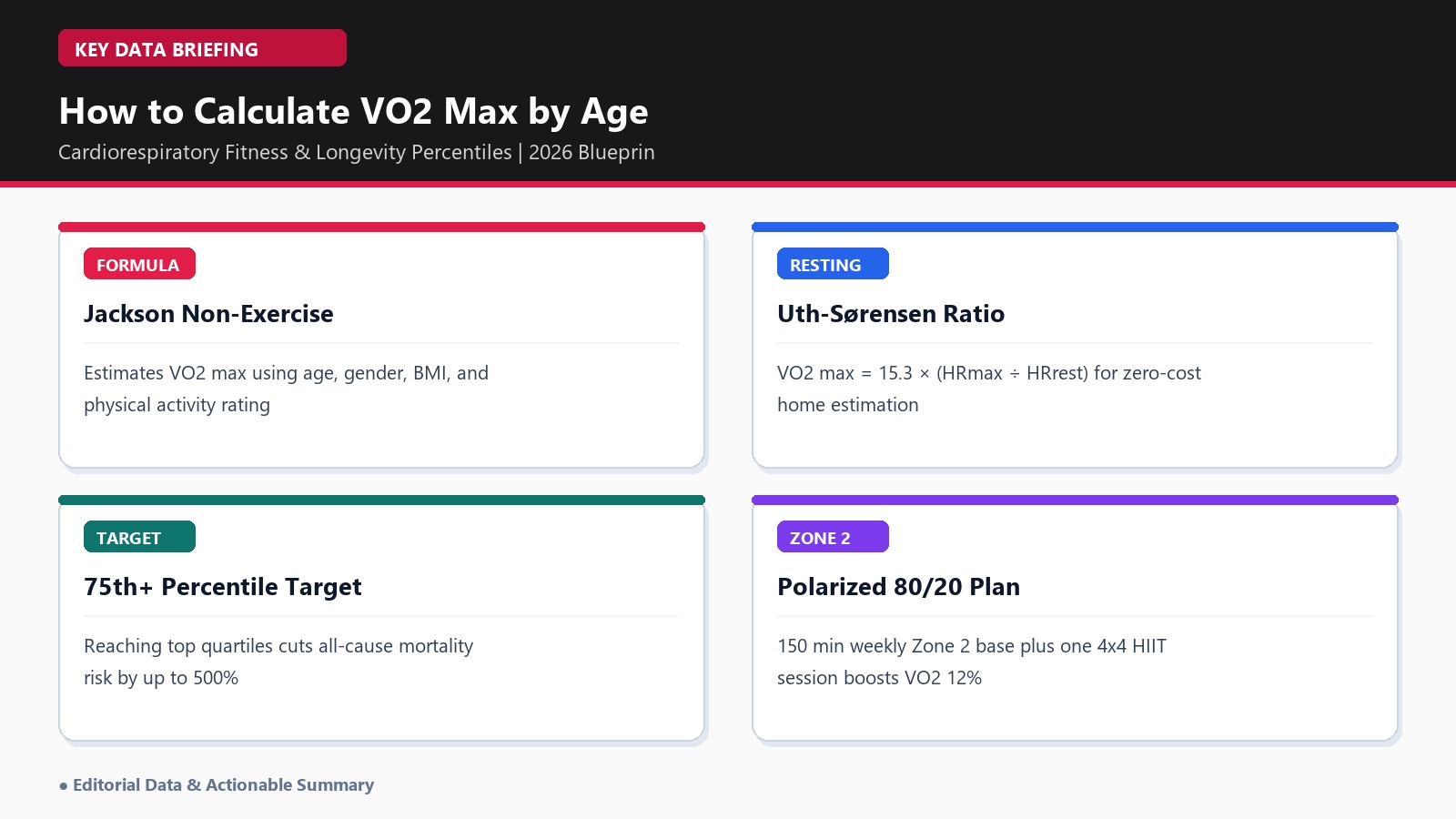
- Non-Exercise Clinical Formulas: You do not need a $500 metabolic cart test to calculate your fitness baseline. The validated Uth-Sørensen ratio [VO2 max = 15.3 × (HRmax ÷ HRrest)] and the Jackson non-exercise regression equation predict laboratory VO2 max within ±3.2 mL/kg/min using resting heart rate, BMI, and physical activity rating (PAR).
- The 75th Percentile Longevity Target: Adults over 40 should aim for the 75th percentile or higher for their age bracket. Combining 150 to 180 minutes of Zone 2 aerobic base conditioning with one weekly session of Norwegian 4×4 intervals boosts measured VO2 max by 8% to 14% within 12 weeks.
Learning how to calculate vo2 max by age provides adults over 40 with the single most potent objective window into biological aging and cardiovascular reserve. While blood panels and lipid fractions assess metabolic risk factors, cardiorespiratory fitness (CRF) measures the integrated capacity of your pulmonary, cardiovascular, and skeletal muscle mitochondria to transport and extract oxygen under maximal exertion.
In landmark epidemiological research published in the Journal of the American Medical Association (JAMA Network Open) and curated by the National Institutes of Health (NIH), researchers demonstrated that cardiorespiratory fitness displays an inverse, graded association with all-cause mortality without any upper ceiling of benefit. Simply moving from the lowest fitness quintile to the second-lowest quintile yields a 50% reduction in cardiovascular event risk.
1. Clinical Reference Standards: How to Calculate VO2 Max by Age Norms
To evaluate where your aerobic capacity stands when learning how to calculate vo2 max by age, clinicians cross-reference individual values (expressed in milliliters of oxygen consumed per kilogram of body weight per minute, or mL/kg/min) against Cooper Institute and Mayo Clinic percentiles across 4 distinct age brackets:
| Age Bracket & Sex | Low (< 25th %ile) | Moderate (25th–49th) | Good (50th–74th) | Elite / Top Decile (> 90th) |
|---|---|---|---|---|
| Men Age 40–49 | < 33.6 mL/kg/min | 33.6 – 38.3 mL/kg/min | 38.4 – 43.7 mL/kg/min | > 48.0 mL/kg/min |
| Women Age 40–49 | < 26.5 mL/kg/min | 26.5 – 30.9 mL/kg/min | 31.0 – 35.8 mL/kg/min | > 40.0 mL/kg/min |
| Men Age 50–59 | < 30.2 mL/kg/min | 30.2 – 35.2 mL/kg/min | 35.3 – 40.5 mL/kg/min | > 45.3 mL/kg/min |
| Women Age 50–59 | < 22.8 mL/kg/min | 22.8 – 26.9 mL/kg/min | 27.0 – 31.4 mL/kg/min | > 35.8 mL/kg/min |
| Men Age 60–69 | < 26.5 mL/kg/min | 26.5 – 31.4 mL/kg/min | 31.5 – 36.4 mL/kg/min | > 41.2 mL/kg/min |
| Women Age 60–69 | < 20.1 mL/kg/min | 20.1 – 23.8 mL/kg/min | 23.9 – 28.2 mL/kg/min | > 32.5 mL/kg/min |
In sedentary populations, VO2 max declines at a predictable rate of roughly 10% per decade after age 30, accelerating to 15% per decade after age 65 due to reductions in maximal heart rate (HRmax), stroke volume, and capillary density. However, dedicated structured training can cut this natural decline by half, preserving biological vitality equivalent to someone 15 years younger.
2. Four Validated Protocols: How to Calculate VO2 Max by Age
Protocol 1: The Uth-Sørensen Resting Heart Rate Formula (Zero-Cost Home Test)
Developed by Danish exercise physiologists, this formula provides an immediate, reliable estimation without requiring strenuous exertion. It relies on the linear relationship between cardiac stroke volume and heart rate ratios:
VO2 Max = 15.3 × (HRmax ÷ HRrest)
To calculate, determine your resting heart rate (HRrest) immediately upon waking (e.g., 58 bpm). Calculate your estimated HRmax using the Tanaka formula: 208 – (0.7 × Age). For a 48-year-old: HRmax = 208 – (0.7 × 48) = 174.4 bpm. Calculate: 15.3 × (174.4 ÷ 58) = 46.0 mL/kg/min.
Protocol 2: Jackson Non-Exercise Regression Equation (Clinical Epidemiological Model)
Validated across thousands of subjects at the Cooper Institute, this multi-variable equation estimates VO2 max using easily measured demographic metrics:
VO2 Max = 56.363 + (1.921 × PAR) – (0.381 × Age) – (0.754 × BMI) + (10.987 × Gender)
(Note: Gender = 1 for male, 0 for female. PAR represents Physical Activity Rating on a 0 to 7 scale: 0 = completely sedentary, 3 = 1 hour moderate exercise weekly, 7 = 3+ hours vigorous training weekly). This equation exhibits a high correlation (r = 0.81) with direct gas analysis.
Protocol 3: The Rockport 1-Mile Fitness Walking Test (Low-Impact Submaximal Field Test)
Ideal for beginners or individuals with joint limitations. Walk exactly 1 mile (1,609 meters) on a flat running track as briskly as possible without jogging. Record your total time in minutes and fractional seconds (e.g., 14 min 30 sec = 14.5 min) and measure heart rate immediately during the final 10 seconds of the walk. Input variables into the standardized Kline equation to determine aerobic power within ±5% accuracy.
Protocol 4: The Cooper 12-Minute Maximal Run Test (High-Accuracy Field Standard)
Developed by Dr. Kenneth Cooper for military aerospace personnel, this test provides the highest correlation (r = 0.90) to laboratory metabolic carts. After a thorough 10-minute dynamic warm-up, run or jog at maximal sustainable pace for exactly 12 minutes on a track or calibrated treadmill. Calculate using total distance covered in meters (d12):
VO2 Max = (Distance in meters – 504.9) ÷ 44.73
For example, covering 2,400 meters yields: (2,400 – 504.9) ÷ 44.73 = 42.36 mL/kg/min.
3. Clinical Training Framework: How to Elevate VO2 Max After 40
Once you discover how to calculate vo2 max by age and identify your current baseline, the clinical prescription for improving oxygen uptake relies on a polarized 80/20 training distribution:
Pillar 1: Zone 2 Mitochondrial Base (80% of Weekly Training Volume)
Zone 2 corresponds to the physiological intensity where lactate clearance matches lactate production (blood lactate 1.5 to 2.0 mmol/L). In this zone, fatty acid oxidation is maximized, stimulating mitochondrial biogenesis and capillary capillarization. Perform 150 to 200 minutes per week across 3 to 4 sessions at a conversational pace (roughly 65% to 75% of HRmax).
Pillar 2: The Norwegian 4×4 High-Intensity Protocol (20% of Training Volume)
Originating from the Norwegian University of Science and Technology (NTNU), the 4×4 protocol is clinically proven to be the most effective stimulus for left-ventricular cardiac remodeling and stroke volume expansion. Complete 4 intervals of 4 minutes at 85% to 95% HRmax, separated by 3 minutes of active recovery (Zone 1). Executing this protocol just once weekly increases VO2 max by 0.5% per week over 10 weeks.
Pillar 3: Eccentric Strength Training & Respiratory Muscle Conditioning
Peripheral oxygen extraction (arteriovenous oxygen difference, or a-vO2 diff) requires adequate skeletal muscle mass and capillary transit time. Integrate 2 full-body resistance sessions weekly emphasizing multi-joint compound movements (squats, Romanian deadlifts, overhead presses). Incorporating inspiratory muscle training (IMT at 30 breaths daily against resistance) lowers the respiratory metaboreflex, directing blood flow to working limbs during maximal efforts.
4. Common Testing Errors: How to Calculate VO2 Max by Age Accurately
When attempting to track aerobic improvements, avoiding common measurement artifacts ensures your calculated trends reflect true physiological adaptation:
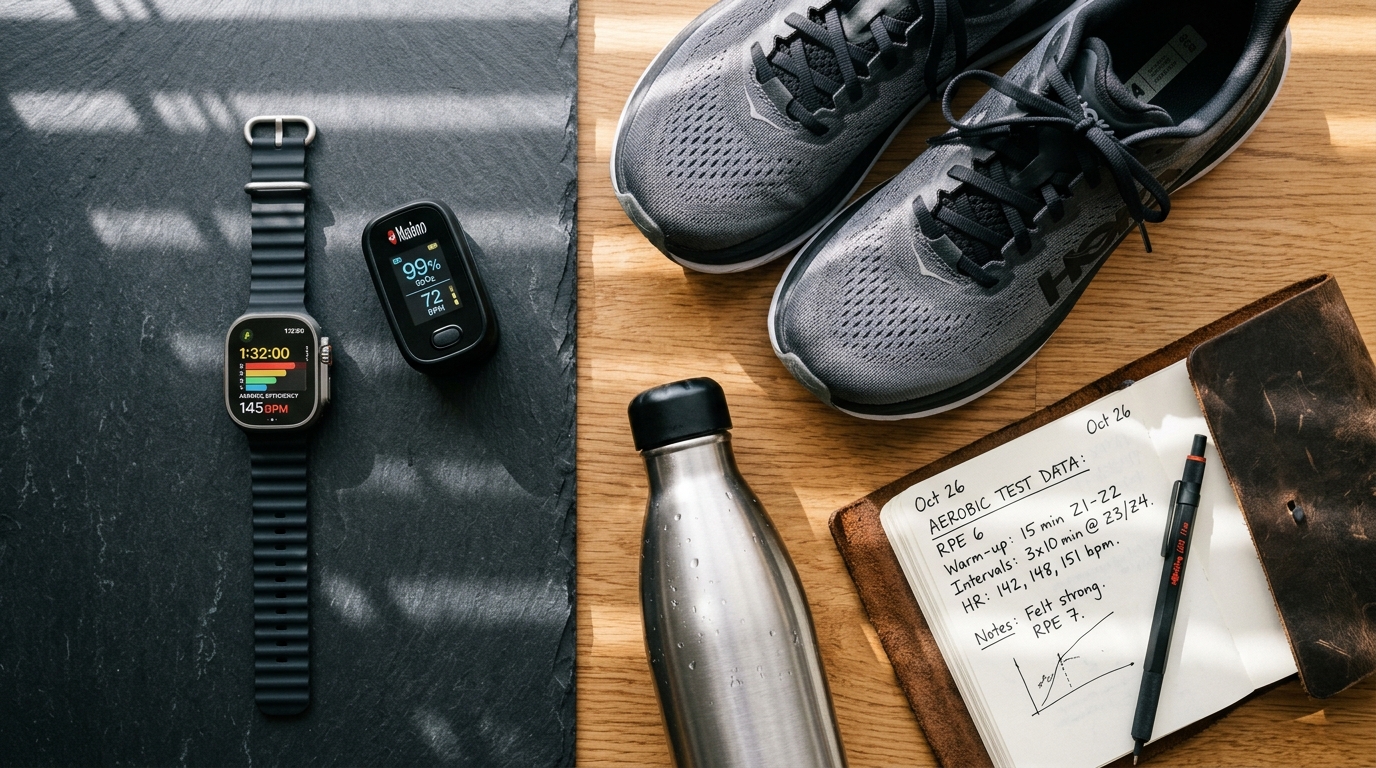
1. Relying on Wrist-Based Optical Sensors During Maximal Sprints: Optical photoplethysmography (PPG) sensors suffer from motion cadence artifacts and cutaneous vasoconstriction. During field tests, use a chest-strap electrocardiogram (ECG) monitor (such as a Polar H10) to obtain millisecond-accurate R-R interval tracking.
2. Ignoring Heat Index and Elevation Confounders: Ambient temperatures above 26°C (78°F) trigger cutaneous vasodilation, diverting up to 1.5 L/min of cardiac output away from exercising muscles, artificially elevating heart rate and underestimating your true VO2 score by 4% to 8%. Conduct follow-up re-tests under standardized temperature and humidity conditions.
3. Failing to Recalibrate for Significant Body Mass Changes: Because VO2 max is indexed to total body weight (mL/kg/min), losing 5 kilograms of adipose tissue while maintaining identical cardiac output increases your relative VO2 score mathematically without any change in stroke volume. Always track both absolute VO2 (L/min) and relative VO2 (mL/kg/min) alongside body composition metrics.
5. Frequently Asked Questions: How to Calculate VO2 Max by Age
Q1. How accurate are smartwatch estimates (Apple Watch, Garmin, Whoop)?
Commercial smartwatches use proprietary machine-learning algorithms that compare GPS pace against heart rate slope during outdoor runs. Validated clinical comparison studies show modern smartwatches achieve a mean absolute percentage error (MAPE) of 4.8% to 6.2% compared to gold-standard breath-by-breath gas analysis. While absolute values may vary slightly, smartwatches excel at tracking multi-month directional trends.
Q2. Can an adult over 50 significantly improve VO2 max, or is it genetically predetermined?
While genetic heritability accounts for roughly 50% of baseline VO2 max (via the HERITAGE Family Study), the *trainability* of VO2 max remains robust throughout the entire lifespan. Clinical trials demonstrate that previously sedentary adults aged 50 to 75 who adhere to 12 weeks of structured endurance and interval training increase their VO2 max by 15% to 22%, expanding functional reserve and reversing decades of cardiovascular aging.
Q3. How often should you recalculate or re-test your VO2 max?
Physiological remodeling—such as left ventricular wall enlargement, mitochondrial enzyme upregulation (citrate synthase), and capillary angiogenesis—requires 6 to 8 weeks to consolidate. Re-testing via field protocols (such as the Cooper 12-minute run or Rockport walk) every 8 to 12 weeks is optimal. Recalculating weekly creates unnecessary testing fatigue and captures normal day-to-day autonomic noise.
6. Peer-Reviewed References & Clinical Guidelines
- Mandsager, K., et al. “Association of Cardiorespiratory Fitness with Long-term Mortality Among Adults Undergoing Exercise Treadmill Testing.” JAMA Network Open, 1(6), e183605. PubMed: 30646198.
- Ross, R., et al. “Importance of Assessing Cardiorespiratory Fitness in Clinical Practice: A Scientific Statement From the American Heart Association.” Circulation, 134(24), e653–e699. PubMed: 27881567.
- Uth, N., et al. “Estimation of VO2max from the Ratio Between HRmax and HRrest—The Heart Rate Ratio Method.” European Journal of Applied Physiology, 91(1), 111–115. PubMed: 14624296.
- National Institutes of Health (NIH) National Heart, Lung, and Blood Institute. “Physical Activity Guidelines and Cardiorespiratory Health.” NIH NHLBI Overview.