
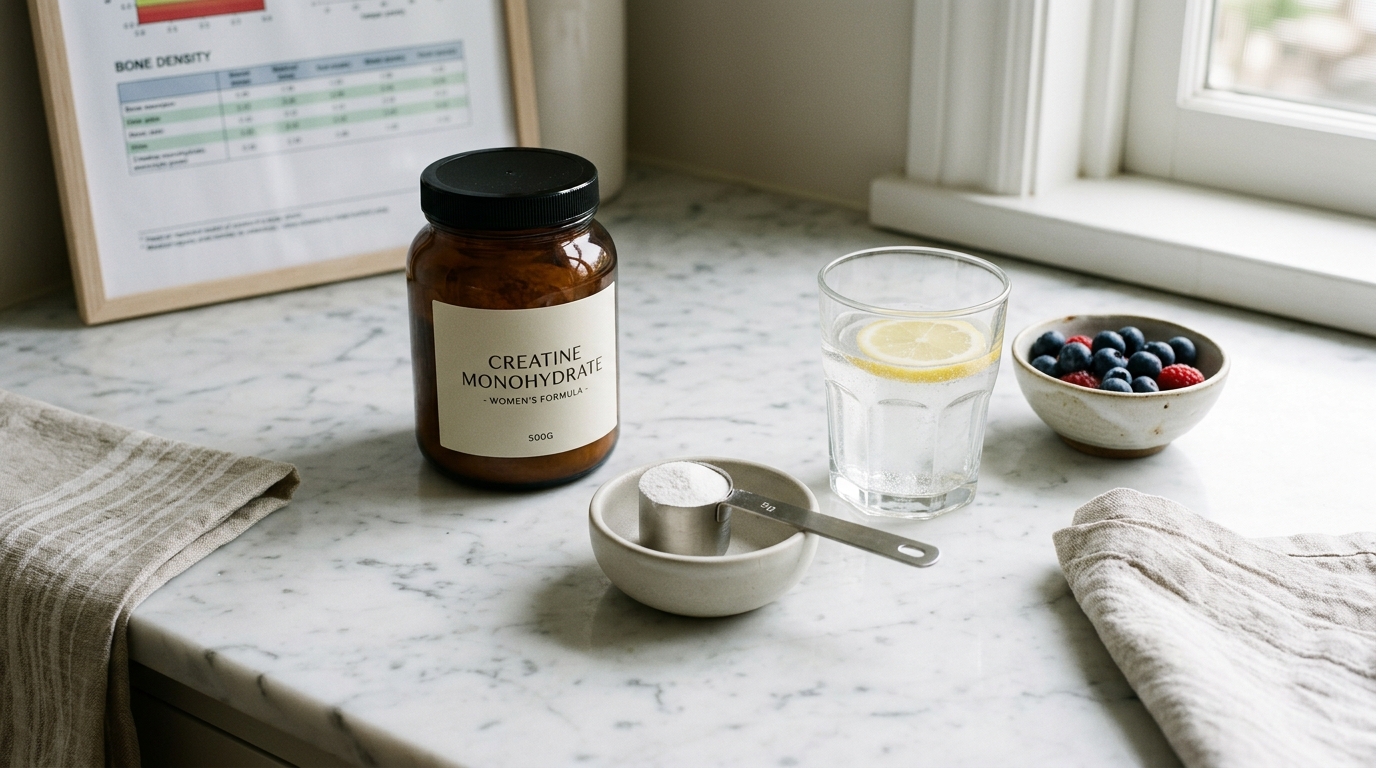
1-Minute Clinical Briefing
Creatine for Women After 40: Bone & Cognitive Protocol
Historically mislabeled as a bodybuilding supplement for men, creatine monohydrate is now recognized by geroscience as a premier longevity nutrient for women past 40. Estrogen fluctuations during perimenopause deplete brain phosphocreatine reserves and accelerate trabecular bone loss. A steady 3 to 5g daily intake restores neuronal ATP synthesis, blunts hormonal brain fog, stimulates osteoblasts during resistance training, and causes zero subcutaneous water retention when the loading phase is bypassed.
When women cross the age of 40, physiological shifts in 17β-estradiol directly impair cellular bioenergetics. Estrogen acts as a master regulator of cerebral glucose metabolism and muscle protein synthesis. As ovarian hormone output wanes during perimenopause, women frequently encounter unexplained cognitive fatigue, memory lapses, accelerated loss of Type II muscle fibers, and declining bone mineral density.
Deploying creatine for women after 40 bone and cognitive health provides an immediate biochemical bypass around these hormonal bottlenecks. By directly replenishing the intracellular phosphocreatine pool, creatine donates high-energy phosphate groups to regenerate adenosine triphosphate (ATP) in energy-intensive tissues—primarily the prefrontal cortex and skeletal bone matrix.
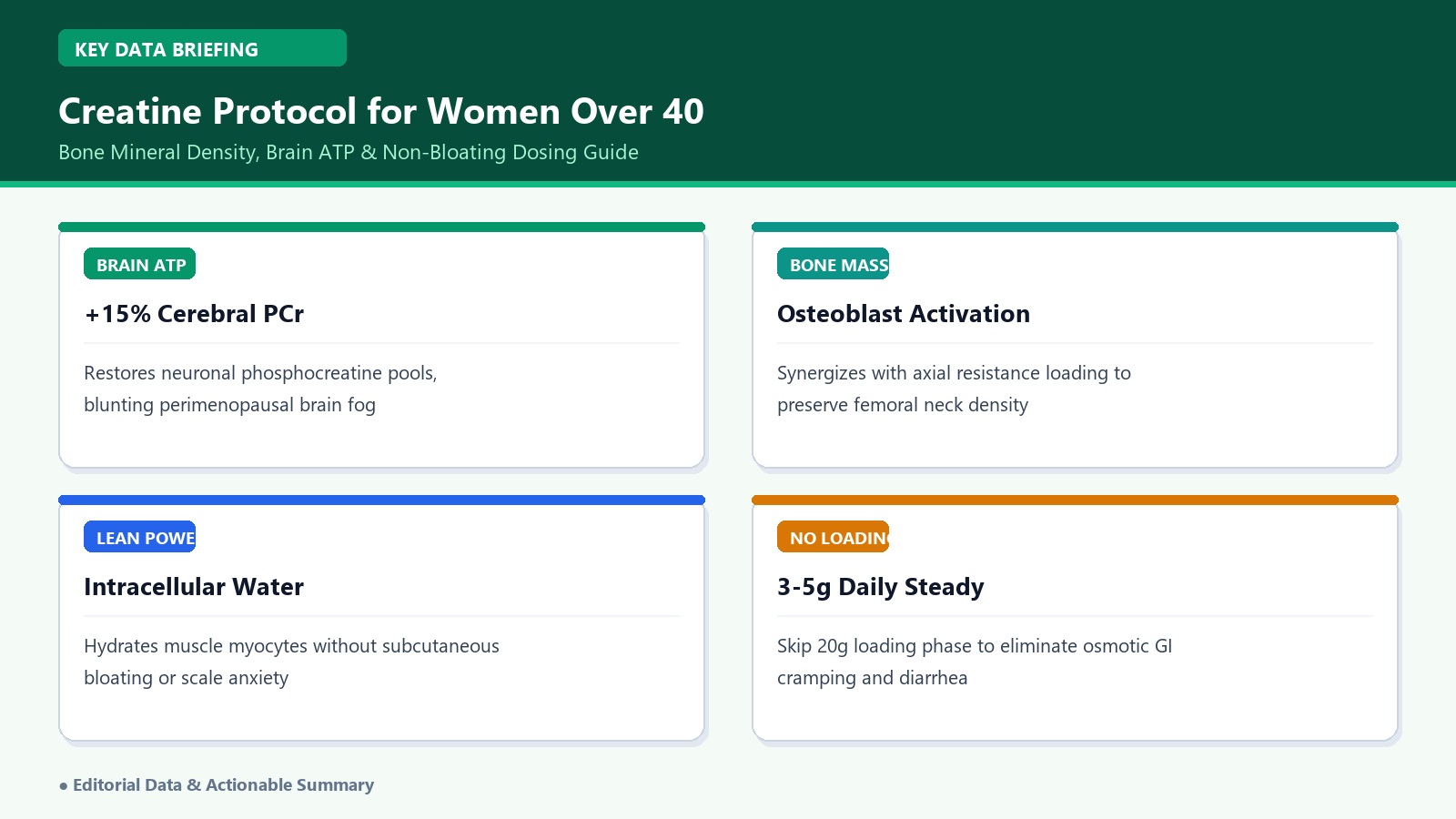
Figure 1: Cellular Bioenergetics of Creatine Across Bone, Brain, and Muscle in Women Over 40.
Comparative Bioenergetics: Creatine Forms vs. Inaction
The table below outlines how various creatine formulations and clinical approaches compare regarding brain bioenergetics, bone density retention, gastric tolerability, and systemic cellular hydration for women over 40.
| Supplement Strategy | Brain ATP & Fog Relief | Bone Mineral Synergy | Bloating & GI Tolerance |
|---|---|---|---|
| Micronized Monohydrate (Creapure®) | +9.2% to +15% frontal phosphocreatine elevation | Stimulates osteoblast differentiation + preserves femoral neck density | Zero subcutaneous bloat at 3-5g daily without loading phase |
| Creatine Hydrochloride (HCL) | Moderate brain uptake; limited direct human neuro-imaging data | Theoretical benefit, lacks long-term bone clinical trials | High water solubility, but acidic taste and 3x higher cost |
| Aggressive Loading (20g/day) | Rapid 5-day saturation; no added long-term cognitive advantage | Identical 12-week bone markers to steady 5g/day protocol | High risk of osmotic diarrhea, nausea, and acute water puffiness |
| Dietary Intake Alone (No Supps) | Brain phosphocreatine declines ~12% post-menopause | Normal age-related bone loss (1.5-2.0% annually after 45) | Neutral GI; requires consuming 1 kg raw beef daily to match 5g |

Figure 2: Daily adherence to a steady 3-5g micronized creatine protocol delivers sustained neuromuscular vitality.
1. Reversing Perimenopausal Brain Fog: The Cerebral ATP Axis
The human brain consumes roughly 20% of the body’s basal metabolic energy despite accounting for only 2% of total body weight. Neuronal communication, synaptic plasticity, and neurotransmitter synthesis depend entirely on the creatine kinase enzyme reaction, which transfers phosphate from phosphocreatine to replenish ADP into active ATP.
Magnetic resonance spectroscopy (MRS) clinical studies show that women exhibit naturally lower resting brain creatine concentrations in the frontal and temporal lobes compared to men. Furthermore, estrogen normally upregulates endogenous creatine synthesis in the liver. When estrogen drops during perimenopause, brain phosphocreatine declines precipitously, manifesting as:
- Working Memory Lapses: Difficulty holding numbers, multi-tasking, or recalling names during complex cognitive tasks.
- Mental Exhaustion Under Sleep Deprivation: Heightened cognitive vulnerability to insomnia, night sweats, and interrupted slow-wave sleep.
- Reduced Processing Speed: Slower verbal fluency and delayed recall during periods of high mental stress or executive demand.
Supplementation with 3 to 5 grams of micronized creatine monohydrate crosses the blood-brain barrier via the SLC6A8 transporter, increasing cerebral phosphocreatine by 9% to 15%. This cellular fuel buffer preserves cognitive stamina even during periods of hormonal fluctuation or sleep fragmentation.
2. Bone Mineral Density & Osteoblast Activation
Osteoporosis is a silent clinical crisis. Women can lose up to 20% of their bone mineral density in the five to seven years immediately following menopause due to osteoclastic resorption outstripping osteoblastic bone formation. While calcium and vitamin D3/K2 supply the raw building blocks, bone remodeling is an energy-demanding metabolic process.
Osteoblasts rely directly on the creatine kinase reaction to synthesize collagen matrix, alkaline phosphatase, and osteocalcin. In landmark 12-month and 2-year clinical trials published in Medicine & Science in Sports & Exercise, postmenopausal women participating in resistance training combined with daily creatine experienced:
Clinical Bone Remodeling Outcomes in 40+ Females
1. Femoral Neck Preservation: Significant attenuation of bone mineral loss at the femoral neck (the primary site of hip fracture).
2. Osteoclast Downregulation: Marked reduction in urinary N-telopeptide cross-links (NTx), a key clinical marker of active bone resorption.
3. Trabecular Microarchitecture: Enhanced geometric bending strength and cortical thickness when combined with axial mechanical loading.
3. Sarcopenia Defense & Debunking the “Water Weight” Myth
The single most common barrier preventing women over 40 from utilizing creatine is the fear of weight gain, bloating, or a “bulky” appearance. This myth stems from misunderstanding cellular fluid distribution and old-school bodybuilding protocols.
Creatine is an osmolite. When absorbed, it pulls water strictly into the intracellular compartment of muscle myocytes—not into the extracellular or subcutaneous space beneath the skin. This intracellular cell swelling acts as a potent anabolic trigger:
- Intracellular Hydration: Elevates cellular turgor, which inhibits myocyte proteolysis (muscle protein breakdown) and upregulates myogenic gene expression.
- Zero Facial or Adipose Puffiness: Subcutaneous puffiness is caused by high sodium-to-potassium ratios and elevated cortisol, not by intracellular phosphocreatine storage.
- Functional Power & Balance: Improves force production in fast-twitch motor units, dramatically lowering fall risk and functional frailty.
4. The 2026 Non-Bloating Daily Dosing Protocol
To achieve full cellular saturation without gastrointestinal cramping, osmotic diarrhea, or acute scale anxiety, adhere to the modern geroscience dosing guidelines outlined below.
1
Form Selection: Choose 100% pure micronized creatine monohydrate (Creapure® tested for heavy metals and purity). Avoid buffered or ethyl-ester gimmicks.
2
Skip the Loading Phase: Do NOT consume 20g/day. Take 3 to 5 grams once daily. While full saturation takes 21 to 28 days instead of 5 days, gastrointestinal tolerance is virtually 100%.
3
Full Dissolution & Hydration: Dissolve 5g completely in 350 to 500 mL of room-temperature water, herbal tea, or post-workout smoothie. Undissolved crystals can draw water into the intestinal lumen.
4
Timing & Co-Ingestion: Consume with a meal containing carbohydrates or protein (e.g., morning oats with whey or post-resistance meal) to leverage insulin-mediated uptake into muscle and brain tissue.
Frequently Asked Questions
Will taking creatine cause weight gain or water retention in women after 40?
No subcutaneous fat or bloating occurs. Any mild scale increase (typically 0.5 to 1.5 kg) is 100% intracellular hydration inside muscle tissue, which boosts basal metabolic rate and cellular protein synthesis. When you skip the 20g loading phase and take 3 to 5g daily, most women experience zero sudden scale fluctuations.
How long does it take for creatine to improve perimenopausal brain fog?
While muscle saturation takes roughly 3 to 4 weeks at 5g per day, clinical studies evaluating cognitive tasks report measurable improvements in executive function, working memory recall, and reaction speed within 2 to 3 weeks of consistent daily supplementation.
Does creatine harm female kidneys or elevate creatinine blood tests?
In individuals with healthy baseline renal function, decades of clinical trials prove creatine is entirely safe. It may produce a benign, transient elevation in serum creatinine on routine blood tests (since creatinine is a natural metabolic breakdown product), but kidney filtration markers like cystatin C and eGFR remain completely uncompromised.
Do I need to cycle off creatine, or can I take it year-round?
Creatine does not downregulate your body’s natural baseline receptors permanently. Endogenous synthesis resumes normally within weeks if discontinued. For women past 40 seeking ongoing bone density preservation and brain bioenergetics, continuous year-round daily supplementation is standard clinical practice.
Medical Disclaimer: This article is intended strictly for educational and scientific research purposes and does not replace medical advice, diagnosis, or treatment. Women with pre-existing renal disease or chronic metabolic conditions should consult their licensed healthcare practitioner before beginning creatine supplementation.