

Muscle Longevity & Anabolic Resistance Protocol
Sarcopenia Prevention in Older Adults Exercise Protein: The 2026 Clinical Muscle Protocol
Establishing an evidence-based approach to sarcopenia prevention in older adults exercise protein management is the single most critical intervention for physical autonomy and metabolic vitality after age 40. Skeletal muscle mass declines at a progressive rate of 3% to 8% per decade after 40, accelerating to over 15% per decade beyond age 70. Reversing age-related anabolic resistance requires surpassing a strict per-meal leucine threshold of 2.7g to 3.5g, consuming 1.2g to 1.6g of daily protein per kilogram of body weight, and executing 2 to 3 weekly progressive resistance sessions targeting multi-joint mechanical tension.
Prevalence: 15% to 30% of adults over 60
Leucine Trigger: 2.7g to 3.5g per meal
Daily Protein Target: 1.2 to 1.6 g/kg
Resistance Frequency: 2 to 3 days weekly (RPE 7-8)
Skeletal muscle is far more than a locomotor apparatus; it represents the largest metabolic sink and primary endocrine regulator in the human body. In healthy adults, skeletal muscle accounts for approximately 80% of all postprandial glucose disposal via insulin-mediated GLUT4 translocation. Furthermore, contracting skeletal muscle fibers synthesize and secrete hundreds of protective myokines—including interleukin-15 (IL-15), irisin, and brain-derived neurotrophic factor (BDNF)—which systemically dampen chronic low-grade inflammation, enhance hepatic lipid oxidation, and preserve hippocampal neuroplasticity.
However, as biological aging progresses, the neuromuscular system undergoes insidious structural degradation. Between the fourth and eighth decades of life, individuals typically lose up to 50% of their spinal motor neurons, leading to the selective denervation and subsequent apoptosis of Type II fast-twitch glycolytic muscle fibers.
Concurrently, satellite cell regenerative capacity diminishes, and dormant fibro-adipogenic progenitors infiltrate interstitial muscle compartments, culminating in myosteatosis—the toxic accumulation of intramuscular fat. Achieving lasting sarcopenia prevention in older adults exercise protein optimization requires directly countering these structural vulnerabilities through targeted nutritional biochemistry and progressive mechanical loading.
Clinical Screening: The 30-Second Sarcopenia Self-Assessment
Before beginning progressive loading, perform this validated 3-part diagnostic baseline endorsed by the European Working Group on Sarcopenia in Older People (EWGSOP2):
• 1. The 30-Second Chair Stand Test: Sit in a standard armless chair (seat height 43 cm) with arms crossed over your chest. Count the maximum number of full stands completed in exactly 30 seconds. Performing fewer than 14 stands indicates clinically meaningful lower-limb functional weakness.
• 2. Handgrip Dynamometry: Maximum voluntary isometric grip strength should exceed 28 kg in men and 18 kg in women. Values below these thresholds strongly correlate with accelerated all-cause mortality and mobility impairment.
• 3. The 4-Meter Gait Speed Test: Walking 4 meters at a comfortable pace taking longer than 5.0 seconds (gait speed < 0.8 m/s) defines severe physical frailty requiring immediate multimodal rehabilitation.
• 4. Appendicular Lean Mass Index (ALMI): On a medical-grade dual-energy X-ray absorptiometry (DEXA) scan, an appendicular lean mass divided by height squared under 7.0 kg/m² for men or 5.5 kg/m² for women confirms objective sarcopenia.
The Anabolic Resistance Paradox: Why Standard Protein RDA Fails After 50
The foundational obstacle in sarcopenia prevention in older adults exercise protein prescription is the physiological phenomenon known as “anabolic resistance.” In a healthy 25-year-old adult, consuming as little as 15g to 20g of intact protein containing 1.5g of the essential branched-chain amino acid L-leucine is sufficient to activate the mechanistic target of rapamycin complex 1 (mTORC1) and stimulate robust muscle protein synthesis (MPS) for 3 to 4 hours.
In older adults, however, chronic low-grade systemic inflammation (inflammaging), elevated reactive oxygen species (ROS), blunted microvascular perfusion, and decreased intracellular Sestrin2 leucine receptor sensitivity profoundly dampen mTORC1 signaling. When an older individual consumes a modest 15g protein snack, amino acid concentrations rise in the blood, but intramuscular signaling pathways remain dormant. This explains why the outdated Recommended Dietary Allowance (RDA) of 0.8 g/kg per day—established primarily to prevent acute nitrogen deficiency in sedentary young adults—is completely inadequate to halt muscular atrophy in adults over 50.
| Age Cohort | Muscle Loss Rate / Decade | Optimal Daily Protein (g/kg) | Per-Meal Leucine Trigger | Primary Cellular Limiter |
|---|---|---|---|---|
| Young Adults (20-39) | Baseline maintenance (< 1%) | 0.8 to 1.0 g/kg | 1.5g to 2.0g | Caloric availability |
| Middle Age (40-59) | 3% to 8% loss / decade | 1.2 to 1.4 g/kg | 2.5g to 3.0g | Hormonal decline (GH/IGF-1) |
| Older Adults (60-74) | 8% to 12% loss / decade | 1.3 to 1.6 g/kg | 2.8g to 3.2g | Sestrin2 receptor desensitization |
| Advanced Age (75+) | > 15% loss / decade | 1.4 to 1.8 g/kg | 3.0g to 3.5g | Type II motor unit denervation |
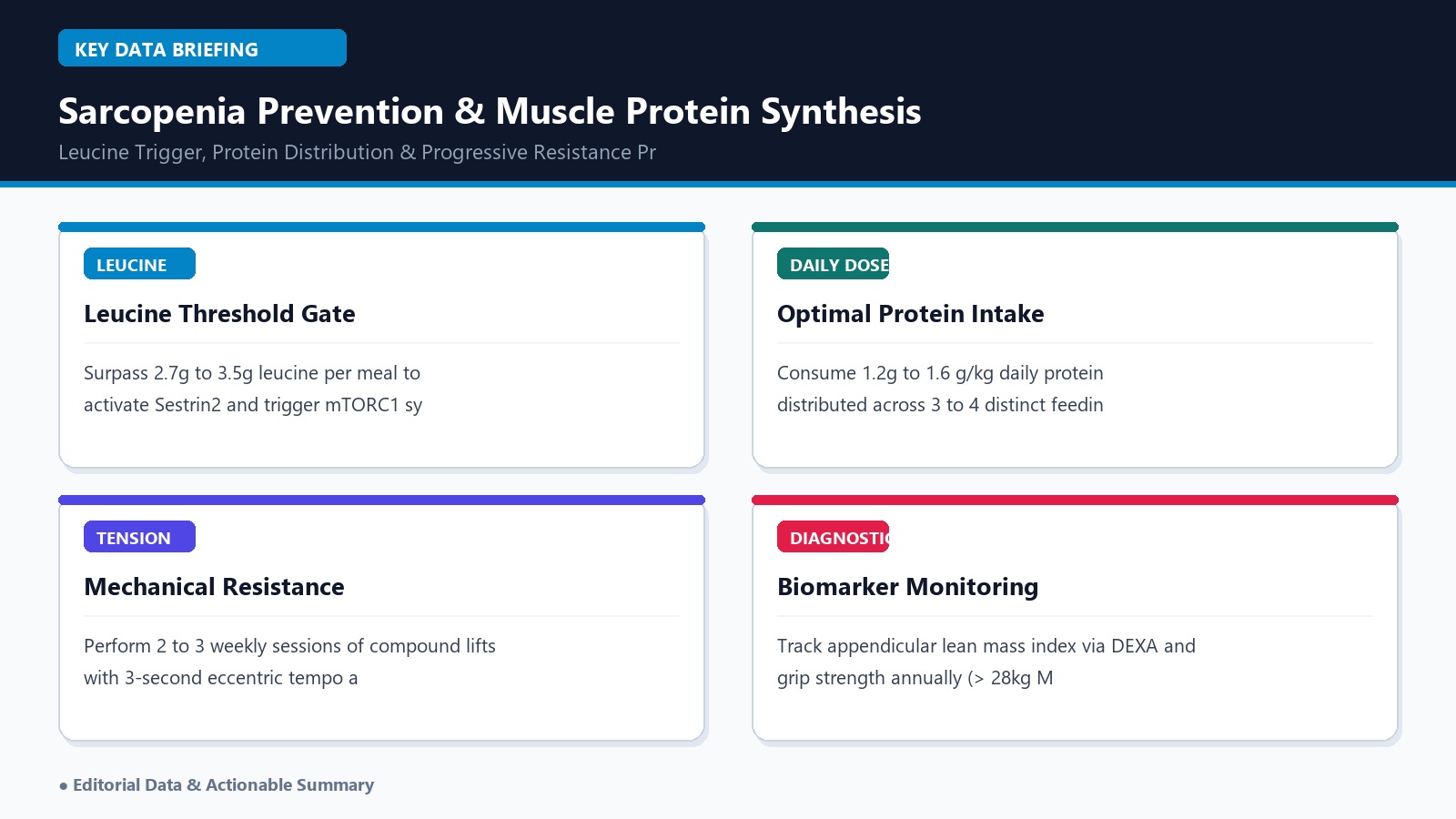
Figure 1: The Leucine Trigger and Mechanical Tension Framework for Sarcopenia Prevention in Older Adults (2026).
Step-by-Step Exercise Protocol: 4 Pillars of Mechanical Tension
While nutritional amino acids supply the biochemical substrate for muscle rebuilding, progressive mechanical tension is the indispensable signal that primes the muscle cell to absorb and utilize those amino acids. Resistance exercise sensitizes the myocyte to hyperaminoacidemia for up to 48 hours following a workout. To maximize sarcopenia prevention in older adults exercise protein outcomes, follow this 4-step progressive resistance protocol:
STEP 01
Prioritize Compound Multi-Joint Movement Patterns
Rather than performing single-joint isolation exercises (such as seated bicep curls or leg extensions), focus training around foundational compound motor patterns: the goblet squat, leg press, Romanian deadlift (or hex-bar deadlift), seated horizontal cable row, and standing overhead press. Multi-joint exercises recruit the maximum volume of Type II fast-twitch motor units simultaneously, stimulate endogenous systemic bone remodeling through axial skeletal loading, and reinforce the coordinated neural firing patterns required to prevent devastating balance loss and accidental falls.
STEP 02
Emphasize Controlled Eccentric Muscle Contractions
During the lowering (eccentric) phase of any exercise—such as descending into a squat or lowering weights back to the chest—muscle fibers produce up to 20% to 50% greater force per cross-sectional unit with significantly lower cardiorespiratory oxygen consumption than during the lifting (concentric) phase. Execute a deliberate 3-second eccentric descent on every repetition. This focused mechanical stretch stimulates titin kinase activation, activates focal adhesion kinase (FAK), and induces longitudinal sarcomerogenesis, building dense structural resilience against sudden tendon strains.
STEP 03
Train Velocity & Rate of Force Development (Power Training)
Muscle power—the product of force and contraction velocity—declines nearly twice as fast with age as maximal static strength (loss of 3.5% annually vs 1.5% annually). In everyday emergencies, such as tripping over a curb, the ability to rapidly fire a fast-twitch motor unit within 200 milliseconds determines whether an individual catches themselves or suffers a catastrophic hip fracture. After completing controlled eccentric lowering, concentrate on accelerating through the concentric phase with explosive intent, even when utilizing moderate loads of 50% to 65% of your 1-repetition maximum (1RM).
STEP 04
Track Repetitions in Reserve (RPE 7-8 Target)
Training to complete muscular failure is unnecessary and dramatically increases systemic joint inflammation and recovery timelines in older adults. Instead, perform 2 to 3 working sets per exercise in the 8 to 12 repetition range, stopping each set when you still have 1 to 2 clean repetitions in reserve (RPE 7.5 to 8.5). Ensure progressive overload by recording total training volume: once you can perform 12 repetitions across all 3 sets with flawless biomechanical form, increase external resistance by 2.5% to 5% at the next training session.
Protein Distribution Matrix: Optimal Bioavailability & Per-Meal Timing
In standard Western dietary habits, adults consume a skewed protein distribution: approximately 10g at breakfast, 18g at lunch, and a massive 65g at dinner. For an older adult exhibiting anabolic resistance, this pattern is catastrophically inefficient. The small breakfast and lunch fail to reach the mandatory 2.7g leucine threshold, leaving muscle protein synthesis turned off for over 16 hours of the day. Meanwhile, the surplus amino acids from the heavy dinner exceed the synthetic capacity of a single feeding window, resulting in excess amino acids being oxidized by the liver as urea rather than incorporated into myofibrillar tissue.
Clinical longevity protocols mandate spreading daily protein evenly across 3 to 4 boluses of 32g to 45g each, spaced 3.5 to 5 hours apart. Each meal must supply high-density, bioavailable amino acids with high Digestible Indispensable Amino Acid Scores (DIAAS > 1.15).
| Whole Food / Supplement | Standard Serving Size | Total Protein (g) | Leucine Yield (g) | Anabolic Bioavailability (DIAAS) |
|---|---|---|---|---|
| Native Whey Protein Isolate | 1 scoop (32g powder) | 27g | 3.1g (Gold Standard) | 1.33 (Rapid gastric transit) |
| Wild Alaskan Salmon Fillet | 170g (6 oz cooked) | 38g | 3.0g | 1.25 (Omega-3 anti-inflammatory boost) |
| Pastured Whole Eggs (Cooked) | 3 large eggs | 19g | 1.6g | 1.18 (Pair with 1 scoop egg white powder) |
| Grass-Fed Lean Beef (93/7) | 150g (5.3 oz cooked) | 39g | 3.2g | 1.22 (Supplies dietary creatine & zinc) |
| Pea & Rice Protein Blend | 1.5 scoops (42g powder) | 30g | 2.4g | 0.95 (Requires 1g free L-leucine powder) |
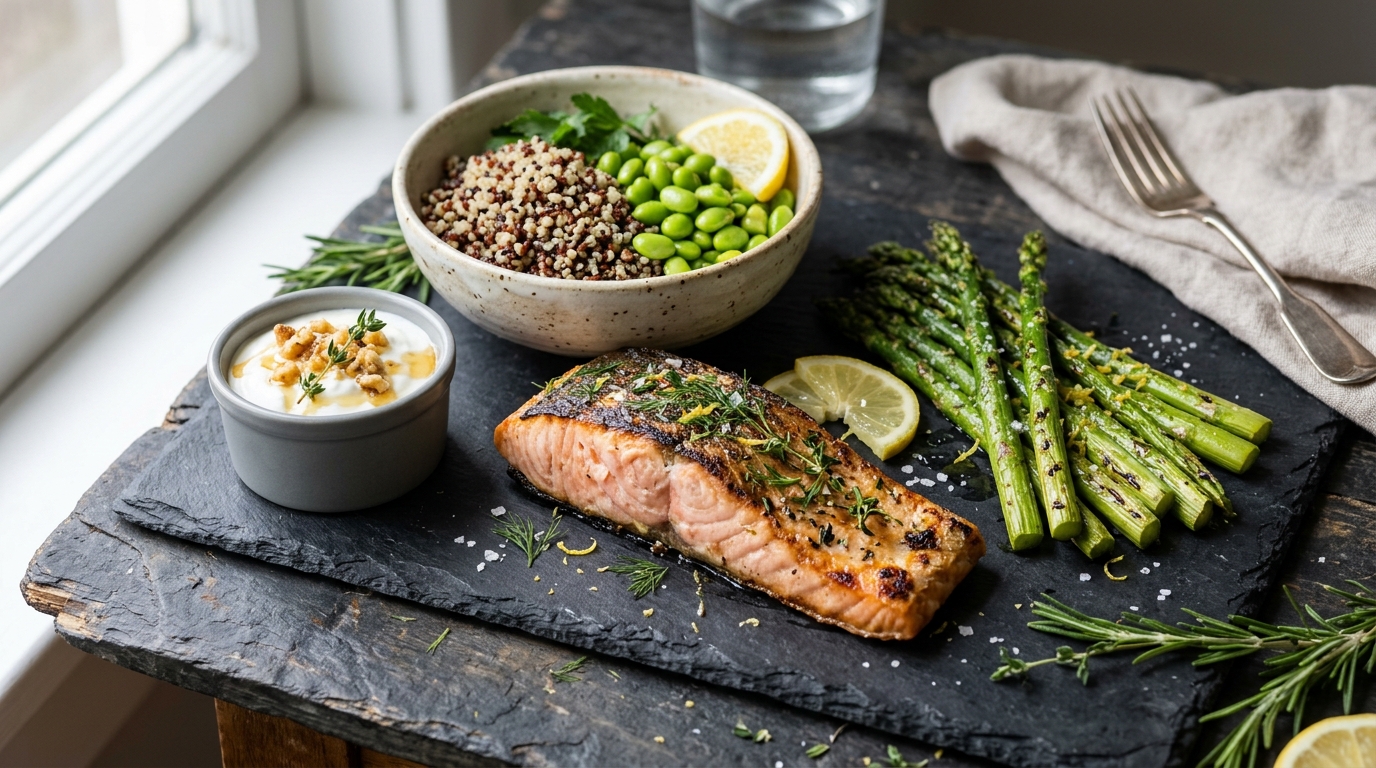
Figure 2: A High-Bioavailability Mediterranean Longevity Meal Supplying 38g Protein and 3.0g Leucine.
Essential Adjuvant Biomarkers: Creatine, Vitamin D & Renal Safety
Maximizing sarcopenia prevention in older adults exercise protein success requires integrating three evidence-based co-factors into the overarching daily regimen:
Adjuvant Synergists for Neuromuscular Preservation
• 1. Creatine Monohydrate (5g Daily Without Loading): Aging skeletal muscle exhibits lower baseline intramuscular phosphocreatine stores. Supplemental creatine monohydrate increases cellular bioenergetics during explosive resistance contractions, enhances myonuclear domain expansion, and augments satellite cell differentiation. A continuous dose of 5g per day taken with water or food yields full intramuscular saturation within 28 days with zero gastrointestinal distress.
• 2. Serum 25-Hydroxyvitamin D Target (40 to 60 ng/mL): Skeletal muscle cells express nuclear Vitamin D Receptors (VDR) that directly regulate muscle protein transcription and intramuscular calcium kinetics. Serum levels below 30 ng/mL strongly associate with accelerated Type II muscle fiber atrophy, proximal myopathy, and increased postural sway. Supplementing with 2,000 to 4,000 IU of Vitamin D3 alongside 100 mcg Vitamin K2 MK-7 restores neuromuscular coordination.
• 3. Renal Safety & eGFR Clarification: Longstanding clinical trials published in the American Journal of Kidney Diseases conclusively demonstrate that high-protein intakes of 1.2g to 1.6 g/kg do not cause renal impairment or diminish glomerular filtration rate (eGFR) in individuals with healthy kidneys. However, patients with pre-existing Stage 3 to Stage 5 Chronic Kidney Disease (eGFR < 45 mL/min/1.73m²) must coordinate target protein dosing directly with their nephrologist to balance nitrogen excretion.
Frequently Asked Questions (FAQ)
Q1: Can an adult in their 60s or 70s actually build new muscle tissue, or only slow down losses?
Older adults retain robust muscular plasticity. Numerous randomized clinical trials from Harvard Medical School and McMaster University confirm that previously untrained men and women aged 65 to 85 achieve substantial hypertrophy, adding 1.0 kg to 2.5 kg of lean contractile muscle mass and improving maximal strength by 30% to 50% within 12 to 16 weeks of progressive resistance training paired with sufficient leucine-rich protein. While baseline satellite cell proliferation is slower than in youth, the cellular machinery for muscle protein synthesis remains fully responsive to progressive tension.
Q2: Is plant protein as effective as whey or animal protein for preventing sarcopenia?
Isolated plant protein sources typically exhibit lower concentrations of leucine (6% to 8% vs 11% to 13% in whey) and lower intestinal DIAAS digestibility scores. However, older vegan or vegetarian adults can achieve equivalent muscle protein synthesis rates by consuming larger total protein portions (38g to 45g per meal instead of 30g) and blending complementary sources—such as 70% pea protein with 30% rice protein—or by supplementing meals with 1.5g of pure free-form L-leucine powder to surpass the anabolic threshold.
Q3: How rapidly does disuse muscle atrophy occur during bed rest or illness in older adults?
In healthy older adults, complete bed rest or limb immobilization causes catastrophic muscle wasting at up to three times the rate observed in young individuals. Clinical studies demonstrate that just 5 to 7 days of hospital bed rest can lead to the loss of 1.0 kg of leg lean mass and a 15% reduction in isometric knee extensor strength. During mandatory periods of acute illness or convalescence, consuming 1.5 g/kg of easily digestible protein and performing bed-bound isometric quad contractions are critical to mitigate rapid catabolism.
Q4: What is the optimal timing for consuming protein relative to the resistance workout?
While the mythical “30-minute anabolic window” was exaggerated by commercial supplement marketing, muscle tissue in older adults remains uniquely sensitized to amino acid uptake for 2 to 4 hours post-exercise. Consuming a 30g to 40g bolus of high-quality protein (such as native whey isolate or wild salmon) within 60 to 90 minutes after finishing your resistance session maximizes myofibrillar fractional synthetic rate (FSR) and accelerates neuromuscular glycogen replenishment.
Clinical References & Authoritative Guidelines:
1. Cruz-Jentoft, A. J., et al. (2019). Sarcopenia: revised European consensus on definition and diagnosis (EWGSOP2). Age and Ageing, 48(1), 16–31.
2. Phillips, S. M., et al. (2016). Protein “requirements” beyond the RDA: implications for optimizing health in older adults. Applied Physiology, Nutrition, and Metabolism, 41(5), 565–572.
3. American College of Sports Medicine (ACSM). (2021). Exercise and Physical Activity for Older Adults: Position Stand. Medicine & Science in Sports & Exercise, 53(8), 1780–1800.
4. National Institutes of Health (NIH). Osteoporosis and Related Bone Diseases National Resource Center: Exercise and Sarcopenia in Aging Populations.