

1-Minute Longevity Briefing
Essential Health Habits for Disease Prevention After 40
After age 40, general wellness platitudes no longer suffice. Age-related vascular stiffening, muscle mass loss, and mitochondrial decay demand five targeted, non-negotiable protocols: circadian light calibration, Zone 2 mitochondrial conditioning, leucine-triggered protein distribution, 3-hour pre-bed glycemic clearance, and systemic oral-gut inflammation control.
For decades, conventional medicine framed adult wellness around broad guidelines: eat balanced meals, walk 10,000 steps, and avoid tobacco. While necessary, modern geroscience reveals that after age 40, cellular renewal kinetics change fundamentally. Sarcopenia accelerates at roughly 1% per year, postprandial insulin sensitivity declines, and mitochondrial efficiency deteriorates if unprovoked by specific metabolic stress.
Implementing evidence-based essential health habits for disease prevention requires shifting from passive harm reduction to proactive biological maintenance. By focusing on five validated longevity pillars, individuals past 40 can optimize cardiometabolic biomarkers, safeguard functional independence, and dramatically compress morbidity.
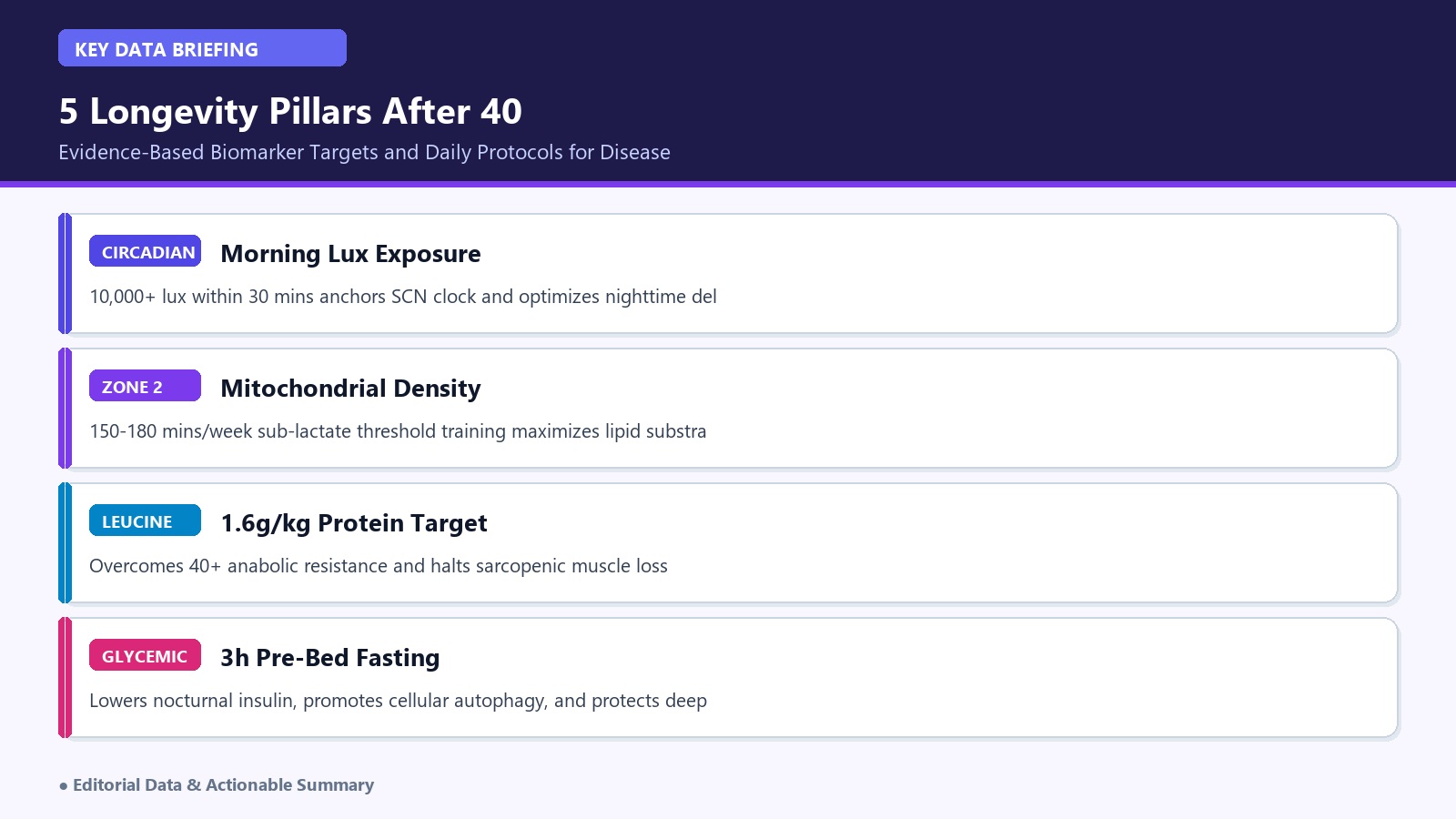
Figure 1: The 5 Precision Longevity Pillars for Disease Prevention After 40.
Conventional Advice vs. 2026 Longevity Standards
The table below contrasts outdated, generic health recommendations with the 2026 clinical standards required to prevent chronic cardiometabolic and neurodegenerative disease.
| Longevity Pillar | Conventional Advice | 2026 Longevity Standard | Primary Target Biomarker |
|---|---|---|---|
| 1. Circadian Photobiology | Sleep 7-8 hours when tired | 10k+ lux within 30 min of waking; zero blue light 2h pre-bed | Cortisol awakening response (CAR), deep sleep delta power |
| 2. Mitochondrial Density | Walk 10,000 steps daily | 150-180 min/wk dedicated Zone 2 cardio (lactate < 2.0 mmol/L) | Fat oxidation capacity, resting heart rate, VO2 max |
| 3. Sarcopenia Defense | RDA 0.8g/kg general protein | 1.6-2.0g/kg with ≥3g leucine per bolus + resistance training | Appendicular lean mass (ALM/ht²), grip strength |
| 4. Glycemic Clearance | Avoid dessert; eat small frequent snacks | 3-4h strict fasting before sleep; post-meal 10-minute ambulation | Fasting insulin, HbA1c, nighttime HRV elevation |
| 5. Micro-Inflammation | Yearly dental cleaning and multivitamin | Oral microbiome hygiene, polyphenol-fiber diversity, ApoB triage | hs-CRP < 0.5 mg/L, ApoB < 70 mg/dL |

Figure 2: Daily adherence to circadian and metabolic routines forms the core of preventative longevity.
Pillar 1: Circadian Photobiology & Cortisol Timing
The suprachiasmatic nucleus (SCN) serves as the master molecular clock governing virtually every peripheral organ. As we age, the sensitivity of intrinsically photosensitive retinal ganglion cells (ipRGCs) declines due to crystalline lens yellowing and reduced pupil miosis. Consequently, middle-aged adults require higher lux intensities to anchor their central circadian rhythm.
Actionable Morning Protocol:
- Immediate Light Exposure: Step outdoors within 30 minutes of waking for 10–15 minutes (or 20–30 minutes on overcast days) to absorb 10,000+ lux without sunglasses.
- Cortisol Awakening Surge: Early photons trigger an optimal cortisol spike early in the morning, which programs the timed release of melatonin approximately 14 to 16 hours later.
- Evening Blue-Light Hygiene: Dim ambient overhead lighting 2 hours before bed; filter blue wavelengths (<480 nm) to avoid nocturnal melatonin suppression.
Essential Protocol:
Pillar 2: Zone 2 Mitochondrial Biogenesis
Cardiorespiratory fitness is the single strongest epidemiological predictor of all-cause mortality. High-intensity interval training (HIIT) recruits fast-twitch glycolytic fibers, but it is steady-state Zone 2 training that stimulates mitochondrial biogenesis in slow-twitch Type I fibers. Zone 2 training keeps blood lactate between 1.5 and 2.0 mmol/L, maximizing fat oxidation and cellular energy production.
Aim for 150 to 180 minutes of weekly Zone 2 exercise (e.g., brisk inclined treadmill walking, cycling, or rowing at a conversational pace). Maintaining this base preserves cardiorespiratory capacity, boosts insulin-independent glucose uptake via GLUT4 translocation, and builds a robust cardiovascular buffer against metabolic decline.
Pillar 3: Sarcopenia Prevention & The Leucine Threshold
Age-related anabolic resistance means muscle tissue becomes less responsive to small doses of dietary amino acids. While a 20-year-old can stimulate muscle protein synthesis (MPS) with 15 grams of protein, adults over 40 typically require 30 to 45 grams containing at least 2.7 to 3.0 grams of free leucine to activate the intracellular mTORC1 pathway.
The 40+ Skeletal Muscle Preservation Standard
1. Daily Protein Target: Consume 1.6 to 2.2 grams per kilogram of ideal body weight distributed across 3–4 meals.
2. Heavy Resistance Training: Minimum 3 sessions per week focusing on progressive compound movements (squats, deadlifts, presses, loaded carries).
3. Objective Verification: Schedule an annual DEXA scan to track Appendicular Lean Mass Index (ALMI) alongside handgrip dynamometer strength testing.
Pillar 4: Glycemic Triage & The Pre-Bed Fasting Window
Late-night eating is one of the most widespread disruptors of adult metabolic health. Consuming carbohydrates or large meals within 3 hours of sleep impairs nocturnal growth hormone secretion, elevates resting core body temperature, and blunts heart rate variability (HRV) recovery during slow-wave deep sleep.
Establishing a firm 3-to-4 hour pre-sleep fasting window allows circulating insulin to return to baseline before melatonin peaks. Furthermore, completing a light 10-minute walk immediately following your evening meal significantly reduces postprandial glycemic excursions, flattening glucose spikes and protecting vascular endothelial walls.
Pillar 5: Systemic Micro-Inflammation & The Oral-Gut Axis
“Inflammaging”—the sterile, low-grade chronic inflammation that silently progresses with age—often originates in overlooked barrier tissues. Periodontal pathogens such as Porphyromonas gingivalis release lipopolysaccharides (LPS) directly into the systemic circulation, accelerating arterial plaque formation and microvascular injury.
Pair meticulous oral hygiene (flossing, sonic brushing, bi-annual dental debridement) with a microbiome-enriching diet rich in prebiotic fibers and polyphenols. Target an ultra-sensitive high-sensitivity C-reactive protein (hs-CRP) level below 0.5 mg/L and an Apolipoprotein B (ApoB) level below 70 mg/dL to maintain systemic endothelial integrity.
The 24-Hour Preventive Protocol Checklist
1
06:30 – 07:30 (Morning Awakening): Hydrate with 500 mL water + electrolytes; obtain 10–15 minutes of natural sunlight outside before screens.
2
12:00 – 13:00 (Midday Nutrition): Consume ≥35g protein rich in leucine with abundant polyphenol-dense vegetables; follow with a 10-minute outdoor stroll.
3
17:00 – 18:30 (Physical Conditioning): Complete 45 minutes of Zone 2 aerobic training or full-body compound resistance work.
4
19:00 (Kitchen Closed): Finish dinner at least 3 to 4 hours before bedtime; allow water and herbal non-caffeinated tea only.
5
22:30 (Sleep Preparation): Dim overhead lights, keep bedroom temperature at 18–19°C (65–67°F), and maintain absolute darkness.
Frequently Asked Questions
What is the single most important habit for disease prevention after 40?
While cardiovascular fitness (VO2 max) has the highest mathematical correlation with longevity, resistance training coupled with adequate protein (1.6g/kg) is equally critical. Preserving skeletal muscle ensures metabolic glucose disposal, prevents insulin resistance, and halts age-related frailty.
How much Zone 2 exercise is required per week to lower cardiometabolic risk?
Clinical longevity literature recommends a minimum threshold of 150 to 180 minutes of dedicated Zone 2 cardio per week. This can be divided into three 45-to-60 minute sessions or four 40-minute sessions at an intensity where you can sustain nasal breathing and speak full sentences.
Why does protein distribution matter more after 40 than in your 20s?
Anabolic resistance diminishes the cellular signaling response to modest protein intakes. Consuming 30 to 45 grams per meal ensures reaching the “leucine trigger” (approx. 3.0g leucine), stimulating muscle protein synthesis far more effectively than grazing on 10-gram snacks throughout the day.
How does pre-bed fasting protect against metabolic dysfunction?
Eating within 3 hours of sleep keeps insulin and blood glucose elevated when the body naturally attempts to lower core temperature and enter deep slow-wave sleep. Fasting before bed protects nocturnal parasympathetic tone, boosts heart rate variability, and maximizes cellular autophagy.
Medical Disclaimer: This article is published for educational and longevity research purposes only and does not constitute medical advice or clinical diagnosis. Always consult a qualified physician or registered dietitian before initiating heavy resistance exercise or making drastic changes to your nutritional intake.