

Key Takeaways
- Maintain core strength for better swing mechanics
- Prioritize flexibility to enhance range of motion
- Incorporate balance exercises for stability
- Consult professionals before starting new fitness routines
Why Fitness Matters for Aging Golfers

As golfers pass 40, natural declines in muscle mass, flexibility, and balance begin to affect performance on the course. Research from the American College of Sports Medicine indicates that adults may lose up to 3-5% of lean muscle mass per decade after 30, impacting swing speed and endurance. Maintaining fitness is no longer optional for competitive play; it’s a necessity to counteract age-related changes. Strengthening stabilizing muscles, improving joint mobility, and enhancing core endurance directly contribute to more consistent ball striking and reduced injury risks, according to sports medicine experts who work with mature athletes.
Core Strengthening for Powerful Swings
A strong core forms the kinetic link between upper and lower body movements during a golf swing. Studies published in the Journal of Sports Science & Medicine demonstrate that golfers with greater core stability achieve 8-12% higher club head speeds. Focus on building rotational strength and endurance through targeted exercises that protect the lower back while maximizing torque production.
Pelvic Tilts for Lower Back Support
This gentle floor exercise activates deep core muscles while minimizing spinal stress. Lie on your back with knees bent, gently tilt your pelvis upward while pressing your lower back into the floor. Hold for 5 seconds before releasing. Perform 2-3 sets of 10-15 repetitions daily to improve lumbar stability. Physical therapists often recommend this movement as a safe starting point for middle-aged and older athletes returning to fitness programs.
Russian Twists with Light Weights
Sitting on the floor with knees bent, lean back 45 degrees while holding a light dumbbell or medicine ball. Twist your torso side-to-side in controlled motions, maintaining engaged abdominal muscles throughout. Start with 8-10 repetitions per side, gradually increasing duration as tolerated. This movement specifically trains the obliques used during swing rotation, though always use proper form to avoid excessive spinal torsion.
Plank Variations for Core Stability
Front planks, side planks, and bird-dog planks develop isometric strength across multiple planes of motion. Begin with 20-second holds on each side, progressing gradually while maintaining neutral spine alignment. A 2021 study in the International Journal of Golf Science found that golfers who incorporated planks into weekly routines improved shot consistency by 15% over 12 weeks. Modify intensity by adjusting limb positions or performing modified planks on knees.
Flexibility and Mobility Routines
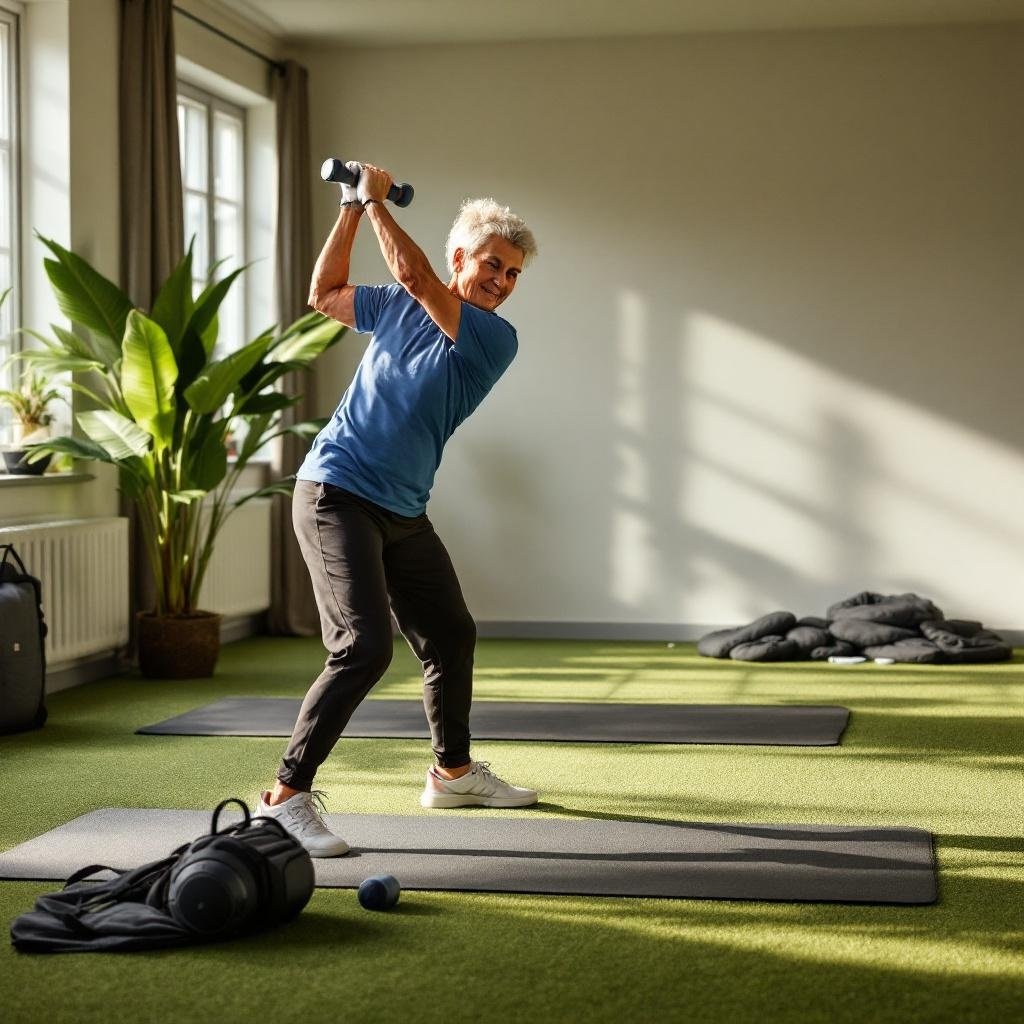
Reduced range of motion in hips, shoulders, and thoracic spine becomes increasingly common after 40, directly limiting swing mechanics. The National Academy of Sports Medicine reports that golfers with greater joint mobility achieve 20-30 yards more carry distance. Develop a regular stretching routine that addresses common movement restrictions while emphasizing dynamic preparation before play.
Dynamic Warm-Ups Before Play
Static stretching before activity may actually decrease performance, according to current sports physiology guidelines. Instead, perform controlled leg swings, arm circles, and bodyweight lunges to increase blood flow and neuromuscular activation. Spend 5-10 minutes moving through golf-specific motions such as air swings with a club, gradually increasing amplitude to prime muscles for play.
Hip Flexor Stretches for Range of Motion
Extended sitting during daily life tightens hip flexors, restricting rotational capacity needed for proper weight transfer. The kneeling hip flexor stretch effectively lengthens these muscles when performed 2-3 times weekly. Kneel on one knee with the opposite foot flat at 90 degrees, gently pressing the pelvis forward while keeping the torso upright. Hold for 30 seconds per side, avoiding overstretching to prevent joint strain.
Shoulder Mobility Drills
Tight lats and restricted shoulder external rotation contribute to inconsistent ball contact. Perform the “stick lift” exercise by holding a golf club behind your back with both hands, slowly raising it toward the ceiling while keeping arms straight. This improves thoracic spine and shoulder complex mobility over time when done consistently. Combine with doorway pec stretches to counteract forward-rounded postures developed from desk work or driving.
Strength Training for Stability
Multi-joint resistance exercises preserve functional strength needed for walking 18 holes and maintaining posture through entire rounds. Work with a trainer to develop a program balancing pushing/pulling movements, lower body lifts, and rotational patterns. Focus on controlled tempos and proper breathing to maximize benefits while minimizing injury risks during training sessions.
Balance and Injury Prevention
As proprioception declines with age, dedicated balance training becomes crucial for consistent ball striking and fall prevention. Practice single-leg stands while brushing teeth or waiting for coffee, gradually progressing to eyes-closed variations. Incorporate foam pads or wobble boards for additional challenge. Research from the British Journal of Sports Medicine shows that 6 weeks of balance training reduced ankle sprain occurrences by 34% in middle-aged athletes.
Frequently Asked Questions
Can older golfers benefit from resistance training?
Current research published in the Journal of Aging and Physical Activity suggests resistance training may help maintain muscle mass and improve swing mechanics in older golfers. Always consult your doctor before starting new routines.
How often should golfers stretch?
Regular stretching 3-5 times weekly may help maintain flexibility. Focus on major muscle groups used during swings and consult a trainer for personalized plans.
Are balance exercises necessary?
Balance training may enhance stability during swings and reduce fall risks. Simple drills like single-leg stands may be beneficial for aging golfers.
What warm-up is best before golf?
Dynamic warm-ups involving arm circles, torso twists, and light cardio may help prepare muscles. Cold muscles may increase injury risk according to general wellness guidelines.
Key Takeaways
- Maintain core strength for better swing mechanics
- Prioritize flexibility to enhance range of motion
- Incorporate balance exercises for stability
- Consult professionals before starting new fitness routines
Frequently Asked Questions
Can older golfers benefit from resistance training?
Research suggests resistance training may help maintain muscle mass and improve swing mechanics in older golfers. Always consult your doctor before starting new routines.
How often should golfers stretch?
Regular stretching 3-5 times weekly may help maintain flexibility. Focus on major muscle groups used during swings and consult a trainer for personalized plans.
Are balance exercises necessary?
Balance training may enhance stability during swings and reduce fall risks. Simple drills like single-leg stands may be beneficial for aging golfers.
What warm-up is best before golf?
Dynamic warm-ups involving arm circles, torso twists, and light cardio may help prepare muscles. Cold muscles may increase injury risk according to general wellness guidelines.
Disclaimer: This article is for informational purposes only and does not constitute medical advice. Always consult a qualified healthcare provider before making changes to your health regimen.