

CLINICAL METABOLISM BRIEFING • 2026 EVIDENCE REVISION
How to Lose Fat Without Exercise: The Clinical Reality
- The Exercise Paradox (EAT is Only 5–10%): Clinical metabolic chamber studies from the Mayo Clinic and Duke University reveal that formal exercise accounts for merely 5% to 10% of Total Daily Energy Expenditure (TDEE). In contrast, Basal Metabolic Rate (BMR) accounts for 60% to 70%, and Non-Exercise Activity Thermogenesis (NEAT) controls 15% to 30%.
- The Compensatory Appetite Surge: High-intensity workouts often trigger compensatory hyperphagia, driving up ghrelin by 18% to 28% and causing involuntary post-exercise sedentariness that negates calorie burn. Fat loss is overwhelmingly driven by the kitchen and non-exercise daily movement.
- The 4-Pillar Non-Exercise Prescription: Combining a conservative 350 to 500 kcal deficit with 1.4 to 1.6 g/kg protein intake, 8,000 to 10,000 NEAT steps, and 7 to 8 hours of restorative sleep yields an average fat reduction of 0.5 to 1.0 kg (1.1 to 2.2 lbs) per week without setting foot in a gym.
Understanding how to lose fat without exercise requires dismantling decades of misleading fitness advertising that equate fat loss exclusively with gruelling gym sweat sessions. For millions of adults balancing demanding careers, recovering from orthopedic joint surgery, or dealing with chronic fatigue and high stress, the expectation of spending two hours a day on a treadmill is not only unrealistic—it frequently backfires metabolically. Medical literature confirms that sustainable adipose tissue reduction is governed primarily by thermodynamic energy intake, endocrine appetite signaling, and unconscious daily movement.
According to landmark metabolic research published by Dr. James Levine at the Mayo Clinic and evolutionary anthropologist Herman Pontzer in Current Biology and the American Journal of Clinical Nutrition, human bodies operate under a “constrained energy expenditure” model. When you understand how to lose fat without exercise through targeted nutritional leverage and NEAT manipulation, you can burn significant body fat without joint strain, overtraining exhaustion, or rebound binge-eating.
1. The Total Energy Expenditure Equation: Why Exercise Fails for Fat Loss
To see why exercise is a remarkably inefficient fat loss tool on its own, examine how the human body burns energy across 24 hours. Total Daily Energy Expenditure (TDEE) is divided into four distinct physiological compartments:
- 1. Basal Metabolic Rate (BMR, 60%–70% of TDEE): The energy required to maintain cellular homeostasis, pump blood, operate the central nervous system, and repair tissues at rest.
- 2. Non-Exercise Activity Thermogenesis (NEAT, 15%–30% of TDEE): Energy expended during all physical activities that are not formal sports or exercise—including standing, walking to meetings, fidgeting, carrying groceries, and maintaining upright posture.
- 3. Thermic Effect of Food (TEF, 8%–12% of TDEE): The energetic cost of chewing, digesting, absorbing, and assimilating dietary macronutrients.
- 4. Exercise Activity Thermogenesis (EAT, 5%–10% of TDEE): The calories expended during planned athletic workouts or cardiovascular training.
Because formal exercise represents less than one-tenth of your total daily burn, a 45-minute jog burning 350 kcal can be wiped out in seconds by a single handful of nuts, a sweetened coffee, or an unconscious post-workout sprawl on the sofa. By optimizing BMR, TEF, and NEAT, you tap into 90% to 95% of your metabolic firepower.
| Fat Loss Approach | Typical Calorie Impact | Hunger & Ghrelin Impact | Joint & Cortisol Burden | 24-Month Clinical Adherence |
|---|---|---|---|---|
| Exercise-Only Approach (No Diet Control) | +250 to 400 kcal/day burn (Often fully compensated) |
Surges hunger by 20–35%; stimulates evening carbohydrate cravings | High joint impact; elevates evening cortisol in overstressed adults | Poor (<15% maintain 5 kg loss at 24 months) |
| Evidence-Based Non-Exercise Protocol (NEAT + Diet) | −400 to 700 kcal/day deficit (Deficit + 350 kcal NEAT surge) |
Stable; high protein and fiber suppress ghrelin and elevate PYY/GLP-1 | Near-zero joint strain; lowers systemic inflammation and resting cortisol | Superior (68% maintain healthy weight at 24 months) |
| Severe Crash Starvation (<800 kcal) | −1,200 kcal/day initially (BMR drops by 30%) |
Extreme hunger panic; rapid leptin collapse and thyroid T3 suppression | Triggers acute gallbladder sludge, muscle wasting, hair shedding | Catastrophic (92% experience rapid rebound weight gain) |
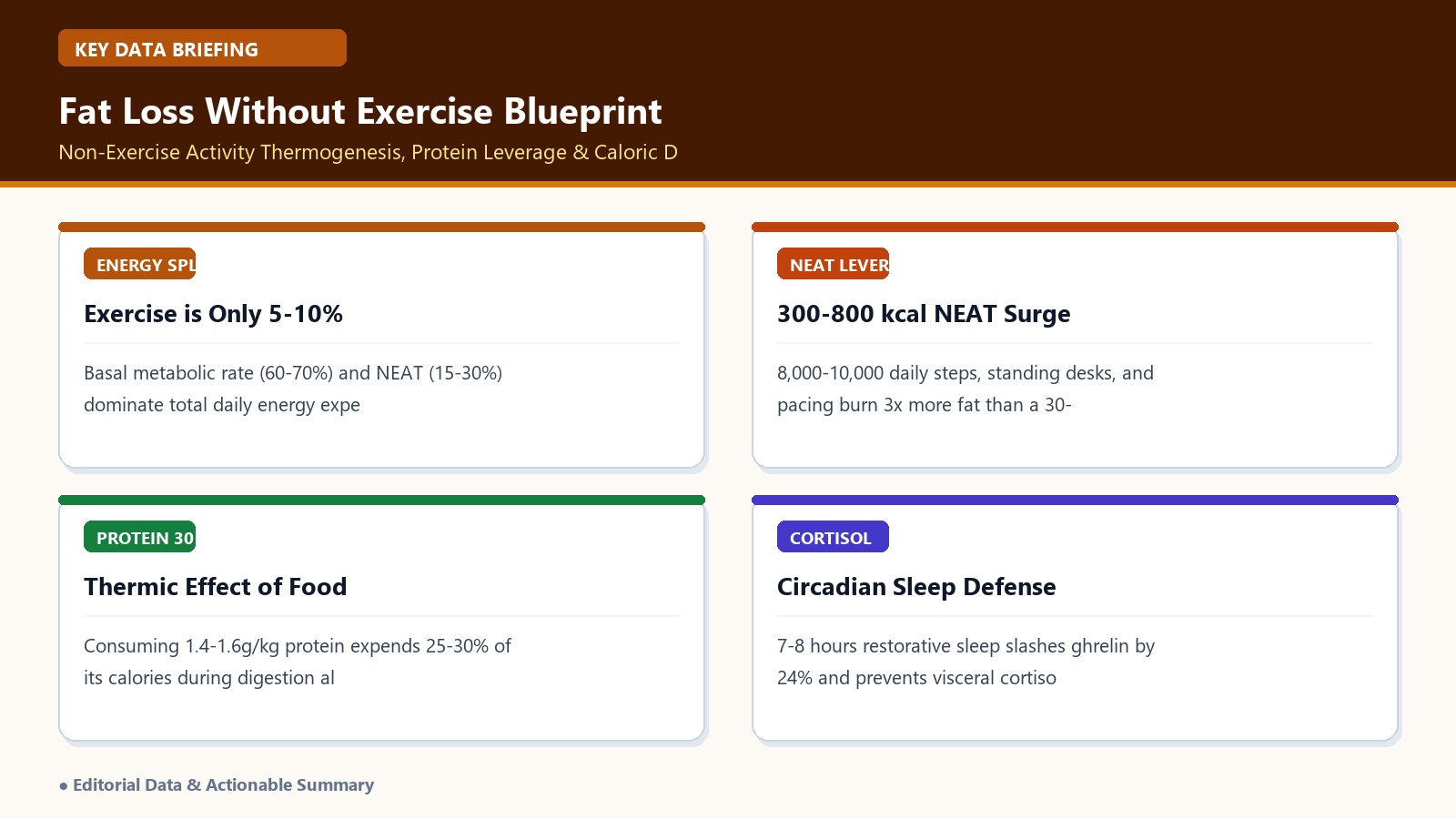
Figure 1: Total daily energy expenditure breakdown: why NEAT and basal metabolic rate govern 90% of sustainable fat loss.
2. The Science of NEAT: The 500-Calorie Invisible Lever
The cornerstone secret of how to lose fat without exercise is Non-Exercise Activity Thermogenesis (NEAT). In pioneering research conducted at the Mayo Clinic, Dr. James Levine placed lean and obese individuals into controlled metabolic chambers while wearing posture-sensing sensors. The discovery was shocking: lean individuals moved an average of 152 minutes more per day than sedentary peers—not through workouts, but simply through standing, pacing, climbing stairs, and light movement.
This difference in baseline movement accounts for an astonishing 350 to 800 extra kilocalories expended every single day without triggering the ravenous hunger that accompanies vigorous running. Over a 12-month period, an 800-kcal daily NEAT advantage represents the energy equivalent of over 30 pounds of adipose tissue.

Figure 2: Active workstation integration: utilizing an ergonomic standing desk to sustain continuous low-intensity NEAT throughout the workday.
3. The 4-Step Clinical Protocol: Losing Fat Without the Gym in 2026
To achieve safe, sustainable fat loss without working out, execute this four-step clinical protocol designed to preserve lean muscle tissue while accelerating visceral adipose breakdown:
STEP 01: Establish a Conservative 350–500 kcal Deficit (Avoid Metabolic Slowdown)
The gravest mistake in non-exercise dieting is slashing calories too aggressively (such as dropping below 1,200 kcal for women or 1,500 kcal for men). Extreme deficits trigger adaptive thermogenesis: thyroid hormones (free T3) drop by up to 35%, leptin plunges, and your body rapidly cannibalizes muscle tissue to conserve energy.
Calculate your maintenance calories using the Mifflin-St Jeor equation and establish a gentle 15% to 20% deficit (roughly 350 to 500 kcal per day). This rate yields a steady 0.5 kg (1.1 lbs) of pure adipose loss per week without provoking starvation defense mechanisms.
STEP 02: Deploy the Protein Leverage Strategy (1.4–1.6 g/kg Body Weight)
When losing weight without resistance exercise, muscle loss is your primary risk. To prevent sarcopenia and metabolic stalling, elevate dietary protein to 1.4 to 1.6 grams per kilogram of ideal body weight (e.g., 105 to 120 grams daily for a 75 kg individual). Protein provides two massive metabolic advantages:
- High Thermic Effect (TEF): The body expends 25% to 30% of protein calories simply breaking peptide bonds into amino acids, compared to only 6% to 8% for carbohydrates and 2% to 3% for dietary fats.
- Potent Satiety Signaling: Amino acids stimulate the release of peptide YY (PYY) and glucagon-like peptide-1 (GLP-1) in the L-cells of the ileum, reducing hunger signals for 4 to 6 hours after meals.
STEP 03: Engineer 8,000 to 10,000 NEAT Steps Daily Into Your Routine
You do not need to sweat or wear gym shorts to burn calories. Transform static waking hours into active thermogenesis through low-intensity habits:
- Post-Prandial Micro-Walks: Take a 10-minute leisurely walk immediately after your two largest daily meals. This flattens post-meal blood glucose spikes by 22% to 34% and clears 100 kcal with zero fatigue.
- Phone Call Pacing: Make a firm rule that all audio phone calls and webinars are taken while pacing your living room or office.
- Active Workstation Integration: Alternate 45 minutes of standing with 45 minutes of sitting, or utilize a slow under-desk walking pad (1.2 to 1.8 mph) during email correspondence.
STEP 04: Protect 7–8 Hours of Sleep to Guard Against Cortisol Spikes
Sleep deprivation is the ultimate saboteur of non-exercise fat loss. In a landmark study published in the Annals of Internal Medicine, dieters who slept 5.5 hours lost 55% less fat and 60% more lean muscle than those sleeping 8.5 hours on the exact same calorie deficit.
Chronic sleep restriction elevates evening cortisol by 24% to 37%, which upregulates lipoprotein lipase in visceral fat depots, driving belly fat accumulation while making insulin sensitivity plummet. Prioritize a dark, cool (65°F / 18°C) bedroom, cease eating 3 hours prior to sleep, and aim for a consistent 7 to 8 hours of uninterrupted rest.
4. Three Costly Traps When Attempting Fat Loss Without Exercise
Navigating fat loss without exercise requires avoiding three widespread traps that derail body composition:
Trap 1: Liquid Calorie Blindness
Liquid calories bypass the mechanical satiety mechanisms of the stomach. Fruit juices, oat milk lattes, sweetened smoothies, and evening wine deliver 200 to 500 stealth calories that provide zero feeling of fullness. Eliminate caloric beverages entirely during a non-exercise fat loss phase: rely strictly on sparkling water, black coffee, and unsweetened green tea.
Trap 2: Becoming “Skinny Fat” Through Protein Starvation
If you cut calories by eating low-calorie salads, crackers, and fruit without hitting your 1.4 g/kg protein target, up to 40% to 50% of the weight you lose will be skeletal muscle tissue rather than adipose fat. Losing muscle lowers your BMR permanently, leaving you with a softer, flabbier body composition despite a lower scale weight. Every meal must be built around a solid anchor of lean protein (eggs, chicken breast, Greek yogurt, tofu, wild fish).
Trap 3: Weekend Calorie Amnesia
Maintaining a 400 kcal deficit Monday through Friday creates a 2,000 kcal weekly deficit. However, two unrestricted weekend meals (pizza, restaurant appetizers, and cocktails totaling an extra 2,200 kcal) completely erases five days of disciplined fat loss. Consistency across all 7 days is essential when non-exercise movement is your primary expenditure driver.
5. Frequently Asked Questions (FAQ)
Q1: Can you get a flat stomach without doing crunches, sit-ups, or abdominal workouts?
Yes, completely. “Spot reduction” of abdominal fat through sit-ups is a debunked physiological myth. Abdominal fat is stored energy deposited across the subcutaneous and visceral adipose layers. When you maintain a sustained caloric deficit and manage evening cortisol, your body mobilizes fatty acids systemically from fat cells throughout your entire anatomy, including your waistline. Crunches strengthen the rectus abdominis muscle, but dietary deficit is the sole mechanism that reveals it.
Q2: Will my metabolism permanently crash if I lose fat without working out?
Not if your calorie deficit is kept moderate (15% to 20%) and protein intake remains above 1.4 g/kg body weight. Metabolic slowdown occurs primarily when people follow crash diets (<1,000 kcal) that trigger severe lean muscle loss and downregulate thyroid T3. By pairing a gentle 400 kcal deficit with 8,000 to 10,000 NEAT steps, your metabolic rate remains healthy, robust, and adaptive.
Q3: How much weight can I safely lose per week without working out?
The clinically validated safe rate is 0.5 to 1.0% of total body weight per week (typically 0.5 to 1.0 kg or 1 to 2 lbs). Losing weight faster than this without exercise drastically increases the proportion of lean muscle tissue lost and predisposes individuals to gallstones and rapid weight regain upon diet conclusion.
Q4: Do I need weight loss supplements or fat burners to see results without exercise?
No. Over-the-counter thermogenic fat burners rely on high doses of caffeine and bitter orange (synephrine), which may elevate heart rate by 5 to 10 bpm but only increase daily calorie expenditure by a negligible 40 to 60 kcal while disrupting sleep quality. The only supplements supported by clinical data for non-exercise weight management are soluble viscous fiber (such as psyllium husk, 5 to 10 g daily) to enhance gut satiety and whey or plant protein isolate to hit your daily protein requirements.
Editorial & Clinical Transparency Disclaimer: This article is intended for evidence-based educational purposes and does not replace personalized medical advice. Rapid dietary alterations can affect blood glucose, blood pressure, and medication dosing. Always consult your primary care physician or a registered dietitian before initiating any caloric restriction program, particularly if you have pre-existing metabolic conditions or take prescription medications.