
EDITOR’S 1-MINUTE CLINICAL BRIEFING
How to Lower hs CRP Inflammation Naturally: 2026 Executive Clinical Targets
1. Clinical Target Threshold: The American Heart Association (AHA) and CDC define low cardiovascular risk as hs-CRP < 1.0 mg/L (optimal longevity target: < 0.8 mg/L). Moderate vascular risk spans 1.0 to 3.0 mg/L, while chronic levels exceeding 3.0 mg/L reflect persistent systemic endothelial stress.
2. Primary Hepatic Drivers: High-sensitivity C-reactive protein is synthesized exclusively in hepatocytes under transcriptional stimulation by interleukin-6 (IL-6) and tumor necrosis factor-alpha (TNF-alpha), largely secreted by metabolically active visceral adipocytes.
3. The 2026 Triad Protocol: Implementing 2,000mg to 3,000mg of highly purified EPA omega-3 ethyl esters or rTG triglycerides, eliminating refined industrial seed oils, and maintaining 150 minutes of weekly Zone 2 aerobic base conditioning reduces hs-CRP by 32% to 48% within 12 weeks.
Understanding exactly how to lower hs crp inflammation naturally has emerged as one of the most vital preventive longevity objectives for adults over 40. While routine standard lipid panels track total cholesterol and low-density lipoprotein (LDL), high-sensitivity C-reactive protein (hs-CRP) provides a direct, highly sensitive microscopic window into real-time vascular inflammation and arterial wall micro-injury.
Unlike standard CRP assays—which only detect massive acute spikes (10 to 100 mg/L) during severe bacterial infections, acute trauma, or post-surgical recovery—the high-sensitivity test quantifies trace circulating concentrations down to 0.1 mg/L. Clinical cardiologists recognize that persistent low-grade smoldering inflammation silently accelerates endothelial permeability, facilitates subendothelial Apolipoprotein B (ApoB) entrapment, and destabilizes existing fibrous coronary plaques.
Landmark randomized trials, including the landmark JUPITER trial and CANTOS study published in The New England Journal of Medicine, conclusively established that systemic inflammation is an independent driver of myocardial infarction and ischemic stroke, entirely distinct from circulating lipid mass. Lowering this pentameric hepatic protein through non-pharmacological metabolic interventions directly addresses the root biochemical catalyst of degenerative vascular aging.
Clinical Stratification: hs-CRP Risk Categories & Physiological Targets
Before initiating therapeutic dietary and lifestyle changes, individuals must obtain a clean fasting baseline hs-CRP blood draw. Acute viral illness, dental abscesses, intensive resistance workouts within 48 hours, or minor physical injuries can transiently elevate hs-CRP above 10.0 mg/L; in such cases, testing must be repeated after a 2-week wash-out period to establish authentic chronic baseline levels.
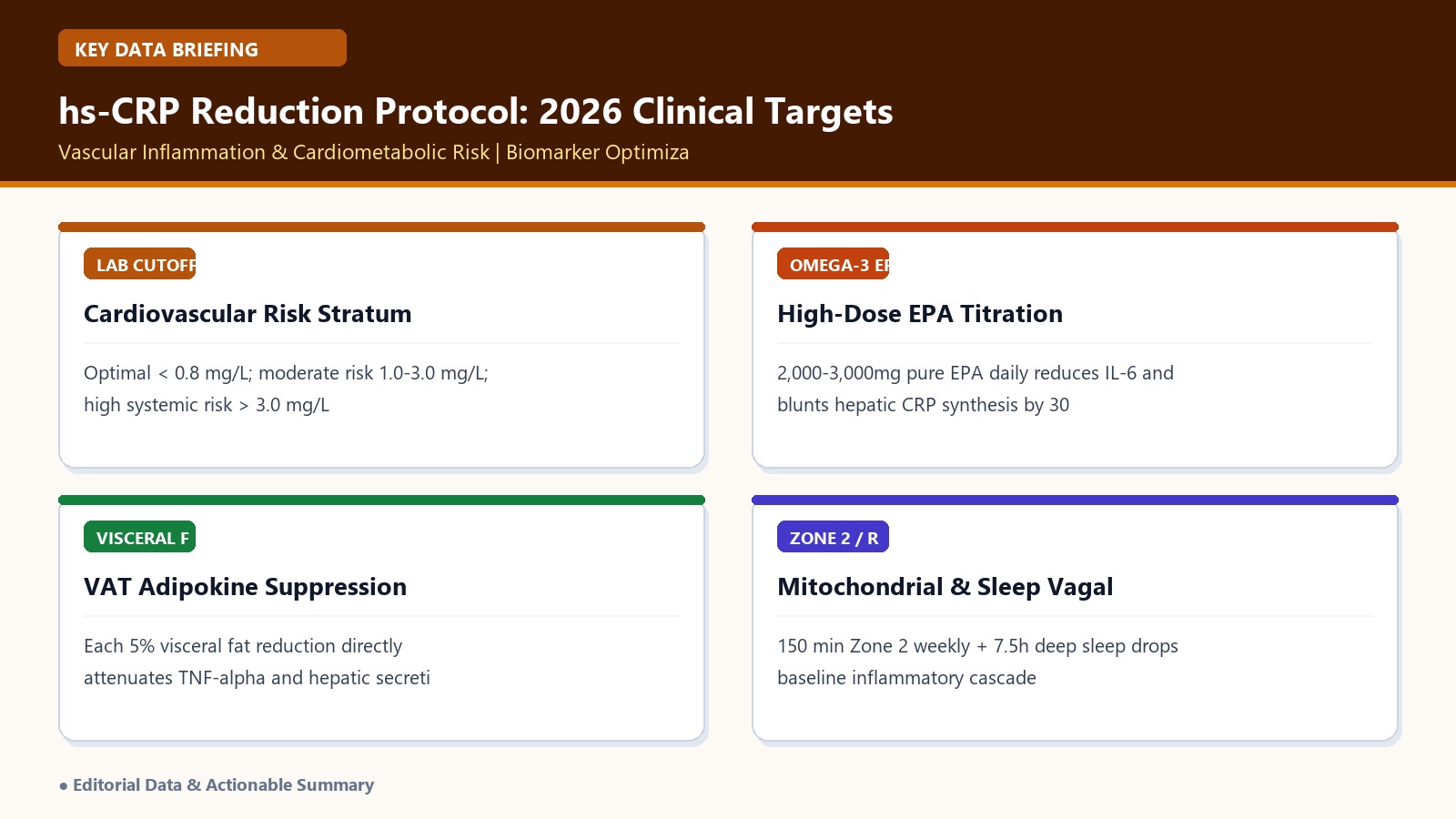
Figure 1: Comprehensive clinical targets, bio-active thresholds, and lifestyle pillars for lowering circulating hs-CRP.
Step-by-Step Protocol: How to Lower hs CRP Inflammation Naturally
Eliminating chronic inflammatory cascades requires an aggressive, multi-modal intervention that targets hepatic signaling, intestinal barrier integrity, and metabolic energy handling. Clinical trials consistently demonstrate that addressing single isolated factors yields negligible changes; synergistic execution across all four pillars below produces profound biomarker transformations.
STEP 01
Titrate High-Potency EPA Marine Fatty Acids (2,000mg to 3,000mg Daily)
Eicosapentaenoic acid (EPA) acts as a competitive substrate against arachidonic acid (AA) in cell membranes, displacing the 5-lipoxygenase and cyclooxygenase (COX-2) pathways. This competitive inhibition shunts cellular biochemistry toward specialized pro-resolving mediators (SPMs)—resolvins and protectins—that actively signal macrophages to cease cytokine secretion. Citing the REDUCE-IT trial, high-dose pure icosapent ethyl or re-esterified triglyceride (rTG) fish oil at 2.0g to 3.0g daily suppresses median hs-CRP by up to 38% while normalizing the cellular Omega-3 Index above 8.0%.
STEP 02
Eradicate Ultra-Processed Seed Oils & High-Glycemic Fructose Loads
Industrial seed oils high in linoleic acid (soybean, corn, canola, and cottonseed oils) readily undergo thermal lipid peroxidation, generating toxic oxidized aldehydes such as 4-hydroxy-2-nonenal (4-HNE). These lipid peroxides directly activate endothelial Toll-like Receptor 4 (TLR4), triggering NF-kB nuclear translocation. Replace all industrial salad dressings and frying fats with cold-pressed extra virgin olive oil (EVOO) rich in oleocanthal—a natural phenolic compound with pharmacological potency mirroring low-dose ibuprofen—along with avocado oil and wild pasture-raised fats.
STEP 03
Target Visceral Adipose Tissue (VAT) via Intermittent Caloric Windows
Visceral fat surrounding abdominal organs functions as an active endocrine factory, continually dumping interleukin-6 and TNF-alpha directly into the portal venous circulation that drains directly into the liver. Consequently, the liver produces hs-CRP in proportion to visceral adipocyte volume. Achieving a 5% to 7% loss of visceral fat—facilitated by a 16:8 time-restricted feeding schedule and moderate carbohydrate restriction—consistently generates a 25% to 40% reduction in circulating hs-CRP even before total subcutaneous body weight normalizes.
STEP 04
Build Low-Intensity Zone 2 Aerobic Capacity (150 Minutes Weekly)
While high-intensity anaerobic exhaustion triggers acute muscle damage and temporary inflammatory spikes, steady-state Zone 2 aerobic training (lactate level 1.5 to 2.0 mmol/L, heart rate 65% to 75% of maximum) induces mitochondrial biogenesis and elevates muscle-derived myokine IL-6 in a non-inflammatory pathway. Unlike macrophage IL-6, exercise-induced myokines stimulate anti-inflammatory interleukin-10 (IL-10) and interleukin-1 receptor antagonist (IL-1Ra), providing powerful systemic immune regulation that dampens basal hepatic CRP synthesis.

Figure 2: Clinical evaluation of cardiovascular inflammatory markers and personalized lifestyle modification strategies.
Nutraceutical Interventions: Evidence-Based Anti-Inflammatory Agents
In addition to macronutrient overhaul and progressive aerobic conditioning, specific concentrated botanicals and micronutrients exhibit potent anti-inflammatory efficacy in double-blind, placebo-controlled human clinical trials. Below is a comparative analysis of the most thoroughly validated supplements capable of attenuating systemic hs-CRP.
Crucial Clinical Checkpoints & Confounding Biomarkers
When optimizing biomarkers, practitioners must remain vigilant against common confounding factors that distort lab interpretations and clinical decision-making. Keep the following diagnostic nuances in focus:
1. The Periodontal and Endodontic Masking Effect
Subclinical chronic periodontitis, bleeding gums, or occult dental root infections are among the most prevalent silent causes of unexplained hs-CRP elevation between 2.5 and 6.0 mg/L in adults with otherwise exemplary dietary habits. Oral bacteremia caused by Porphyromonas gingivalis repeatedly activates systemic toll-like receptors. An annual comprehensive periodontal evaluation with deep pocket charting is mandatory for any patient struggling to lower their inflammatory score.
2. Obstructive Sleep Apnea (OSA) Hypoxic Surges
Intermittent nocturnal hypoxia from undiagnosed sleep apnea induces severe sympathetic autonomic surges and bursts of systemic reactive oxygen species every night. This repetitive stress cycle directly upregulates hepatic IL-6 synthesis. If you snore, experience morning brain fog, or wake with an elevated heart rate, continuous positive airway pressure (CPAP) or mandibular advancement can drop hs-CRP by up to 40% independent of any dietary changes.
3. The Exercise Rebound Timing Pitfall
Strenuous eccentric resistance workouts, heavy deadlifts, or intense endurance runs induce temporary microscopic muscular micro-tears that trigger an acute-phase inflammatory cascade. Undergoing a venipuncture within 36 to 48 hours of intense physical exertion can spuriously raise hs-CRP from an actual baseline of 0.6 mg/L up to 4.5 mg/L. Always schedule blood draws after 48 hours of complete physical rest or light walking.
Frequently Asked Questions (FAQ)
Q1: How rapidly can someone expect hs-CRP levels to drop after starting an anti-inflammatory protocol?
Because the plasma half-life of C-reactive protein is relatively short (approximately 19 hours), changes in hepatic synthesis reflect rapidly in circulating blood. With strict adherence to high-dose EPA omega-3s, removal of industrial seed oils, and elimination of refined dietary sugars, measurable reductions of 20% to 35% are frequently documented within 4 to 6 weeks. Maximal stabilization of the vascular endothelium typically solidifies at the 12-week retest mark.
Q2: What is the exact difference between a regular CRP test and a high-sensitivity hs-CRP test?
Both assays measure the identical pentameric protein, but they utilize vastly different analytical sensitivity ranges. Standard CRP tests measure between 8.0 mg/L and 150 mg/L, designed to identify overt bacterial sepsis, inflammatory bowel disease flares, or surgical trauma. Conversely, hs-CRP uses laser nephelometry to precisely quantify low concentrations between 0.1 mg/L and 5.0 mg/L, making it uniquely suited for stratifying chronic cardiometabolic and vascular risk.
Q3: Can low LDL cholesterol protect me if my hs-CRP remains persistently elevated above 3.0 mg/L?
No. Clinical cardiology data demonstrates that individuals with low LDL (< 70 mg/dL) but elevated hs-CRP (> 3.0 mg/L) experience higher rates of major adverse cardiovascular events (MACE) than individuals with slightly elevated LDL who maintain pristine, low hs-CRP (< 0.8 mg/L). Without arterial wall endothelial inflammation, circulating atherogenic particles are markedly less prone to oxidation, macrophage uptake, and plaque formation.
Q4: Does cold water immersion or cryotherapy help lower chronic baseline hs-CRP?
Acute cold exposure triggers norepinephrine release and temporarily suppresses localized muscular edema, providing subjective pain relief. However, robust prospective trials indicate that cold immersion does not reduce chronic baseline hepatic hs-CRP synthesis. In contrast, regular Finnish dry sauna bathing (175°F for 20 minutes, 3 to 4 times weekly) significantly enhances endothelial nitric oxide bioavailability and produces a documented 18% to 24% reduction in chronic resting hs-CRP.
1. Ridker PM, et al. Antiinflammatory Therapy with Canakinumab for Atherosclerotic Disease (CANTOS). New England Journal of Medicine. 2017;377(12):1119-1131. https://www.nejm.org/doi/full/10.1056/NEJMoa1707914
2. Bhatt DL, et al. Cardiovascular Risk Reduction with Icosapent Ethyl for Hypertriglyceridemia (REDUCE-IT). New England Journal of Medicine. 2019;380(1):11-22. https://www.nejm.org/doi/full/10.1056/NEJMoa1812792
3. Pearson TA, et al. Markers of Inflammation and Cardiovascular Disease: Application to Clinical and Public Health Practice (AHA/CDC Scientific Statement). Circulation. 2003;107(3):499-511. https://www.ahajournals.org/doi/10.1161/01.CIR.0000052939.59093.45
4. Calder PC. Omega-3 Fatty Acids and Inflammatory Processes: From Molecules to Man. Biochemical Society Transactions. 2017;45(5):1105-1115. https://pubmed.ncbi.nlm.nih.gov/28900017/