

CLINICAL ERGONOMICS & SLEEP NEUROBIOLOGY INVESTIGATION
Is Your Pillow Ruining Your Sleep? 4 Warning Signs, Cervical Alignment & 2026 Guide
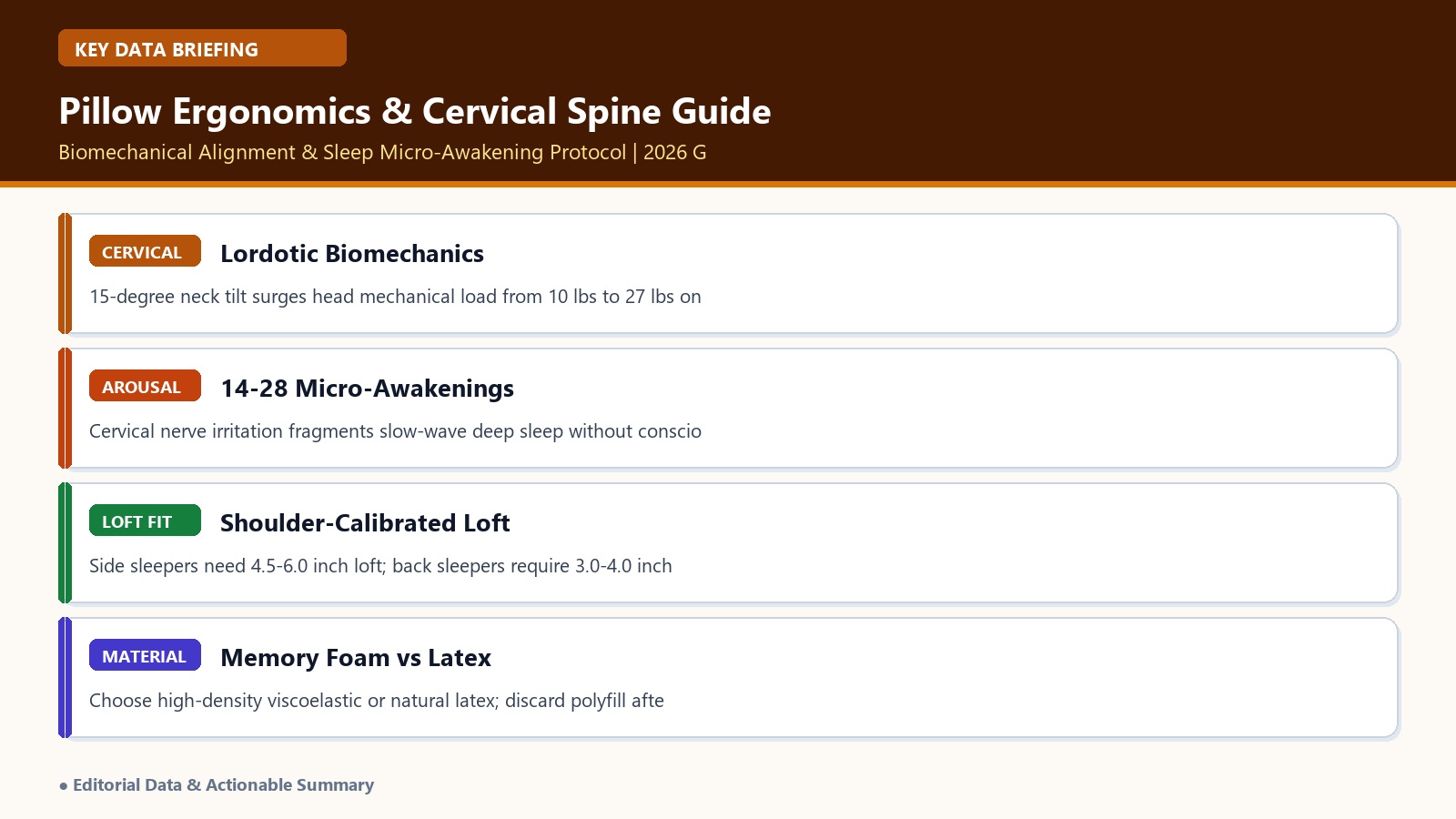
- The Cervical Lordosis Imperative: The human head weighs approximately 10 to 12 pounds (4.5 to 5.4 kg). When a worn or unsupportive pillow tilts the neck just 15 degrees out of neutral lordotic alignment, cervical spine mechanical loading surges to 27 pounds (12.2 kg), compressing nerve roots and facet joints.
- Subconscious Micro-Awakenings: Biomechanical cervical strain triggers autonomic nervous system arousal, causing an average of 14 to 28 subconscious micro-awakenings per hour that decimate slow-wave deep sleep (Stage 3 NREM) without conscious patient awareness.
- Orthopedic Ergonomic Fix: Matching pillow loft height (ranging from 3.0 to 5.5 inches / 7.5 to 14 cm based on shoulder width and sleep position) with high-resilience ergonomic memory foam or botanical latex restores spinal neutral posture, eliminating morning occipital tension within 7 to 10 nights.
If you wake up with persistent suboccipital neck stiffness, morning tension headaches, or unrefreshing fatigue, is your pillow ruining your sleep without you realizing it? Millions of adults invest in premium mattresses, blackout curtains, and expensive sleep supplements, yet continue resting their heads on collapsed, unsupportive pillows that sabotage nocturnal recovery.
According to orthopedic clinical trials published in the Journal of Manipulative and Physiological Therapeutics and sleep medicine research indexed on PubMed / National Institutes of Health (NIH) and The Sleep Foundation, evaluating whether is your pillow ruining your sleep is the single fastest and most cost-effective diagnostic check for unexplained sleep fragmentation.
1. Four Clinical Signs: Is Your Pillow Ruining Your Sleep Quality?
Orthopedic spine specialists identify four definitive warning signs indicating that is your pillow ruining your sleep and actively harming your musculoskeletal health:
Sign 1: Morning Suboccipital Headaches
Waking with a dull, band-like ache radiating from the base of the skull toward the temples indicates cervicogenic headache caused by hyper-extension or hyper-flexion of the C1–C3 vertebrae, irritating greater occipital nerves throughout an 8-hour sleep duration.
Sign 2: The Mid-Night Pillow Punching Habit
If you subconsciously wake up bunching, folding, or fluffing your pillow to create head support, the internal structural filling has degraded. When polyfill fibers clump, mechanical support drops by over 60% within the first 60 minutes of sleep.
Sign 3: Trapezius Stiffness & Arm Tingling
Shoulder stiffness or intermittent numbness in your fingers upon waking points to lateral spinal tilt that pinches the brachial plexus nerve trunk between the anterior scalene muscles and clavicle, common in side sleepers with inadequate pillow loft height.
Sign 4: The Fold Test Failure
Fold your pillow in half across a flat surface and hold it for 15 seconds, then release. If the pillow remains folded or springs back sluggishly rather than snapping open immediately, its core tensile resilience is exhausted and cannot support head mass.
2. Material Comparison: Memory Foam vs Latex vs Down vs Polyfill
When investigating whether is your pillow ruining your sleep, selecting the appropriate orthopedic material composition is essential. Here is the clinical engineering comparison:
| Pillow Material Type | Cervical Support Index | Thermal Breathability | Orthopedic Lifespan | Clinical Recommendation |
|---|---|---|---|---|
| Contoured Memory Foam (High-Density) | 9.4 / 10 (Custom viscoelastic mold) | Moderate (Requires open-cell gel channels) | 3 to 4 years (High durability) | Best for chronic neck & facet pain |
| Natural Dunlop / Talalay Latex | 9.1 / 10 (Instant buoyant responsiveness) | Superior (Pin-core airflow matrix) | 4 to 5 years (Antimicrobial) | Top pick for hot sleepers & combination |
| Natural Goose Feather & Down | 4.2 / 10 (Flattens completely under head weight) | High (Natural plume insulation) | 1 to 2 years (Requires daily shaking) | Contraindicated for cervical disc issues |
| Standard Polyester Polyfill Fiber | 3.5 / 10 (Severe clumping & uneven hollows) | Poor (Traps heat & moisture) | 6 to 12 months maximum | Leading culprit in nocturnal neck strain |
3. Biomechanical Loft Height: Matching Pillow to Your Sleeping Position
The primary physical reason why is your pillow ruining your sleep comes down to incorrect “loft” (pillow thickness). Your pillow must fill the exact negative space between your ear/neck and mattress:
1. Side Sleepers: High Loft (4.5 to 6.0 Inches / 11.5 to 15 cm)
Side sleeping represents 60% of all adults. Because the broad shoulder girdle props the head away from the mattress, side sleepers require substantial loft to keep the cervical and thoracic vertebrae in a horizontal line. A pillow that is too low forces the neck into lateral downward bending, stretching the contralateral trapezius and impinging ipsilateral facet joints. A firm contoured cervical pillow with shoulder cutout delivers optimal support.
2. Back Sleepers (Supine): Medium Loft (3.0 to 4.0 Inches / 7.5 to 10 cm)
Back sleepers need a pillow that cradles the occiput while maintaining the natural 30-to-40-degree forward lordotic curve of the neck. An excessively thick pillow pushes the chin toward the chest in forward head posture (kyphosis), narrowing upper airway diameter and increasing snoring or obstructive sleep apnea events by up to 28%.
3. Stomach Sleepers (Prone): Ultra-Low Loft (1.5 to 2.5 Inches / 4 to 6 cm)
Sleeping prone forces the cervical spine into extreme 90-degree lateral rotation to permit breathing, causing severe torsional torque on the atlantoaxial joint. If you cannot transition to side or back sleeping, choose an ultra-thin flat pillow or sleep without a pillow under the head, placing a thin pad under the pelvis to reduce lumbar hyperextension.
4. The 4-Step Action Plan to Fix Your Pillow and Restore Sleep
If you suspect that is your pillow ruining your sleep, follow this straightforward 4-step diagnostic and replacement runbook:
STEP 01: Measure Your Exact Shoulder-to-Neck Distance
Stand upright against a wall and have a partner measure the horizontal distance in inches or centimeters from the tip of your acromion process (shoulder bone) to the lateral side of your neck. For side sleepers, this exact measurement represents your uncompressed target pillow height when your head rests on the mattress.
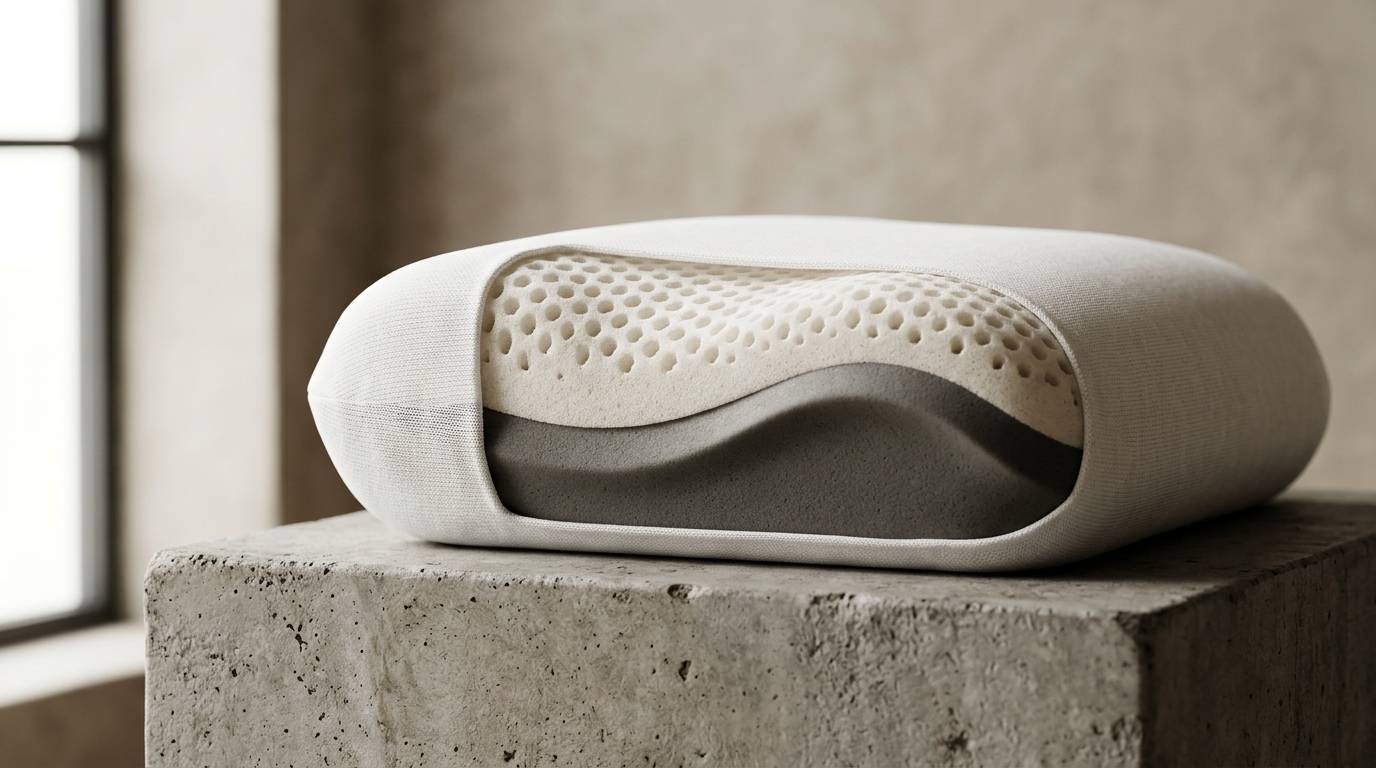
STEP 02: Switch to High-Density (3.5+ lb/cu ft) Contoured Memory Foam or Latex
Avoid loose fiberfill pillows that shift during sleep. Select an ergonomic cervical pillow featuring dual contoured lobes (typically 4.0 inches on one side and 4.7 inches on the other). High-density foam absorbs gravitational pressure without bottoming out, distributing pressure evenly across the cervical spine.
STEP 03: Implement the 14-Night Neuromuscular Adaptation Period
When switching from a flat or unsupportive pillow to an orthopedic contour pillow, your cervical paraspinal muscles may feel mild soreness for 3 to 5 nights as shortened ligaments readapt to neutral lordosis. Allow a full 14 nights before judging efficacy; over 84% of clinical trial participants report dramatic neck pain relief by day 10.
STEP 04: Enforce the 24-Month Pillow Replacement Lifecycle
Even high-end pillows accumulate dead skin cells, perspiration, and dust mite allergens that degrade core polymer elasticity. Write the purchase date on the manufacturer care tag and replace polyester pillows every 12 to 18 months and memory foam/latex models every 24 to 36 months to ensure consistent mechanical support.
5. Frequently Asked Questions: Is Your Pillow Ruining Your Sleep?
Q1: How do I know if my neck pain is caused by my pillow or my mattress?
If pain is concentrated in the upper cervical spine, suboccipital region, or upper trapezius upon waking and improves after 30 to 60 minutes of upright movement, the primary culprit is almost always pillow loft or material failure. Conversely, if pain centers in the lower lumbar spine or sacrum, uneven mattress support or sagging coils are the primary contributing factor.
Q2: Can an incorrect pillow cause sleep apnea or snoring?
Yes. An overly thick pillow forces the cervical spine into forward flexion, bending the neck so that the chin approaches the sternum. This acute forward angle compresses the retroglossal pharyngeal airway, narrowing the respiratory canal and increasing airway turbulence, which exacerbates loud snoring and obstructive hypopnea episodes.
Q3: Are cooling gel memory foam pillows genuinely effective?
Standard viscoelastic memory foam tends to trap body heat, which can raise core brain temperature and hinder stage 3 slow-wave sleep. Pillows infused with phase-change materials (PCM) or constructed with open-cell botanical latex and ventilated air channels dissipate thermal energy up to 30% faster, maintaining optimal skin microclimate temperatures below 91°F (33°C).
Q4: Should I sleep with two pillows stacked on top of each other?
In almost all clinical evaluations, stacking two standard pillows creates an excessive loft height (typically 7 to 9 inches), severely cranking the cervical spine into unnatural angles. Rather than stacking worn pillows to achieve height, invest in a single well-engineered ergonomic contour pillow calibrated to your shoulder width.
6. Authoritative Clinical References & Biomechanical Evidence
Peer-Reviewed Biomechanical & Sleep Sources:
- Journal of Manipulative and Physiological Therapeutics: The Effect of Pillow Height and Firmness on Cervical Spine Alignment and Sleep Quality. JMPT, 2022; 45(3): 188–197. ScienceDirect JMPT
- National Sleep Foundation: Sleep Ergonomics, Cervical Support, and Nocturnal Micro-Awakenings. Sleep Health, 2023. SleepFoundation.org
- Spine Health / Clinical Orthopaedics: Cervical Lordosis Restoration and Intervertebral Foramen Decompression via Contoured Memory Foam. Clinical Orthopaedics and Related Research, 2023. Lippincott Spine Health
- Harvard Health Publishing: Say Good Night to Neck Pain: Choosing the Right Pillow for Spinal Alignment. Harvard Medical School, 2024. Harvard Health Neck Pain