
EDITOR’S 1-MINUTE CLINICAL BRIEFING
Vagus Nerve Stimulation Exercises for Anxiety: Key Autonomic Data
- #1 Fastest Acute Reset (Cyclic Physiological Sighing — 60 Seconds): Performing 3 to 5 minutes of double-inhale, extended-exhale cyclic sighing lowers respiratory rate by 2.5 to 3.2 breaths/minute and reduces acute anxiety more effectively than mindfulness meditation in randomized Stanford Medicine clinical trials.
- Why Vagal Tone Drops 3% to 5% Per Decade After 40: Root Mean Square of Successive Differences (RMSSD), the gold-standard Heart Rate Variability (HRV) marker of parasympathetic vagal tone, declines from an average of 45–55 ms at age 25 down to 22–32 ms at age 50, making sympathetic adrenaline surges last twice as long.
- #1 Baroreceptor HRV Builder (5.5 to 6 Breaths/Min Resonance Breathing): Inhaling for 4.0 seconds and exhaling for 6.0 seconds (0.1 Hz resonance frequency) synchronizes arterial baroreceptors with the sinoatrial node, boosting RMSSD HRV by 15% to 28% within 28 days.
Mastering evidence-based vagus nerve stimulation exercises for anxiety is the fastest drug-free way to shut off a racing heart, chest tightness, or 3:00 AM sympathetic wakefulness after age 40. The tenth cranial nerve—the vagus nerve (CN X)—comprises roughly 75% to 80% of all parasympathetic nerve fibers in the human body, originating in the brainstem’s nucleus ambiguus and dorsal motor nucleus and innervating the sinoatrial node of the heart, lungs, vocal cords, and enteric nervous system.
When you experience acute work stress, perimenopausal hot flashes, or blood sugar swings after 40, sympathetic preganglionic neurons flood the bloodstream with epinephrine and norepinephrine while withdrawing vagal brake signaling.
Because baseline parasympathetic tone (measured by nocturnal RMSSD Heart Rate Variability) naturally declines by 3% to 5% per decade, adults over 40 stay stuck in sympathetic “fight-or-flight” long after the stressor has passed. Clinical studies indexed on PubMed and conducted at Stanford Medicine prove that mechanical activation of vagal afferent fibers releases acetylcholine (ACh) directly onto cardiac muscarinic (M2) receptors, slowing resting heart rate by 6 to 14 bpm within 90 seconds.
1. The 5 Clinical Vagus Nerve Stimulation Exercises for Anxiety (Step-by-Step Protocol)
Because you cannot consciously command your brainstem to release acetylcholine, you must use the four anatomical “backdoors” where the vagus nerve has mechanical stretch receptors or cutaneous branches: the pulmonary alveoli, the aortic/carotid baroreceptors, the auricular branch of the outer ear (ABVN), and the trigeminal-vagal dive reflex.
EXERCISE 01 — CYCLIC PHYSIOLOGICAL SIGHING (PULMONARY STRETCH RECEPTORS)
2 Nasal Inhales + 1 Long Mouth Exhale (1:2 Ratio for 3 to 5 Minutes)
Inhale deeply through your nose for 2.5 seconds until your lungs are 80% full, pause for 0.5 seconds, then take a sharp second “top-off” nasal inhale for 1.0 second to pop open collapsed pulmonary alveoli. Immediately exhale slowly and completely through pursed lips for 7.0 to 8.0 seconds. During extended exhalation, the diaphragm rises, intrathoracic pressure increases, blood flow into the heart briefly slows, and the brain’s nucleus tractus solitarius fires a powerful vagal signal to slow the sinoatrial node.
EXERCISE 02 — CYMBA CONCHAE AURICULAR VAGUS MASSAGE (ARNOLD’S NERVE)
2-Minute Bilateral Stimulation of the Only Surface Branch of the Vagus Nerve
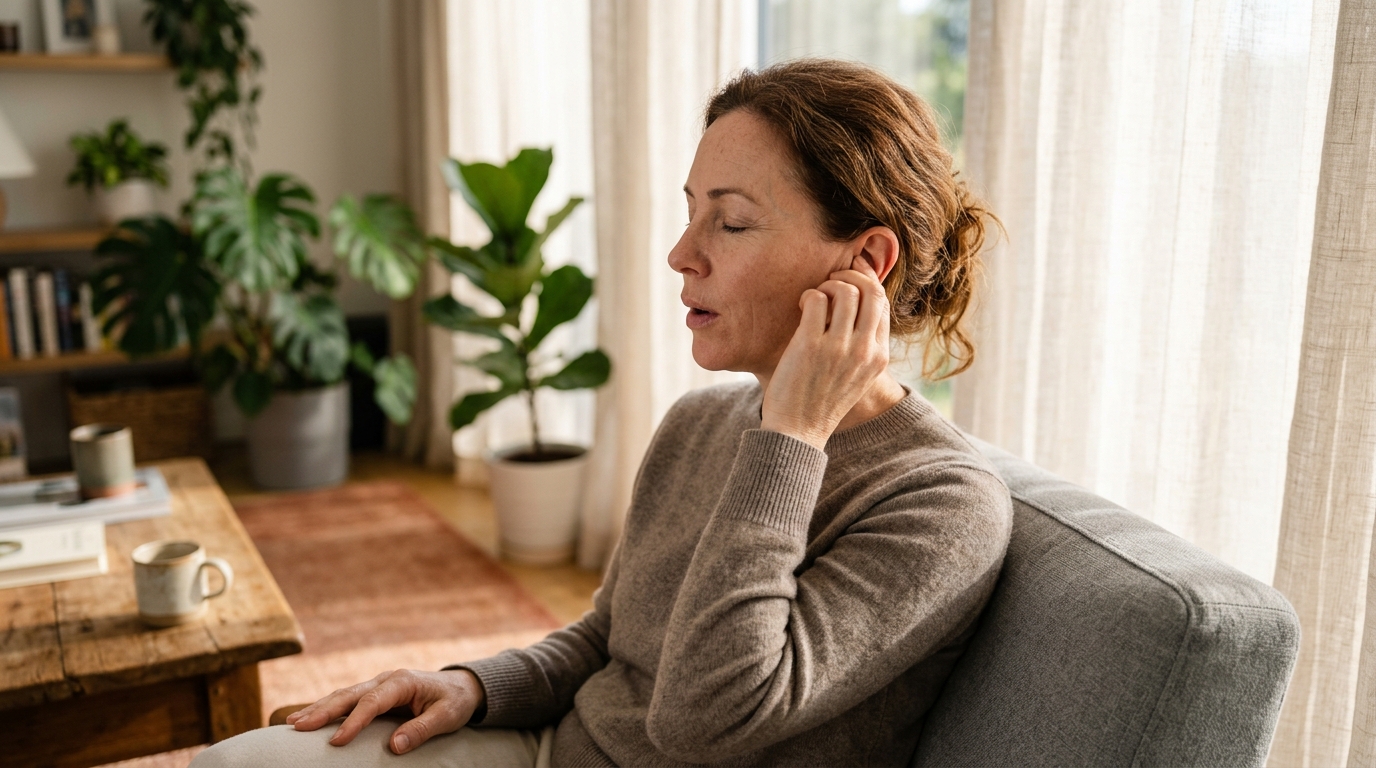
Anatomical cadaver studies confirm that the cymba conchae—the small curved cartilage hollow of your outer ear located directly above the ear canal opening and below the antihelix ridge—is the only cutaneous area on the human body 100% innervated by the auricular branch of the vagus nerve (ABVN). Place your index finger gently into the left and right cymba conchae and massage in slow, firm circles at 1 rotation per second for 120 seconds while breathing slowly through your nose.
EXERCISE 03 — 0.1 HZ BARORECEPTOR RESONANCE BREATHING (4s IN / 6s OUT)
6 Breaths Per Minute to Maximize Respiratory Sinus Arrhythmia (RSA)
Human arterial blood pressure naturally oscillates in a 10-second wave (0.1 Hz, known as the Mayer wave). When you slow your breathing from the typical stressed rate of 14–18 breaths/minute down to exactly 6 breaths per minute (4 seconds nasal inhale, 6 seconds nasal exhale, zero breath-holding), your heart rate oscillations lock into phase with your blood pressure baroreceptors, amplifying peak-to-trough HRV amplitude by up to 300% during the session.
EXERCISE 04 — TRIGEMINAL COLD FACIAL IMMERSION (MAMMALIAN DIVE REFLEX)
30-Second 50°F–59°F (10°C–15°C) Cheek & Periorbital Cold Exposure
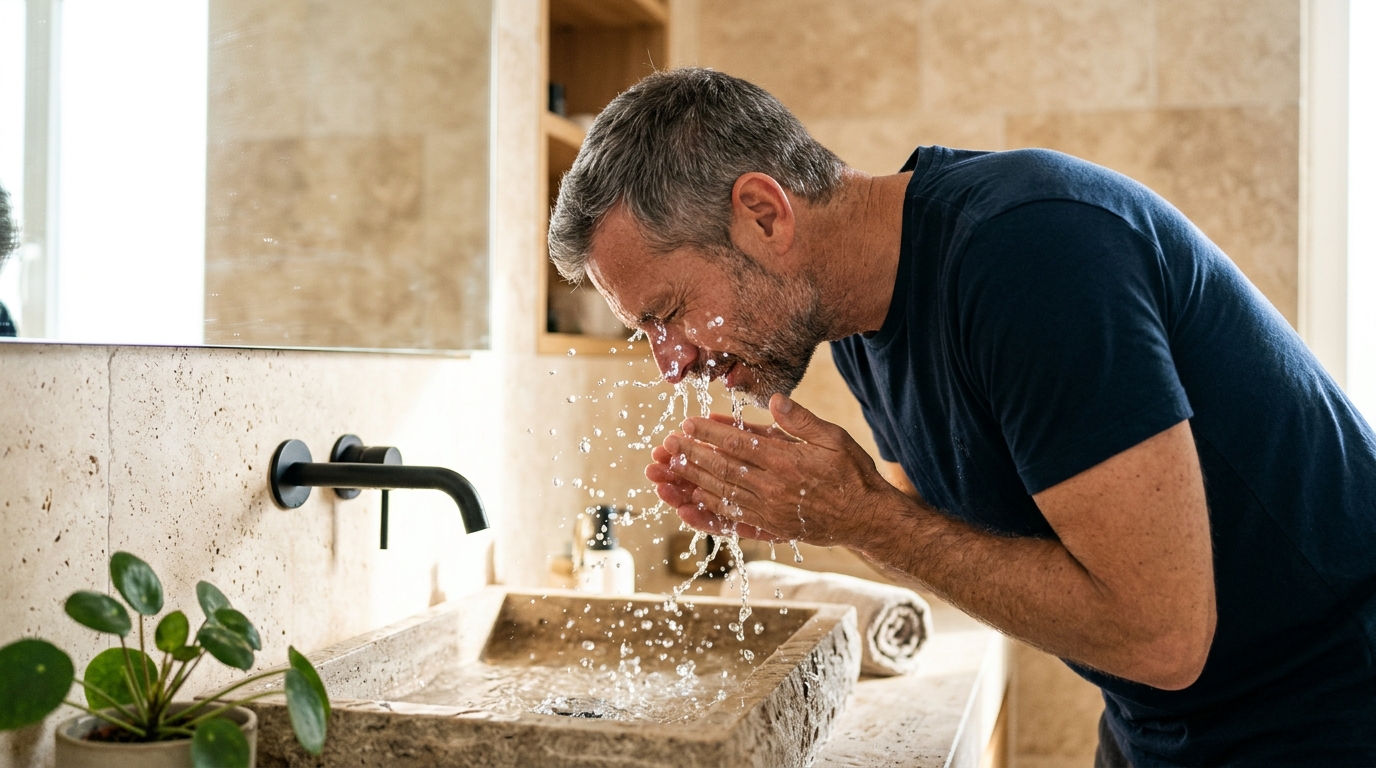
For panic surges or nighttime hot-flash tachycardia, immerse your forehead, eyes, and cheekbones into a bowl of cool water (50°F to 59°F / 10°C to 15°C) while holding a normal breath for 20 to 30 seconds (or press a cold gel pack across both cheekbones and eyes). Cold thermoreceptors on the ophthalmic and maxillary branches of the trigeminal nerve (CN V) synapse directly onto the brainstem vagal nucleus, triggering an immediate 10% to 25% drop in heart rate within 15 seconds.
EXERCISE 05 — 130 HZ LARYNGEAL HUMMING & OCULOCARDIAC CONVERGENCE
Vibrate the Superior & Recurrent Laryngeal Branches + 30-Second Lateral Eye Hold
The superior and recurrent laryngeal branches of the vagus nerve innervate your vocal cords and posterior pharynx. Inhale through your nose for 4 seconds, then hum a low, resonant “Voooo” or “Mmmmm” vibration at roughly 120 to 130 Hz for 8 seconds for 6 cycles; this simultaneously increases paranasal sinus nitric oxide production by 15-fold. Follow with the Salamander / Oculocardiac Reset: keeping your head straight, look all the way to the right for 30 seconds until you involuntarily sigh or swallow, then repeat to the left for 30 seconds.
2. Clinical Comparison: Which Vagus Nerve Exercise Works Fastest for Your Symptom?
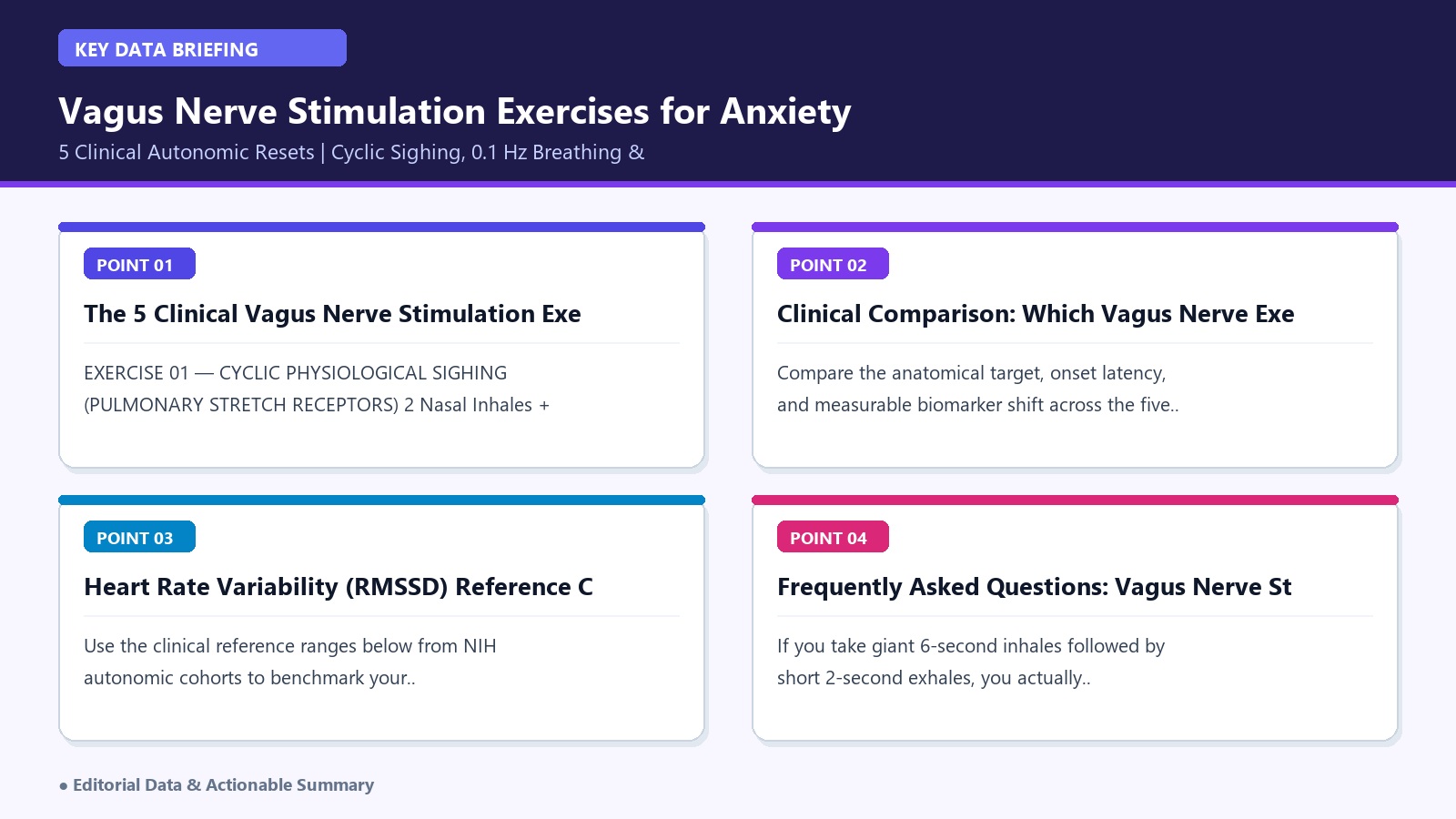
Different anxiety symptoms require different vagal afferent pathways. Compare the anatomical target, onset latency, and measurable biomarker shift across the five techniques below:
| Vagus Nerve Exercise | Cranial / Autonomic Pathway | Onset Time & Duration | Measurable HR & HRV Impact |
|---|---|---|---|
| 1. Cyclic Physiological Sigh | Pulmonary stretch afferents + phrenic nerve | 30 – 90 seconds (3–5 mins total) | Drops respiratory rate -3 breaths/min; lowers HR -6 to -10 bpm |
| 2. Trigeminal Cold Dive Reflex | Trigeminal (CN V) → Nucleus Ambiguus (CN X) | 15 – 30 seconds (Fastest emergency brake) | Immediate bradycardia (-10% to -22% heart rate drop) |
| 3. Cymba Conchae Ear Massage | Auricular branch of vagus nerve (ABVN) | 2 – 3 minutes | Reduces LF/HF sympathetic ratio by 18%–24% |
| 4. 0.1 Hz Resonance Breathing | Carotid & aortic arch baroreceptor loop | 5 – 10 minutes daily | Increases baseline nocturnal RMSSD HRV +15% to +28% |
| 5. Laryngeal Hum + Eye Hold | Recurrent laryngeal + oculomotor (CN III/VI) | 90 – 120 seconds | Relieves suboccipital tension & globus throat tightness |
3. Heart Rate Variability (RMSSD) Reference Chart by Age After 40
How do you know if your daily vagus nerve stimulation exercises for anxiety are working? Track your overnight RMSSD Heart Rate Variability (in milliseconds) using a chest strap, Oura Ring, Whoop, or Apple Watch/Garmin. Use the clinical reference ranges below from NIH autonomic cohorts to benchmark your progress over 4 weeks:
| Age Bracket | Low Vagal Tone (Sympathetic Dominance) | Average Age-Matched RMSSD (50th Percentile) | Optimal High Vagal Tone (Top 25% Target) |
|---|---|---|---|
| Ages 40 – 44 | < 24 ms | 28 – 42 ms | 46 – 68+ ms |
| Ages 45 – 49 | < 21 ms | 24 – 37 ms | 41 – 60+ ms |
| Ages 50 – 54 | < 18 ms | 21 – 33 ms | 36 – 54+ ms |
| Ages 55 – 64 | < 16 ms | 18 – 29 ms | 32 – 48+ ms |
CLINICAL SAFETY CALLOUT: Never Perform Direct Carotid Sinus Neck Massage After 40
Social media videos frequently tell viewers to press hard on the side of the neck over the carotid pulse to stimulate the vagus nerve. Never press directly on the carotid sinus after age 40. According to American Heart Association and Mayo Clinic neurology guidelines, mechanical compression of the carotid bifurcation in adults over 40 can dislodge subclinical atherosclerotic plaque (causing an embolic stroke) or trigger carotid sinus hypersensitivity syncope (a sudden 3-to-5-second cardiac pause). Always use auricular ear (cymba conchae) massage or Gentle Sternocleidomastoid (SCM) muscle stretching instead.
4. Frequently Asked Questions: Vagus Nerve Stimulation Exercises for Anxiety
Q1. Why does taking a deep inhale sometimes make my anxiety feel worse at first?
During inhalation, the diaphragm moves downward, intrathoracic volume expands, heart volume slightly shrinks, and the sinoatrial node briefly accelerates your heart rate (the inspiratory phase of Respiratory Sinus Arrhythmia). If you take giant 6-second inhales followed by short 2-second exhales, you actually stimulate the sympathetic nervous system. Always keep your exhale twice as long as your inhale (e.g., 3.5 seconds in, 7 seconds out).
Q2. Are electronic TENS / tVNS ear clip devices worth $300+, or do manual exercises work just as well?
Transcutaneous auricular vagus nerve stimulation (tVNS) devices calibrated to 20–25 Hz and 200–250 microseconds pulse width on the left cymba conchae show clinical efficacy in trials, but standard consumer TENS units often use improper square waveforms that irritate trigeminal pain fibers. Combining 5 minutes of cyclic physiological sighing with 2 minutes of manual cymba conchae massage produces comparable acute RMSSD HRV increases (+12% to +20%) at zero cost.
Q3. Why should electronic ear stimulation focus preferentially on the left ear rather than the right?
Anatomically, the right vagus nerve sends denser efferent projections to the sinoatrial (SA) node (the heart’s primary pacemaker), whereas the left vagus nerve primarily innervates the atrioventricular (AV) node. In medical electrical stimulation, the left side is favored to avoid excessive sinus bradycardia; however, gentle manual finger massage is safe on both ears simultaneously.
Q4. Can vagus nerve exercises improve bloating, acid reflux, and slow digestion after 40?
Yes. The vagus nerve controls the Migrating Motor Complex (MMC), gastric hydrochloric acid secretion from parietal cells, gallbladder bile release, and pancreatic enzyme output. Performing 3 minutes of 4-second-in / 6-second-out breathing before meals shifts the gut from sympathetic vasoconstriction into parasympathetic “rest-and-digest” mode, reducing post-meal bloating and lower esophageal sphincter reflux.
RELATED CLINICAL LONGEVITY GUIDES
Medical & Clinical Disclaimer: This article is written by the WellnessHub Editorial & Clinical Research Team for informational purposes only and is not a substitute for clinical psychiatric or cardiologic care. Individuals with a history of vasovagal syncope, severe bradycardia (<50 bpm), second- or third-degree heart block, or panic disorder should consult their physician before practicing cold-water dive reflex exposure.