
EDITOR’S 1-MINUTE CLINICAL BRIEFING
Insulin Resistance Diet Plan After 40: 3 Core Metabolic Rules
- #1 Clinical Target (HOMA-IR < 1.5 & Fasting Insulin < 6.0 uIU/mL): Standard annual physicals only check fasting glucose, missing early hyperinsulinemia for up to 10 years. A structured insulin resistance diet plan lowers fasting insulin by 28% to 44% within 8 weeks by clearing ectopic liver and muscle fat.
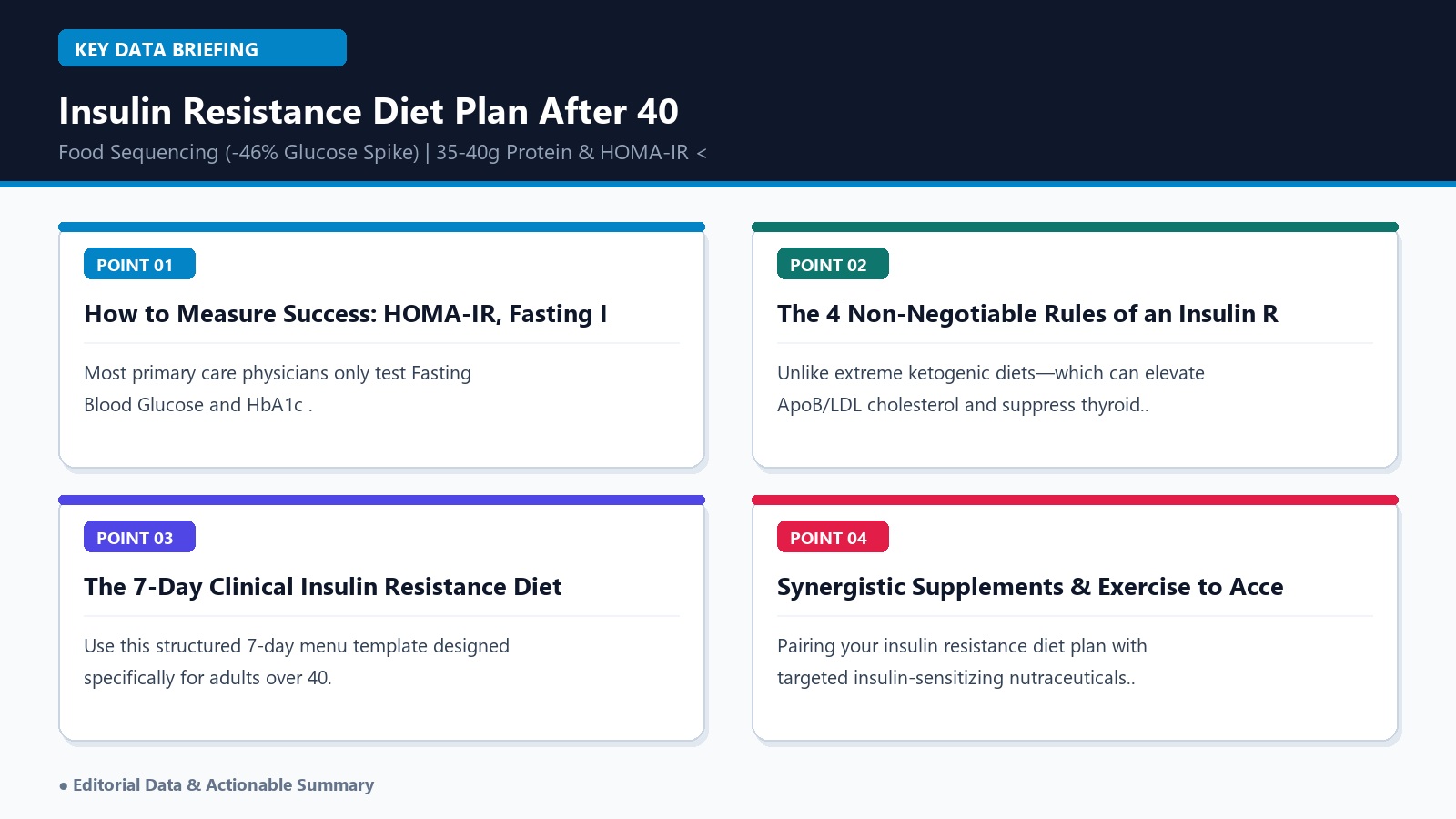
- Weill Cornell Food Sequencing Protocol (-46% Glucose Spike): Eating fibrous non-starchy vegetables and 1 tablespoon diluted apple cider vinegar first, followed by 35g–40g protein and healthy fats, and consuming complex carbohydrates last cuts post-meal insulin spikes by 39% to 46% without changing total calories.
- The 12-Minute Post-Meal GLUT4 Walk: Walking briskly for 12 to 15 minutes within 20 minutes of finishing dinner recruits skeletal muscle GLUT4 transporters via AMPK contraction, clearing blood glucose with zero pancreatic insulin demand.
Designing an effective insulin resistance diet plan after age 40 requires far more nuance than simply “cutting carbs” or starving yourself on 1,200-calorie crash diets. Between ages 40 and 55, adults naturally lose 3% to 8% of skeletal muscle mass per decade while experiencing declining estrogen or free testosterone. Because skeletal muscle is the disposal site for 75% to 80% of all post-meal glucose, even mild muscle loss combined with chronic work stress causes glucose to back up in the bloodstream, forcing the pancreas to pump out 2x to 3x more insulin to keep blood sugar normal.
According to metabolic clinical trials funded by the National Institute of Diabetes and Digestive and Kidney Diseases (NIH NIDDK) and food-order studies published in Diabetes Care (Weill Cornell Medical College), chronically elevated insulin locks adipose tissue in storage mode by inhibiting hormone-sensitive lipase (HSL). Below is the complete, evidence-based 7-day protocol to restore insulin sensitivity, drop visceral waist circumference, and bring your HOMA-IR score into the optimal longevity zone.
1. How to Measure Success: HOMA-IR, Fasting Insulin & Triglyceride-to-HDL Ratio
Before starting an insulin resistance diet plan, know your baseline numbers. Most primary care physicians only test Fasting Blood Glucose and HbA1c. However, your pancreas can mask severe cellular insulin resistance for a decade by overproducing insulin—keeping your fasting glucose at a seemingly “normal” 94 mg/dL while your fasting insulin sits at a dangerous 16 uIU/mL.
Ask your physician or order an independent lab panel for these three gold-standard metabolic markers:
- Fasting Serum Insulin: Reference ranges often list up to 24.9 uIU/mL as “normal,” but metabolically optimal adults over 40 maintain fasting insulin between 2.5 and 6.0 uIU/mL. Anything above 8.0 uIU/mL signals early hyperinsulinemia.
- HOMA-IR Score: Calculated as
(Fasting Glucose [mg/dL] × Fasting Insulin [uIU/mL]) ÷ 405. An optimal HOMA-IR is below 1.0; 1.5 to 1.9 indicates early insulin resistance; above 2.0 confirms clinical insulin resistance and visceral liver fat accumulation. - Triglyceride-to-HDL Ratio: Divide your fasting triglycerides by your HDL cholesterol. A ratio below 1.5 (ideally <1.0) reflects high insulin sensitivity, whereas a ratio above 2.5 strongly correlates with small, dense LDL particles (ApoB) and hepatic de novo lipogenesis.
2. The 4 Non-Negotiable Rules of an Insulin Resistance Diet Plan After 40
Unlike extreme ketogenic diets—which can elevate ApoB/LDL cholesterol and suppress thyroid T4-to-T3 conversion in women over 40—a clinical Mediterranean-style insulin resistance diet plan focuses on glycemic velocity, viscous fiber matrixes, and muscle protein synthesis:
Rule 1: Strict Meal Sequencing (Fiber First → Protein/Fat Second → Starch Last)
In landmark crossover trials by Dr. Louis Aronne at Weill Cornell Medical College, eating the exact same meal in a specific sequence—1st: non-starchy vegetables/salad with olive oil & vinegar; 2nd: animal or legume protein; 3rd: slow complex carbohydrates—reduced 60-minute post-meal blood glucose spikes by 46% and insulin secretion by 39%. Soluble and viscous fibers form a physical gel lattice across the duodenum (for specific lipid-binding fibers, read our guide on Top Soluble Fiber Foods for High Cholesterol & Metabolic Health).
Rule 2: Anchor Every Meal With 35g–40g of Leucine-Rich Protein (No Naked Carbs)
After age 40, skeletal muscle develops “anabolic resistance,” requiring at least 3.0 grams of the amino acid leucine (roughly 35g to 40g of complete protein) per meal to trigger mTOR muscle preservation and stimulate GLP-1 and PYY satiety hormones. Replace high-glycemic breakfasts (oatmeal with brown sugar, bagels, or fruit smoothies) with a Savory 40g Protein Breakfast (such as 3 pasture-raised eggs + 100g smoked wild salmon or cottage cheese + avocado + sauteed spinach).
Rule 3: The Acetic Acid & Resistant Starch Upgrade
Taking 1 tablespoon (15 mL) of raw unfiltered apple cider vinegar diluted in 8 oz of water 10 minutes before your largest carbohydrate meal inhibits salivary and pancreatic alpha-amylase enzymes while increasing muscle glucose uptake by 20% to 30%. Furthermore, when eating rice, potatoes, or oats, cook and chill them for 12–24 hours in the refrigerator before reheating; retrogradation converts digestible starch into Type 3 Resistant Starch, feeding butyrate-producing gut bacteria instead of spiking blood glucose.

3. The 7-Day Clinical Insulin Resistance Diet Plan Matrix (1,800–2,000 kcal, 140g+ Protein)
Use this structured 7-day menu template designed specifically for adults over 40. Every day delivers 135g–150g of complete protein, 38g+ of prebiotic fiber, and keeps net glycemic load low without triggering evening cortisol crashes:
| Day | Breakfast (8:30 AM — Savory 40g Protein) | Lunch (1:00 PM — Fiber + Lean Protein) | Dinner (6:30 PM — Sequenced Plate + 15m Walk) |
|---|---|---|---|
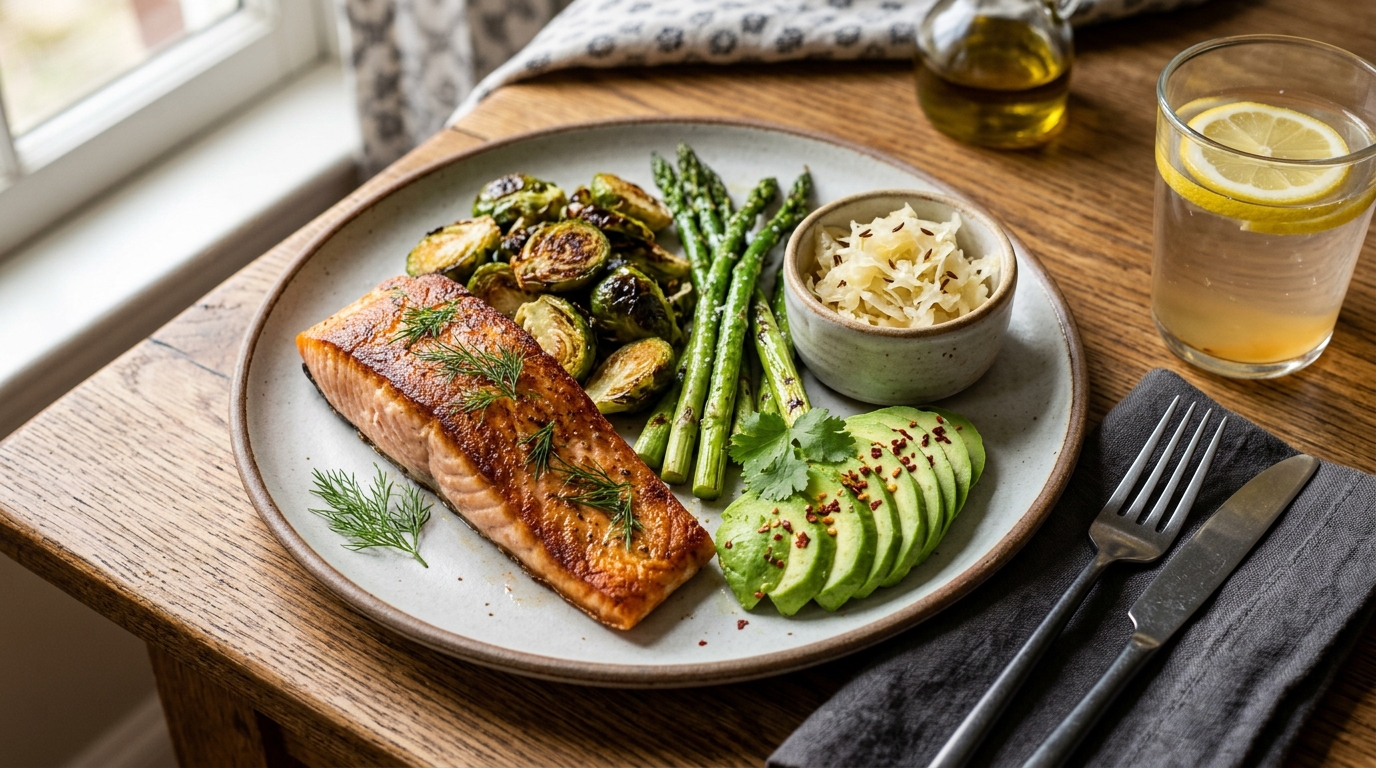
| Mon | 3 pasture eggs + 1/2 cup egg whites scrambled with spinach, mushrooms, feta & 1/2 avocado | 6 oz grilled chicken breast over arugula, pumpkin seeds, olive oil, and 1/2 cup black lentils | 6 oz wild sockeye salmon, roasted Brussels sprouts, sauerkraut & 1/2 cup cooled/reheated quinoa |
| Tue | 200g plain 2% Greek yogurt + 1 scoop whey/collagen isolate + 1 tbsp chia seeds, walnuts & blackberries | Mediterranean tuna & white bean salad with capers, celery, extra-virgin olive oil & mixed greens | 6 oz grass-fed flank steak stir-fry with broccoli, bok choy, ginger, garlic & shirataki/cauliflower rice blend |
| Wed | Smoked wild salmon (4 oz) + 2 poached eggs over sautéed asparagus & 1 slice sprouted Ezekiel toast | Turkey & avocado lettuce wraps (6 oz roast turkey breast) with hummus, cucumber & olives | Baked cod with lemon-caper olive oil, roasted cauliflower mash & sautéed garlicky kale |
| Thu | Cottage cheese bowl (1 cup 2%) + 2 hard-boiled eggs, hemp hearts, cherry tomatoes & everything spice | Grilled shrimp (6 oz) & avocado salad over romaine, hearts of palm, radishes & apple cider vinaigrette | Herb-roasted chicken thighs (6 oz), roasted zucchini, bell peppers & 1/2 cup chickpeas |
| Fri | 3-egg frittata with turkey sausage, bell peppers, onions & 1/2 sliced avocado | Wild salmon burger patty over massaged kale Caesar salad with Parmesan & toasted almonds | Grilled sea bass or halibut (6 oz), steamed artichoke with olive oil & 1/2 cup wild black rice |
| Sat | Chia & flax protein pudding (2 tbsp chia, unsweetened almond milk, 35g whey isolate, cinnamon & raspberries) | Chicken & vegetable bone broth soup loaded with shredded chicken breast, celery, carrots & white beans | Bison or lean grass-fed beef tenderloin (6 oz), grilled asparagus, mushrooms & side Greek salad |
| Sun | Shakshuka (3 eggs poached in spiced tomato-pepper sauce) with 2 oz sheep’s milk feta & greens | Cobb salad with 6 oz grilled chicken, hard-boiled egg, avocado, bacon crumble & olive oil dressing | Oven-baked trout or mackerel (6 oz), roasted fennel, broccoli rabe & 1/2 cup cooled/reheated sweet potato |
4. Synergistic Supplements & Exercise to Accelerate HOMA-IR Reversal
Pairing your insulin resistance diet plan with targeted insulin-sensitizing nutraceuticals and aerobic/resistance training accelerates visceral fat loss by up to 2x (for a complete breakdown of metabolic nutraceuticals, read our Clinical Guide to Visceral Fat & Insulin Resistance Supplements After 40):
- Berberine Phytosome or Dihydroberberine (500 mg Twice Daily Before Meals): Activates cellular AMPK and upregulates insulin receptor expression on hepatocyte and muscle membranes, lowering HOMA-IR by 25% to 36% over 12 weeks.
- Myo-Inositol (2,000 mg to 4,000 mg Daily) + Magnesium Bisglycinate (300 mg): Acts as an intracellular second messenger for insulin signaling while preventing nocturnal cortisol-driven hepatic gluconeogenesis (see How to Stop Waking Up at 3am Cortisol Spikes).
- Zone 2 Mitochondrial Training + Heavy Resistance Lifting: Combine three 45-minute sessions of Zone 2 Cardio at Your Exact 40+ Heart Rate with twice-weekly compound strength training to expand the mitochondrial density that oxidizes fatty acids and clears intramyocellular lipids.
5. Frequently Asked Questions (FAQ)
Q1. How long does it take to reverse insulin resistance on this diet plan?
Hepatic (liver) insulin sensitivity begins improving within 7 to 14 days of eliminating liquid sugars, eating 35g+ protein per meal, and walking 12 minutes after dinner. Measurable reductions in fasting serum insulin, HOMA-IR (dropping below 1.5), and HbA1c typically show up on blood work within 8 to 12 weeks.
Q2. Can I eat fruit on an insulin resistance diet plan after 40?
Yes, provided you choose whole, high-polyphenol, low-glycemic fruits—specifically raspberries, blackberries, blueberries, strawberries, green kiwifruit, and Granny Smith apples—and always consume them at the end of a meal containing protein and fat, never blended into liquid fruit juice or eaten alone on an empty stomach.
Q3. Is 16:8 intermittent fasting good for insulin resistance in women over 40?
Aggressive morning-skipping fasts (drinking black coffee on an empty stomach until 1:00 PM) often backfire in perimenopausal and postmenopausal women by spiking morning cortisol, raising hepatic glucose output, and causing muscle loss. Instead, use a gentle 12-to-13-hour circadian overnight fast (for example, eating breakfast at 8:00 AM and finishing dinner by 7:30 PM) with zero late-night snacking.