
EXECUTIVE CLINICAL BRIEFING | SPORTS NUTRITION & CELLULAR BIOENERGETICS
Creatine Monohydrate vs HCL: Solubility, Dosing & Clinical Decision Matrix (2026)
- The Molecular Distinction: Creatine monohydrate binds creatine to a single water molecule (90% pure creatine by weight), whereas creatine hydrochloride (HCL) attaches a hydrochloric acid salt group, drastically lowering solution pH and accelerating dissolution kinetics.
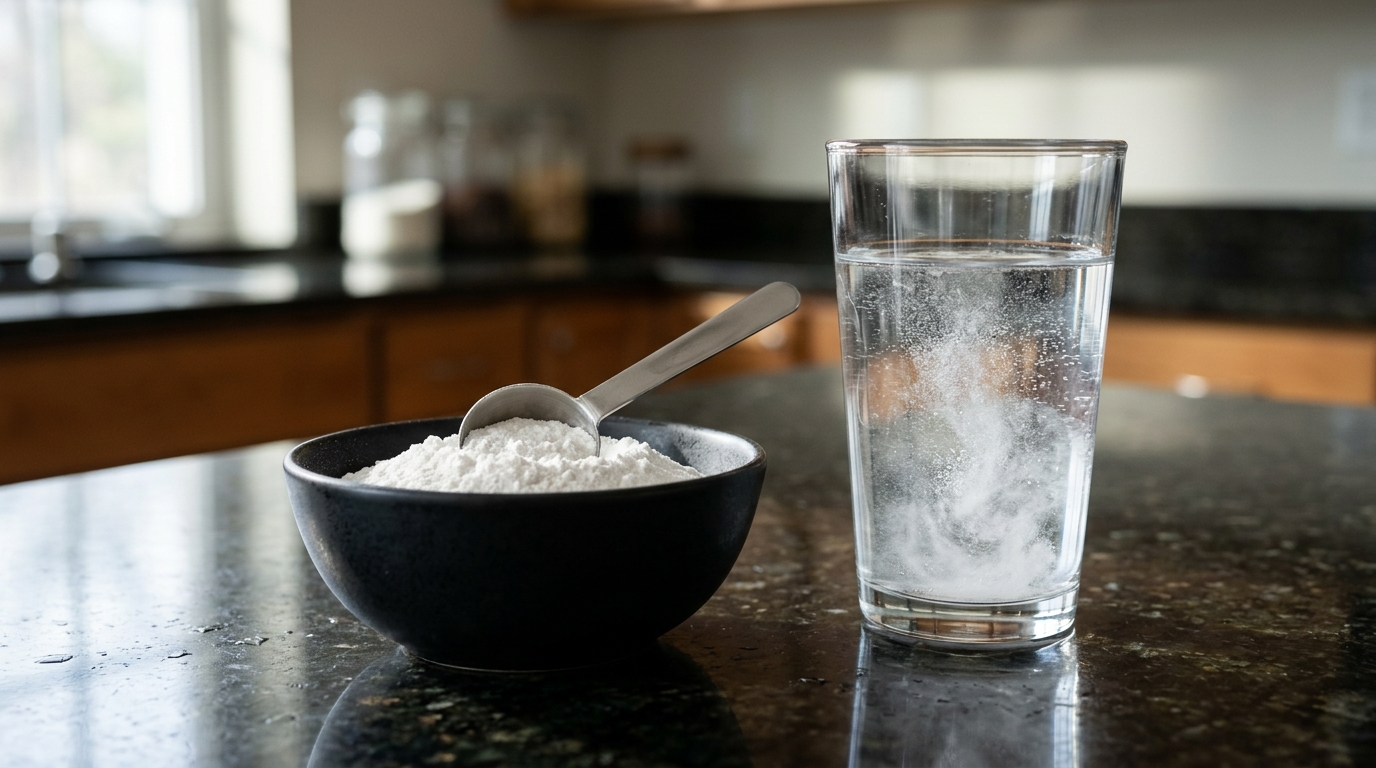
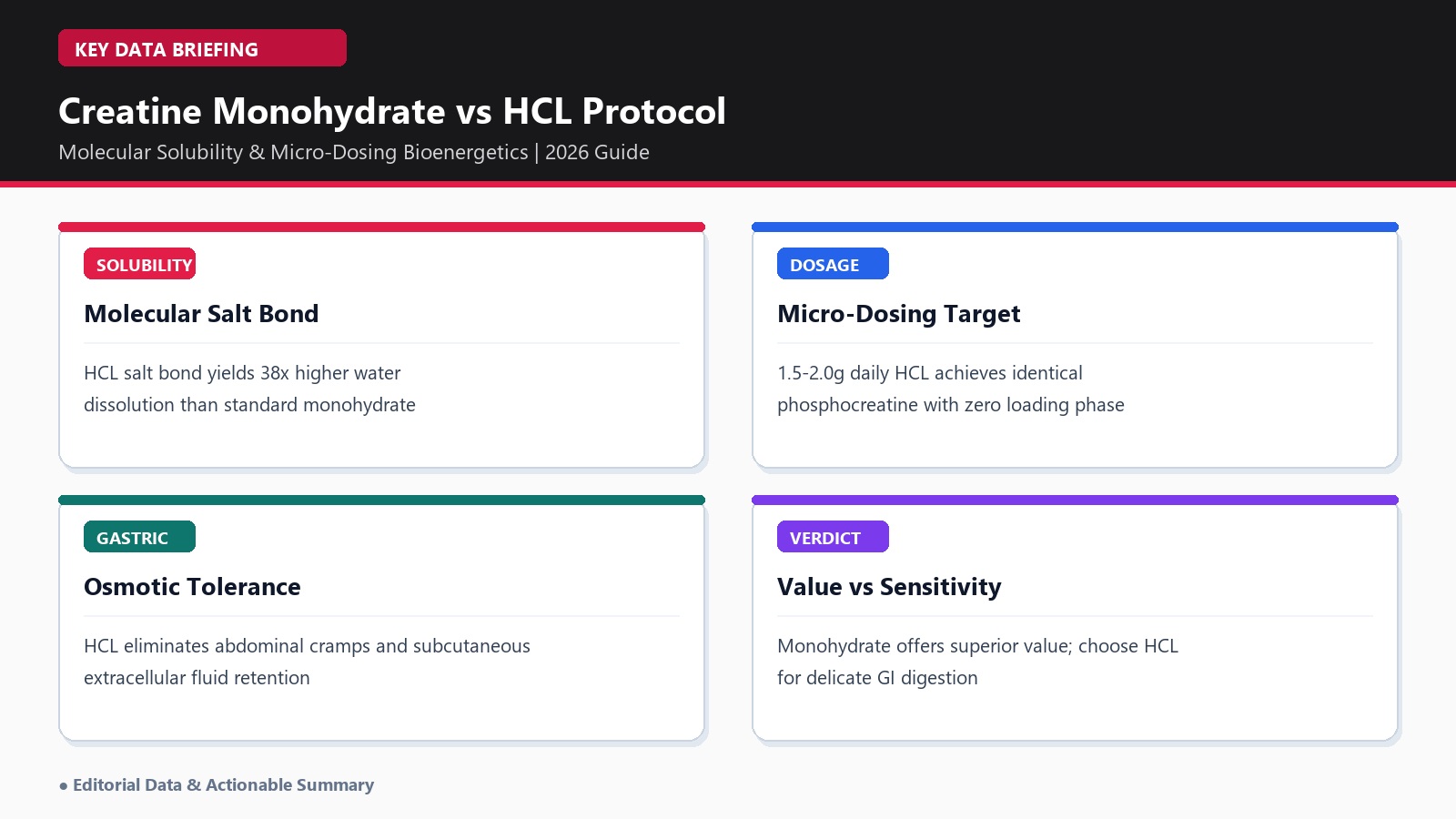
- 38-Fold Solubility Advantage: Research confirms creatine HCL is approximately 38 times more water-soluble than standard monohydrate, allowing full dissolution of a 1.5g to 2.0g clinical serving in just 120 mL of water without grainy sediment.
- Definitive Decision Verdict: Creatine monohydrate delivers identical intracellular phosphocreatine saturation at 70% lower financial cost ($0.08 vs $0.32 per day); however, creatine HCL is the undisputed champion for athletes experiencing osmotic gut cramping or unwanted subcutaneous water retention.
Choosing between creatine monohydrate vs hcl has emerged as one of the most vigorously debated decisions in contemporary sports pharmacology and longevity conditioning. Both compounds ultimately deliver identical free creatine molecules to skeletal muscle tissue to regenerate adenosine triphosphate (ATP), yet their distinct molecular architectures fundamentally alter gastrointestinal tolerance, cellular uptake speed, and daily financial commitment.
Decades of peer-reviewed data compiled by the International Society of Sports Nutrition (ISSN) and indexed on PubMed / National Institutes of Health (NIH) substantiate that increasing intramuscular phosphocreatine stores by 15% to 40% enhances high-intensity power output, accelerates lean muscle accrual, and provides neuroprotective bioenergetic support across midlife adults over 40.
1. Head-to-Head Comparison: Creatine Monohydrate vs HCL Master Matrix
When evaluating creatine monohydrate vs hcl, athletes must weigh bioavailability metrics against cost efficiency. Below is the comprehensive pharmacological and clinical comparison:
| Evaluation Criteria | Creatine Monohydrate (Creapure®) | Creatine Hydrochloride (HCL) | Clinical Winner |
|---|---|---|---|
| Molecular Composition | Creatine molecule + single H2O (87.9% yield) | Creatine molecule + HCl salt group (78.2% yield) | Monohydrate (Higher Yield) |
| Aqueous Solubility | Moderate (~1.0g per 100 mL at 20°C) | Extreme (~38.8g per 100 mL at 20°C) | Creatine HCL (38x Superior) |
| Standard Daily Maintenance Dose | 3.0g to 5.0g daily | 1.5g to 2.0g daily (micro-dosing) | Creatine HCL (Smaller Volume) |
| Loading Phase Necessity | Optional: 20g/day for 5–7 days or 30 days slow | Not required (immediate high micro-absorption) | Creatine HCL (Zero Hassle) |
| Gastrointestinal Side Effects | Bloating & loose stools in 8% to 14% of users | Virtually zero gastric distress reported | Creatine HCL (Gentle on Gut) |
| Cost Per 100 Servings | $18 – $24 (~$0.19 per 5g) | $36 – $55 (~$0.45 per 2g) | Monohydrate (Unbeatable Value) |
| Peer-Reviewed Clinical Human Trials | 1,200+ published randomized trials | ~15 clinical pharmacokinetic studies | Monohydrate (Gold Standard Evidence) |
2. Absorption and Water Retention: Creatine Monohydrate vs HCL Dynamics
The physiological debate surrounding creatine monohydrate vs hcl centers on how the body handles fluid balance and intestinal absorption. To understand why some individuals experience severe puffiness while others remain lean and vascular, we must examine osmotic transport:
✅ Creatine Monohydrate: Cellular Volumization
Monohydrate functions through the SLC6A8 sodium-dependent creatine transporter. As creatine enters myocytes, it draws intracellular water via osmosis, swelling the muscle fiber by 1.5% to 3.0% within 14 days. This intracellular hydration acts as an anabolic trigger, activating mTOR kinase phosphorylation and reducing muscle protein catabolism by up to 12%.
⚡ Creatine HCL: Rapid Micro-Absorption
Due to its conjugated hydrochloric acid salt, creatine HCL lowers the stomach solution pH, preventing premature conversion into waste creatinine. By bypassing the intestinal lumen rapidly without lingering in the colon, HCL avoids pulling excess water across the gut barrier, completely eliminating the painful distension and subcutaneous extracellular fluid retention seen in sensitive lifters.

3. Practical Dosage and Daily Protocols: Which Compound Fits Your Goals?
In clinical trials comparing creatine monohydrate vs hcl, both substances saturate muscular phosphocreatine pools when dosed correctly over a 4-week window. However, dosing regimens differ significantly between the two compounds:
| Athlete Persona & Priority | Recommended Form | Optimal Protocol & Fluid | Expected 8-Week Outcome |
|---|---|---|---|
| Maximum Muscle Mass & Budget Conscious | Creatine Monohydrate | 5g daily with 350 mL warm water or carbohydrate drink | +3.5 to 5.2 lbs total mass; +8% bench press 1RM |
| Sensitive Stomach / Prone to IBS & Cramps | Creatine Hydrochloride (HCL) | 1.5g to 2.0g daily dissolved in 150 mL cold liquid | Zero gastric distress; 100% full muscular saturation |
| Weight-Class Athlete (Combat / Gymnastics) | Creatine Hydrochloride (HCL) | 750 mg per 50 lbs body weight pre-training | Explosive power gain with zero non-functional water weight |
| Healthy Aging / Cognitive Longevity (40+) | Creatine Monohydrate (Creapure®) | 3g to 5g daily in morning coffee or protein shake | Enhanced cortical phosphocreatine & working memory |
4. Cost Efficiency and Gastric Distress: 4-Step Selection Checklist
To avoid wasting supplement budget or suffering unneeded GI side effects, follow this 4-step clinical checklist when choosing between creatine monohydrate vs hcl:
STEP 01: Audit Your Gastrointestinal Sensitivity Threshold
If you have previously taken standard creatine monohydrate and experienced diarrhea, abdominal cramps, or bloating, test a pure 1.5g serving of creatine HCL. If your digestion remains tranquil, you have identified your ideal molecular match. If you tolerate monohydrate with zero digestive friction, there is no clinical requirement to switch.
STEP 02: Verify Third-Party Purity Certifications (Informed-Choice / Creapure®)
Inferior non-patented creatine powders can harbor heavy metals, dicyandiamide, or dihydrotriazine contaminants. For monohydrate, always select products verified as German Creapure® (99.9% pure). For creatine HCL, ensure the label specifies patented CON-CRĒT® or HPLC batch-tested laboratory purity standards.
STEP 03: Calculate Annual Financial Investment ($0.08 vs $0.35 Daily)
Creatine is a lifelong saturation supplement, not a temporary 4-week cycle. A 1,000-gram tub of micronized monohydrate provides 200 daily servings for $28 ($0.14/day). In contrast, 100 servings of creatine HCL costs $38 ($0.38/day), totaling an annual price difference of over $87. Weigh whether gut comfort justifies the 2.7x price premium.
STEP 04: Optimize Hydration and Co-Ingestion Strategy
Regardless of whether you choose monohydrate or HCL, co-ingesting creatine with 20g to 30g of fast-digesting carbohydrates or protein stimulates a moderate insulin spike that upregulates myocellular creatine transport by 18% to 22%. Ensure daily baseline water intake reaches at least 3.0 to 3.5 liters for optimal cellular volumization.
5. Frequently Asked Questions: Creatine Monohydrate vs HCL
Q1: Does creatine HCL really build more muscle than monohydrate?
No. Once ingested and absorbed into the bloodstream, both compounds enter muscle cells as free creatine and convert into phosphocreatine. In blinded clinical trials measuring myofibrillar protein synthesis and 1-rep max strength improvements over 8 to 12 weeks, creatine HCL showed zero statistical superiority over creatine monohydrate when muscular saturation levels were matched.
Q2: Why does creatine monohydrate cause stomach cramps in some people?
Creatine monohydrate has lower dissolution capacity in room-temperature water. When undissolved powder particles enter the gastrointestinal tract, they exert an osmotic pull, drawing surrounding fluid into the small intestine and colon. This localized fluid accumulation causes abdominal distension, intestinal cramping, and loose bowel movements. Dissolving monohydrate in warm liquid or switching to ultra-soluble HCL eliminates this issue completely.
Q3: Do I need to cycle off creatine or complete a 20-gram loading phase?
Neither cycling nor loading is biologically required. While a 5-day loading phase of 20g/day saturates skeletal muscle faster (in 5 to 7 days), taking a steady maintenance dose of 3g to 5g of monohydrate or 1.5g to 2g of HCL daily achieves the exact same intramuscular saturation by day 28 without gastrointestinal upset. Continuous daily supplementation is proven safe for multi-year regimens.
Q4: Can women or adults over 40 take creatine without puffiness or facial bloating?
Yes. Subcutaneous water retention (facial bloating or ankle edema) is a myth when taking therapeutic dosages. Creatine stores water strictly inside intracellular muscle fibers, not under the skin. For women or mature adults who are particularly sensitive to scale weight fluctuations, micro-dosing 1.5 grams of creatine HCL daily delivers full cognitive and sarcopenia-prevention benefits without any noticeable water retention.