
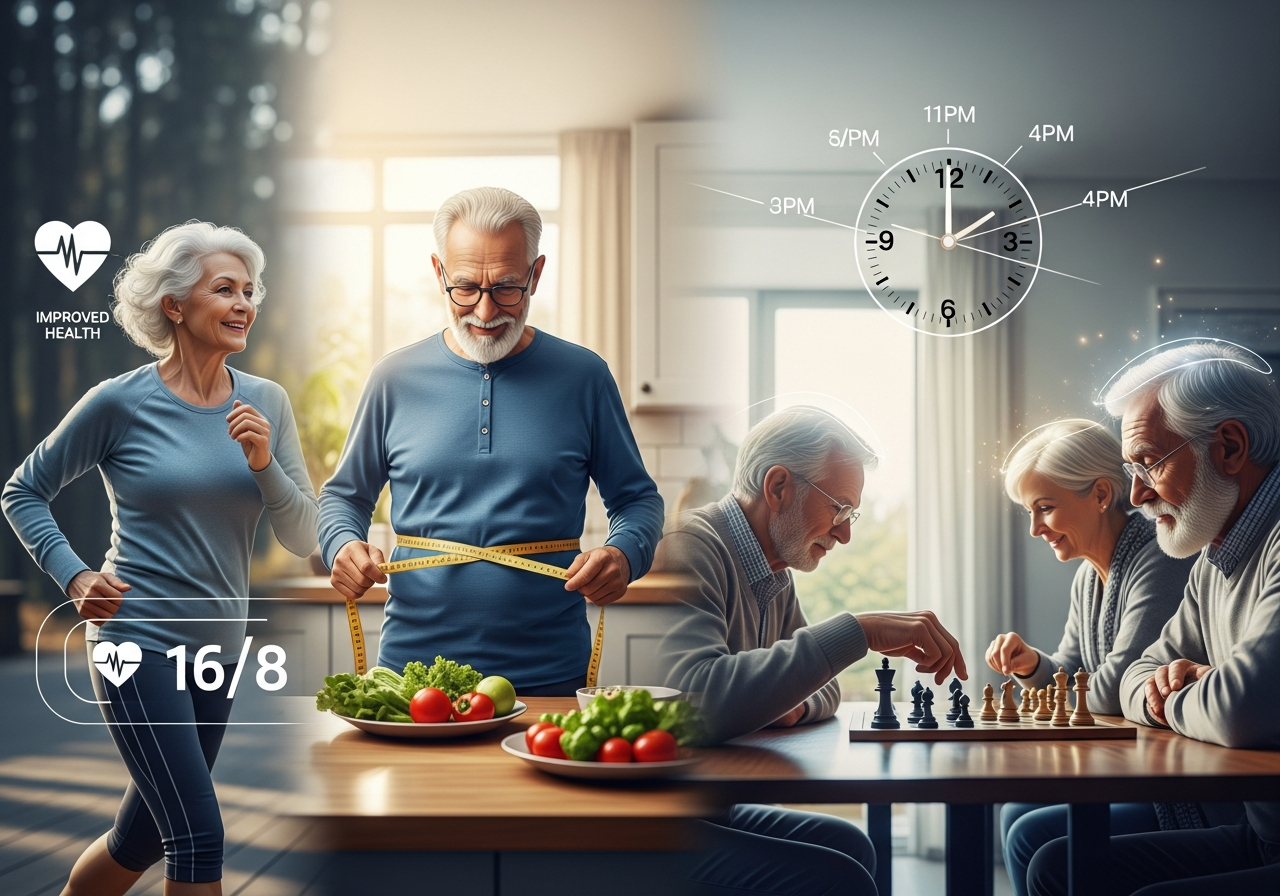
## The Senior’s Guide to Intermittent Fasting: Improved Health and Vitality
As we journey through life, our bodies undergo natural changes. These changes can sometimes bring about health challenges that impact our overall well-being. Many seniors face issues like decreased **insulin sensitivity**, increased inflammation, and a higher risk of age-related diseases. But what if there was a way to navigate these golden years with more vitality and resilience?
**Intermittent fasting (IF)**, a dietary approach that cycles between periods of eating and voluntary fasting on a regular schedule, is emerging as a promising strategy for improving **healthspan**, the period of life spent in good health. The rising tide of research into IF is revealing its potential to positively influence the aging process, offering hope for a healthier and more fulfilling later life.
### Understanding Intermittent Fasting: Types and Methods
**Intermittent fasting (IF)** isn’t a diet in the traditional sense; it’s more of an eating pattern. It revolves around *when* you eat, rather than *what* you eat. This approach has gained considerable attention for its potential health benefits, particularly for older adults.
**Definition:** Intermittent fasting involves structuring your eating schedule to include regular periods of voluntary fasting. This means alternating between times when you eat and times when you abstain from eating, all on a set schedule.
**Application:** There are several popular methods of IF, each with its own unique approach:
* **16/8 Method:** This involves fasting for 16 hours each day and restricting your eating window to 8 hours. For example, you might eat between noon and 8 pm and fast for the remaining 16 hours.
* **5:2 Diet:** With this method, you eat normally for five days a week and restrict your calorie intake to around 500-600 calories on the other two non-consecutive days.
* **Alternate-Day Fasting:** This involves alternating between days of normal eating and days of very low-calorie intake (typically around 500 calories).
**Implication:** The primary benefit of intermittent fasting lies in its ability to trigger various physiological responses in the body. These responses, such as increased **autophagy** and improved **insulin sensitivity**, can have profound effects on health and longevity, especially for seniors.
#### A Brief History of Fasting
Fasting is not a new concept. Throughout history, various cultures and religions have incorporated fasting into their practices for spiritual, health, and even survival purposes. In ancient Greece, figures like Hippocrates advocated for fasting to treat certain illnesses. Many religions, including Islam (Ramadan), Christianity (Lent), and Judaism (Yom Kippur), incorporate fasting rituals. These practices highlight the deep-rooted connection between fasting and human well-being. The current scientific interest in IF builds upon this historical foundation, using modern research methods to understand the mechanisms and potential benefits of this ancient practice.
#### How Intermittent Fasting Works: The Cellular Level
The magic of IF lies in the metabolic and hormonal shifts that occur during the fasting period. When you abstain from eating for a prolonged period, your body begins to tap into its stored energy reserves, primarily fat. This process leads to weight loss and also triggers several beneficial cellular processes.
**Definition:** **Autophagy** is a natural cellular process in which the body cleans out damaged cells in order to regenerate newer, healthier cells.
**Application:** During fasting, cells activate **autophagy**, essentially a cellular “housekeeping” process where damaged or dysfunctional components are broken down and recycled. This helps to clear out cellular debris and promote the health of the cells.
**Implication:** By promoting cellular repair, **autophagy** can help slow down the aging process and protect against age-related diseases.
**Important Note:** *Before embarking on any IF regimen, it’s crucial to consult with your healthcare provider. This is especially important for seniors who may have pre-existing health conditions or be taking medications.*
### The Science Behind Intermittent Fasting and Longevity in Seniors
The scientific community has been buzzing about **intermittent fasting (IF)** and its potential to extend both lifespan and **healthspan**. Numerous studies, primarily conducted on animal models, have shown promising results.
**Definition:** Healthspan refers to the period of life spent in good health, free from chronic diseases and disabilities.
**Application:** Research has demonstrated that IF can significantly increase the lifespan of various organisms, from yeast to rodents. These studies suggest that IF can delay the onset of age-related diseases and improve overall health.
**Implication:** While human studies are still ongoing, the evidence so far is encouraging. Emerging research suggests that IF can have positive effects on various health markers, including:
* Improved blood sugar control
* Reduced inflammation
* Enhanced brain function
* Lower risk of cardiovascular disease
#### The Role of Inflammation and Cellular Repair
Aging is often accompanied by chronic, low-grade inflammation, which contributes to the development of various age-related diseases. IF has been shown to reduce inflammation by modulating the activity of immune cells and promoting the production of anti-inflammatory molecules. Furthermore, as mentioned earlier, IF promotes **autophagy**, a cellular cleaning process that removes damaged components and contributes to cellular rejuvenation.
#### Promising Studies: A Glimpse into the Future
While more research is needed, several studies have explored the effects of IF on humans, including seniors. Some studies have shown that IF can improve **glycemic control** in individuals with type 2 diabetes, while others have found that it can improve cognitive function and reduce the risk of neurodegenerative diseases. These findings suggest that IF holds promise as a strategy for promoting healthy aging and preventing age-related diseases.
### Intermittent Fasting and Insulin Sensitivity in Older Adults
As we age, our bodies tend to become less responsive to insulin, a hormone that regulates blood sugar levels. This condition, known as **insulin resistance**, can lead to elevated blood sugar levels and an increased risk of type 2 diabetes.
**Definition:** Insulin sensitivity refers to how responsive your cells are to insulin. When your cells are sensitive to insulin, it’s easier for glucose to enter cells, and blood sugar levels remain stable.
**Application:** Intermittent fasting has been shown to improve **insulin sensitivity**, helping to regulate blood sugar levels and reduce the risk of type 2 diabetes. By reducing the frequency of meals, IF gives the body a chance to utilize stored glucose and improve its response to insulin.
**Implication:** For seniors, improving **insulin sensitivity** can have a significant impact on overall health. It can help prevent or manage type 2 diabetes, reduce the risk of cardiovascular disease, and improve cognitive function.
#### The Link Between Insulin Resistance and Aging
As we age, several factors contribute to **insulin resistance**, including:
* Decreased physical activity
* Increased body fat
* Changes in hormone levels
* Genetic predisposition
**Insulin resistance** can have a cascading effect on health, leading to a range of complications, including:
* Type 2 diabetes
* Cardiovascular disease
* Non-alcoholic fatty liver disease
* Cognitive decline
#### Research Findings: IF and Blood Sugar Management
Several studies have investigated the effects of IF on **insulin sensitivity** and blood sugar control in older adults. These studies have generally found that IF can improve **insulin sensitivity**, lower blood sugar levels, and reduce the need for diabetes medication.
### Practical Guide to Intermittent Fasting for Seniors: Getting Started Safely
If you’re a senior considering trying **intermittent fasting (IF)**, it’s essential to approach it with caution and prioritize safety. Here’s a step-by-step guide to help you get started:
1. **Consult Your Healthcare Provider:** This is the most crucial step. Talk to your doctor or a registered dietitian before starting any IF regimen, especially if you have any pre-existing health conditions or are taking medications.
2. **Start Slowly:** Don’t jump into a rigorous IF schedule right away. Begin with a less demanding method, such as the 16/8 method, and gradually increase the fasting window as you feel comfortable.
3. **Choose the Right Method:** Consider your individual needs and preferences when selecting an IF method. Some seniors may find the 16/8 method easier to manage, while others may prefer the 5:2 diet.
4. **Stay Hydrated:** Drink plenty of water throughout the day, especially during fasting periods. Dehydration can lead to dizziness, fatigue, and other unpleasant side effects.
5. **Eat Nutrient-Dense Foods:** During your eating windows, focus on consuming whole, unprocessed foods that are rich in nutrients. This includes fruits, vegetables, lean protein, and healthy fats.
6. **Monitor Your Blood Sugar:** If you have diabetes or are at risk of developing it, monitor your blood sugar levels regularly during IF.
7. **Listen to Your Body:** Pay attention to how your body responds to IF. If you experience any negative side effects, such as dizziness, fatigue, or muscle loss, adjust your fasting schedule or discontinue IF altogether.
Here’s a Sample IF Schedule Using the 16/8 Method:
* **7:00 AM:** Wake up and drink water.
* **8:00 AM – 12:00 PM:** Fasting period (drink water, black coffee, or unsweetened tea).
* **12:00 PM – 8:00 PM:** Eating window (consume nutritious meals and snacks).
* **8:00 PM – 7:00 AM:** Fasting period.
### Potential Risks and Considerations for Seniors
While **intermittent fasting (IF)** offers potential benefits for seniors, it’s crucial to be aware of the potential risks and considerations.
**Definition:** Sarcopenia: The age-related loss of muscle mass and strength.
**Application:** Muscle loss, also known as **sarcopenia**, is a significant concern for older adults, as it can lead to decreased mobility, increased risk of falls, and reduced quality of life. IF may potentially exacerbate muscle loss if not managed carefully.
**Implication:** To mitigate the risk of muscle loss, seniors need to ensure they consume adequate protein during their eating windows. Aim for at least 1.0-1.2 grams of protein per kilogram of body weight per day.
Here are some other potential risks and considerations:
* **Dizziness and Fatigue:** These are common side effects of IF, especially when starting out. Staying hydrated and gradually increasing the fasting window can help minimize these effects.
* **Nutrient Deficiencies:** IF can increase the risk of nutrient deficiencies if you’re not careful about eating a balanced diet during your eating windows.
* **Medication Interactions:** IF may interact with certain medications, such as those for diabetes or blood pressure. It’s essential to discuss your IF plans with your doctor to ensure there are no potential interactions.
| ✅ Pros | ❌ Cons |
|———————————–|————————————–|
| May Improve Insulin Sensitivity | Potential for Muscle Loss if not enough protein |
| Can aid in weight management | Possible Dizziness and Fatigue |
| Could reduce inflammation | Risk of Nutrient Deficiencies |
| May enhance Brain function | Possible negative reaction with certain meds |
### Conclusion: Embracing Intermittent Fasting for a Healthier, Longer Life
**Intermittent fasting (IF)** is a promising strategy for promoting healthy aging and improving the quality of life for seniors. By improving **insulin sensitivity**, reducing inflammation, and promoting cellular repair, IF can help prevent or manage age-related diseases and extend **healthspan**. However, it’s crucial to approach IF with caution, consult with your healthcare provider, and listen to your body.
Remember, IF is not a one-size-fits-all approach. What works for one person may not work for another. It’s essential to find an IF method that suits your individual needs and preferences.
By embracing IF as part of a holistic approach to health and well-being, seniors can unlock their golden years and enjoy a healthier, longer, and more fulfilling life.
Today’s Wellness Action Tip: Start by consulting with your doctor or a registered dietitian to determine if intermittent fasting is right for you. If so, begin with a less demanding method, such as the 16/8 method, and gradually increase the fasting window as you feel comfortable.