EDITOR’S 1-MINUTE CLINICAL BRIEFING
Spirulina Benefits and Daily Dosage After 40: Evidence Summary
- #1 Active Molecule (C-Phycocyanin — NADPH Oxidase Inhibitor): Spirulina’s emerald-blue pigment C-phycocyanin mimics protective human bilirubin, suppressing vascular oxidative stress, boosting endothelial nitric oxide (-4.6 mmHg systolic BP), and cutting seasonal allergic rhinitis congestion at 2,000 mg/day.
- Proven Cardiometabolic Dose (3,000 mg – 5,000 mg Daily for 12 Weeks): Meta-analyses of randomized controlled trials show 3g to 5g/day reduces fasting triglycerides by -44 mg/dL, LDL cholesterol by -41 mg/dL, and MASLD liver enzymes (ALT/AST).
- 2 Non-Negotiable Safety Warnings: Never buy cheap open-pond spirulina (high risk of neurotoxic microcystins, lead, and arsenic—demand USP Verified US/Hawaiian closed-basin cultivation), and never rely on spirulina for Vitamin B12 (it contains inactive pseudovitamin B12).
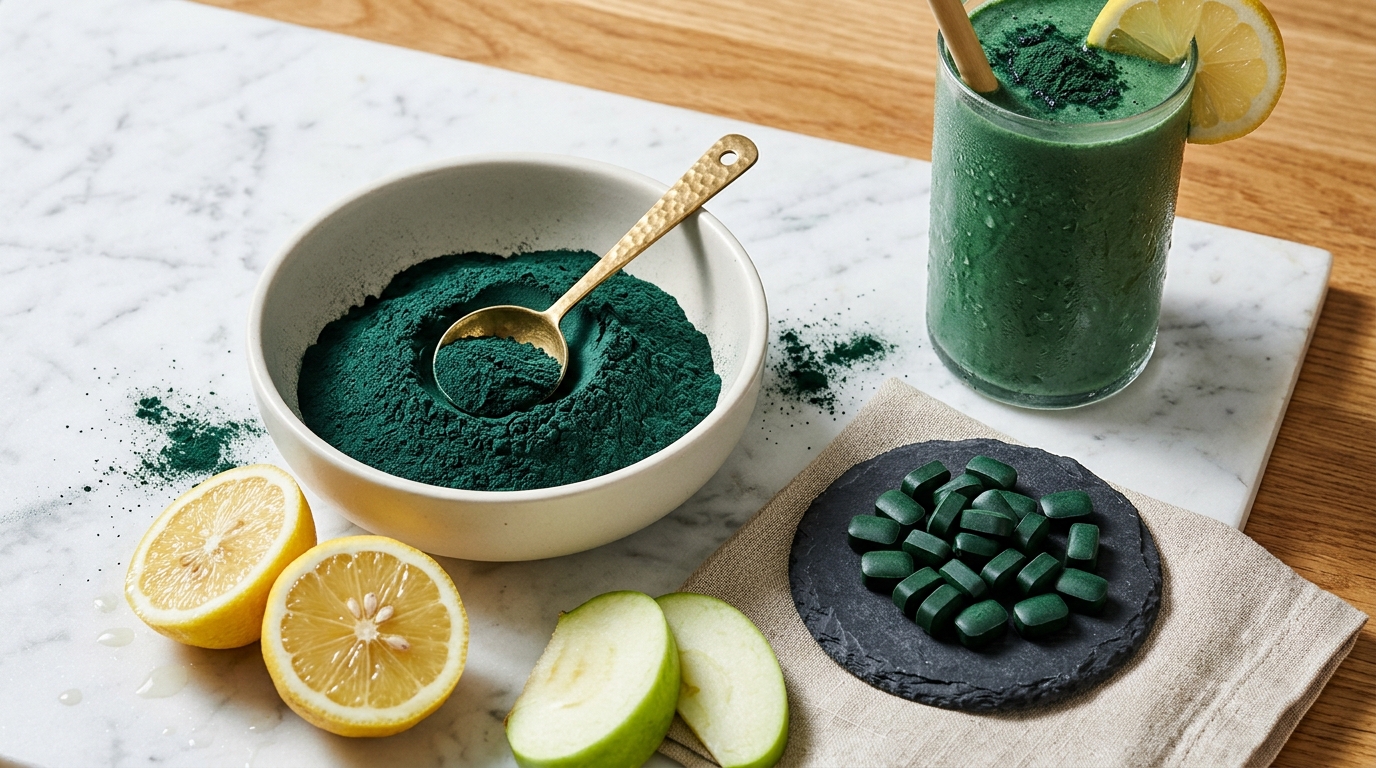
Evaluating spirulina benefits and daily dosage through rigorous human clinical trials—rather than “superfood smoothie” hype—reveals one of nature’s most pharmacologically dense microalgae. Technically a filamentous cyanobacterium (Arthrospira platensis) rather than a true marine kelp, spirulina thrives in high-alkaline, high-sunlight mineral waters where it synthesizes 60% to 70% complete protein by dry weight alongside rare tetrapyrrole pigments found nowhere in land vegetables.
According to clinical safety and efficacy reviews from the NIH MedlinePlus Natural Medicines Database and lipid meta-analyses published in Clinical Nutrition, standardized spirulina delivers striking improvements in atherogenic lipids, endothelial blood pressure, allergic histamine reactivity, and liver fat—if and only if you select toxin-screened batches and dose within the validated 2,000 mg to 5,000 mg window.
1. Top 4 Clinical Benefits of Spirulina After 40 (Powered by C-Phycocyanin)
While spirulina contains gamma-linolenic acid (GLA), zeaxanthin, superoxide dismutase, and bioavailable iron, nearly 80% of its therapeutic punch comes from C-phycocyanin—a brilliant blue light-harvesting biliprotein comprising 15% to 20% of high-grade spirulina powder:
- 1. Lipid Remodeling & Fatty Liver (MASLD) Reduction: In a landmark meta-analysis of 7 randomized controlled trials (Serban et al.), adults supplementing with spirulina experienced a mean drop of -46.7 mg/dL in total cholesterol, -44.2 mg/dL in fasting triglycerides, and -41.3 mg/dL in LDL-C, while raising protective HDL-C by +6.0 mg/dL. C-phycocyanin binds bile acids in the jejunum and inhibits pancreatic lipase/cholesterol esterase (stack this with our 30-Day Triglyceride Lowering Protocol).
- 2. Vascular Nitric Oxide & Blood Pressure Support (Gilbert Syndrome Mimicry): Clinicians have long noted that individuals with mildly elevated endogenous bilirubin (Gilbert syndrome) enjoy a 50%+ lower rate of heart disease because bilirubin potently inhibits NADPH oxidase (NOX) superoxide damage in arteries. Phycocyanorubin inside spirulina shares an almost identical molecular backbone to bilirubin, preserving endothelial nitric oxide (eNOS) and lowering systolic blood pressure by 4.59 mmHg and diastolic BP by 3.20 mmHg in hypertensive meta-analyses (see Nitric Oxide Foods for Blood Pressure).
- 3. Seasonal Allergic Rhinitis & Histamine Relief: In double-blind placebo-controlled ENT trials, 2,000 mg/day of spirulina suppressed interleukin-4 (IL-4) by 32% and inhibited mast-cell IgE histamine degranulation—significantly outperforming placebo for nasal congestion, sneezing, and itching without the cognitive anticholinergic fog of first-generation antihistamines.
- 4. VO2 Max Time-to-Exhaustion & Bioavailable Non-Heme Iron: Just 3 grams of spirulina supplies ~2–3 mg of highly absorbable iron bound to phycobiliproteins, proven in UC Davis senior clinical trials to counteract age-related anemia and boost skeletal muscle fat oxidation during endurance exercise.
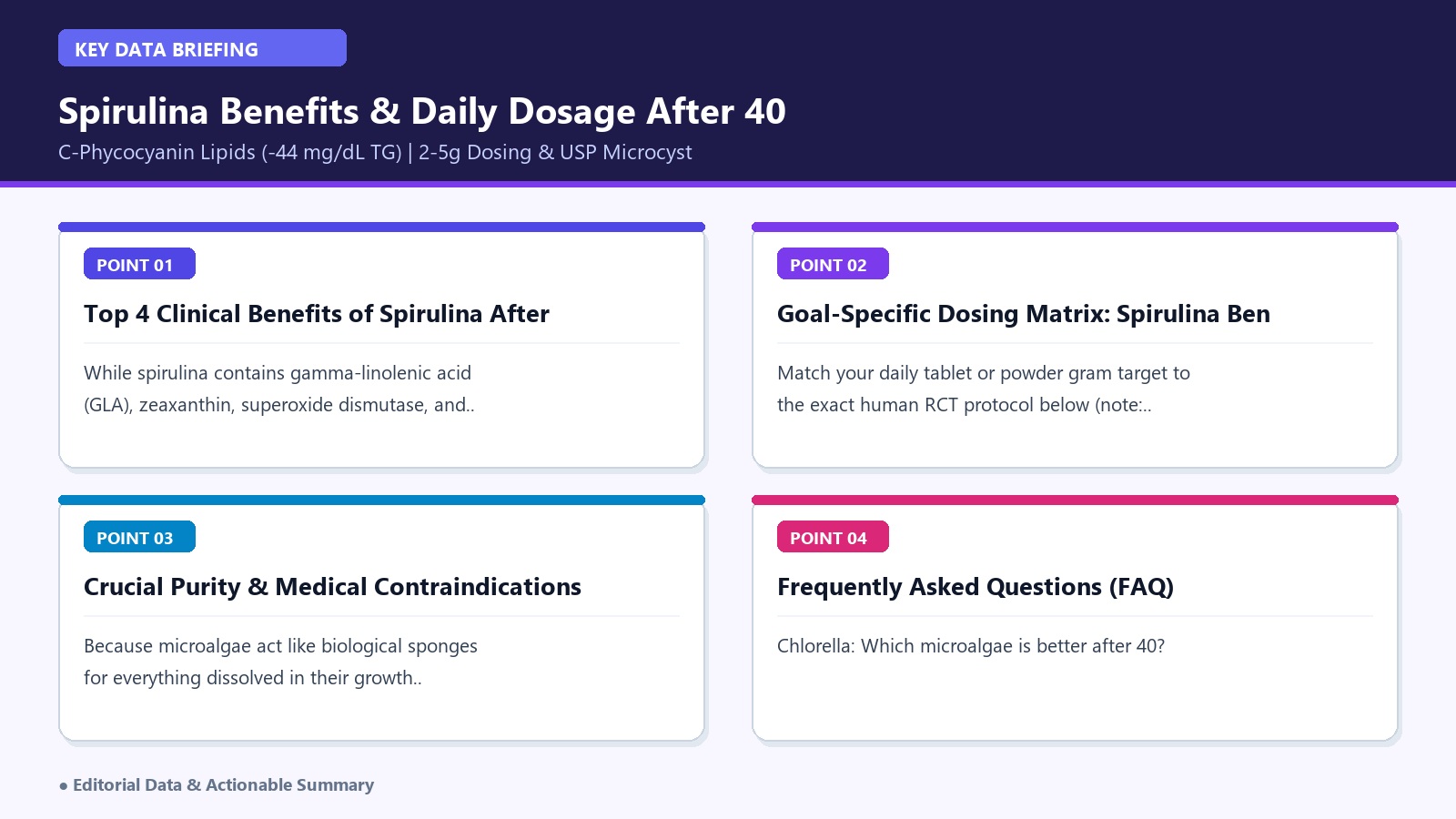
2. Goal-Specific Dosing Matrix: Spirulina Benefits and Daily Dosage
Match your daily tablet or powder gram target to the exact human RCT protocol below (note: most standard spirulina tablets weigh 500 mg each, meaning 6 tablets = 3.0 grams; 1 level teaspoon of powder = ~3.0 grams):
| Primary Health Goal After 40 | Validated Daily Dosage | Best Delivery Format & Timing | Clinical Trial Timeline |
|---|---|---|---|
| 1. Allergic Rhinitis & Sinus Histamine Control | 2,000 mg (2.0 g) / day | Four 500mg tablets with breakfast | 4 to 8 weeks (start 3 weeks pre-pollen season) |
| 2. LDL Cholesterol, Triglycerides & Blood Pressure | 3,000 mg – 5,000 mg (3–5 g) / day | 1 rounded tsp powder in cold morning smoothie, or split 2g AM / 2g lunch | 8 to 12 weeks before repeat lipid panel |
| 3. Endurance VO2 Max & Fatty Liver (ALT/AST) | 4,500 mg – 6,000 mg (4.5–6 g) / day | Powder blended with berries, lemon & whey/pea protein (never boil/cook—heat destroys phycocyanin above 115°F!) | 6 to 12 weeks |
3. Crucial Purity & Medical Contraindications After 40
Because microalgae act like biological sponges for everything dissolved in their growth water, quality control matters more for spirulina than almost any other supplement on the market:
Warning 1: Microcystin Liver Toxins, Heavy Metals & Sourcing
Independent laboratory audits by ConsumerLab and university toxicology teams have repeatedly found uncertified imported spirulina powders contaminated with hepatotoxic microcystins (from co-blooming wild Microcystis aeruginosa bacteria), lead, arsenic, cadmium, and BMAA neurotoxins. Only purchase spirulina grown in lined, closed-system potable aquifer ponds in Kona, Hawaii or Southern California carrying USP Verified or California Prop-65 / ISO batch certificates of analysis.
Warning 2: The Inactive “Pseudovitamin B12” Trap
Many vegan blogs falsely claim spirulina is a rich source of Vitamin B12. Biochemical chromatography proves over 83% of the B12-like compound in spirulina is “pseudovitamin B12” (adeninylcobamide), which is biologically inactive in humans! Worse, pseudovitamin B12 can bind to intrinsic factor and show up as normal “Total Serum B12” on a standard blood test while masking dangerous intracellular B12 neurological deficiency and rising homocysteine. Adults over 50 and plant-based eaters must still take sublingual Methylcobalamin B12 (see our Decade-by-Decade Supplement Guide After 40).
Warning 3: Autoimmune Disease, Anticoagulants & PKU Contraindications
Because spirulina polysaccharides stimulate natural killer (NK) cells, macrophage interferon-gamma, and innate immune signaling, dermatology case reports at the University of Pennsylvania document acute flares in patients with autoimmune pemphigus vulgaris, dermatomyositis, systemic lupus erythematosus (SLE), multiple sclerosis, and rheumatoid arthritis. Avoid spirulina if you have an autoimmune condition, take immunosuppressants, have phenylketonuria (PKU), or have elevated uric acid/gout sensitivity to high nucleic-acid foods.
4. Frequently Asked Questions (FAQ)
Q1. Spirulina vs. Chlorella: Which microalgae is better after 40?
Spirulina lacks a rigid cellulose cell wall (making it instantly digestible with zero “cracked-cell” processing needed) and is uniquely rich in C-phycocyanin for cholesterol, triglycerides, nitric oxide, and allergy relief. Chlorella is a true green single-celled alga higher in chlorophyll, lutein, and bioavailable active B12, primarily used to bind dietary dioxins/heavy metals in the gut. For cardiometabolic and sinus health, spirulina has vastly stronger human RCT backing.
Q2. Does spirulina contain iodine or affect Hashimoto’s hypothyroidism?
Unlike ocean kelp, bladderwrack, or wakame seaweed (which contain massive, thyroid-disrupting doses of iodine), authentic freshwater-cultivated spirulina contains virtually zero iodine. However, if your hypothyroidism is driven by autoimmune Hashimoto’s thyroiditis (elevated TPO antibodies), introduce spirulina cautiously or avoid it due to its general Th1 immune-stimulating activity.
Q3. How do you mask the strong pond-like taste of spirulina powder—or are tablets equally effective?
Cold-pressed 100% pure spirulina tablets (containing zero magnesium stearate or silica binders) offer identical bioavailability to loose powder without staining your teeth or blender! If using powder, acidity neutralizes the earthy sulfur notes instantly: blend 1 teaspoon with half a squeezed lemon, frozen pineapple or blueberries, fresh mint, and unsweetened almond milk (for optimal digestion tips, see Managing Supplement Side Effects).