

EDITOR’S 1-MINUTE CLINICAL BRIEFING
How to Avoid Weight Gain Perimenopause: 3 Metabolic Shifts
- #1 The Protein Leverage Effect (1.6g–1.8g Protein/kg Body Weight): Declining estradiol accelerates lean muscle protein breakdown, triggering an unconscious hypothalamic drive to overeat 250 to 350 extra calories per day until amino acid needs are met. Hitting 35g–40g complete protein at breakfast shuts off afternoon sugar cravings.
- Why “Eat Less & Run More” Backfires After 42: Severe 1,200-kcal dieting combined with daily high-heart-rate bootcamps spikes serum cortisol and suppresses active thyroid hormone (free T3), accelerating visceral belly fat storage while cannibalizing metabolically active glute and leg muscle.
- Polarized Training Replaces hormonal Loss: Two to three weekly sessions of heavy compound lifting (5–8 reps) plus brisk Zone 2 walking restores insulin-independent GLUT4 glucose disposal that 17-beta-estradiol previously handled automatically.
Figuring out how to avoid weight gain perimenopause is deeply frustrating when the exact nutrition and exercise habits that kept you lean in your 30s suddenly stop working at age 43 or 46. Many women report eating cleaner than ever and logging five days a week of spin classes or running—yet watching a stubborn 8 to 15 pounds accumulate directly around their midsection and ribcage within 18 months.
According to longitudinal body-composition DEXA data from the landmark NIH Study of Women’s Health Across the Nation (SWAN) and University of Sydney metabolic trials published in BJOG: An International Journal of Obstetrics & Gynaecology, perimenopausal fat redistribution is not caused by a “suddenly broken metabolism” or lack of willpower.
Instead, erratic fluctuations and eventual decline in ovarian progesterone and 17-beta-estradiol (E2) fundamentally rewire where your body stores fat, how your muscles respond to insulin, and how your brain regulates appetite. Below is the clinical protocol to stay lean, muscular, and metabolically flexible throughout the transition.
1. Why Fat Shifts to Your Belly After 40: Estradiol, Lipoprotein Lipase & Protein Leverage
In your 20s and 30s, steady ovulatory 17-beta-estradiol directs fat storage safely into subcutaneous gluteofemoral depots (hips and thighs) while suppressing an enzyme called lipoprotein lipase (LPL) inside deep abdominal visceral fat. Simultaneously, estradiol enhances mitochondrial fatty-acid beta-oxidation and insulin sensitivity inside skeletal muscle.
When perimenopause begins—often 6 to 8 years before your final menstrual period, even while cycles still appear mostly regular—three simultaneous metabolic shifts occur:
- Visceral Adipose Tissue (VAT) Doubling: SWAN DEXA scans show that even when total body weight stays relatively stable, visceral intra-abdominal fat jumps from 5%–8% of total fat mass pre-menopause to 15%–20% post-menopause because lower estradiol relative to free androgens unlocks visceral fat LPL storage gates.
- The “Protein Leverage Effect” Appetite Trap: Groundbreaking research by Professors Stephen Simpson and David Raubenheimer demonstrated that elevated Follicle-Stimulating Hormone (FSH) and falling estrogen increase net whole-body protein breakdown by 0.5% to 1.0% per year. If you continue eating a typical 12%–14% protein diet (such as toast/oatmeal for breakfast and a light salad for lunch), your brain triggers relentless grazing until it hits its daily amino acid target—automatically causing 250 to 350 kcal/day of passive excess calorie intake.
- Luteal Progesterone Drop & Cortisol Amplification: Progesterone is the first hormone to fall in early perimenopause. Without progesterone to buffer adrenal aldosterone and hypothalamic cortisol receptors, poor sleep and fasted morning cardio trigger sharp blood sugar and insulin spikes.
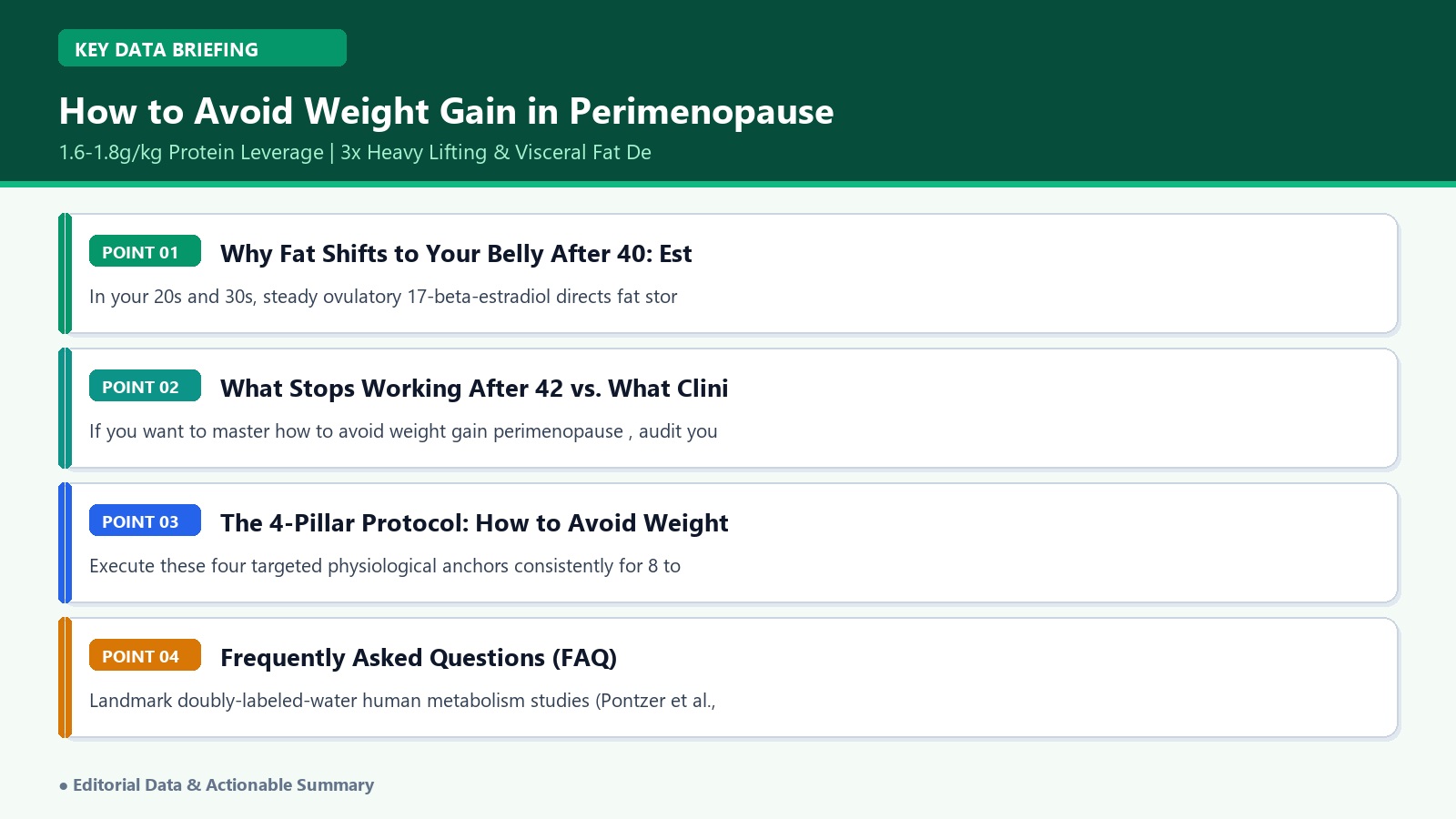
Avoid Protocol: 2. What Stops Working After 42 vs. What Clinically Works
If you want to master how to avoid weight gain perimenopause, audit your current routine against the four biggest hormonal mistakes women over 40 make:
| Outdated 30s Habit | Why It Backfires in Perimenopause | Clinical Perimenopause Upgrade | Expected 12-Week Metabolic Impact |
|---|---|---|---|
| 1. Fasted Morning Coffee + Skipping Breakfast Until 1:00 PM | Compounds the morning Cortisol Awakening Response, breaking down lean muscle for gluconeogenesis and triggering 8:00 PM binge cravings | Eat 35g–40g savory protein within 60 minutes of waking; use a gentle 12-hour overnight fast | Blunts morning cortisol by 25%, preserves lean mass & eliminates evening snacking |
| 2. Chronic “Zone 3” Moderate-Hard Cardio (45m Bootcamps / Jogging) | Too intense to burn pure fat, not heavy enough to build Type II muscle fibers; keeps systemic inflammation and appetite chronically elevated | Polarize: 3x Heavy Lifting (5–8 reps) + 8,500 daily Zone 1/2 steps + 1x short SIT sprint session | Rebuilds resting metabolic rate (+70–120 kcal/day) & shrinks visceral waist circumference |
| 3. Low-Protein Salads & 1,200 kcal Crash Diets | Up to 35% of weight lost on low-protein diets after 45 is skeletal muscle and bone mineral—causing rapid rebound fat gain | Target 1.6g–1.8g protein/kg ideal weight (110g–135g/day) with a modest 250–300 kcal deficit | Triggers Protein Leverage satiety (GLP-1 & PYY) while protecting lumbar/hip bone density |
| 4. Evening Glass of Wine to Unwind | Pauses hepatic fat oxidation for up to 12 hours, worsens night sweats, and triggers a 3:00 AM cortisol/glutamate rebound | Swap weekday alcohol for tart cherry sparkling water + 300mg Magnesium Bisglycinate | Restores deep slow-wave sleep growth hormone pulses & morning insulin sensitivity |
3. The 4-Pillar Protocol: How to Avoid Weight Gain Perimenopause
Execute these four targeted physiological anchors consistently for 8 to 12 weeks to halt midsection fat gain and re-composition your body:
Pillar 1: Hit the 3.0-Gram Leucine Threshold Three Times Daily (120g–135g Total Protein)
Without estrogen priming muscle satellite cells, women over 40 require at least 35 to 40 grams of high-leucine protein per meal (yielding ~3.0g of leucine) to flip the cellular mTOR muscle-building switch. Distribute your intake evenly across Breakfast (40g), Lunch (40g), and Dinner (40g) using wild salmon, pasture eggs, 2% Greek yogurt, cottage cheese, chicken breast, lean grass-fed beef, or whey/pea-leucine isolate—and sequence fibrous vegetables before starches at every meal (for a full 7-day menu, see our 7-Day Insulin Resistance Diet Plan After 40).

Pillar 2: Lift Heavy 3x/Week & Add 5g Creatine Monohydrate
As exercise physiologist Dr. Stacy Sims emphasizes, high-rep light-dumbbell circuits do not generate sufficient central nervous system motor-unit recruitment to replace lost estrogen signaling. Perform 3 weekly 40-minute strength sessions centered on heavy compound lifts—goblet or back squats, trap-bar deadlifts, overhead presses, and chest-supported rows for 4 sets of 6 to 8 reps (see What Exercises Are Best for Bone Density After 40). Pair your training with 5 grams of daily micronized creatine monohydrate, which enhances intramuscular water hydration, strength output, and prefrontal brain ATP during hormone fluctuations.
Pillar 3: Support the Gut “Estrobolome” (35g Fiber + Cruciferous & Flax Lignans)
During early and mid-perimenopause, wild estrogen surges occur when gut dysbiosis elevates an enzyme called beta-glucuronidase, which uncouples detoxified estrogen in the colon and forces it back into circulation—causing breast tenderness, water retention, and stubborn hip/belly bloat. Consume 2 tablespoons of freshly ground flaxseeds daily (rich in phytoestrogenic secoisolariciresinol lignans that modulate estrogen receptors), 1–2 cups of cooked cruciferous vegetables (broccoli sprouts, Brussels sprouts, kale containing indole-3-carbinol/DIM precursors), and 35g+ of total soluble and insoluble fiber daily.
Pillar 4: Guard Deep Sleep & Discuss Menopause Hormone Therapy (MHT) Timing
Even a single night of fragmented 5-hour sleep from night sweats or 3:00 AM awakenings reduces next-day insulin sensitivity by 25% to 30% and elevates ghrelin hunger hormones (apply our 3:00 AM Cortisol & Sleep Rescue Protocol). In addition, consult a Menopause Society-certified clinician regarding bioidentical oral micronized progesterone (for luteal sleep/anxiety relief) or transdermal 17-beta-estradiol when indicated; large clinical studies confirm transdermal estradiol significantly attenuates visceral abdominal fat accumulation without increasing hepatic clotting factors.
4. Frequently Asked Questions (FAQ)
Q1. Does perimenopause slow down basal metabolic rate (BMR) directly?
Landmark doubly-labeled-water human metabolism studies (Pontzer et al., Science) revealed that intrinsic organ metabolic rate remains remarkably stable between ages 20 and 60. The 100-to-200 kcal/day drop in daily energy burn observed in perimenopause comes almost entirely from loss of lean skeletal muscle mass and subtle reductions in spontaneous non-exercise movement (NEAT) due to fatigue and poor sleep—both of which are 100% reversible with heavy lifting and 1.6g/kg protein intake.
Q2. Will lifting heavy weights or taking creatine make me look bulky or bloated in perimenopause?
No. Women in their 40s have 10x to 15x lower circulating testosterone than men, making “bulky” hypertrophy physiologically impossible from 3 weekly strength workouts. Instead, heavy compound lifting increases muscle density and resting tone while shrinking waist circumference. Similarly, 3g to 5g of micronized creatine monohydrate draws water inside muscle cells (intracellular hydration), not under the skin as subcutaneous bloat.
Q3. Which blood tests should I request if perimenopause weight refuses to budge?
Subclinical hypothyroidism and iron deficiency frequently overlap with perimenopause and stall fat loss. Ask your physician for a complete metabolic audit: TSH, Free T4, Free T3, TPO Thyroid Antibodies, Fasting Insulin (HOMA-IR), HbA1c, ApoB, Serum Ferritin (target 60–100 ng/mL), and 25(OH) Vitamin D.