
EDITOR’S 1-MINUTE CARDIOLOGY NUTRITION BRIEFING
Choosing the Best Diet for Heart Health After 40: Biomarker Verdict
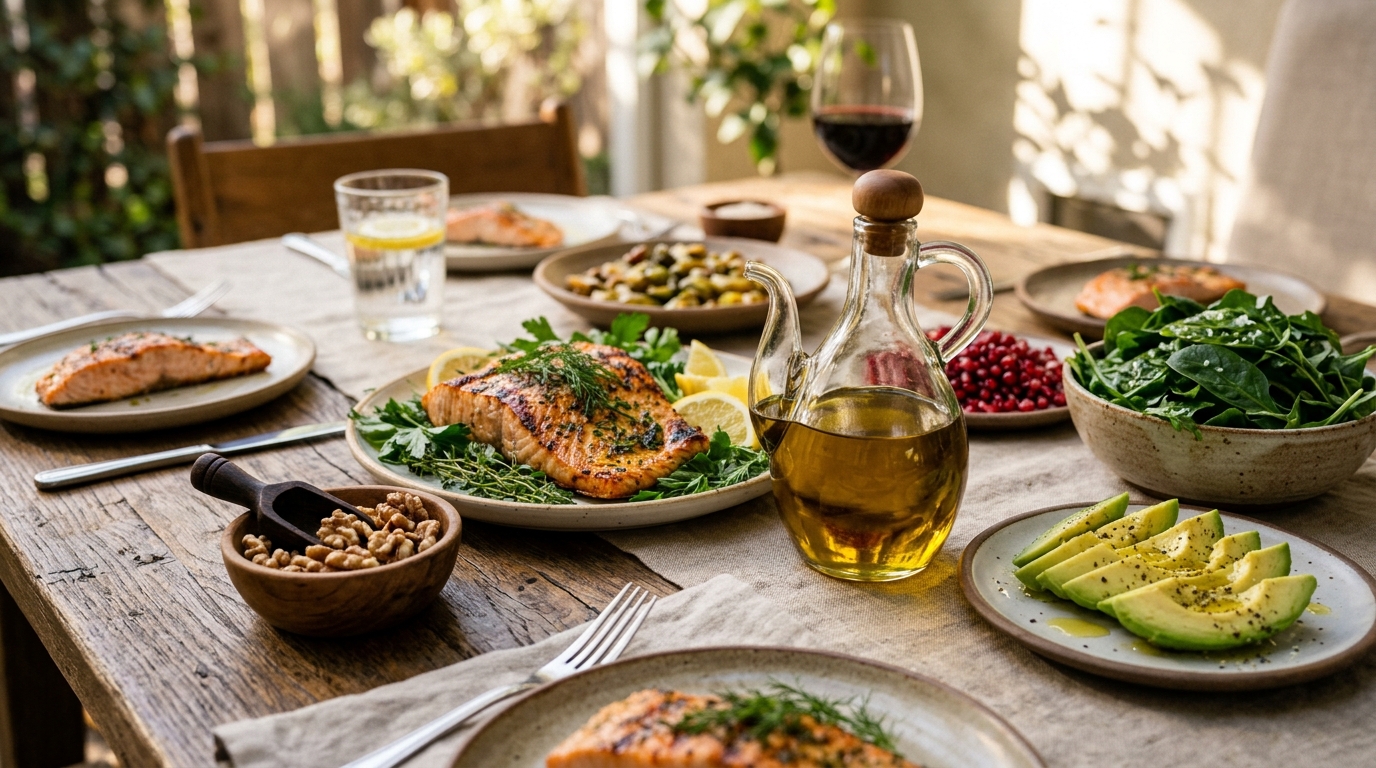
- #1 for Overall Cardiovascular Survival (Mediterranean + EVOO): In the landmark 7,447-patient PREDIMED trial, an extra-virgin olive oil (4 tbsp/day) and walnut-enriched Mediterranean diet cut major cardiovascular events (heart attack, stroke, and CV death) by 30%.
- #1 for Lowering Stubborn LDL-C & ApoB (The Portfolio Diet): Combining 4 specific cholesterol-binding foods (2g plant sterols, 15g viscous soluble fiber, 45g nuts, and plant protein) lowers LDL cholesterol by 25% to 29% in 4 weeks—comparable to a starting low-dose statin.
- #1 for Systolic Blood Pressure >130 mmHg (Modified DASH): Hitting 4,700 mg of dietary potassium and 500 mg of magnesium while capping sodium at 1,800 mg/day reduces systolic blood pressure by 8 to 11 mmHg within 21 days.
For decades, conventional heart-healthy diet advice told adults over 40 to fear all dietary fat and replace eggs and olive oil with fat-free refined starches—a strategy that inadvertently fueled high triglycerides, small dense LDL particles, and insulin resistance. Today, preventive cardiology defines the best diet for heart health after 40 by how effectively a meal pattern lowers three primary vascular drivers: Apolipoprotein B (ApoB), endothelial blood pressure, and high-sensitivity C-reactive protein (hs-CRP).
According to the American Heart Association (AHA Dietary Guidelines) and Harvard T.H. Chan School of Public Health cohorts, combining the anti-inflammatory polyphenols of the Mediterranean diet with the soluble fiber targets of the Portfolio protocol offers the most powerful non-pharmacological plaque protection available.
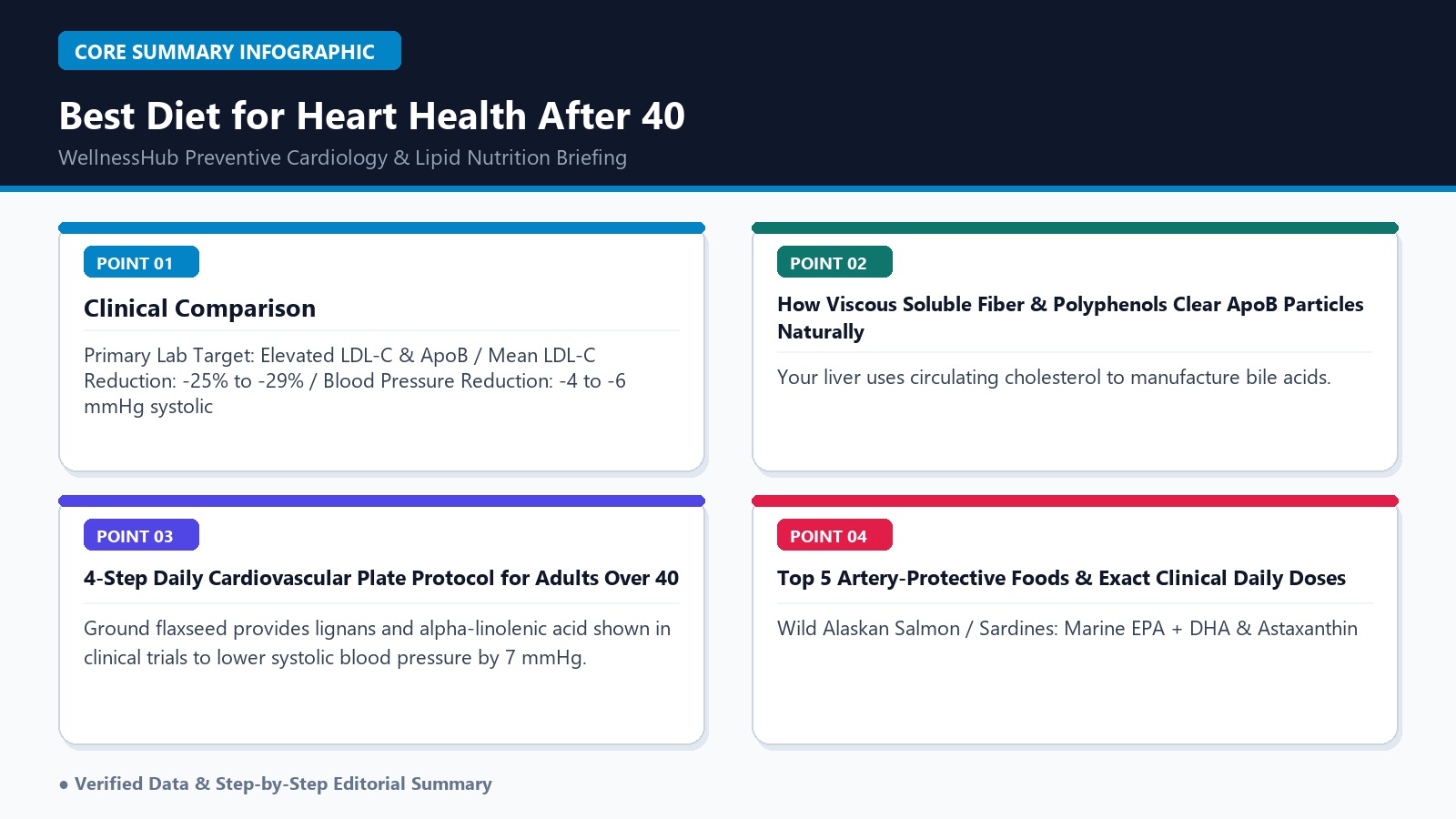
1. Clinical Comparison: Mediterranean vs. Portfolio vs. DASH Diet After 40
Rather than following a vague “eat more vegetables” rule, match your daily nutrition template to your most urgent lipid or blood pressure lab marker:
| Cardiovascular Metric | PREDIMED Mediterranean | Dr. Jenkins Portfolio Diet | Potassium-Rich DASH |
|---|---|---|---|
| Primary Lab Target | hs-CRP, Triglycerides, Oxidized LDL | Elevated LDL-C (>130 mg/dL) & ApoB | Hypertension (>130/85 mmHg) |
| Mean LDL-C Reduction (8 Wks) | -8% to -14% (shifts small LDL to large buoyant) | -25% to -29% (binds bile acids in gut) | -7% to -10% |
| Blood Pressure Reduction | -5 to -7 mmHg systolic | -4 to -6 mmHg systolic | -8 to -11 mmHg systolic |
| Core Daily Therapeutic Foods | 4 tbsp Extra-Virgin Olive Oil, 30g walnuts, wild fish 3x/wk | Oat beta-glucan, psyllium, almonds, edamame, avocado | Spinach, beet greens, white beans, kefir, hibiscus tea |
2. How Viscous Soluble Fiber & Polyphenols Clear ApoB Particles Naturally
Your liver uses circulating cholesterol to manufacture bile acids, which are secreted into the small intestine to digest fats and then reabsorbed in the terminal ileum (enterohepatic recirculation). When you consume 15 to 20 grams of viscous soluble fiber daily—from oat beta-glucan, ground flaxseed, psyllium husk, lentils, and okra—that gel-forming fiber traps bile acids and carries them out in the stool.
To replace the lost bile acids, your liver upregulates hepatic LDL receptors, pulling atherogenic ApoB and LDL particles out of your bloodstream and lowering serum LDL-C by 15% to 25% without depleting CoQ10 levels.
3. 4-Step Daily Cardiovascular Plate Protocol for Adults Over 40
To build the best diet for heart health after 40, combine the endothelial nitric-oxide boost of DASH with the lipid-clearing power of the Mediterranean-Portfolio hybrid across four daily habits:
STEP 01
Start Morning with 3g Oat Beta-Glucan + 2 Tbsp Ground Flaxseed + Berries
Combine 1/2 cup steel-cut oats (or 2% strained Greek yogurt), 2 tablespoons freshly ground golden flaxseed, 1/2 cup wild blueberries, and 25g whey or plant protein isolate. Ground flaxseed provides lignans and alpha-linolenic acid (ALA) shown in clinical trials to lower systolic blood pressure by 7 mmHg.
STEP 02
Replace Butter & Seed Oils with 3–4 Tbsp High-Polyphenol Extra-Virgin Olive Oil
Replacing 10 grams per day of butter or ultra-processed mayonnaise with cold-pressed extra-virgin olive oil rich in oleocanthal reduces cardiovascular mortality risk by 17% and prevents LDL particle oxidation inside arterial walls.
STEP 03
Eat SMASH Fatty Fish 3x/Week to Hit an Omega-3 Index ≥8%
Consume 4–6 oz of wild Salmon, Mackerel, Anchovies, Sardines, or Herring three times weekly (providing 2,000+ mg of marine EPA and DHA per serving) to lower serum triglycerides by 25% and stabilize cardiac heart rate variability (HRV).
STEP 04
Boost Endothelial Nitric Oxide at Dinner with Dietary Nitrates & Potassium
Include 2 cups of arugula, spinach, or roasted beets alongside dinner. Oral bacteria convert natural dietary nitrates into vasodilating nitric oxide (NO), relaxing stiff arterial walls and preventing nocturnal blood pressure spikes.

4. Top 5 Artery-Protective Foods & Exact Clinical Daily Doses
| Cardioprotective Food | Active Bioactive Compound | Clinical Daily Target & Lab Effect |
|---|---|---|
| Psyllium Husk or Oat Bran | Viscous soluble arabinoxylan & beta-glucan | 10g/day lowers LDL-C & ApoB by 10%–14% in 6 weeks |
| Raw Walnuts & Almonds | Plant sterols, L-arginine, and gamma-tocopherol | 1.5 oz (42g)/day improves endothelial flow-mediated dilation |
| Wild Alaskan Salmon / Sardines | Marine EPA + DHA & Astaxanthin | 12–15 oz/week cuts fasting triglycerides by 20%–30% |
| Extra-Virgin Olive Oil (EVOO) | Oleic acid (MUFA) & hydroxytyrosol polyphenols | 3–4 tbsp (40 mL)/day lowers hs-CRP and oxidized LDL |
5. Frequently Asked Questions (FAQ)
Q1. Do whole eggs raise heart attack risk or LDL cholesterol in adults over 40?
For 75% to 80% of adults, dietary cholesterol in egg yolks has minimal impact on blood ApoB levels compared to saturated fat from processed meats and butter. Eating up to 7 whole pasture-raised eggs per week is completely compatible with a Mediterranean heart-healthy diet and supplies essential liver-protective choline and lutein. (Only individuals carrying the APOE4 allele or hyper-absorbers should cap whole yolks at 3–4 per week.)
Q2. Why do cardiologists now test ApoB and Lp(a) instead of just standard LDL cholesterol?
Standard LDL-C measures the *weight* of cholesterol inside particles, which can look falsely normal in adults with insulin resistance who have millions of small, dense, cholesterol-depleted particles. Apolipoprotein B (ApoB, optimal target <80 mg/dL) counts the exact total number of atherogenic particles capable of penetrating your arterial wall.
Q3. Does unfiltered French press or espresso coffee raise LDL cholesterol?
Yes. Unfiltered coffee (French press, Turkish coffee, and metal-mesh espresso) contains natural diterpenes called cafestol and kahweol, which downregulate hepatic LDL receptors and can raise LDL cholesterol by 10 to 18 mg/dL. Switching to paper-filtered drip or pour-over coffee traps 99% of cafestol while preserving all cardiovascular chlorogenic acid antioxidants.
RELATED CLINICAL LONGEVITY GUIDES
- Ubiquinol vs. Ubiquinone CoQ10 After 40: Statin Muscle Relief & Dosage Guide
- Berberine vs. Inositol for Insulin Resistance & Lipid Lowering After 40
Medical Disclaimer: Content on WellnessHub.center is reviewed by the WellnessHub Editorial & Clinical Research Team for educational purposes only and does not substitute for personalized medical advice. View our Medical Disclaimer & Privacy Policy.