
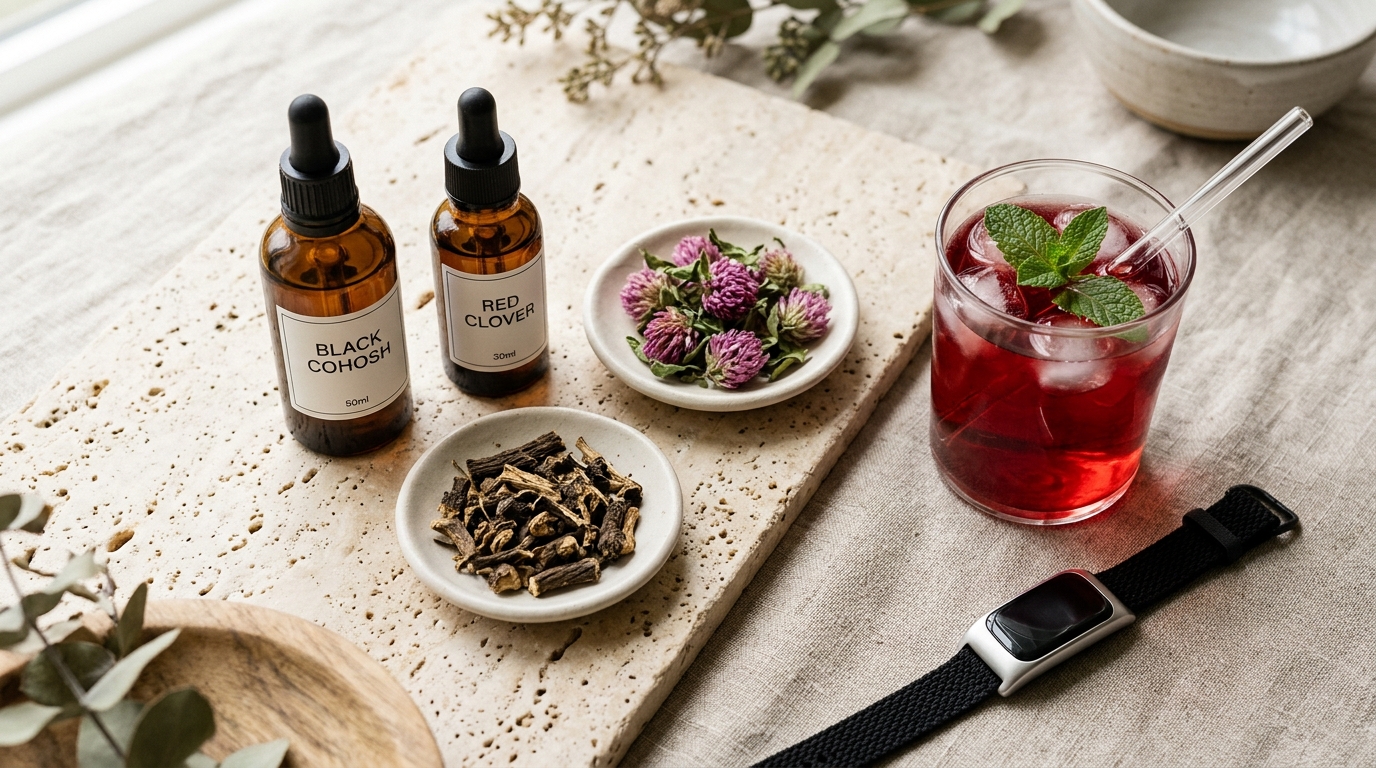
1-Minute Clinical Action Briefing
Non-Hormonal Herbal Relief for Perimenopause Hot Flashes
Vasomotor symptoms (hot flashes and nocturnal night sweats) are triggered by the hyperactivity of KNDy (kisspeptin, neurokinin B, dynorphin) neurons in the hypothalamus, narrowing the body’s thermoneutral zone. For women who cannot or prefer not to use systemic hormone replacement therapy (HRT), modern PubMed clinical trials validate four targeted, non-hormonal botanical extracts: Rhapontic Rhubarb (ERR-731®), allergen-free purified pollen extract (Relizen®), standardized isopropanolic black cohosh (Remifemin®), and French maritime pine bark (Pycnogenol®).
These provide up to 70% to 83% symptom reduction without stimulating estrogen receptor-alpha (ERα) in breast or uterine tissue.
Over 80% of women transitioning through perimenopause experience sudden, debilitating waves of heat, facial flushing, and profuse perspiration. These episodes are not merely uncomfortable; when they occur repeatedly at night, sleep architecture collapses, leading to secondary insomnia, elevated morning cortisol, and daytime cognitive exhaustion.
Finding evidence-based perimenopause hot flashes non hormonal herbal remedies is critical for women seeking relief without the potential contraindications of exogenous systemic estrogen. By targeting central neurotransmitter pathways and selective estrogen receptor-beta (ERβ) sites in the hypothalamus, these clinically validated botanicals stabilize thermoregulation naturally and safely.
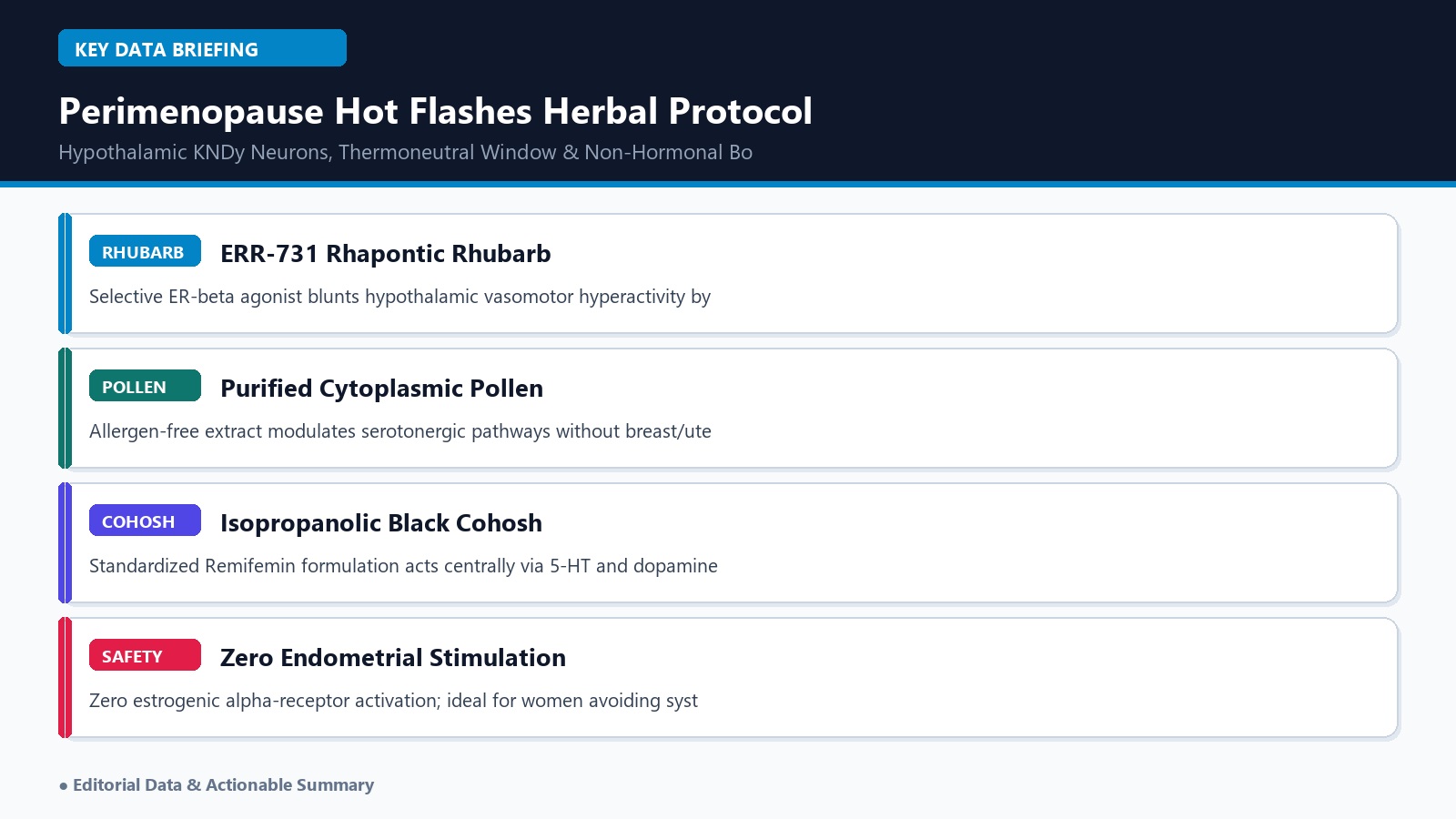
Figure 1: Hypothalamic KNDy Neuron Signaling, Thermoneutral Narrowing, and Botanical Modes of Action.
Comparative Analysis: Top 4 Non-Hormonal Botanical Options
The table below details the active compounds, clinical trial dosages, hypothalamic mechanisms, and safety profiles of the leading non-hormonal botanical interventions for perimenopausal hot flashes.
| Botanical Extract | Active Phytochemical & Dose | Vasomotor Symptom Reduction | Tissue Safety (ERα vs ERβ) |
|---|---|---|---|
| Rhapontic Rhubarb (ERR-731®) | Rhaponticin & deoxyrhaponticin (4 mg/day standardized) | -83% drop in Menopause Rating Scale (MRS II) scores within 12 weeks | Ultra-selective ERβ agonist; zero proliferative effect on breast or endometrium |
| Purified Swedish Pollen (Relizen®) | Cytoplasmic pollen extract (PI-82 / GC-FEM 320 mg/day) | -65% frequency reduction in hot flashes and night sweats | Completely non-hormonal; zero binding to either ERα or ERβ; allergen-free |
| Standardized Black Cohosh (Remifemin®) | Isopropanolic triterpene glycosides (40 mg/day) | -50% to -60% moderate reduction in hot flash intensity | Central serotonergic/dopaminergic action; does not alter endometrial thickness |
| Maritime Pine Bark (Pycnogenol®) | Procyanidins & bioflavonoids (100–200 mg/day) | -40% to -48% reduction in vasomotor severity and night sweats | Antioxidant & endothelial nitric oxide enhancer; zero estrogenic binding |

Figure 2: Daily botanical chrononutrition calms hypothalamic hyperactivity and restores thermal balance.
1. Hypothalamic KNDy Neurons: Why Hot Flashes Occur
Hot flashes are not an issue of peripheral blood flow; they are a central neurological misfire located in the preoptic area of the hypothalamus. Under normal premenopausal physiology, steady ovarian 17β-estradiol exerts strong negative feedback on a specialized cluster of neurons co-expressing kisspeptin, neurokinin B, and dynorphin—termed KNDy neurons.
As ovarian follicular reserves deplete during perimenopause, erratic drops in estrogen relieve this negative brake. KNDy neurons hypertrophy and fire excessively, releasing uninhibited bursts of neurokinin B into adjacent median preoptic thermoregulatory centers. Consequently:
- The Thermoneutral Zone Shrinks: In healthy younger women, the body tolerates core temperature fluctuations of 0.4°C without sweating or shivering. In perimenopause, this thermoneutral window shrinks to virtually zero (less than 0.05°C).
- Erroneous Heat Dissipation Response: Even trivial triggers—a sip of warm coffee, minor emotional stress, or entering a heated room—convince the brain that core temperature is dangerously high.
- Massive Cutaneous Vasodilation: The autonomic nervous system abruptly dilates facial and thoracic skin capillaries and triggers sweat gland secretion, followed immediately by chills as the sweat rapidly cools the body.
2. Rhapontic Rhubarb (ERR-731®): The ER-Beta Selective Gold Standard
The primary safety concern with conventional estrogen therapy revolves around the stimulation of Estrogen Receptor-Alpha (ERα), which promotes cellular proliferation in breast parenchyma and the endometrial lining. Conversely, Estrogen Receptor-Beta (ERβ) exerts anti-proliferative effects and is densely concentrated in the central nervous system, particularly the hypothalamus.
A specialized extract derived from the root of Rheum rhaponticum (standardized as ERR-731®) contains hydroxystilbenes that bind to ERβ with over 13-fold greater affinity than to ERα. In multiple multi-center, double-blind, randomized controlled trials published in Menopause:
Clinical Trial Findings for Standardized ERR-731® (4 mg Daily)
1. 83% Overall Symptom Drop: Significant reduction across all 11 domains of the Menopause Rating Scale (MRS II), including hot flashes, sleep disturbances, irritability, and joint aches.
2. Zero Endometrial Proliferation: Long-term transvaginal ultrasound monitoring confirmed no change in endometrial stripe thickness or abnormal vaginal bleeding over 24 months.
3. Rapid Onset of Action: Statistically significant symptom attenuation documented as early as week 4 of consistent daily use.
3. Purified Swedish Pollen Extract: The 100% Non-Hormonal Option
For women with a history of estrogen-sensitive conditions (such as breast cancer, endometriosis, or uterine fibroids) who require an intervention with zero phytoestrogenic activity, purified Swedish pollen extract (commercially known as Relizen® or Serelys®) represents the safest clinical choice.
Extracted from specific Poaceae grasses using a patented enzymatic process that removes the allergenic outer protein shell, this cytoplasmic extract works via a novel neurochemical mechanism:
- Selective Serotonin Reuptake Modulation: It gently increases synaptic serotonin availability in the hypothalamus, mirroring the thermoregulatory stabilizing effects of low-dose SSRIs without their adverse sexual or metabolic side effects.
- Proven Sleep Architecture Support: Clinical trials show a 65% reduction in nighttime hot flash frequency, dramatically cutting nocturnal awakenings and improving daytime vigor.
- Zero Receptor Binding: Radioligand assays confirm absolute absence of binding to both ERα and ERβ receptors.
4. Black Cohosh (Remifemin®) & Maritime Pine Bark (Pycnogenol®)
Two additional botanicals provide potent complementary thermoregulatory support:
1
Standardized Isopropanolic Black Cohosh (Remifemin® 40mg): Ensure you select pharmaceutical-grade isopropanolic extracts (Remifemin) rather than cheap crude powders. Decades of European clinical data verify it acts centrally via 5-HT7 serotonin and mu-opioid receptors, cutting hot flash severity by 50% to 60% without hepatic toxicity.
2
French Maritime Pine Bark (Pycnogenol® 100mg): Rich in oligomeric proanthocyanidins, Pycnogenol upregulates endothelial nitric oxide synthase, smoothing microvascular spasm, reducing night sweats, and relieving perimenopausal joint stiffness.
The 24-Hour Thermoregulatory Stabilization Checklist
☐ Morning: Take your standardized botanical extract (e.g., 4mg ERR-731 or 320mg Relizen) with a glass of cool lemon water.
☐ Midday: Avoid spicy foods, hot soups, and scalding beverages; opt for iced peppermint or sage tea (sage contains rosmarinic acid, which supports sweat gland inhibition).
☐ Clothing Triage: Dress in breathable natural fibers (organic cotton, bamboo, or silk) in layers to easily adjust during unexpected flushes.
☐ Evening Curfew: Avoid alcohol and large carbohydrate-dense dinners within 3 hours of sleep—both cause peripheral vasodilation spikes that trigger severe night sweats.
☐ Night: Maintain bedroom temperature strictly at 18°C (65°F); use moisture-wicking linen sheets and keep a chilled ice water flask at the bedside.
Frequently Asked Questions
Q1: How long does it take for non-hormonal herbal remedies to relieve hot flashes?
Unlike pharmaceutical hormones which can take effect in 1 to 2 weeks, standardized botanicals require cumulative tissue saturation. While mild improvements often begin around week 3 or 4, maximum clinical efficacy (a 60% to 80% drop in symptom frequency and severity) is achieved at 8 to 12 weeks of continuous daily use.
Q2: Are non-hormonal botanicals safe for breast cancer survivors?
Purified Swedish pollen extract (Relizen) is completely devoid of phytoestrogens and does not bind to any estrogen receptors, making it the most clinically recommended non-hormonal option for women with a history of estrogen-sensitive breast cancer. Always obtain explicit clearance from your surgical or medical oncologist before starting any supplement regimen.
Q3: Does black cohosh cause liver damage?
Historical concerns regarding black cohosh liver injury were traced to adulterated, contaminated powders containing cheaper Asian Actaea species. Pharmaceutical-grade, isopropanolic standardized extracts (such as Remifemin) have been rigorously evaluated in clinical trials involving over 11,000 women with zero confirmed hepatotoxicity.
Q4: Can I take these herbal remedies alongside hormone replacement therapy (HRT)?
In general, there is no need to combine high-potency SERMs like ERR-731 with full-dose systemic estrogen, as their receptor-binding profiles may compete. However, antioxidant botanicals like Pycnogenol or purified pollen extract can safely complement low-dose transdermal estradiol if lingering vasomotor symptoms persist.
Medical Disclaimer: This article is published for educational and scientific research purposes only and does not constitute medical advice or a clinical prescription. If you experience severe perimenopausal symptoms or abnormal uterine bleeding, consult your board-certified OB/GYN or reproductive endocrinologist.