

Editor’s 1-Minute Briefing
NIMH & Harvard Health Circadian Mood Blueprint
Winter Mental Health Tips After 40: Reversing Light Loss, Melatonin Lag & Mood Drops (2026)
1. The Core Mechanism: Short November-to-February days cut outdoor illuminance from 50,000+ lux down to indoor 300 lux, delaying morning melatonin shutoff and accelerating brain serotonin transporter clearance.
2. Highest-Impact Fix: Sitting 16–24 inches from a 10,000-lux UV-filtered light box for 20 to 30 minutes before 8:30 a.m. improves winter mood scores in 60% to 75% of seasonal mood cases within 14 days.
3. Midlife Stack: Pair morning bright light with a 25(OH)D blood test (targeting 35–50 ng/mL), 30 minutes of brisk midday outdoor walking, and a strict 2:00 p.m. caffeine cutoff to protect deep restorative sleep.
Every year around mid-November, 47-year-old David notices the same subtle shift: the 4:30 p.m. dusk makes 6:00 p.m. feel like midnight, his alarm rings to heavy brain fog, and by January he craves refined bread at 3:00 p.m. while skipping workouts he loved in September. Nothing went wrong in his career or marriage—his brain simply reacted to a 4-hour contraction in solar daylight.
Roughly 5% of U.S. adults experience full Seasonal Affective Disorder (SAD), while another 10% to 20% develop subsyndromal “winter blues”—a cluster of fatigue, low motivation, and social withdrawal that hits adults over 40 harder due to natural age-related lens yellowing that filters blue morning photons. Applying structured winter mental health tips grounded in National Institute of Mental Health (NIMH) and Harvard Health Publishing protocols recalibrates your circadian clock before January exhaustion sets in.
1. Why Winter Changes Your Brain: Summer Baseline vs. Mid-Winter Biology
Shorter photoperiods alter three interlocking neurochemical pathways simultaneously: retinal melanopsin signaling, pineal melatonin timing, and synaptic serotonin reuptake. Compare what shifts inside your physiology between July and December.
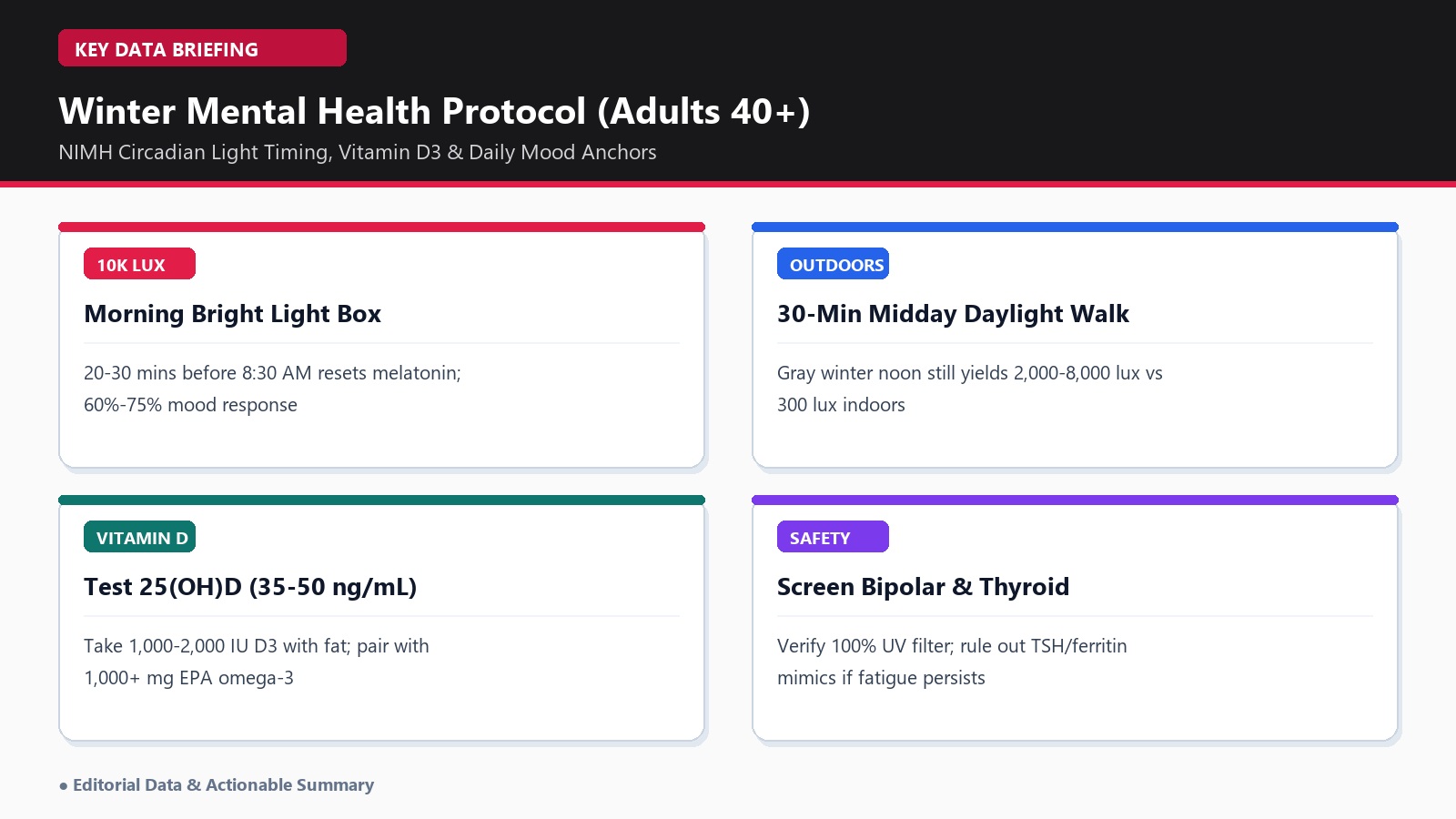
Figure 1: Winter Circadian Mood Pillars — Light Intensity, Melatonin Reset & Neurotransmitter Support
2. Evidence-Based Winter Mental Health Tips: Intervention Impact Simulation
Not all winter habits deliver equal neurological return. Clinical trials reviewed by the Mayo Clinic show that timed bright light and aerobic outdoor movement outperform passive supplements within two to four weeks.
3. Your 4-Step Daily Winter Mental Health Blueprint
Build an automatic circadian anchor rather than relying on January willpower. Stack these four time-locked behaviors into your existing morning and evening routine.
STEP 01 — 7:00 A.M. PHOTON ANCHOR
Bright Light Within 45 Minutes of Waking
Place a UV-free 10,000-lux lamp angled 30 degrees to the side while eating breakfast—never stare directly into LEDs, and avoid light box sessions after 2:00 p.m. so sleep isn’t delayed.
STEP 02 — 12:30 P.M. OUTDOOR WALK
Collect Gray-Sky Daylight + Zone 2 Steps
Even a cloudy December noon delivers 2,000 to 8,000 lux outdoors—up to 20x brighter than office ceilings. Leave sunglasses off for 20 minutes unless snow glare hurts.
STEP 03 — NUTRIENT & GLYCEMIC SHIELD
30 g Breakfast Protein + Tested Vitamin D3
Anchor morning tryptophan and blood sugar with 30 g protein (eggs, Greek yogurt, or smoked salmon) and take vitamin D3 alongside healthy dietary fat at lunch rather than on an empty stomach.
STEP 04 — 9:00 P.M. WIND-DOWN
Guard Wake Consistency Over Weekend Oversleep
Sleeping past 9:00 a.m. on weekends worsens Monday social jetlag. Keep your wake time within 45 minutes all week and dim overhead lights to warm amber 90 minutes before bed.

Figure 2: Pairing Gentle Morning Mobility With Window Daylight Prevents Circadian Drift
4. Safety Exceptions & When Winter Blues Need Clinical Care
3 Contraindications & Medical Checkpoints Before Self-Treating
• Bipolar Spectrum & Light Box Mania Risk: Bright 10,000-lux morning light can trigger hypomania or agitated insomnia in adults with bipolar I or II disorder; consult your psychiatrist first to pair light therapy with mood stabilizers or shift timing to midday.
• Retinal Conditions & Photosensitizing Meds: Verify your lamp is certified 100% UV-filtered, and check with an ophthalmologist if you have macular degeneration, diabetic retinopathy, or take lithium, St. John’s wort, or tetracycline antibiotics.
• Rule Out Thyroid & Ferritin Mimics: Hypothyroidism (high TSH), low vitamin B12, and low ferritin cause fatigue and cold sensitivity indistinguishable from winter mood drops. Request a basic winter lab panel if lifestyle adjustments fail after 3 weeks—and seek immediate clinical care if hopelessness, severe insomnia, or thoughts of self-harm appear.
5. Frequently Asked Questions (FAQ): Winter Mental Health Tips After 40
Q1: Why does winter affect mental health more noticeably after age 40?
Reduced winter daylight slows retinal signaling to the brain’s suprachiasmatic nucleus, raising melatonin duration and accelerating serotonin clearance. After age 40, progressive yellowing of the eye’s crystalline lens filters up to 20%–35% more short-wavelength morning blue light, making indoor office winters noticeably harder on sleep and mood.
Q2: How can I improve mental health in winter if I work indoors before sunrise?
Use a 10,000-lux UV-filtered therapy lamp for 20 to 30 minutes at your breakfast table before leaving for work, then take a mandatory 20-minute outdoor walk during your lunch hour. Combining artificial dawn brightness with natural midday sky exposure delivers the cleanest two-step circadian reset.
Q3: Is vitamin D alone enough to prevent seasonal mood drops?
Correcting a confirmed deficiency (25(OH)D under 20–30 ng/mL) supports immune health, bone density, and neurotransmitter synthesis, yet clinical trials show vitamin D supplementation alone acts slowly (4–8 weeks) and rarely replaces morning bright light therapy or aerobic movement for rapid winter energy recovery.
Q4: How long does it take for bright light therapy to work?
Most adults notice cleaner morning alertness within 4 to 7 days and measurable mood improvements by day 14 of consistent daily use. Continue daily morning sessions through March or early April, as stopping abruptly in January typically brings symptoms back within one to two weeks.
Related Clinical Protocols & Evidence Guides