
Editor’s 1-Minute Briefing
2026 Clinical Pharmacokinetics & GI Tolerance Guide
Berberine Digestive Upset & Diarrhea Management: Root Cause & Fast Relief
1. Why Your Gut Reacts: Effective berberine digestive upset diarrhea management starts with one pharmacokinetic fact: standard berberine HCl has under 5% oral bioavailability, leaving up to 95% of each 500 mg capsule inside your intestinal tract where it triggers osmotic water shifts and smooth-muscle cramping.
2. The 48-Hour Stabilization Fix: Drop from 1,500 mg to 500 mg once daily mid-meal alongside dietary fat, avoid empty-stomach coffee dosing, and pair with 3–5 g soluble fiber or Saccharomyces boulardii while your microbiome adapts.
Between 10% and 35% of adults over 40 who start berberine for fasting glucose or ApoB support quit within the first 10 days—not because the alkaloid fails, but because acute cramping and watery stools ambush their workday. Mastering berberine digestive upset diarrhea management turns an intolerable 1,500 mg/day regimen into a sustainable metabolic routine.
Pharmacokinetic data from PubMed and digestive guidance from Cleveland Clinic explain why: intestinal P-glycoprotein efflux pumps eject most standard berberine HCl back into the gut lumen. While that luminal pool can beneficially remodel gut flora over 4 to 8 weeks, jumping straight to full doses shocks mucosal motility.
1. Berberine Digestive Upset & Diarrhea Management: 4-Symptom Diagnostic Matrix
Not every berberine stomach reaction shares the same biological trigger. Match your timing and stool pattern below to apply the fastest targeted adjustment before abandoning the supplement.
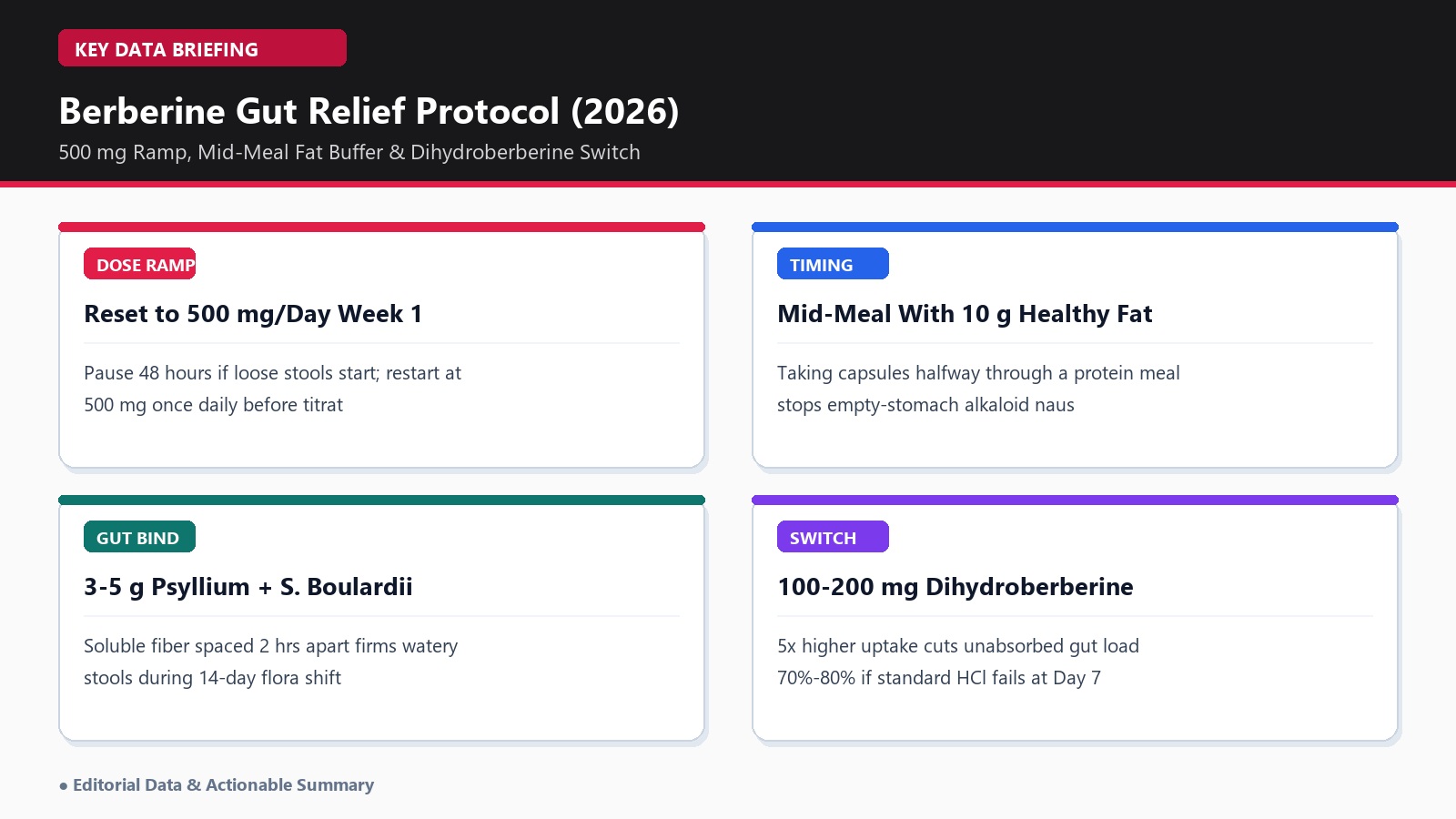
Figure 1: Berberine Digestive Upset & Diarrhea Management — Luminal Bioavailability, Titration Schedule & Delivery Forms
2. 4-Step Protocol for Berberine Digestive Upset & Diarrhea Management
Most supplement labels instruct adults to take 500 mg three times daily (1,500 mg total) from Day 1—a schedule borrowed from hospital trials on inpatient diabetics. At home, following a gradual 21-day ramp prevents roughly 80% of dropouts.
STEP 01 — Reset to 500 mg/Day for 7 Days Before Titrating Up
If diarrhea or cramping hits, pause berberine for 48 hours until stools normalize, then restart at just 500 mg once daily during Week 1 (or split into two 250 mg capsules). Advance to 1,000 mg/day only in Week 2 if bowel movements stay solid, and reserve 1,500 mg/day strictly for stubborn fasting glucose above 105 mg/dL.
STEP 02 — Shift Timing From Empty Stomach to Mid-Meal Fat & Protein
Although classic advice suggests taking berberine 30 minutes before eating, empty-stomach dosing floods the duodenum with concentrated alkaloid crystals. Taking your capsule halfway through a meal containing 15–25 g protein and 10 g healthy fat slows gastric emptying, buffers mucosal contact, and lowers nausea rates dramatically.
STEP 03 — Bind Excess Gut Water With Soluble Fiber & Targeted Yeast Probiotics
During the first 14 days of microbiome adjustment, mix 3 to 5 g of psyllium husk or partially hydrolyzed guar gum (PHGG) into 250 mL water with your evening meal—spaced 2 hours apart from berberine so it does not trap the active dose. Pairing with 250–500 mg Saccharomyces boulardii further stabilizes loose stools without feeding bacterial gas.
STEP 04 — Switch to Dihydroberberine or Phytosome If Symptoms Persist Past Day 7
If 500 mg mid-meal still triggers cramping after 7 consecutive days, your gut cannot tolerate high luminal HCl loads. Switching to 100–200 mg dihydroberberine (GlucoVantage) or 550 mg berberine phytosome (Berbevis) delivers comparable AMPK activation using 70% to 80% less raw powder inside your intestines.
3. Berberine HCl vs. Dihydroberberine vs. Phytosome: GI Tolerance Comparison
Formulation chemistry dictates how much unabsorbed alkaloid irritates your colon. Compare the four main clinical berberine and prescription options on absorption efficiency, diarrhea incidence, and monthly cost below.

Figure 2: Taking Titrated Berberine Mid-Meal With Warm Ginger-Peppermint Tea Buffers Gastric Mucosa and Smooths Motility
4. Medication Interactions & Red-Flag Clinical Guardrails
Clinical Safety Rules: CYP Enzymes, Blood Sugar & When to Discontinue
1. Avoid Stacking Full-Dose Berberine + Metformin Without Labs: Both compounds activate AMPK and inhibit mitochondrial Complex I, amplifying GI diarrhea exponentially. Review any overlap with your clinician per Mayo Clinic hypoglycemia precautions to avoid blood sugar dipping below 70 mg/dL.
2. CYP3A4, CYP2D6 & P-gp Drug Clearance Checks: Berberine slows liver clearance of cyclosporine, warfarin, certain statins, and beta-blockers—and never add black pepper extract (piperine) if your prescription list relies on CYP3A4 metabolism.
3. Immediate Stop Triggers & Pregnancy Rule: Discontinue berberine right away if watery diarrhea lasts over 72 hours, causes orthostatic dizziness, or includes fever or blood in stool. Berberine is strictly contraindicated during pregnancy and breastfeeding due to neonatal bilirubin displacement risks.
5. Frequently Asked Questions: Berberine Digestive Upset & Diarrhea Management
Q1. How long does berberine digestive upset and diarrhea usually last?
Mild loose stools or stomach gurgling from microbiome adjustment typically resolve within 5 to 10 days once you drop to 500 mg/day with meals. If explosive diarrhea or abdominal cramping continues beyond 7 days even on a 500 mg mid-meal dose, stop standard berberine HCl rather than pushing through, and test dihydroberberine instead.
Q2. Does berberine work if you take it with food to stop stomach upset?
Yes. Taking berberine mid-meal with protein and healthy fat still blunts post-meal glucose spikes and activates hepatic AMPK—and dietary lipids actually assist micellar dispersion across the small intestine while preventing harsh alkaloid contact against an empty stomach lining.
Q3. Is 500 mg of berberine once a day enough if 1,500 mg causes diarrhea?
For adults over 40 with mild insulin resistance or borderline triglycerides, 500 to 1,000 mg/day still delivers measurable glycemic smoothing with far fewer GI dropouts than 1,500 mg/day—or you can switch to 200 mg dihydroberberine twice daily to achieve therapeutic plasma levels without gut overload.
Q4. Can I take loperamide (Imodium) or probiotics alongside berberine for diarrhea?
Do not mask chronic supplement-induced diarrhea with daily loperamide—fix the underlying dose or switch to phytosome/DHB. However, short-term support with 250–500 mg Saccharomyces boulardii or 3 g PHGG prebiotic fiber spaced 2 hours away from berberine safely firms stools during Week 1 adaptation.
Related Clinical Protocols & Evidence Guides
Medical Disclaimer: This article is written by the WellnessHub Editorial & Clinical Research Team for educational purposes only and does not substitute for personalized medical advice. Always consult your physician before changing supplements or prescription medications. View our Medical Disclaimer & Privacy Policy.