

Editor’s 1-Minute Briefing
Men’s Cognitive Longevity & Neurovascular Protocol (2026)
Men’s Health Brain Supplements Over 40: Evidence-Based Nootropics vs. Marketing Hype
1. What Actually Changes After 40: Male brain fog in midlife is rarely a “lack of caffeine”—it tracks measurable drops in cerebral blood flow, rising homocysteine (above 10 µmol/L), and declining cellular acetylcholine and ATP buffering rather than rapid neuron loss.
2. Highest-Evidence Core Stack: Clinical trials compiled on PubMed randomized human studies support 1,000–2,000 mg Omega-3 EPA/DHA, 250–500 mg Citicoline (CDP-Choline), 3–5 g Creatine Monohydrate, and 144 mg elemental Magnesium L-Threonate over opaque proprietary pills.
3. Lab-First Action Rule: Check morning hs-CRP, homocysteine, Vitamin B12, TSH, and fasting insulin before stacking stimulants, and replace under-dosed “brain blends” with single-ingredient standardized extracts tested for purity.
Consider a 47-year-old engineer or business owner who sleeps seven hours yet hits a mental wall by 3:00 PM—forgetting names mid-meeting, rereading emails twice, and reaching for a third espresso that wrecks deep sleep. Choosing targeted men’s health brain supplements starts with separating real human neurochemistry from flashy “limitless” capsules stuffed with hidden caffeine.
Evidence reviews from the NIH Office of Dietary Supplements and Harvard Health cognitive aging guidelines confirm that brain performance after 40 depends heavily on microvascular circulation, phospholipid membrane fluidity, and restorative sleep architecture.
1. Before vs. After Age 40: Why Male Cognitive Focus Shifts
Men do not suddenly lose memory overnight at 40; instead, four silent metabolic and neurovascular shifts gradually narrow cognitive reserve. Compare baseline physiology in your 20s against midlife realities to understand why targeted nutrition works better than mega-dose stimulants.
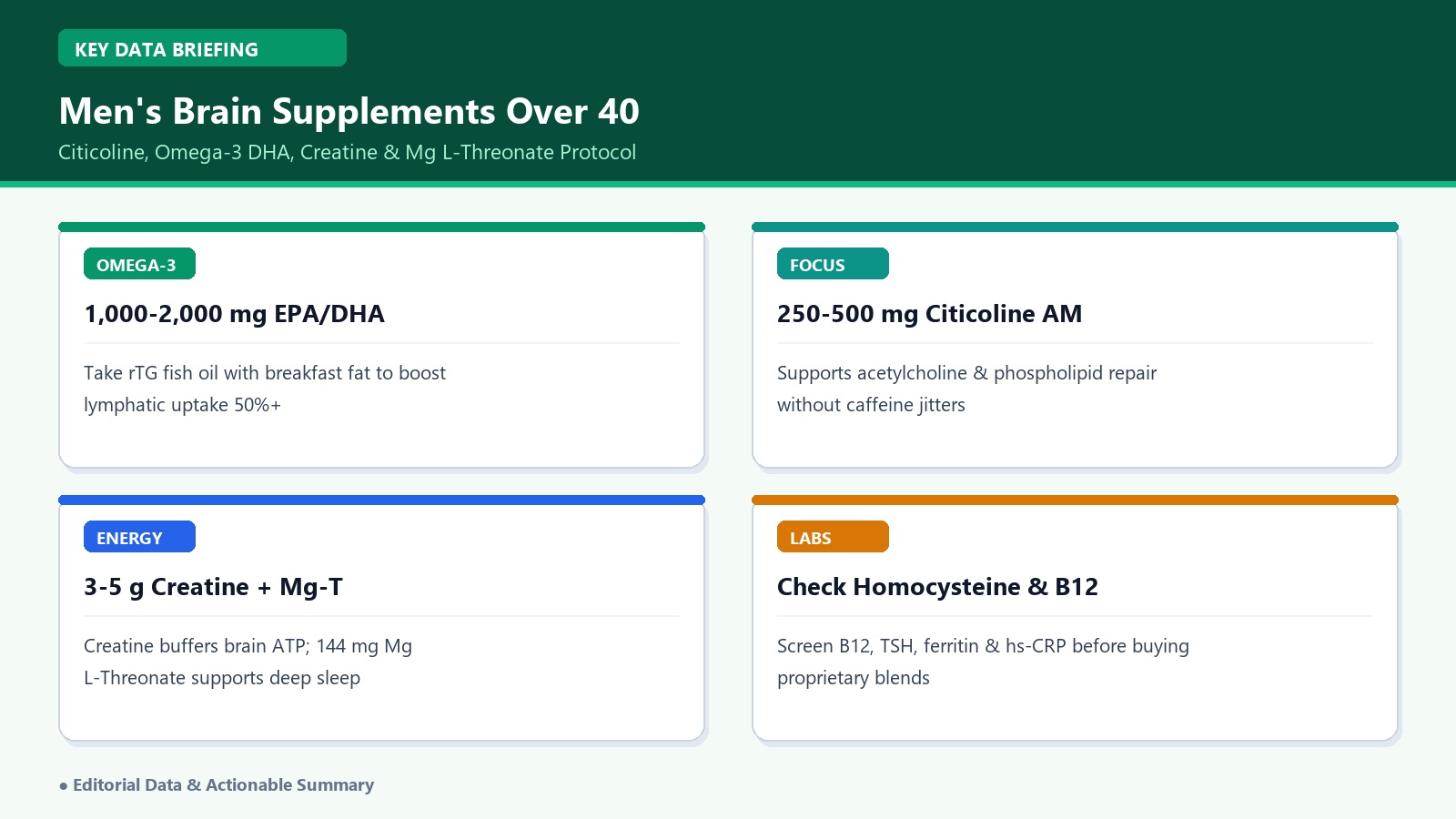
Figure 1: Evidence-Backed Brain Supplement Pathways, Clinical Doses & Lab Anchors for Men Over 40
2. Top 5 Men’s Health Brain Supplements Ranked by Clinical Evidence (2026)
Roughly 75% of commercial “focus” blends rely on excessive caffeine, B-vitamin megadoses, and trace 25 mg herb dustings. Focus exclusively on five compounds with reproducible human clinical trial outcomes and transparent dosing.
3. 4-Step Daily Brain Optimization & Supplement Timing Protocol
Introducing five new capsules on Day 1 makes it impossible to tell which compound sharpens focus and which upsets your stomach. Layer your stack methodically over 30 days using this four-step schedule.
STEP 01 — Baseline Blood Work Before Buying Any Bottle
Ask your physician for a morning fasting panel covering Vitamin B12, folate, homocysteine, Vitamin D (25-OH), ferritin, TSH, and HbA1c. Correcting borderline B12 (<400 pg/mL) or sleep apnea delivers faster clarity than any herbal extract.
STEP 02 — Morning Focus Anchor (With Protein Breakfast)
Pair 250 mg Citicoline and 1,000–2,000 mg Omega-3 rTG fish oil with a fat-containing meal (eggs, salmon, or olive oil) between 7:30 AM and 9:00 AM. Taking fish oil alongside dietary fat boosts lymphatic absorption by over 50%.
STEP 03 — Post-Workout Cellular Energy (5 g Creatine + Hydration)
Stir 3 to 5 g micronized creatine monohydrate into water or tea after your midday walk or resistance session. Consistent daily intake preserves both skeletal muscle mass and prefrontal cortex phosphocreatine stores through stressful workweeks.
STEP 04 — Evening Glymphatic Clearance (Magnesium L-Threonate)
Take 144 mg elemental Magnesium L-Threonate 60 minutes before lights-out, and enforce a strict 10-hour caffeine cutoff before bed. Deep N3 sleep activates the brain’s glymphatic drainage system to clear metabolic waste accumulated during the day.

Figure 2: Structuring Morning Deep Work, Hydration & Non-Jittery Cognitive Routines After 40
4. Proprietary Blend Traps & Medication Interactions to Avoid
Men over 40 frequently manage borderline blood pressure, cholesterol statins, or mild mood prescriptions alongside over-the-counter brain boosters. Watch for three critical label red flags before purchasing.
3 Label & Safety Warnings for Men Over 40
1. Avoid “Proprietary Blends”: If a bottle hides 12 herbs inside a single 650 mg total blend, individual ingredients are almost always under-dosed to 15–30 mg. 2. Check Serotonergic & Anticoagulant Interactions: Never combine St. John’s Wort, high-dose 5-HTP, or Huperzine-A with SSRIs, SNRIs, or dementia prescriptions; consult your doctor before mixing Ginkgo biloba or high-dose Omega-3 with aspirin, warfarin, or DOAC blood thinners. 3. Demand Third-Party Testing: Look for USP, NSF, or Informed-Choice seals to verify zero heavy-metal or undeclared stimulant contamination.
5. Frequently Asked Questions (FAQ): Men’s Health Brain Supplements
Q1: What is the single best brain supplement for men over 40 starting from scratch?
Start with a high-purity Omega-3 EPA/DHA supplement (1,000–2,000 mg/day) paired with 3–5 g Creatine Monohydrate. Both deliver the broadest peer-reviewed support across brain energy, cardiovascular elasticity, and healthy aging without triggering insomnia or jitters.
Q2: Is Citicoline (CDP-Choline) better than Alpha-GPC for middle-aged men?
For daily longevity over 40, Citicoline (250–500 mg) is generally preferred because it supplies both acetylcholine precursors and cytidine (uridine) for neuron membrane synthesis, with fewer observational TMAO cardiovascular concerns than chronic high-dose Alpha-GPC.
Q3: How long do men’s health brain supplements take to show measurable results?
Alertness from Citicoline and sleep-debt buffering from Creatine typically become noticeable within 2 to 4 weeks, whereas structural neuroplasticity herbs like Bacopa monnieri and Lion’s Mane require 8 to 12 weeks of steady daily use.
Q4: Can low testosterone or poor sleep cause brain fog that supplements won’t fix?
Yes. Untreated obstructive sleep apnea, morning total testosterone below 300 ng/dL, subclinical hypothyroidism, and insulin resistance drive severe midlife brain fog. Treat underlying sleep and metabolic lab abnormalities first so supplements act as true multipliers rather than Band-Aids.
Q5: Should men over 50 take high-dose B-vitamins for memory even if B12 is normal?
In landmark VITACOG clinical trials, B-vitamin supplementation slowed brain atrophy primarily in adults with elevated baseline homocysteine (>11 µmol/L) AND adequate Omega-3 status. Excess megadoses offer little benefit if your homocysteine is already optimal at 6–8 µmol/L.
Related Clinical Protocols & Evidence Guides
Medical Disclaimer: This article is for educational purposes only and does not diagnose, treat, or prevent dementia or neurological disease. Consult your physician before starting new nootropics or brain supplements, particularly if you take blood thinners, blood pressure medications, thyroid hormone, or psychiatric prescriptions.