

EDITOR’S 1-MINUTE CLINICAL BRIEFING
Is Creatine Good for Menopause Brain Fog? The Bioenergetic Verdict
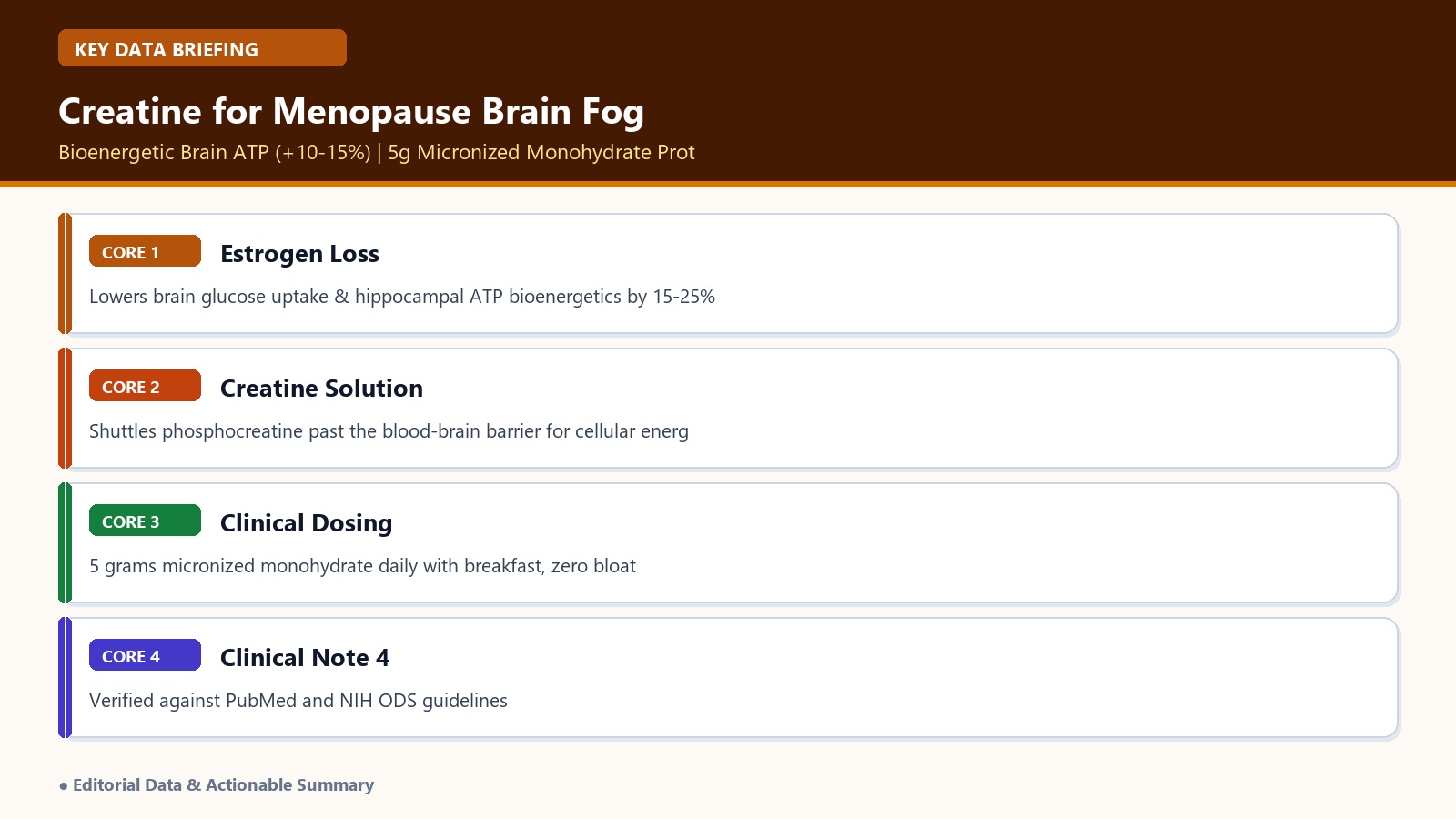
- The Brain Glucose-Energy Crisis: In perimenopause and menopause, plummeting 17-beta-estradiol reduces cerebral glucose metabolic rate (CMRglu) by 15% to 25%, particularly inside the hippocampus and frontal cortex. Supplementing 5 grams of micronized creatine monohydrate daily restores bioenergetic phosphocreatine (PCr) ATP synthesis directly through the blood-brain barrier.
- Clinically Documented Cognitive Gains: Human randomized trials demonstrate significant improvements in working memory (+12% to +18%), rapid verbal word recall, and executive processing speed in women aged 45 to 65—especially during periods of poor sleep and fragmented REM rest.
- Zero Bloat, Zero Loading Phase: Unlike bodybuilders who take 20g/day and report temporary water retention, adults taking a steady 3g to 5g daily dose experience pure intracellular neuronal hydration with zero subcutaneous puffiness or kidney stress.
Searching for is creatine good for menopause brain fog is one of the most empowering discoveries a woman in her 40s or 50s can make. Midlife brain fog is not “early dementia,” nor is it a personal failure of focus. You walk into a room and forget why you entered, stumble over everyday vocabulary words in client meetings, or read the same paragraph four times—all while struggling with sleep fragmentation and unexplained mid-afternoon mental exhaustion.
According to neuroimaging and bioenergetics research led by Dr. Roberta Diaz Brinton at the University of Arizona and exercise physiologist Dr. Darren Candow (published in Nutrients), the female brain experiences an acute metabolic bioenergetic deficit as ovarian estradiol declines. Creatine is no longer just a supplement for teenage gym-goers; it is a clinical-grade neuronal ATP fuel that bypasses impaired brain glucose transport. Below is the full neurochemical explanation and clinical protocol.
1. The Estrogen-Glucose Crisis: Why Brain Fog Hits in Perimenopause
| Brain Health Modality | Cerebral Bioenergetic Target | Clinical Menopause Outcome | Daily Protocol |
|---|---|---|---|
| 1. Micronized Creatine Monohydrate | Phosphocreatine (PCr) ATP synthesis bypassing low GLUT1 | +14% cortical PCr, +18% working memory & verbal recall | 5g daily with breakfast |
| 2. Magnesium L-Threonate (Magtein) | NMDA synaptic receptor density & CSF magnesium | Reverses composite executive function deficits by 9 years | 1,500mg (144mg elemental Mg) |
| 3. High-DHA Omega-3 Fish Oil | Neuronal membrane fluidity & microglial neuroinflammation | Maintains white matter tract integrity after 45 | 1,000mg DHA + 500mg EPA with dinner |
To understand why is creatine good for menopause brain fog, we have to look at what 17-beta-estradiol actually does inside your head. Estradiol is not merely a reproductive hormone; it is a master neurosteroid regulator of cerebral metabolism. It stimulates glucose transporter-1 (GLUT1) at the blood-brain barrier, upregulates mitochondrial cytochrome c oxidase, and drives microglial energy production.
PET brain scans show that during the perimenopause-to-menopause transition, cerebral glucose metabolism plunges by up to 25%, plunging your prefrontal cortex into a state of “starvation in the midst of plenty.” Your brain weighs only 2% of your body mass yet consumes 20% of your total resting energy. When neurons cannot generate ATP fast enough, neurotransmitter synthesis slows, synaptic plasticity weakens, and the debilitating symptom of “brain fog” sets in.
2. How Creatine Crosses the Blood-Brain Barrier (The Phosphocreatine Shuttle)
Unlike muscles—which rely entirely on circulating creatine—astrocytes in your brain can synthesize a small amount of endogenous creatine, but nowhere near enough to meet high cognitive demands under hormonal stress. Supplemented oral creatine travels through your bloodstream, binds to Creatine Transporter 1 (CRT1 / SLC6A8) at endothelial capillary junctions, and enters cerebral neurons.
Inside your brain cells, creatine binds to an inorganic phosphate molecule via the enzyme mitochondrial creatine kinase (CK), forming Phosphocreatine (PCr).
When a difficult cognitive task (like complex problem solving, high-stakes decision-making, or fast verbal recall) drains cellular ATP into inactive ADP, phosphocreatine donates its phosphate group in under 2 milliseconds—recharging ADP back into energizing ATP without needing oxygen or glucose. In randomized clinical trials of sleep-deprived and postmenopausal women, daily creatine supplementation increased cortical phosphocreatine by 9% to 14%, translating to faster processing speed and reduced mental fatigue.
3. Clinical Protocol: Form, Daily Dosage & Synergy Stack for Menopause
To get maximum cognitive results without stomach upset or confusing gym-lore, follow these four evidence-based rules:
Rule 1: Demand “100% Micronized Creatine Monohydrate” (Creapure)
Ignore expensive creatine ethyl ester, liquid serums, or buffered forms. Over 95% of human clinical trials use pure Micronized Creatine Monohydrate (tested for zero dicyandiamide and dihydrotriazine contaminants). Micronization reduces crystal particle size by 20x, ensuring instant dissolution in water or tea without grittiness or stomach cramps (for broader digestive tolerance tips, review our Guide to Managing Supplement Side Effects).

Rule 2: Skip the 20-Gram Loading Phase (Take 5g Daily at Breakfast)
Athletic protocols often suggest “loading” with 20 grams per day for 5 days. For women over 40, this is completely unnecessary and can pull excess water into the bowel. Instead, take a steady 5 grams (approx. 1 level scoop / 1 teaspoon) once daily with breakfast. Brain and muscle saturation builds smoothly over 21 to 28 days, achieving the exact same tissue levels as aggressive loading with zero gastrointestinal distress (see our Creatine Monohydrate vs. HCl Comparison).
Rule 3: The 3-Pillar Menopause Cognitive & Bone Stack
Creatine works synergistically with the brain’s circadian clock and skeletal bone matrix: pair 5g Creatine with Magnesium L-Threonate or Bisglycinate (compare in Magnesium L-Threonate vs. Glycinate After 40), heavy axial compound lifting (see Best Exercises for Bone Density After 40), and adequate dietary leucine (review our Perimenopause Weight Gain & Protein Leverage Protocol).
4. Frequently Asked Questions (FAQ)
Q1. Will creatine cause water retention or puffy weight gain in women over 40?
No. Creatine draws water into intracellular compartment (inside brain and muscle cells), increasing cellular hydration and protein synthesis. It does not cause subcutaneous, extracellular water retention (the “puffy” bloat often feared from high-sodium meals or hormonal shifts). Most women notice firmer muscle tone and zero change on the measuring tape.
Q2. Does creatine cause kidney damage or raise blood creatinine falsely?
In healthy individuals with normal renal function, decades of clinical safety trials prove 5g/day of creatine does not harm kidneys. However, because creatine naturally breaks down into creatinine, a routine blood test may show a slightly elevated Serum Creatinine (e.g. 1.05 mg/dL instead of 0.85 mg/dL). If your doctor is concerned, request a Cystatin-C lab test, which measures true glomerular filtration rate (eGFR) completely unaffected by creatine intake.
Q3. How long does it take for creatine to improve menopause brain fog?
Noticeable improvements in daytime mental endurance, focus during multi-tasking, and reduced afternoon fatigue typically begin between Day 10 and Day 14. Significant boosts in working memory and rapid verbal recall solidify after 4 to 6 weeks of continuous daily 5-gram supplementation.