
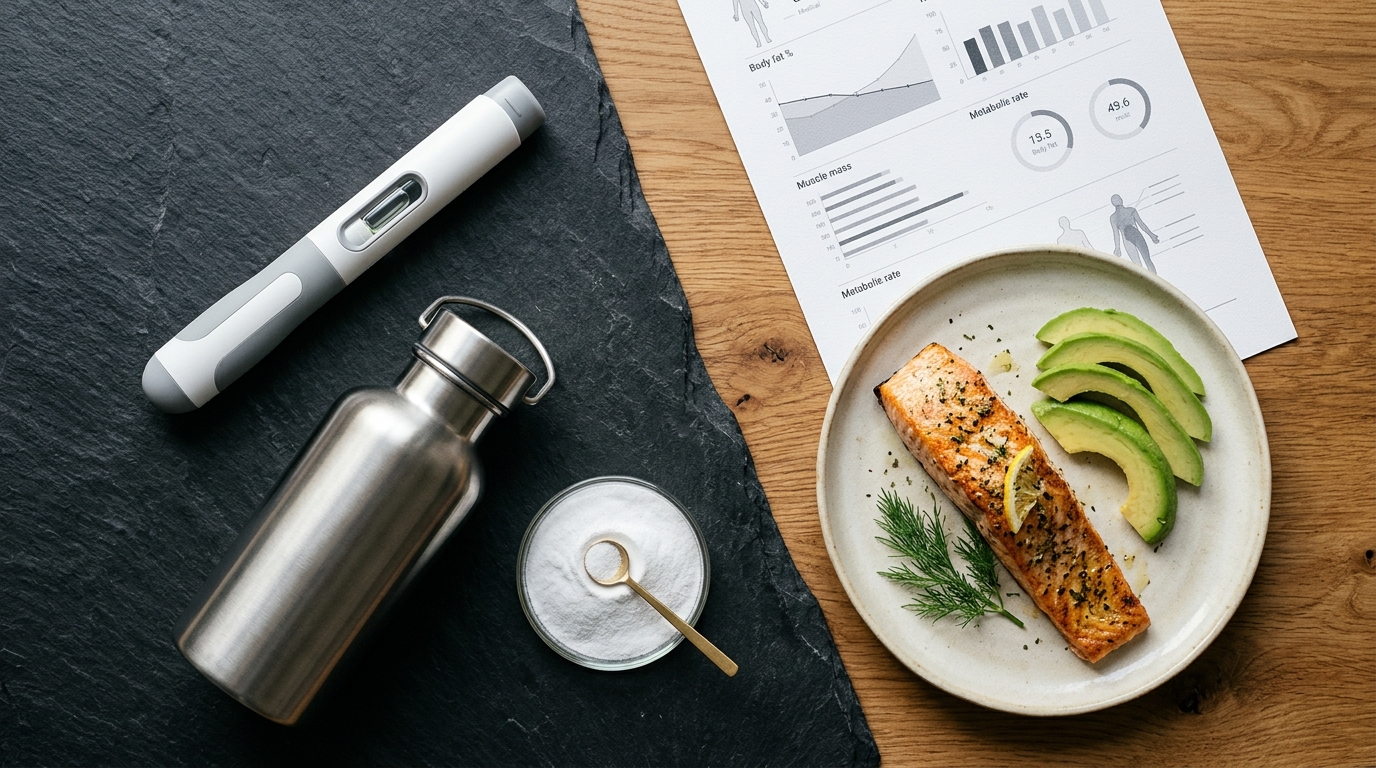
EDITOR’S 1-MINUTE CLINICAL BRIEFING
Preserving Muscle on GLP-1 (Ozempic & Wegovy): The Sarcopenia Defense
- The 40% Lean Mass Warning: In clinical trials evaluating semaglutide (STEP-1) and tirzepatide (SURMOUNT-1), participants who did not perform structured resistance training lost up to 35% to 40% of their total body weight as lean skeletal muscle mass, dramatically reducing resting metabolic rate and predisposing patients to rapid rebound weight gain upon cessation.
- The 1.6–2.2 g/kg Protein Threshold: Because GLP-1 receptor agonists induce delayed gastric emptying and severe early satiety, patients rarely hit basic amino acid requirements. Prioritizing 1.6 to 2.2 grams of dietary protein per kilogram of target body weight (distributed into 30g–40g boluses with ≥2.5g leucine) is non-negotiable to stimulate muscle protein synthesis (MPS).
- The Ergogenic Creatine & Resistance Anchor: Supplementing with 5 grams of micronized creatine monohydrate daily paired with 3 weekly heavy compound resistance sessions preserves intracellular hydration and prevents the dreaded “Ozempic body” sarcopenic phenotype.
Implementing a dedicated strategy for preserving muscle on glp 1 ozempic wegovy protocol has become the most urgent clinical priority in modern obesity and longevity medicine. Glucagon-Like Peptide-1 receptor agonists (semaglutide, tirzepatide) are extraordinary pharmacological tools that quiet central food noise, reduce visceral fat, and normalize glycemic control. However, when appetite crashes precipitously by 40% to 50%, the human body enters a state of severe catabolism, cannibalizing metabolic active lean skeletal tissue alongside adipose fat.
According to DEXA imaging data published in The New England Journal of Medicine (Wilding et al.) and metabolic guidelines from the National Institutes of Health (NIH), losing lean muscle mass lowers basal metabolic rate, impairs whole-body glucose disposal (GLUT4), and increases physical frailty. Below is the comprehensive, evidence-based clinical blueprint to incinerate body fat while safeguarding your structural muscle tissue.
1. Clinical Protocol Matrix: Standard GLP-1 Care vs. Muscle Defense
This clinical comparison matrix contrasts standard unguided GLP-1 weight loss against the structured muscle-preservation clinical protocol across key metabolic and physiological markers:
| Metabolic Parameter | Standard Unguided GLP-1 Use | The Muscle-Preservation Protocol |
|---|---|---|
| Lean Muscle Mass Loss Ratio | 35% to 40% of total weight lost comes from skeletal muscle and bone mineral | < 10% to 15% (High-efficiency selective visceral and subcutaneous fat loss) |
| Daily Protein Target | Sub-optimal (<0.8 g/kg); patients skip meals and consume low-protein processed snacks | 1.6 g – 2.2 g per kg ideal body weight (divided into 3–4 meals with ≥2.5g leucine) |
| Resting Metabolic Rate (RMR) Shift | Crashes by 300 to 500 kcal/day due to fast-twitch muscle fiber atrophy | Preserved within 5% of predicted baseline; prevents rebound hyperphagia |
| Exercise Modality & Frequency | Sedentary or excessive steady-state cardio (which accelerates muscle catabolism) | 3 to 4 days/week progressive multi-joint resistance training (RPE 7–8) |
| Targeted Ergogenic Supplementation | None or generic multivitamin gummies lacking bioavailable amino acids | 5g Creatine Monohydrate + Electrolytes + Whey Isolate + Essential Amino Acids (EAAs) |
| Body Composition Tracking Method | Standard bathroom scale (blind to muscle loss, water dehydration vs. real fat reduction) | Quarterly DEXA Scan or medical multi-frequency InBody tracking appendicular lean mass |
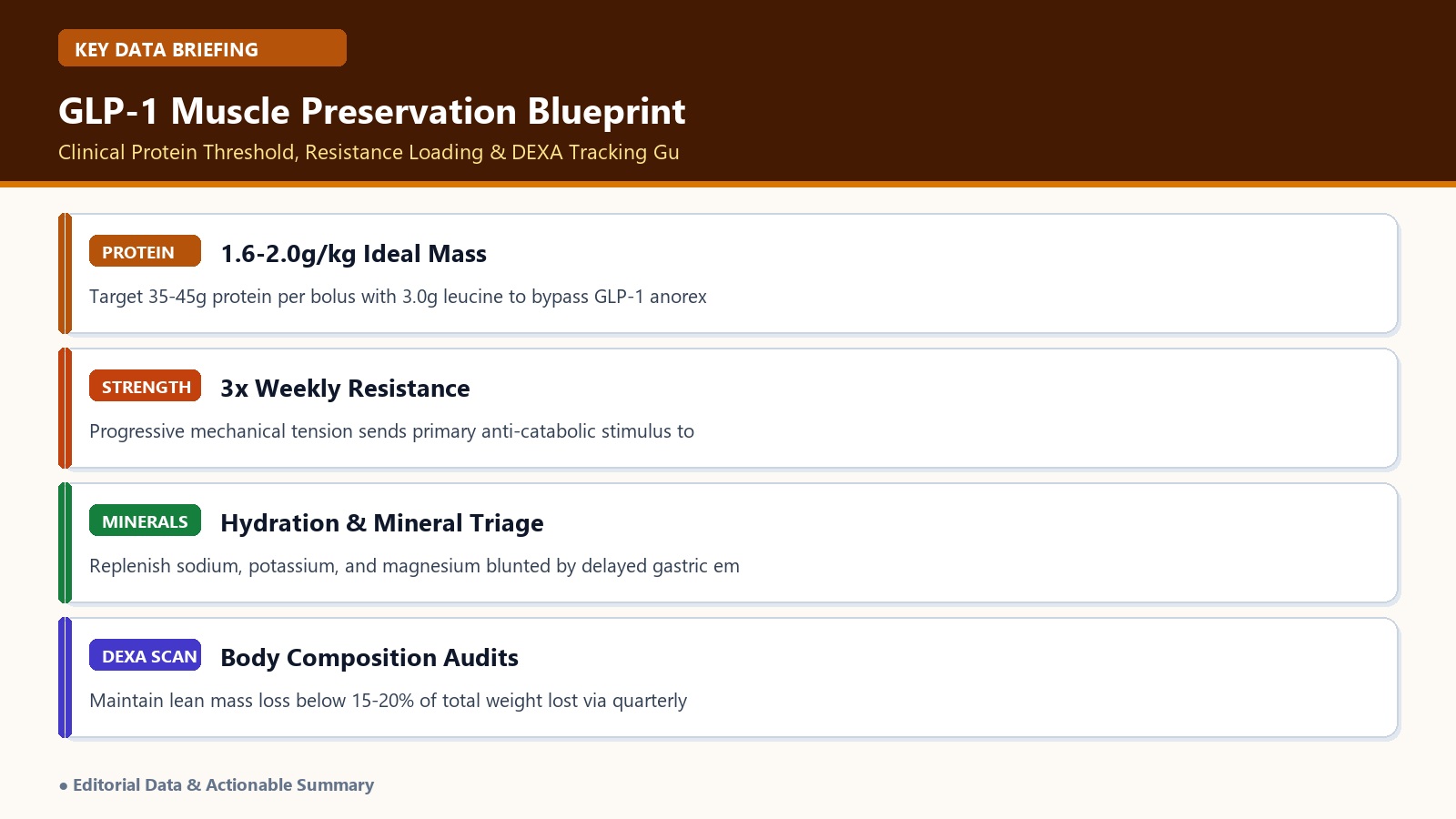
Figure 1: High-resolution clinical roadmap for daily protein distribution, creatine dosing, and resistance overload on GLP-1.
2. The Leucine Trigger: Overcoming Gastric Delay & Anorexia
Why is preserving muscle on glp 1 ozempic wegovy protocol so biologically challenging? Semaglutide and tirzepatide dramatically slow peristalsis and gastric emptying. A patient sitting down to a large 8-ounce ribeye steak often feels overwhelming fullness, sulfur burps, or mild nausea after three bites. This early satiety forces them into severe sub-caloric states (often under 1,000 kcal/day), triggering the ubiquitin-proteasome pathway where the body breaks down muscle contractile proteins to fuel baseline organ function.
To overcome this mechanical barrier, apply the clinical Leucine Threshold Principle:
- The 2.5–3.0 Gram Leucine Threshold: Muscle Protein Synthesis (MPS) is not an analog dial; it is a binary switch governed by mTORC1. To turn on MPS, an influx of at least 2.5 to 3 grams of the essential amino acid leucine must hit the bloodstream within a 60-minute window. Grazing on small bites of crackers or single yogurts throughout the day never hits this threshold.
- Leveraging Rapidly Clearing Liquid Proteins: When solid meats trigger delayed-emptying nausea, swap one meal for a cold-filtered Cross-Flow Microfiltered (CFM) Whey Protein Isolate or pure crystalline Essential Amino Acid (EAA) beverage. Liquid isolates clear the stomach twice as fast as whole meats, delivering 30 grams of protein and 3.2 grams of leucine without gastric heaviness.
Clinical Evidence: Preserving Appendicular Lean Mass During Rapid Weight Loss
In clinical sports nutrition trials evaluating hypocaloric dieting (Pasiakos et al.), subjects consuming 2.0 g/kg/day of protein alongside progressive resistance training preserved 92% of their baseline lean tissue while achieving double the rate of abdominal visceral fat reduction compared to standard dietary control groups.

Figure 2: Progressive multi-joint resistance training serving as the mechanical anchor for muscle preservation.
3. The 4-Pillar Daily Execution Protocol
Follow this daily schedule to maximize metabolic rate, protect skeletal muscle, and prevent post-GLP-1 weight regain:
🏋️ The Daily Sarcopenia Defense Routine
- Morning Hydration & Creatine Anchor: Ingest 5 grams of micronized creatine monohydrate stirred into 16 oz of water with unflavored electrolytes (sodium, potassium, magnesium). GLP-1 medications blunt thirst signals; creatine draws intracellular water into muscle myocytes, preventing hypovolemia and maintaining cellular protein synthesis.
- The “Protein First” Rule at Every Meal: Before taking a single bite of rice, salad, or fruit, consume your primary high-density protein source (grilled chicken breast, wild salmon, egg whites, or tofu). Guaranteeing a minimum of 35 grams of protein per sitting ensures you reach your 1.6–2.0 g/kg daily threshold before early satiety halts your meal.
- 3 Multi-Joint Compound Resistance Workouts Per Week: Train with weights on non-consecutive days (e.g., Monday, Wednesday, Friday). Prioritize movements that recruit large muscle groups: Goblet squats, Romanian deadlifts, seated cable rows, dumbbell chest presses, and farmer’s carries. Train at a Rate of Perceived Exertion (RPE) of 7 to 8 (stopping 2 reps before muscular failure).
- Evening Electrolytes & Slow-Digesting Casein or Greek Yogurt: Consume 1 cup of 0% plain Greek yogurt (20g protein) or micellar casein 90 minutes before sleep to provide steady circulating amino acids throughout the overnight recovery fast.
4. Common Traps: What to Avoid on GLP-1 Medications
When designing your protocol for preserving muscle on glp 1 ozempic wegovy protocol, steer clear of these three fatal errors:
- The Chronic Cardio Trap: Doing 60 minutes of daily treadmill running or elliptical sessions while in a 1,000-calorie deficit signals your body to dump heavy skeletal muscle to become more fuel-efficient. Replace excessive steady-state cardio with 8,000 to 10,000 daily walking steps and heavy weight training.
- Ignoring Gastrointestinal Motility & Fiber Timing: Taking high-dose psyllium husk or massive raw vegetable salads directly before a protein shake further slows gastric emptying and causes painful bloating. Consume concentrated protein first, and space soluble fiber supplements at least 2 hours apart.
- Relying Exclusively on the Scale: If you lose 15 pounds in a month, celebration is premature until a DEXA scan confirms how much was visceral fat versus skeletal muscle. If your lean mass drops by more than 2 pounds in a 30-day window, immediately increase your daily protein by 25 grams and reduce weekly cardio volume.
5. Frequently Asked Questions (FAQ)
Can you actually build new muscle while taking Ozempic or Wegovy?
Yes, particularly for beginners or individuals returning to resistance training after a prolonged sedentary period (“newbie gains”). By providing progressive mechanical tension (lifting heavier over time) and guaranteeing 1.6 to 2.2 g/kg of dietary protein, the body can simultaneously mobilize visceral fat stores for energy while synthesizing new myofibrillar protein.
Does creatine cause water retention that shows up on the bathroom scale?
Creatine draws water exclusively into the intracellular space within muscle cells, not the extracellular subcutaneous space that causes facial puffiness. While the scale may pause or rise by 1 to 2 pounds during the first week of creatine supplementation, this intracellular hydration boosts muscular strength, cellular recovery, and glycogen storage.
What happens to your metabolism if you lose muscle on a GLP-1 medication?
Skeletal muscle accounts for roughly 20% to 25% of total daily energy expenditure and over 80% of postprandial glucose disposal. Losing 10 pounds of muscle permanently depresses your basal metabolic rate by approximately 70 to 100 calories per day. If the medication is discontinued later, the individual burns far fewer calories than before starting, leading to rapid fat regain (“yo-yo sarcopenic rebound”).