
1-Minute Clinical Consensus
Creatine Monohydrate vs. HCl: Water Retention, Solubility & Bloating Myths
The pervasive claim that creatine triggers unsightly subcutaneous “bloating” stems largely from outdated 20g/day loading protocols and undissolved crystals drawing osmotic water into the gut lumen. At physiological maintenance doses (3–5g/day for Monohydrate; 1.5–2g/day for Hydrochloride), water retention occurs almost exclusively inside the muscle cell (intracellular water), expanding cell volume, stimulating protein synthesis, and protecting lean mass without soft puffiness.
While Creatine Hydrochloride (HCl) offers 38-fold higher water solubility and virtually eliminates stomach cramps, both forms yield identical muscular phosphocreatine saturation once absorbed into systemic circulation.
Water Compartment: Intracellular (+1.2L ICW) vs. Zero Extracellular Bloat
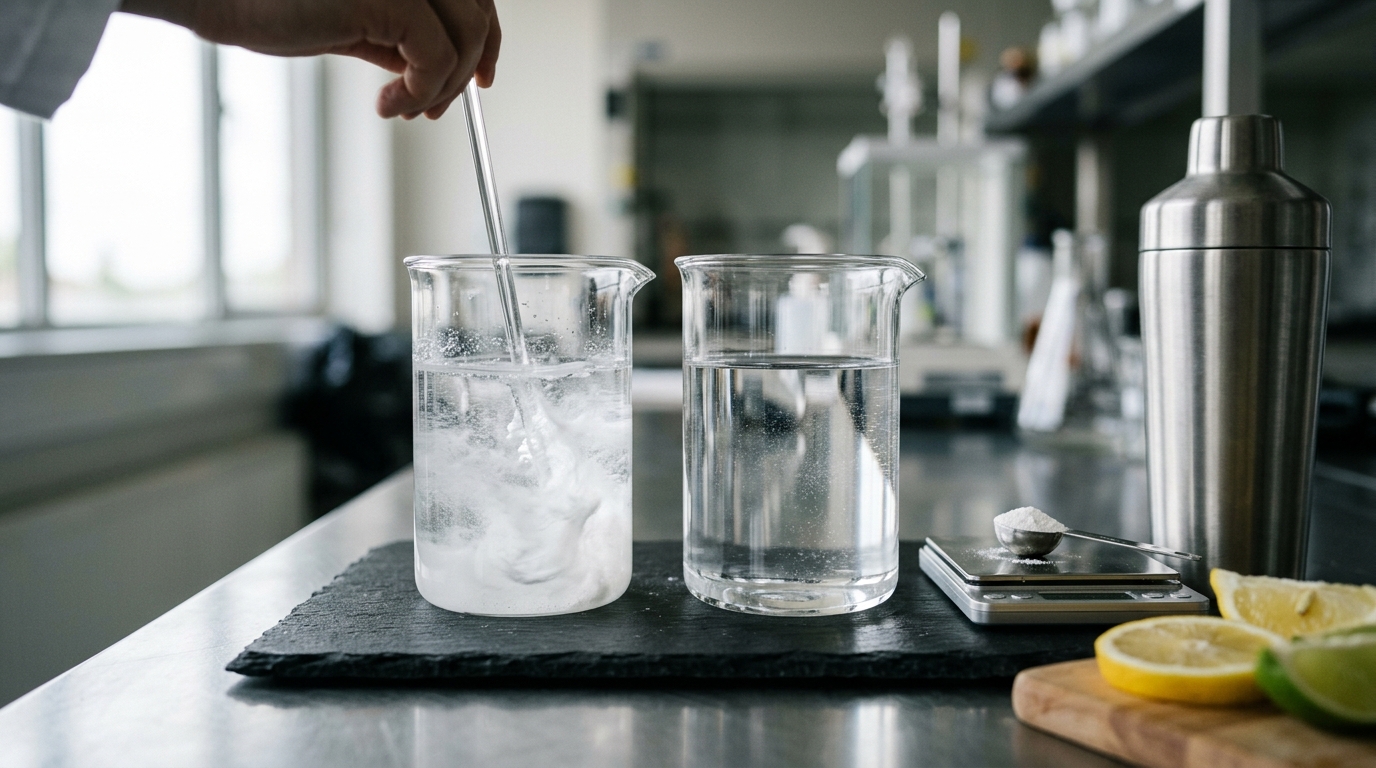
Solubility Difference: HCl dissolves in 2 oz water; Mono requires 10-12 oz warm liquid
40+ Protocol: 3-5g Daily Continuous (Skip 20g loading phase entirely)
Few dietary ergogenics have amassed as robust an empirical pedigree as creatine. Backed by over 1,000 peer-reviewed trials and consensus endorsements from the International Society of Sports Nutrition (ISSN), creatine functions as a bioenergetic currency, donating high-energy phosphate groups to adenosine diphosphate (ADP) to replenish cellular adenosine triphosphate (ATP) during intense muscular contractions and cerebral exertion. However, for adults over 40 navigating metabolic shifts, hormone recalibrations, and body composition management, one stubborn anxiety repeatedly halts supplementation: unwanted water retention, abdominal distension, and facial puffiness.
This apprehension has catapulted alternative formulations—most prominently Creatine Hydrochloride (Creatine HCl)—into the commercial spotlight, marketed as the “non-bloating, zero-water-retention” savior. But is the dichotomy between Creatine Monohydrate and Creatine HCl grounded in rigorous fluid-compartment pharmacokinetics, or is it an artifact of dosage misapplication and marketing alchemy? To settle this debate, we must examine fluid dynamics, gastrointestinal osmotic gradients, and molecular transporter kinetics across cellular boundaries.
Clinical Distinction: Intracellular Hydration vs. Extracellular Bloat
Water retention in human physiology occupies two distinct anatomical spaces: Intracellular Water (ICW) contained within myocyte membranes, and Extracellular Water (ECW) situated in interstitial spaces beneath the dermis and surrounding organs. Intracellular hydration induces an anabolic cascade known as cellular swelling, upregulating mTOR phosphorylation, suppressing myostatin, and enhancing muscle firmness. Conversely, extracellular fluid accumulation causes cosmetic puffiness, shoe tightness, and rapid blood pressure spikes. High-resolution bioelectrical impedance spectroscopy (BIS) confirms that chronic creatine supplementation expands ICW, not interstitial ECW.
Pharmacokinetic Comparison: Creatine Monohydrate vs. Creatine HCl
At the molecular level, both compounds deliver identical bioavailable creatine molecules into systemic circulation. The divergence lies entirely in the chemical salt conjugated to the creatine molecule, which dictates dissolution kinetics in aqueous solution and gastric tolerance:
Why the 20-Gram Loading Phase Causes Bloating in Adults 40+
The traditional sports nutrition dogma—consuming 20 grams of creatine daily divided into four 5-gram doses for 5 to 7 days—was engineered in collegiate sprint laboratories to saturate intramuscular stores within 120 hours. However, in adults over 40 with reduced digestive enzyme secretion, sluggish colonic motility, or borderline insulin sensitivity, this acute bolus introduces severe osmotic stress.
1. Intraluminal Osmotic Flush
Because creatine monohydrate has a saturation limit of ~14 g/L at room temperature, chugging 5g in 6 oz of cold water leaves 3g of un-dissolved grit. In the small intestine, these microscopic crystals act as an osmotic sponge, drawing fluid from mesenteric circulation into the bowel lumen, provoking acute abdominal cramping, gas distension, and osmotic diarrhea.
2. Sodium & Glycogen Co-Storage
Creatine transport into skeletal myocytes via the CreaT1 transporter is an active, sodium-dependent symport process requiring two Na+ ions per creatine molecule. In individuals consuming creatine with high-glycemic fruit juice or sports drinks to spike insulin, the concurrent surge of sodium, glycogen, and fluid causes temporary interstitial water retention until sodium-potassium pumps achieve equilibrium.
3. The 28-Day Zero-Load Alternative
Groundbreaking research demonstrated that a conservative dose of 3 grams per day without any loading phase reaches identical intramuscular phosphocreatine saturation at day 28 as the aggressive 20g loading protocol, completely bypassing gastrointestinal distress and unwanted acute weight spikes.
Creatine Protocol: Cerebral and Metabolic Dividends for Adults Over 40
While 20-year-old gym-goers supplement creatine primarily for 1-rep-max bench press improvements, adults over 40 derive far profounder metabolic, neuromuscular, and neurocognitive dividends that transcend muscular power:
- Reversal of Sarcopenic Type-II Fiber Atrophy: Aging accelerates the preferential denervation of fast-twitch Type-II muscle fibers. Creatine combined with progressive resistance training selectively upregulates satellite cell mitotic activity, preserving glycolytic motor units responsible for fall prevention and gait velocity.
- Cerebral Bioenergetics & Sleep Deprivation Buffer: The human brain consumes 20% of resting metabolic ATP despite accounting for only 2% of body mass. During cognitive fatigue, acute sleep deprivation, or mental multi-tasking, frontal lobe phosphocreatine depletion impairs working memory. Oral creatine passes the blood-brain barrier via SLC6A8 transporters, enhancing executive function and complex reasoning.
- Bone Mineral Density Synergy: In postmenopausal women, creatine supplementation attenuates the rate of bone mineral resorption by suppressing urinary cross-linked N-telopeptides of type I collagen (NTx), creating an alkaline intracellular environment that protects osteoblast survival.
Renal Function: Disentangling Serum Creatinine from Kidney Health
A frequent source of panic during annual medical checkups is an elevated serum creatinine reading. Routine blood panels estimate Glomerular Filtration Rate (eGFR) using mathematical equations based on circulating creatinine. When an individual consumes creatine monohydrate or HCl, spontaneous non-enzymatic degradation of intramuscular creatine into creatinine naturally elevates serum levels, artificially depressing calculated eGFR.
Clinical Lab Advisory: The Cystatin-C Imperative
If your physician flags an elevated serum creatinine (e.g., 1.35 mg/dL) and low eGFR while you are supplementing creatine, request a Serum Cystatin-C test. Cystatin-C is a low-molecular-weight protein produced by all nucleated cells at a constant rate, completely independent of muscle mass, dietary protein, or creatine supplementation. In over 95% of healthy supplement users, Cystatin-C eGFR reveals pristine, unimpaired renal clearance.
The 2026 Evidence-Based Dosing Protocol
To harvest maximum cellular ATP generation without gastrointestinal distress or interstitial fluid retention, follow this calibrated decision framework:
Option A: Micronized Monohydrate
Best Value & Highest Scientific Validation
• Dose: 3.0 to 5.0 grams daily.
• Dissolution Rule: Dissolve in 8–10 oz of lukewarm water or herbal tea until completely translucent (no visible sediment).
• Timing: Post-workout with a balanced meal containing 25g protein and complex carbohydrates to maximize insulin-mediated CreaT1 uptake.
• Dissolution Rule: Dissolve in 8–10 oz of lukewarm water or herbal tea until completely translucent (no visible sediment).
• Timing: Post-workout with a balanced meal containing 25g protein and complex carbohydrates to maximize insulin-mediated CreaT1 uptake.
Option B: Creatine HCl
Best for Sensitive Stomachs & Low Liquid Intake
• Dose: 1.5 to 2.0 grams daily.
• Dissolution Rule: Mixes instantly into 2–4 oz of cold water without residue; possesses a distinct tart/sour taste.
• Ideal User: Individuals prone to acid reflux, irritable bowel syndrome (IBS), or those who travel frequently and require compact micro-dosing.
• Dissolution Rule: Mixes instantly into 2–4 oz of cold water without residue; possesses a distinct tart/sour taste.
• Ideal User: Individuals prone to acid reflux, irritable bowel syndrome (IBS), or those who travel frequently and require compact micro-dosing.
Frequently Asked Questions (FAQ)
Q1: Does creatine cause hair loss or DHT spikes?
No. The hair loss myth stems from a single 2009 study on 20 rugby players where dihydrotestosterone (DHT) increased slightly within normal clinical ranges. Over 12 subsequent randomized controlled trials tracking androgen markers have failed to replicate this finding. Creatine does not increase DHT or cause male pattern baldness.
Q2: Will I lose the muscle and water weight if I stop taking it?
Upon cessation, intramuscular phosphocreatine and intracellular water levels gradually return to baseline over 4 to 6 weeks, resulting in a 1 to 2 kg reduction on the scale. However, the contractile muscle protein and neural adaptations built through progressive resistance training while supplementing remain 100% intact.
Q3: Can women over 40 take creatine without gaining bulk?
Absolutely. Women possess approximately 70–80% lower endogenous creatine stores than men and synthesize less creatine from dietary amino acids. Daily supplementation enhances lean tone, preserves spinal bone density, and mitigates perimenopausal brain fog without causing bulky or masculine musculature.
Q4: Is it necessary to cycle creatine on and off?
No. Long-term studies tracking continuous creatine supplementation for up to 5 years demonstrated no suppression of the body’s endogenous AGAT/GAMT enzyme machinery once supplementation paused. There is no physiological reason to cycle off creatine.
Q5: Should I take creatine before or after workouts?
While consistency matters far more than timing, post-workout ingestion demonstrates a slight physiological advantage due to exercise-induced hyperemia (increased muscular blood flow) and insulin sensitivity, facilitating higher CreaT1 receptor transport.