

Endocrine Pharmacokinetics & Timing Guide
FDA Label & American Thyroid Association Guidelines
FDA Label & American Thyroid Association Guidelines
Levothyroxine and Calcium Iron 4 Hour Separation Rule: Why Absorption Fails & Exact Daily Schedules (2026)
1. The Chelation Trap: Taking thyroid hormone alongside calcium carbonate, ferrous sulfate, or a multivitamin cuts gastrointestinal absorption by 20% to 45% because polyvalent metal ions bind directly to levothyroxine in the small intestine—explaining why TSH climbs despite faithful daily pill use.
2. Strict 4-Hour Window: Under the levothyroxine and calcium iron 4 hour separation rule mandated by FDA prescribing labels and the American Thyroid Association (ATA), wait at least 4 full hours before or after your thyroid tablet before swallowing calcium, iron, magnesium, or aluminum antacids.
3. Coffee & Bedtime Alternatives: Separate espresso, milk, and high-fiber soy meals by 45 to 60 minutes from morning tablets, or ask your endocrinologist about switching to bedtime dosing (3 to 4 hours after dinner) or liquid/gel-cap formulations if morning separation proves unsustainable.
Sarah, 48, takes her 75 mcg thyroid pill every morning at 7:00 a.m., washes it down with water, and faithfully swallows her bone-density calcium citrate and iron supplement twenty minutes later with breakfast. Six months later, her endocrinologist calls with confusing news: her TSH has jumped from 1.9 mIU/L to 6.4 mIU/L, triggering fatigue, cold intolerance, and hair shedding despite never missing a dose.
This scenario is one of the most common preventable causes of refractory hypothyroidism in adults over 40—especially midlife women managing both thyroid therapy and perimenopausal bone or ferritin support. According to official drug labeling compiled by the NIH National Library of Medicine (DailyMed), levothyroxine sodium is exceptionally sensitive to stomach acidity and mineral binding in the duodenum and upper jejunum.
Understanding the levothyroxine and calcium iron 4 hour separation rule transforms erratic thyroid lab swings into steady energy. Below is the clinical pharmacokinetic breakdown of how minerals, coffee, and stomach medications block absorption—followed by three real-world 24-hour schedules you can adopt tomorrow morning.
1. The Chemistry Behind the 4-Hour Rule: Chelation vs. Gastric pH
Under ideal fasting conditions with plain water, oral levothyroxine sodium achieves roughly 70% to 80% bioavailability—meaning minor interference easily shifts your effective daily dose by 15 to 25 micrograms. Two distinct biological mechanisms account for nearly all supplement-induced thyroid malabsorption.
MECHANISM A — MINERAL CHELATION (4-HR RULE)
Insoluble Complexes With Calcium & Iron
Positively charged calcium (Ca2+), ferrous/ferric iron (Fe2+/Fe3+), and magnesium cations chemically bind to the levothyroxine molecule, forming bulky insoluble chelates too large to cross intestinal epithelial walls. Those bound hormones pass straight out in stool unabsorbed.
MECHANISM B — GASTRIC PH & MOTILITY (60-MIN RULE)
Tablet Dissolution & Gastric Acid Needs
Standard compressed levothyroxine tablets require normal stomach acid (pH 1.5–2.5) to dissolve cleanly within 30 minutes. Proton pump inhibitors (omeprazole), calcium carbonate antacids, coffee, and fiber-rich breakfasts raise stomach pH or trap tablets in food boluses.
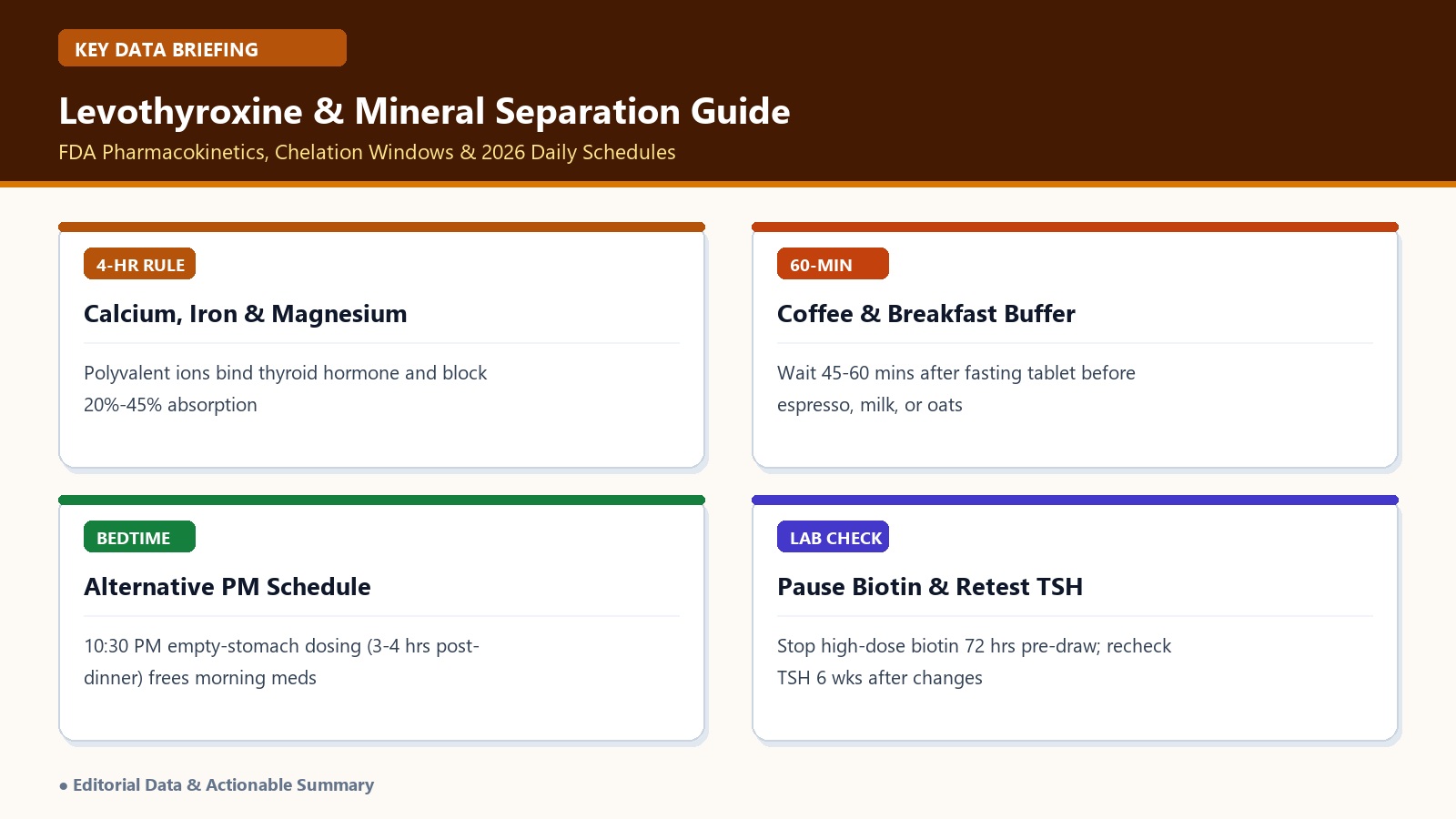
Figure 1: Levothyroxine Chelation Interference & 2026 Clinical Separation Windows
2. Complete Drug, Mineral & Beverage Separation Matrix
Not every pill or beverage demands the full four-hour buffer. Clinical pharmacokinetic studies summarized by the American Thyroid Association (ATA) establish distinct clearance intervals depending on whether a substance chemically chelates the hormone or simply slows gastric emptying.
Watch out for a subtle secondary interaction: iron and calcium also compete with each other! Taking calcium carbonate at the exact same minute as an iron tablet reduces non-heme iron absorption by 30% to 50% via DMT1 transporter competition. If you need all three daily, place levothyroxine first thing in the morning, iron with vitamin C before lunch, and calcium plus magnesium at dinner.
3. Three Practical 24-Hour Schedules That Work in Real Life
Following the levothyroxine and calcium iron 4 hour separation rule fails when schedules feel overly complicated. Choose the single daily template below that matches your actual morning habits, and keep your timing consistent for at least 6 weeks before repeating TSH and Free T4 labs.

Figure 2: Separating Dietary Minerals & Targeted Supplements Across Lunch and Dinner Windows
4. Hidden Traps: Biotin Lab Skew, PPIs & Persistent Hypothyroidism
Even patients who obey the 4-hour mineral window religiously occasionally see unexplained thyroid test anomalies. According to FDA Safety Communications and recent clinical case reports, watch for three overlooked confounders before altering your prescription dosage.
3 Overlooked Factors That Distort Thyroid Labs or Absorption
• High-Dose Biotin (Vitamin B7) Assay Interference: Hair-and-nail supplements containing 5,000 to 10,000 mcg of biotin do not alter true thyroid hormone levels in your body, but they interfere with streptavidin-biotin lab immunoassays—producing falsely low TSH and falsely high Free T4. Pause biotin for 48 to 72 hours before blood draws.
• Oral Estrogen vs. Transdermal Patches: Starting oral estrogen therapy increases thyroxine-binding globulin (TBG), often requiring a 15% to 25% levothyroxine dose increase, whereas transdermal estradiol patches bypass first-pass liver metabolism and rarely disturb TSH.
• Celiac, H. pylori & Liquid Formulations: If TSH stays elevated despite strict 4-hour separation from calcium, iron, and PPIs, ask your physician to screen for silent celiac disease, autoimmune gastritis, or trial a liquid/softgel levothyroxine capsule that dissolves independently of stomach acid.
5. Frequently Asked Questions (FAQ): Levothyroxine, Calcium & Iron Timing
Q1: How long must I wait between levothyroxine and calcium or iron supplements?
Wait a minimum of 4 hours before or after taking levothyroxine before taking calcium supplements, iron tablets, magnesium, zinc, or mineral-containing antacids. That 4-hour buffer gives levothyroxine adequate time to clear the stomach and absorb across the upper small intestine without metal-ion chelation.
Q2: Can I eat yogurt, cheese, or a calcium-rich breakfast 1 hour after levothyroxine?
Modest dietary calcium in food (such as a splash of milk or half a cup of yogurt 60 minutes after your pill) causes far less interference than a concentrated 500 to 600 mg calcium supplement pill. However, stay consistent day to day—and avoid fortified high-calcium protein shakes or Tums within 4 hours of dosing.
Q3: Is it safe to take levothyroxine at bedtime so I can take supplements in the morning?
Yes, clinical trials show bedtime levothyroxine dosing works equally well—or occasionally slightly better due to slower nocturnal gut transit—provided you take it on an empty stomach at least 3 to 4 hours after your final meal or snack and free of evening magnesium or calcium supplements. Always recheck TSH 6 weeks after changing timing.
Q4: What happens if I accidentally took my multivitamin with levothyroxine once?
A single accidental overlap will not cause an acute emergency because levothyroxine has a long biological half-life of roughly 7 days. Do not take a double thyroid dose to compensate; simply resume the 4-hour separation schedule the next day. Consistent daily timing is what keeps TSH steady.
6. Clinical Action Plan: Auditing Your Pill Organizer Tonight
Applying the levothyroxine and calcium iron 4 hour separation rule requires no expensive medications—only reorganizing when existing pills hit your stomach. Tonight, move calcium, magnesium, zinc, and iron-containing multivitamins out of your morning bathroom tray and into a dedicated lunch or dinner pill compartment.
Keep your thyroid tablet beside a bedside water glass for consistent morning or empty-stomach bedtime dosing, pause biotin 72 hours prior to blood work, and retest TSH and Free T4 after 6 to 8 weeks so your endocrinologist can verify whether your true steady-state dose actually needs adjustment.
Related Clinical Protocols & Evidence Guides