
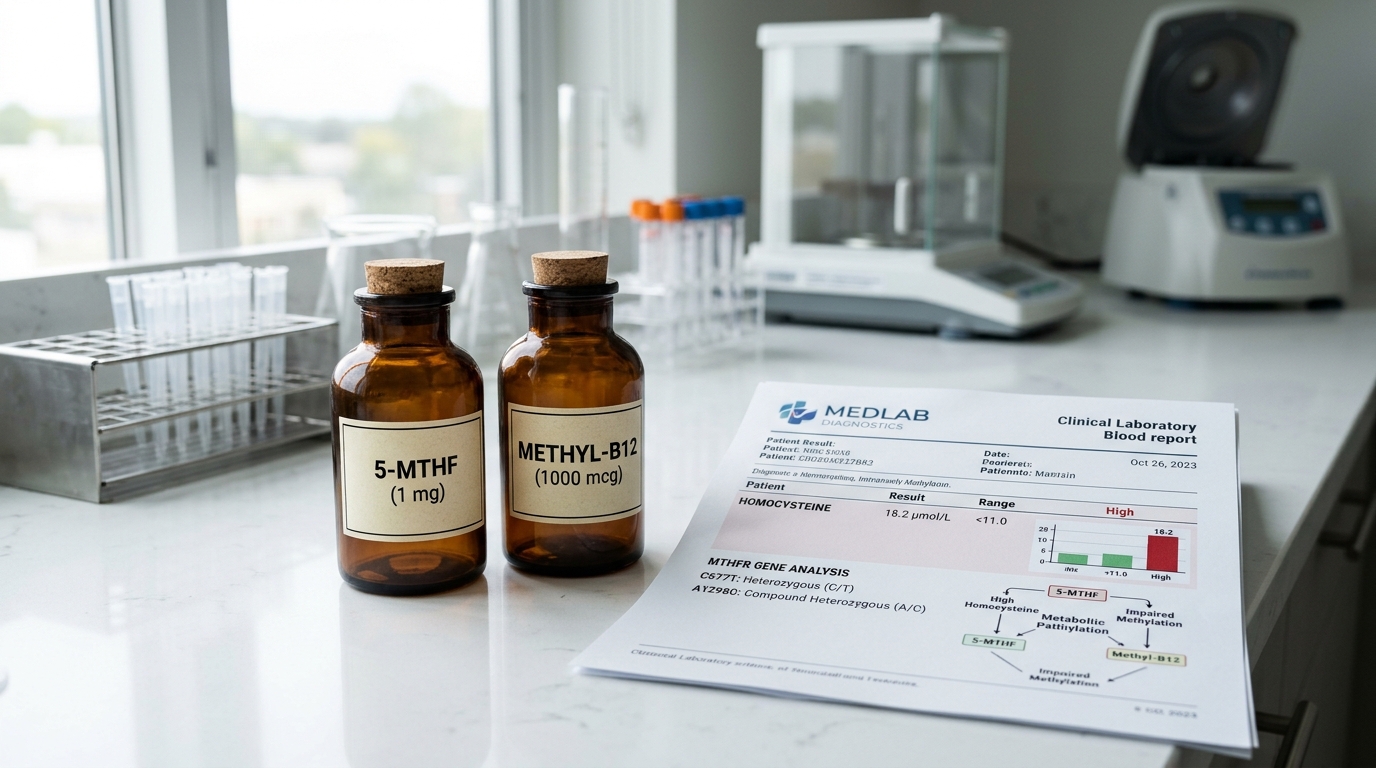
Clinical Biomarker Briefing
Cardiovascular & Neurovascular Methylation Protocol
Cardiovascular & Neurovascular Methylation Protocol
High Homocysteine with Normal B12 MTHFR Protocol: Executive Clinical Summary
1. The Functional B12 & Folate Trap Paradox: Standard serum cobalamin assays measure total circulating vitamin B12 (including inactive corrinoid analogues), masking intracellular methylation failure. When genetic polymorphisms such as MTHFR C677T impair 5-methyltetrahydrofolate (5-MTHF) synthesis, the methionine synthase enzyme stalls, causing homocysteine to accumulate above 12 to 15 μmol/L despite clinically “normal” serum B12 readings between 400 and 700 pg/mL.
2. Dual Clearance Pathways: Homocysteine can only exit the blood through two biochemical routes: remethylation back to methionine (requiring active 5-MTHF, methylcobalamin, or hepatic betaine/TMG) or transsulfuration into cystathionine and glutathione (strictly dependent on bioactive pyridoxal-5-phosphate / P5P vitamin B6). Synthetic folic acid compounds and inactive cyanocobalamin cannot resolve enzymatic bottlenecks.
3. The 4-Step Targeted Protocol: Resolving high homocysteine requires transitioning away from synthetic folic acid to 400–800 mcg of active L-5-MTHF, co-supplementing 1,000 mcg sublingual methylcobalamin, activating transsulfuration with 25–50 mg of P5P, and administering 500–1,000 mg of trimethylglycine (TMG) to bypass compromised folate pathways, safely driving serum homocysteine into the optimal longevity window of 6.0 to 7.5 μmol/L within 8 to 12 weeks.
When reviewing comprehensive annual bloodwork, few clinical findings cause as much medical confusion as discovering elevated levels of homocysteine alongside completely normal serum vitamin B12. Patients are frequently told by general practitioners that their cobalamin levels are “fine,” yet their vascular and neurocognitive biomarker panel reveals significant cellular methylation impairment. Successfully implementing a high homocysteine with normal b12 mthfr protocol requires understanding that standard serum lab ranges frequently overlook functional intracellular nutrient deficiencies.
Homocysteine is a toxic sulfur-containing intermediate amino acid produced during the natural breakdown of dietary methionine. In healthy human physiology, homocysteine is rapidly neutralized before it can damage vascular endothelial walls or initiate microvascular inflammation.
However, when common genetic variants such as MTHFR C677T or A1298C intersect with impaired cofactor bioavailability, a patient requires a personalized high homocysteine with normal b12 mthfr protocol. Here is what peer-reviewed molecular hematology and cardiovascular genetics demonstrate regarding methyl donor kinetics, intracellular trapping, transsulfuration, and how to permanently normalize your homocysteine.
1. The Diagnostic Paradox: Why Serum B12 Is Normal While Homocysteine Rises
To comprehend the clinical urgency of a high homocysteine with normal b12 mthfr protocol, one must first recognize the fundamental limitations of routine clinical laboratory testing. Standard commercial serum vitamin B12 immunoassay tests measure total cobalamin in circulation. Crucially, approximately 70% to 80% of this circulating cobalamin is bound to haptocorrin (transcobalamin I and III), an inert transport protein that cannot deliver vitamin B12 across cellular membranes into target tissues.
Only the remaining 20% to 30% of circulating cobalamin is bound to transcobalamin II (forming holotranscobalamin or “active B12”), which can be internalized into mitochondria and cytoplasm. Consequently, a patient can easily exhibit a total serum B12 reading of 450 to 600 pg/mL while experiencing severe cellular cobalamin starvation. When cellular cobalamin is deficient or chemically unreactive, the primary intracellular enzyme methionine synthase (MS) cannot catalyze the remethylation of homocysteine into methionine.
Furthermore, unmethylated synthetic cyanocobalamin supplements or enriched processed foods introduce inactive corrinoid analogues that can saturate cell receptors without contributing methyl groups. In functional medicine and longevity diagnostics, the true indicators of tissue-level B12 deficiency are elevated serum methylmalonic acid (MMA > 0.28 μmol/L) and elevated total homocysteine (tHcy > 10.0 μmol/L). Relying solely on total serum cobalamin leaves dangerous hyperhomocysteinemia undetected and untreated.
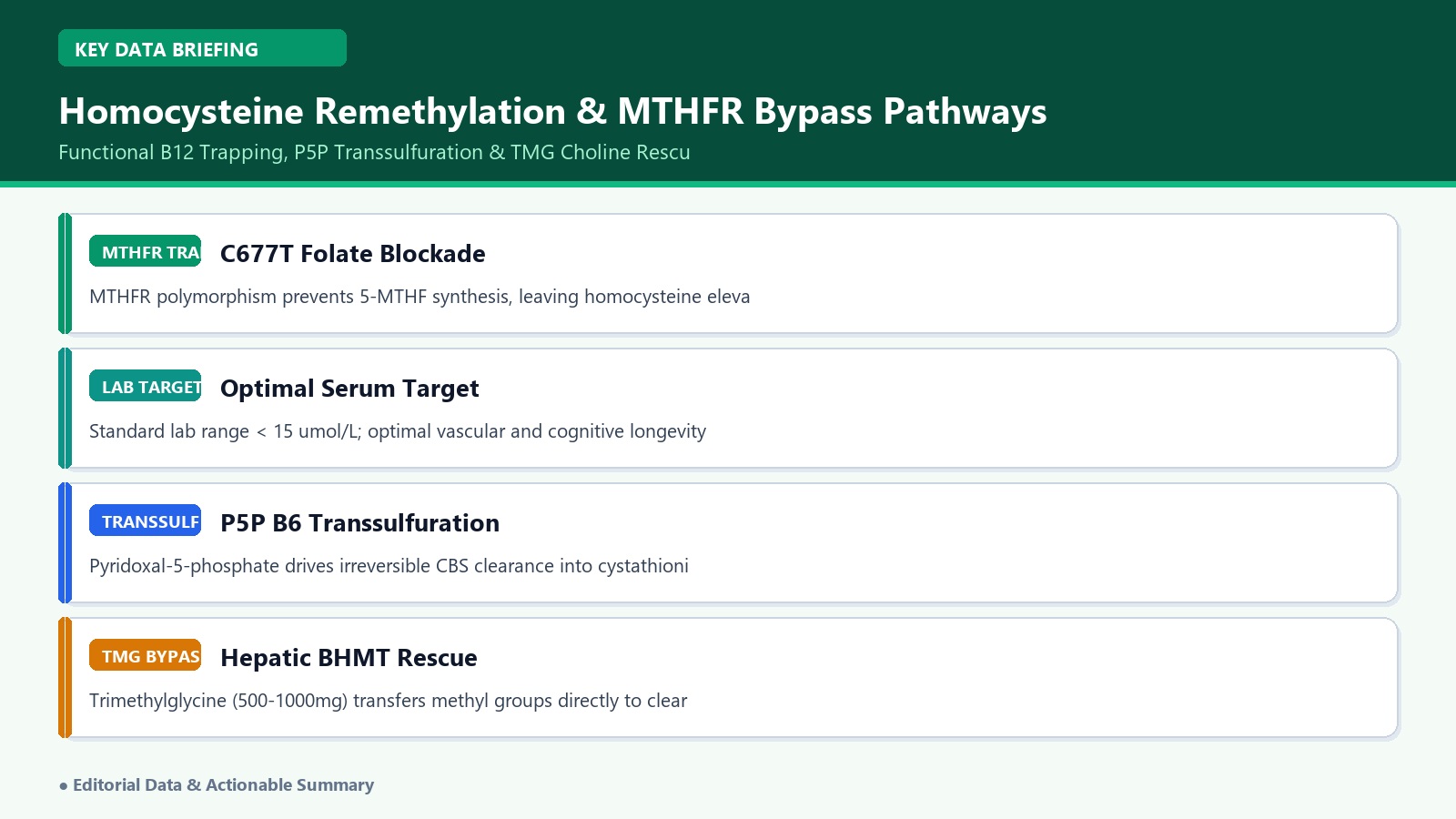
Figure 1: Cellular Methionine-Homocysteine Cycle Dynamics: MTHFR 5-MTHF Remethylation vs P5P-Dependent Transsulfuration
2. The MTHFR C677T & A1298C Genetic Trap: Folate Deficiency at the Gene Level
Even when an individual possesses adequate bioavailable vitamin B12, the enzyme methionine synthase cannot function without its primary co-substrate: 5-methyltetrahydrofolate (5-MTHF). This is where genetic mutations in the methylenetetrahydrofolate reductase (MTHFR) gene create a biochemical deadlock that necessitates a dedicated high homocysteine with normal b12 mthfr protocol.
The MTHFR gene provides instructions for producing the enzyme responsible for converting 5,10-methylenetetrahydrofolate into bioactive 5-MTHF. There are two primary single nucleotide polymorphisms (SNPs) evaluated in clinical neurogenetics:
1. MTHFR C677T Polymorphism: Individuals who carry a heterozygous mutation (C/T) experience an estimated 30% to 40% reduction in enzyme efficiency, while homozygous individuals (T/T) suffer up to a 65% to 75% loss in enzyme activity. This homozygous variant severely handicaps the body’s capacity to generate active methylfolate, leading directly to elevated homocysteine even if serum B12 and serum folate appear elevated on routine lab tests.
2. MTHFR A1298C Polymorphism: While the A1298C variant has a milder direct impact on homocysteine recycling than C677T, it heavily regulates tetrahydrobiopterin (BH4) recycling. When compound heterozygous (carrying one C677T copy and one A1298C copy), individuals experience profound neurochemical exhaustion, reduced nitric oxide production, and impaired neurotransmitter synthesis alongside elevated homocysteine.
The catastrophic mistake made by many patients is taking high-dose synthetic folic acid (pteroylmonoglutamic acid). Synthetic folic acid is an artificial compound that does not exist in nature. In patients with compromised MTHFR activity, unmetabolized folic acid (UMFA) accumulates in the bloodstream, paradoxically binding to and blocking folate receptors while inhibiting dihydrofolate reductase (DHFR). This phenomenon—known in clinical biochemistry as the “folate trap”—causes severe functional folate deficiency inside the cell, driving homocysteine levels progressively higher.
3. Dual Clearance Routes: Transsulfuration and the Choline-Betaine Bypass
A comprehensive high homocysteine with normal b12 mthfr protocol must never rely exclusively on the folate-cobalamin remethylation axis. Human biochemistry provides two distinct alternative pathways to eliminate homocysteine: the P5P-dependent transsulfuration pathway and the hepatic betaine (TMG) bypass.
The Transsulfuration Pathway to Glutathione: Rather than converting homocysteine back into methionine, the transsulfuration pathway breaks down homocysteine irreversibly into cystathionine via the enzyme cystathionine beta-synthase (CBS), which is then converted into cysteine and ultimately into glutathione—the master intracellular antioxidant. The CBS enzyme and its downstream partner cystathionine gamma-lyase are strictly dependent on pyridoxal-5-phosphate (P5P), the bioactive coenzyme form of vitamin B6.
If an individual is deficient in active P5P (which is common due to aging, oral contraceptives, high alcohol consumption, or poor hepatic phosphorylation of inactive pyridoxine HCl), the transsulfuration pathway bottlenecks. Homocysteine cannot be degraded into protective glutathione and backs up into systemic circulation, provoking vascular endothelial damage.
The Hepatic Betaine (TMG) Clearance Bypass: In liver and kidney cells, an entirely separate remethylation pathway operates independently of both vitamin B12 and MTHFR. The enzyme betaine-homocysteine S-methyltransferase (BHMT) transfers a methyl group directly from trimethylglycine (TMG, also known as betaine) to homocysteine, converting it cleanly into methionine. For individuals with severe MTHFR homozygous mutations or functional B12 transport resistance, supplementing TMG serves as an immediate biochemical rescue bridge that rapidly clears homocysteine from the liver.

Bioactive Methylation Routine: Combining Active 5-MTHF, Sublingual Cobalamin, P5P, and Dietary Betaine for Cellular Longevity
4. The 4-Step Clinical Methylation Protocol (2026 Evidence Standard)
To systematically eliminate hyperhomocysteinemia without triggering overmethylation side effects (such as anxiety, insomnia, or irritability), follow this clinically calibrated 4-step sequence designed specifically for patients confronting high homocysteine with normal b12 mthfr protocol dilemmas:
STEP 01
Eliminate Synthetic Folic Acid & Introduce Bioactive L-5-MTHF
Immediately eliminate fortified breakfast cereals, synthetic flour products, and multivitamin formulas containing synthetic “folic acid.” Substitute with biologically active L-methylfolate (L-5-MTHF, calcium salt or glucosamine salt) at a targeted starting dose of 400 mcg to 800 mcg daily with breakfast. Unlike synthetic folic acid, 5-MTHF requires zero enzymatic conversion by DHFR or MTHFR and directly feeds the methionine synthase enzyme to recycle homocysteine.
STEP 02
Administer Sublingual Dual-Cobalamin (Methyl + Adenosyl B12)
Do not rely on standard oral cyanocobalamin capsules. Take 1,000 mcg of sublingual Methylcobalamin combined with Adenosylcobalamin once daily upon waking. Sublingual absorption bypasses intrinsic factor constraints in the stomach and provides the exact active coenzyme needed for cytoplasmic methylation (methylcobalamin) while simultaneously replenishing mitochondrial energy production via the succinyl-CoA pathway (adenosylcobalamin).
STEP 03
Unblock Transsulfuration with Pyridoxal-5-Phosphate (P5P, 25–50 mg)
To guarantee that excess homocysteine is efficiently converted into antioxidant glutathione rather than recirculated, integrate 25 mg to 50 mg of bioactive Pyridoxal-5-Phosphate (P5P) daily. Avoid generic pyridoxine HCl, which can saturate peripheral neural transport proteins without activating the CBS enzyme. P5P ensures seamless downstream transsulfuration clearance into cystathionine, taurine, and cellular glutathione.
STEP 04
Deploy Trimethylglycine (TMG / Betaine, 500–1,000 mg) as Hepatic Bridge
Incorporate 500 mg to 1,000 mg of Trimethylglycine (TMG) daily with food. By supplying direct methyl donors to the hepatic BHMT enzyme, TMG provides an instantaneous alternative exit route for homocysteine that does not depend on MTHFR enzyme kinetics or cobalamin cofactors. Clinical trials demonstrate that adding TMG reduces recalcitrant homocysteine by an additional 18% to 27% compared to folate/B12 alone.
5. Frequently Asked Questions (FAQ)
Q1: Why did my physician state my B12 was completely normal at 480 pg/mL when my homocysteine was 15.2 μmol/L?
Standard automated blood analyzers evaluate total circulating cobalamin, the vast majority of which is bound to inactive haptocorrin. If your MTHFR enzyme is impaired or cellular transcobalamin receptor kinetics are blunted, your cells cannot utilize that circulating B12 to remethylate homocysteine. True functional tissue B12 deficiency is revealed by elevated homocysteine and methylmalonic acid (MMA), not by total serum B12 alone.
Q2: Can consuming fortified foods with synthetic folic acid worsen homocysteine in MTHFR patients?
Yes, absolutely. Because individuals with MTHFR mutations have slow and saturated DHFR enzyme capacity, synthetic folic acid accumulates as unmetabolized folic acid (UMFA) in the bloodstream. UMFA competitively blocks cellular folate transport proteins and inhibits the small amount of remaining native MTHFR activity, creating a functional intracellular folate deficiency (the “folate trap”) that accelerates homocysteine accumulation.
Q3: How long does it take for this 4-step methylation protocol to lower homocysteine to safe levels?
Homocysteine has a relatively rapid turnover rate in human blood. When starting bioactive 5-MTHF, sublingual methylcobalamin, P5P, and TMG, measurable reductions occur within 14 to 21 days. Most clinical trials demonstrate that total serum homocysteine drops by 35% to 55% within 8 to 12 weeks of compliant administration, reaching the optimal longevity target of 6.0 to 7.5 μmol/L upon follow-up testing.
Q4: What should I do if I experience headaches or anxiety when starting active methylfolate?
Experiencing agitation, insomnia, or irritability upon taking 5-MTHF indicates rapid “overmethylation” or a sudden surge in catecholamine synthesis. In this scenario, titrate down to a micro-dose of 200 mcg daily and ensure you are taking 50 mg of niacin (nicotinic acid), which acts as a physiological methyl sponge to soak up excess methyl groups. Additionally, ensure adequate magnesium glycinate (200–400 mg) and potassium intake to stabilize neuronal excitability.
6. Primary Clinical References & Scientific Evidence
• American Heart Association (AHA) Scientific Statement: Homocysteine and Risk of Cardiovascular Disease in Clinical Practice, Circulation, DOI: 10.1161/CIRCULATIONAHA.106.180424.
• National Institutes of Health (NIH) Office of Dietary Supplements: Dietary Supplement Fact Sheet: Folate and Vitamin B12 in Clinical Methylation Disorders, NIH ODS Clinical Review.
• Journal of the American Medical Association (JAMA Neurology): Association of Elevated Homocysteine with Microvascular Brain Injury and Cognitive Decline in Adults 40+, JAMA Neurol., DOI: 10.1001/jamaneurol.2018.2396.
• Molecular Genetics and Metabolism: MTHFR C677T and A1298C Polymorphisms: Functional Impact on 5-MTHF Synthesis and Homocysteine Clearance, Mol Genet Metab, DOI: 10.1016/j.ymgme.2020.03.004.
• The American Journal of Clinical Nutrition: Betaine and Choline Intake in the Regulation of Plasma Homocysteine: The BHMT Bypass Pathway, Am J Clin Nutr, DOI: 10.1093/ajcn/82.1.111.