
1-Minute Clinical Action Briefing
How to Stop Waking Up to Pee at 3 AM: Nocturia Fix
Waking up to urinate between 2:00 AM and 4:00 AM is rarely an issue of weak bladder control or an enlarged prostate alone. In over 80% of adults over 40, nocturnal awakenings stem from three hidden physiological drivers: an age-related decline in nocturnal arginine vasopressin (AVP) secretion, supine venous fluid redistribution triggering atrial natriuretic peptide (ANP), or unrecognized sleep apnea causing negative intrathoracic suction. Resolving nocturia requires a structured 4-pillar mechanical and chronobiological protocol: afternoon leg elevation, daytime compression wear, a 3-hour evening fluid curfew, and airway evaluation.
For millions of adults over 40, midnight and 3:00 AM awakenings follow an infuriatingly predictable pattern: an overwhelming urge to urinate forces you out of bed, instantly shattering your restorative slow-wave deep sleep. Once awake, elevated cortisol and a racing mind make returning to sleep nearly impossible.
Learning how to stop waking up to pee at 3am nocturia requires identifying the exact physiological mechanism at play. Rather than restricting daytime hydration or relying on anticholinergic bladder medications with severe side effects, modern urology and chronobiology offer targeted, non-pharmacological interventions that eliminate nocturnal polyuria at its source.

Figure 1: Etiological Triad of Nocturia: Hormonal, Hemodynamic, and Airway Mechanisms.
Nocturia Etiology: The 4 Distinct Biological Root Causes
Effective treatment depends entirely on accurate clinical classification. The table below compares the four primary drivers of nocturnal urination, detailing urine output volume, physiological triggers, and targeted clinical solutions.
| Root Cause Type | Clinical Mechanism | Urine Volume at 3 AM | Targeted Reversal Protocol |
|---|---|---|---|
| 1. Venous Shift & ANP Surge | Daytime gravity pools 500–1000 mL fluid in lower legs; when lying flat, fluid surges to heart, stretching right atrium and releasing diuretic ANP | High Volume (>350–500 mL dilute clear urine) | Elevate legs 20–30 min at 5:00 PM; wear Class 1 (15–20 mmHg) compression socks during day |
| 2. Vasopressin (AVP) Decay | Pituitary gland loses nocturnal circadian rhythm of antidiuretic hormone (AVP); kidneys fail to concentrate urine while sleeping | High Volume (>33% of 24h total urine produced at night) | Evening salt/electrolyte micro-pinch before bed; strict 3h pre-bed fluid cutoff |
| 3. Obstructive Sleep Apnea | Airway collapse creates negative intrathoracic suction (Mueller maneuver), mimicking fluid overload and signaling kidneys to dump water | Moderate to High Volume accompanied by gasping or dry mouth | CPAP or mandibular advancement device; elevated head-of-bed posture (3–5 degrees) |
| 4. Bladder / BPH Irritability | Detrusor muscle overactivity, benign prostatic hyperplasia, or pelvic floor hypertonicity causing premature sensation of fullness | Low Volume (<100–150 mL concentrated urine, sensation not relieved) | Pelvic floor relaxation drills; beta-sitosterol/saw palmetto; eliminate bladder irritants |
Figure 2: Eliminating fluid shift and hormonal nocturnal triggers allows continuous restorative deep sleep.
1. The Circadian Vasopressin Switch: Why Kidneys Overproduce Urine at Night
Under optimal youthful physiology, the posterior pituitary gland follows a strict circadian rhythm, surging the secretion of arginine vasopressin (AVP), also known as antidiuretic hormone (ADH), during sleep. AVP acts on renal V2 receptors in collecting ducts, signaling the kidneys to reabsorb water and concentrate urine. This ensures a healthy adult can sleep 8 hours without bladder distension.
Starting in our late 40s, circadian melatonin and hypothalamic signaling blunt this nocturnal AVP surge. As a result, the kidneys produce dilute, high-volume urine at identical rates during the night as during midday. Clinically diagnosed as Nocturnal Polyuria (NP), this condition is defined when more than 33% of your total 24-hour urine volume is produced during sleep hours.
2. The Venous Pooling & Atrial Natriuretic Peptide (ANP) Axis
The most overlooked mechanical driver of 3:00 AM nocturia is gravity-dependent fluid pooling. Throughout the day, upright sitting and standing allow extracellular fluid to pool in the interstitial tissues of the calves, ankles, and thighs. In adults with mild venous insufficiency, this can amount to 500 to 1,000 mL of sequestered volume.
When you recline into bed at night:
- Rapid Central Fluid Redistribution: Within 2 to 3 hours of lying horizontal, venous return drains pooled fluid from the legs directly into the central thoracic circulation.
- Atrial Stretch Signaling: The sudden influx of venous volume stretches baroreceptors in the heart’s right atrium. The heart misinterprets this as life-threatening systemic fluid overload.
- Massive ANP Hormone Dump: In response, cardiac myocytes release Atrial Natriuretic Peptide (ANP). ANP immediately shuts down renal sodium reabsorption and forces the kidneys to rapidly filter and dump large volumes of water into the bladder—culminating in an unavoidable 3:00 AM wake-up call.
3. Obstructive Sleep Apnea (OSA): The Negative Pressure Trick
Many patients who believe they wake up because they need to pee are actually waking up due to subtle airway resistance. When soft tissues in the pharynx collapse during sleep, the diaphragm contracts against a closed airway (the classic Mueller maneuver).
This generates powerful negative intrathoracic pressure inside the chest cavity, literally sucking venous blood into the heart and artificially stretching the atrium. Just like venous pooling, this triggers acute ANP release. The individual wakes up slightly choking or startled, notices a full bladder, and falsely assumes the bladder was the culprit when airway obstruction was the true instigator.
4. The 4-Pillar Clinical Protocol to Sleep Through the Night
To definitively resolve nocturia without dangerous pharmaceuticals, implement this evidence-based clinical regimen:
1
Late Afternoon Leg Elevation (5:00 PM – 5:30 PM): Elevate your feet above the level of your heart for 20 to 30 minutes while reading or relaxing. This forces pooled fluid back into circulation early, allowing you to urinate out the excess fluid before going to sleep.
2
Daytime Compression Stockings: If you stand or sit for prolonged hours, wear knee-high graduated compression socks (15–20 mmHg) during the day and remove them at dinner. This prevents fluid from entering interstitial tissues in the first place.
3
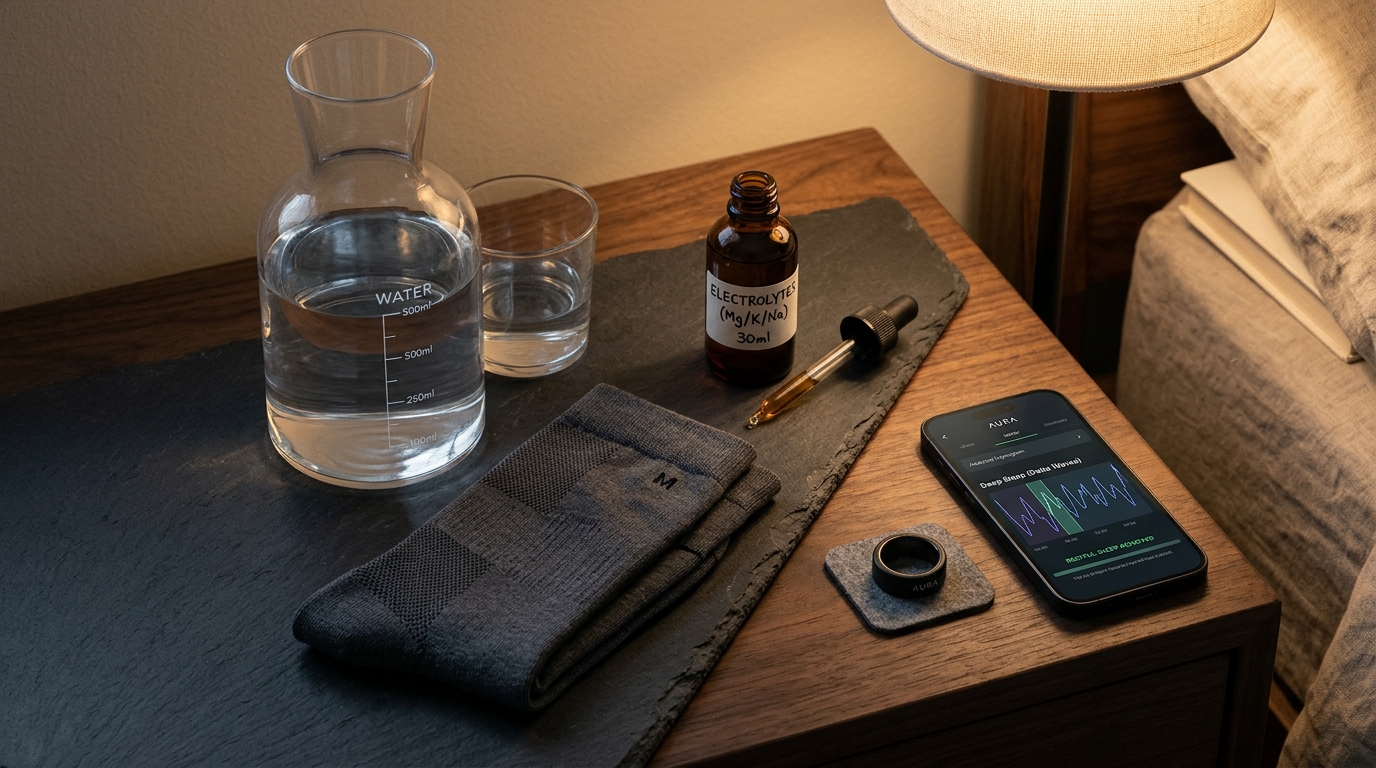
Strict 3-Hour Fluid Curfew & Electrolyte Anchor: Stop drinking water, tea, and alcohol 3 hours before bed. If thirsty, take only tiny sips. Consuming a small pinch of unprocessed sea salt (approx. 100–200mg sodium) 30 minutes before bed holds water in the vascular space, preventing overnight renal dumping.
4
Elevate Head-of-Bed 3 to 5 Degrees: Placing 3-to-4 inch risers under the headboard posts slightly reduces venous return to the right atrium, preventing the ANP surge throughout the night while also reducing airway collapse.
The 24-Hour Nocturia Prevention Daily Checklist
☐ 08:00 – Morning: Front-load your hydration; drink 70% of your daily water intake between waking and 3:00 PM.
☐ 12:00 – Midday: Put on 15–20 mmHg knee-high compression stockings if sitting or standing for long periods.
☐ 17:00 – Afternoon: Recline with legs elevated above heart level for 25 minutes; urinate when the urge arises.
☐ 19:30 – Evening: Kitchen closed; stop all caloric fluids, alcohol, and caffeine.
☐ 22:30 – Bedtime: Double-void (urinate once, brush teeth, urinate again); take a tiny pinch of sea salt with a sip of water.
Frequently Asked Questions
Is waking up once a night to urinate considered normal after 50?
Waking up zero to one time per night is considered within normal physiological limits, provided you fall back asleep within 5 to 10 minutes. However, waking up two or more times per night (clinically defined as significant nocturia) fragments slow-wave sleep, doubles daytime fall risk in older adults, and significantly impairs cardiovascular recovery.
Why does drinking alcohol in the evening guarantee a 3:00 AM bathroom trip?
Alcohol directly inhibits vasopressin (ADH) release from the pituitary gland. Furthermore, as alcohol is metabolized around 3:00 AM, it triggers a rebound surge in sympathetic tone and cortisol, accelerating bladder irritability while simultaneously disrupting deep sleep architecture.
Will drinking less water during the day stop nocturia?
No; daytime dehydration actually worsens nocturia. When you restrict water during the day, urine becomes highly concentrated with uric acid and urea. Highly concentrated, acidic urine irritates the detrusor bladder lining, triggering spasming and premature urgency even when bladder volume is low. Front-load water early in the day instead.
When should I see a urologist or doctor for nighttime urination?
Consult a physician immediately if nocturia is accompanied by gross hematuria (visible blood in urine), burning/dysuria, sudden weak urinary stream, unexpected fever, or involuntary incontinence. A simple 24-hour voiding diary (measuring urine volume daytime vs nighttime) is the most valuable diagnostic tool to bring to your appointment.
Medical Disclaimer: This article is published for educational and scientific research purposes only and does not constitute medical advice or clinical diagnosis. If you experience severe nocturia, cardiovascular symptoms, or suspected sleep apnea, consult a board-certified urologist, cardiologist, or sleep specialist.