
Editor’s 1-Minute Briefing
2026 Clinical Strength Biomarker & Midlife Mobility Protocol
Grip Strength Longevity Exercises After 40: Normative Chart, Test Steps & Weekly Plan
1. Why Handgrip Predicts Lifespan: Large cohort data indexed on PubMed (including the 140,000-adult PURE study) show every 5 kg (11 lbs) drop in grip strength correlates with a 16% higher all-cause mortality risk and 17% higher cardiovascular death risk—outperforming systolic blood pressure as a single midlife screen.
2. Your 40+ Target Zone: Evidence-based grip strength longevity exercises aim to hold adults above clinical sarcopenia cutoffs—targeting at least 40–48 kg (88–106 lbs) for men and 25–32 kg (55–70 lbs) for women in their 40s and 50s using a calibrated digital dynamometer.
3. Minimum Effective Dose: Just 12–15 minutes, 3 days per week of loaded farmer’s carries, dead hangs, and towel pinch holds restores neuromuscular recruitment and forearm tendon resilience without joint overload per National Institute on Aging strength guidance.
Opening a stubborn pasta jar or carrying two 25-pound grocery bags up a flight of stairs feels mundane—until you look at what forearm force actually measures inside your body. Practicing targeted grip strength longevity exercises does not extend your lifespan simply by making your hands tougher; rather, handgrip force acts as a rapid, non-invasive readout of whole-body motor unit recruitment, skeletal muscle reserve, and vascular health after age 40.
Clinical longevity physicians cited by Harvard Health Publishing and Cleveland Clinic warn against squeezing a soft desk stress ball and calling it training. True neuromuscular adaptation requires progressive mechanical tension through heavy carries, bodyweight hangs, and eccentric wrist control.
1. Grip Strength Longevity Chart: Normative Benchmarks by Age (40–79)
Before picking up a kettlebell, measure where your dominant hand currently sits relative to population norms and longevity-optimal thresholds. The benchmarks below synthesize Jamar/Camry dynamometer reference cohorts and the European Working Group on Sarcopenia (EWGSOP2) weakness cutoffs (<27 kg men, <16 kg women).
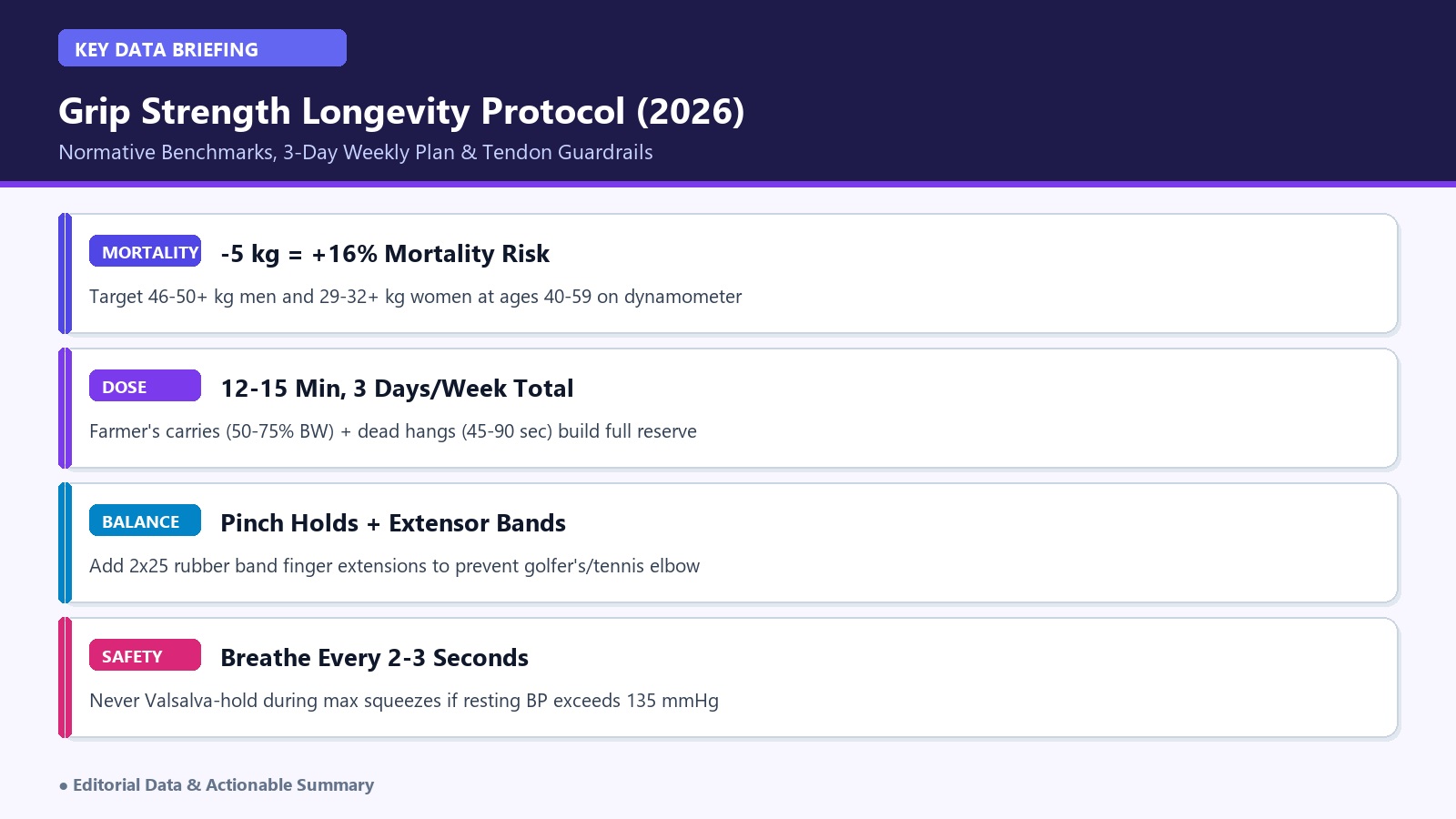
Figure 1: Grip Strength Longevity Exercises — Age-Normative Dynamometer Targets, 3-Day Weekly Protocol & Tendon Guardrails
2. How to Measure Grip Strength Accurately at Home (Standardized 3-Trial Method)
Tracking progress requires a repeatable posture because standing vs. sitting or bending your wrist shifts dynamometer scores by 10% to 18%. Follow the American Society of Hand Therapists (ASHT) protocol using an inexpensive $25–$40 digital hand dynamometer once every 4 weeks:
30-Second ASHT Calibration Checklist
Sit upright with feet flat on the floor, shoulder relaxed in neutral, and elbow bent strictly at 90 degrees tucked lightly against your ribs. Adjust the handle rung so your middle finger’s second knuckle sits squarely on the grip bar, squeeze maximally for 3 to 5 seconds while exhaling, rest 60 seconds, and record the highest of 3 trials per hand. Left-to-right asymmetry greater than 15% warrants targeted unilateral carries.
3. 4-Step Weekly Grip Strength Longevity Exercises Protocol (3 Days/Week)
Effective grip strength longevity exercises train all three functional hand patterns—crush grip, support grip, and pinch grip—while activating core stabilizers and posterior chain muscles. Execute this four-step routine three non-consecutive days per week (for example, Monday, Wednesday, Friday) at the end of your regular 40+ sarcopenia resistance program.
STEP 01 — Heavy Farmer’s Carries (Support Grip + Core Bracing)
Pick up two dumbbells or kettlebells totaling 50% to 75% of your bodyweight combined (for a 170 lb adult, two 45–60 lb bells), pack your shoulders down and back, and walk briskly for 40 yards (35–45 seconds). Perform 3 sets with 90 seconds rest; progress weight by 5 lbs once all 3 walks feel crisp without leaning sideways.
STEP 02 — Dead Hangs From a Pull-Up Bar (Decompression + Endurance)
Grasp an overhead bar with an overhand shoulder-width grip, gently engage your lats to pull shoulders away from your ears, and hang motionless. Longevity coaches cite a 60-second benchmark for women and 90-second benchmark for men; beginners over 40 can start with feet lightly supported on a step bench for 3 sets of 20–30 seconds.
STEP 03 — Plate Pinch Holds or Towel Pulls (Thumb & Intrinsic Hand Strength)
Support grip ignores the thumb opponens muscles critical for opening jars and preventing wrist collapse. Pinch two smooth 10 lb weight plates together (smooth sides facing outward) or grip a thick bath towel draped over a kettlebell handle for 3 holds of 25–30 seconds per hand.
STEP 04 — Rubber Band Finger Extensions (Tendon Balance & Elbow Protection)
Crushing and hanging heavily tax forearm flexors while neglecting finger extensors—the fast track to lateral epicondylitis (tennis elbow). Loop a heavy #64 rubber band or $10 silicone extensor trainer around all five fingertips and spread your hand wide for 2 sets of 20–25 controlled reps at the end of every session.
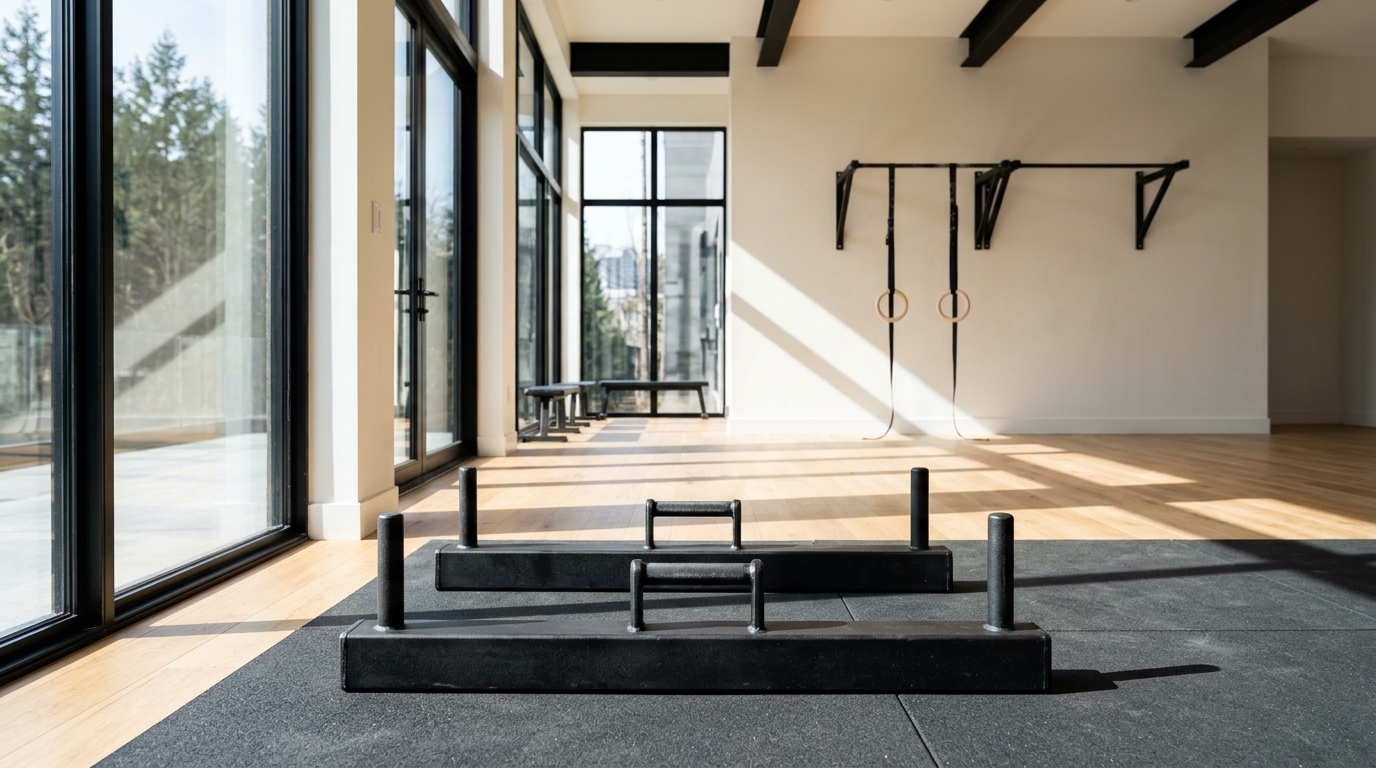
Figure 2: Alternating Overhead Dead Hangs With Loaded Farmer’s Carries Trains Both Forearm Endurance and Whole-Body Neuromuscular Reserve
4. Exercise & Equipment Matrix: What Gives the Highest Longevity Return?
Not every grip tool translates into total-body healthspan gains. Compare the four most popular modalities by systemic muscle recruitment, joint stress, equipment spend, and weekly time efficiency.
5. Clinical Guardrails: Blood Pressure, Carpal Tunnel & Tendon Rules Over 40
Safety Rules: Avoid Breath-Holding & Tendon Overload
1. Never Hold Your Breath During Max Squeezes: Isometric handgrip exercises raise arterial blood pressure transiently if paired with a Valsalva breath-hold. Breathe rhythmically every 2–3 seconds during farmer’s carries and dead hangs, especially if your resting systolic blood pressure exceeds 135 mmHg.
2. Respect Tendon Lag Time (6–8 Weeks): Muscle tissue strengthens faster than forearm flexor tendons after age 40. Keep training volume to 3 non-consecutive days/week (never daily) and back off immediately if sharp inner-elbow pain or morning finger stiffness lasts beyond 20 minutes.
3. Modify Around Carpal Tunnel or Thumb Osteoarthritis: If tight barbell handles trigger finger tingling or basal thumb pain, swap to thicker fat-grip sleeves, neutral-grip hex dumbbells, or warm-water putty squeezes before attempting full bodyweight hangs.
6. Frequently Asked Questions: Grip Strength Longevity Exercises
Q1. Do grip strength exercises alone help you live longer?
Simply squeezing a spring gripper while sitting on a sofa will not extend lifespan by itself. Grip strength is a biomarker reflecting total skeletal muscle mass, nervous system integrity, and metabolic health—so pairing loaded carries and dead hangs with full-body resistance training, Zone 2 aerobic fitness, and 1.2–1.6 g/kg protein delivers the real mortality reduction.
Q2. How fast can adults over 40 increase grip strength on a dynamometer?
Most beginners gain 3 to 6 kg (7–13 lbs) on dynamometer retests within the first 6 to 8 weeks through rapid neural motor-unit synchronization alone. Structural forearm hypertrophy and denser tendon stiffness continue building across 12 to 24 weeks of progressive farmer’s carries.
Q3. Should I use lifting straps when training for longevity?
Keep lifting straps off during all warm-up sets and moderate farmer’s carries so your hands and forearms receive natural mechanical loading. Reserve wrist straps only for top-end deadlift or heavy row sets where forearm fatigue would otherwise prevent your back and legs from reaching muscular stimulus.
Q4. What is a good dead hang time for longevity after age 50?
Holding a clean, pain-free dead hang for 45 to 60 seconds (women) or 60 to 90 seconds (men) after age 50 demonstrates strong relative grip-to-bodyweight capacity and healthy shoulder mobility. If you start at 15 seconds today, adding 5 seconds every two weeks gets you there safely within 4 months.
Related Clinical Protocols & Evidence Guides
Medical Disclaimer: This article is written by the WellnessHub Editorial & Clinical Research Team for educational purposes only and does not replace individualized physical therapy or medical clearance. Consult your clinician before performing heavy overhead hangs or maximal isometric squeezes if you have uncontrolled hypertension, recent rotator cuff tears, or severe carpal tunnel syndrome. View our Medical Disclaimer & Privacy Policy.