
Editor’s 1-Minute Briefing
2026 Longevity Pharmacokinetics & Sirtuin Decision Guide
Resveratrol vs. Pterostilbene for Longevity: Bioavailability, LDL Risk & Winner After 40
1. The 4× Absorption Gap: In the resveratrol vs pterostilbene for longevity matchup, trans-resveratrol achieves roughly 20% oral bioavailability with a short 1.5-hour plasma half-life, whereas methylated pterostilbene reaches ~80% bioavailability and stays active for up to 105 minutes to 14 hours across tissue compartments.
2. The Hidden LDL Cholesterol Catch: Randomized clinical trials indexed on PubMed show doses of 100–250 mg/day pterostilbene can raise LDL-C by 15–20 mg/dL in adults without concurrent grape-seed extract, making lipid monitoring essential after age 40.
3. 1-Second Choice Formula: Choose 50–100 mg pterostilbene for brain-penetrant cellular energy if your ApoB is optimal (<80 mg/dL); choose 150–250 mg micronized trans-resveratrol (taken with 10 g healthy fat) if you want vascular nitric oxide support without risking an LDL bump per NIH Office of Dietary Supplements guidance.
Buying a generic 1,000 mg capsule in the resveratrol vs pterostilbene for longevity aisle wastes roughly 80% of your spend before the polyphenol ever reaches your liver. Because standard trans-resveratrol undergoes rapid glucuronidation and sulfation in the gut wall, less than 1% often circulates in free active form unless properly micronized or methylated.
Yet switching blindly to pterostilbene—the dimethylated cousin naturally concentrated in blueberries—carries an overlooked cardiometabolic trade-off documented in Mayo Clinic and University of Mississippi lipid trials. Choosing the wrong stilbene—or exceeding the dose threshold—can quietly nudge LDL cholesterol upward while failing to activate SIRT1 pathways.
1. Resveratrol vs. Pterostilbene for Longevity: 7 Clinical Differences Compared
Both polyphenols belong to the stilbene family and activate SIRT1 and AMPK longevity pathways, yet two methoxy groups on pterostilbene completely alter how your gut absorbs, clears, and distributes the molecule across the blood-brain barrier. Compare all seven clinical parameters side by side below.
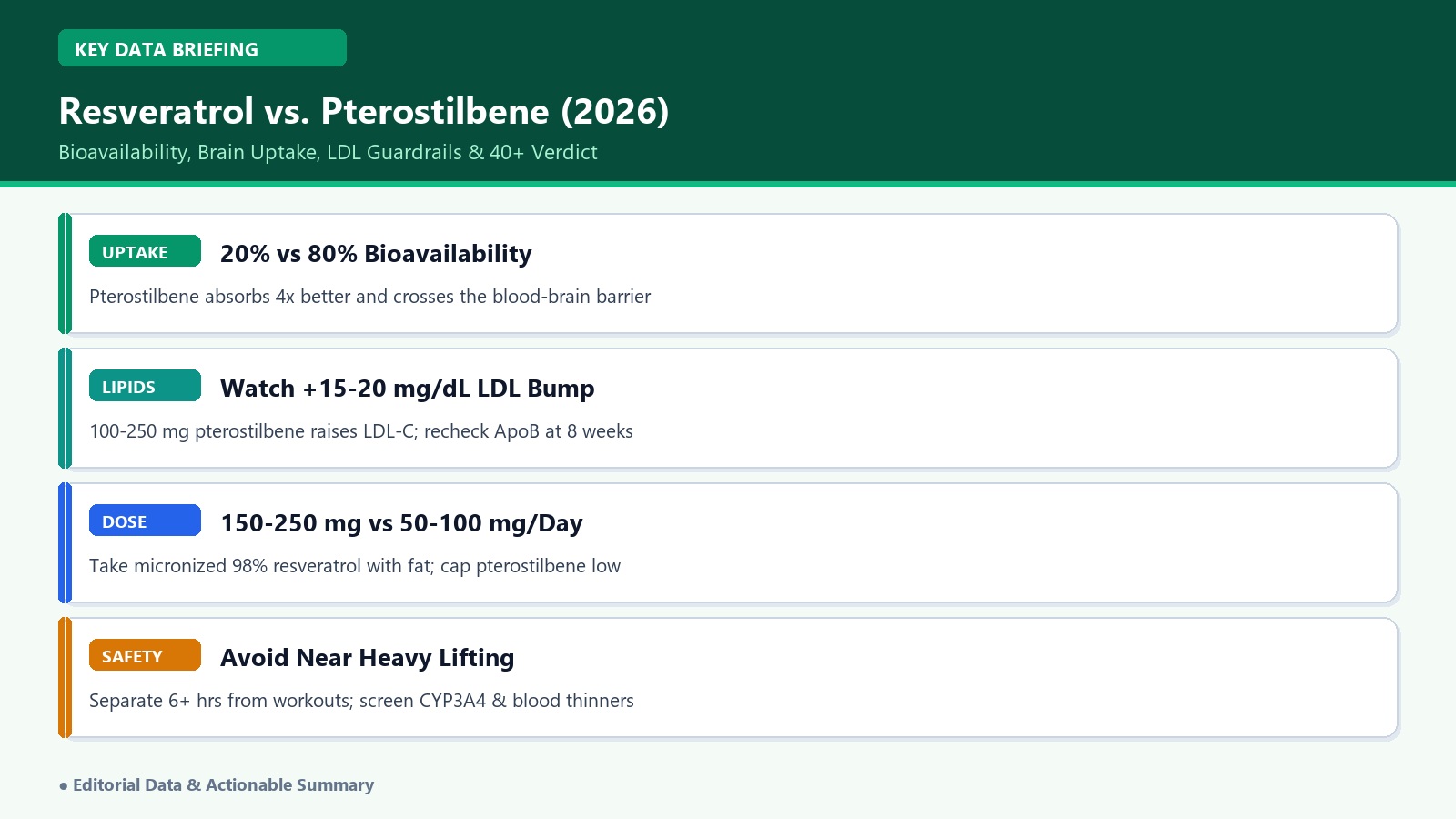
Figure 1: Resveratrol vs. Pterostilbene for Longevity — Oral Bioavailability, Brain Penetration, LDL Guardrails & 40+ Dosing
2. Which Stilbene Wins for Your Health Profile? 40+ Decision Personas
Neither compound is universally superior after age 40 because sirtuin activation interacts differently with vascular endothelium versus lipid metabolism. Match your baseline blood work and primary aging goal to one of the two clear clinical profiles below.
Choose Trans-Resveratrol (150–250 mg Micronized) If…
Your baseline ApoB exceeds 90 mg/dL or LDL-C sits above 115 mg/dL, you take a statin or manage borderline blood pressure (125–138 mmHg systolic), or you prioritize vascular nitric oxide flow. Pair trans-resveratrol with natural ApoB-lowering nutrition and consume it alongside olive oil, avocado, or whole-fat yogurt to triple absorption.
Choose Pterostilbene (50–100 mg) If…
Your lipid panel is clean (LDL-C <100 mg/dL, ApoB <80 mg/dL), you already stack an NAD+ precursor like NR or NMN, and you want superior blood-brain barrier penetration for cognitive stamina and neuroinflammation defense. Keep daily intake capped at 50–100 mg and recheck fasting lipids at Week 8 to verify zero LDL creep.
3. True Cost Per Absorbed Milligram & 12-Month Protocol Simulation
Label milligram numbers mislead longevity buyers because unmicronized resveratrol wastes most of its dose in first-pass liver conjugation. Calculate the real cost per absorbed milligram—and the hidden lab-testing cost—across four common 12-month supplement strategies.
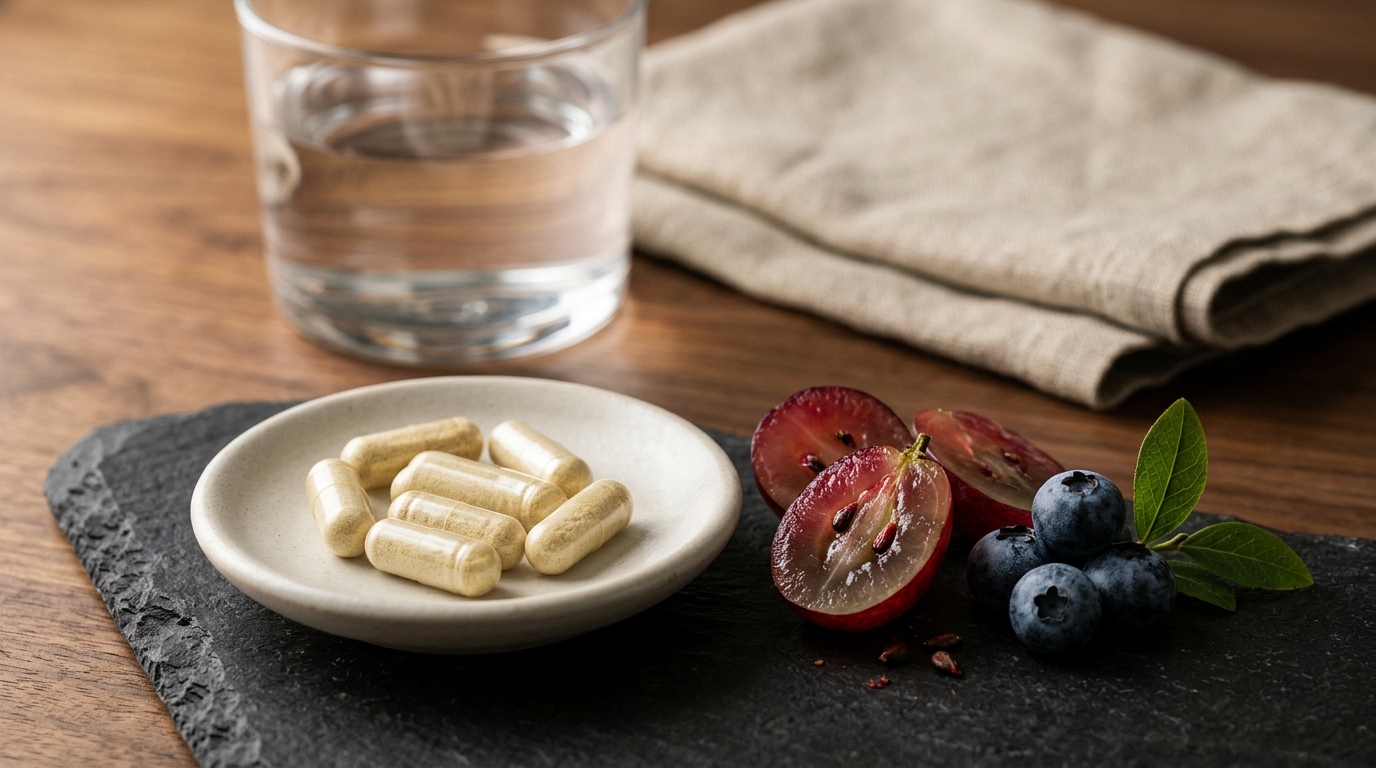
Figure 2: Pairing Purified 98% Trans-Resveratrol or Low-Dose Pterostilbene With Polyphenol-Rich Foods Supports Healthy Aging Without Megadose Side Effects
4. 4-Step Buyer & Dosing Checklist Before Adding Either Stilbene
Clinical supplement reviews from Harvard Health Publishing and Cleveland Clinic highlight wide label discrepancies in over-the-counter longevity pills. Follow these four steps before starting your bottle.
STEP 01 — Verify 98% Pure Trans-Isomer & Zero Emodin Contamination
Cheap Japanese knotweed (Polygonum cuspidatum) extracts rated at 50% resveratrol leave behind emodin, an anthraquinone compound that triggers cramping and diarrhea above 500 mg/day. Demand a Certificate of Analysis showing 98%+ trans-resveratrol (or fermented yeast-derived Veri-te) or trademarked pTeroPure trans-pterostilbene.
STEP 02 — Time With Morning Lipids & Avoid Evening Cortisol Interference
Both stilbenes are fat-soluble polyphenols that activate circadian SIRT1 clock genes aligned with daytime feeding. Take your capsule with 8 to 15 g of monounsaturated fat (two eggs, 1 tablespoon extra-virgin olive oil, or Greek yogurt) at breakfast rather than on an empty stomach or after 6:00 PM.
STEP 03 — Skip on Heavy Strength Training Days if Hypertrophy Is Primary
Human exercise trials (including the Copenhagen study in older men) showed high-dose resveratrol (250–500 mg) blunted post-workout reactive oxygen species signaling needed for VO2 max and muscle adaptation. If you lift weights 3 days/week after 40, take resveratrol or pterostilbene 6+ hours away from training or on recovery days.
STEP 04 — Retest ApoB, LDL-C & Liver Enzymes (ALT/AST) at Week 8
In a landmark 8-week randomized trial, adults taking 100–250 mg/day pterostilbene alone saw LDL rise by an average of 17.1 mg/dL while blood pressure dropped 7.8 mmHg. Ordering a $29–$49 lipid and hepatic panel at Week 8 confirms your personal response before committing to a full year.
5. Clinical Guardrails: CYP Interactions, Blood Thinners & Megadose Traps
Safety Rules: Medication Clearance & Dose Ceilings Over 40
1. Avoid Megadoses Above 500 mg Resveratrol or 200 mg Pterostilbene: Doses of 1,000–2,500 mg/day resveratrol cause gastrointestinal distress in up to 35% of trial participants and offer diminishing returns compared to moderate 150–250 mg micronized dosing.
2. Screen Anticoagulants & CYP3A4 Prescriptions: Both polyphenols inhibit platelet aggregation and slow liver cytochrome enzymes (CYP3A4/CYP2C9). Consult your prescribing physician before combining with warfarin, apixaban, aspirin, calcium-channel blockers, or immunosuppressants, and stop 14 days before surgery.
3. Hormone-Sensitive History Caution: Because resveratrol exhibits weak phytoestrogenic binding on ER-alpha receptors in vitro, individuals with a history of estrogen-receptor-positive breast, ovarian, or uterine cancers should clear any stilbene supplement with their oncologist first.
6. Frequently Asked Questions: Resveratrol vs. Pterostilbene for Longevity
Q1. Should I take resveratrol and pterostilbene together or pick one?
For most adults over 40, picking one well-formulated stilbene is cleaner and easier to verify via blood labs than stacking both. If you want a single bottle with strong human cardiovascular evidence and zero LDL upward drift, start with 150–250 mg micronized trans-resveratrol; if you want compact brain-penetrant SIRT1 support with optimal baseline lipids, use 50–100 mg pterostilbene.
Q2. Why does pterostilbene raise LDL cholesterol in some people?
Pterostilbene activates PPAR-alpha and alters hepatic lipid export pathways differently than resveratrol. In a double-blind University of Mississippi trial, participants taking 100 mg to 250 mg daily experienced an average +15 to +20 mg/dL increase in LDL cholesterol over 8 weeks, though co-administering 100 mg grape seed extract largely neutralized that shift.
Q3. Is pterostilbene better than resveratrol when paired with NMN or NR?
Many NAD+ longevity trials—such as commercial NR + pterostilbene combinations—use 50 mg pterostilbene alongside 250 mg nicotinamide riboside because its 80% oral bioavailability keeps plasma levels steady across the day. Even in that stack, monitor ApoB and LDL-C after 8 weeks if you have borderline cholesterol.
Q4. Can I get clinically effective resveratrol or pterostilbene from food alone?
Whole blueberries provide valuable anthocyanins, yet 100 g of raw blueberries supplies only about 0.01 to 0.05 mg of pterostilbene—roughly 1,000 times less than a single 50 mg capsule. Similarly, a 5 oz glass of red wine contains just 0.3 to 1.5 mg of resveratrol, making food great for baseline polyphenol diversity but insufficient for targeted clinical dosing.
Related Clinical Protocols & Evidence Guides
Medical Disclaimer: This article is written by the WellnessHub Editorial & Clinical Research Team for educational purposes only and does not substitute for personalized medical or cardiology advice. Always consult your physician and review lipid or medication interactions before starting longevity supplements. View our Medical Disclaimer & Privacy Policy.