
Editor’s 1-Minute Briefing
2026 Urological Rehab & Post-Prostatectomy Guide
Pelvic Floor Exercises for Men After Prostate Surgery: What Actually Restores Bladder Control
1. When to Start & Why: Begin pelvic floor exercises for men after prostate surgery only after urinary catheter removal (typically 7 to 14 days post-op) and explicit surgeon clearance—never perform contractions while a Foley catheter is still in place.
2. The Dual-Fiber Daily Dose: Combine 10 slow-twitch holds (5–10 seconds each) with 10 rapid-twitch flicks (1-second squeeze-and-release) across 3 daily sets (60 total contractions/day) without clenching your glutes, thighs, or breath.
3. Realistic Recovery Timeline: Consistent training cuts daytime pad usage significantly within 6 to 12 weeks, with neuromuscular remodeling continuing up to 6–12 months per American Urological Association (AUA) and NIH NIDDK clinical guidance.
Between 65% and 80% of men experience stress urinary incontinence—leaking when standing up, coughing, or lifting—immediately after catheter removal following radical prostatectomy. Practicing targeted pelvic floor exercises for men after prostate surgery trains the external urethral sphincter and levator ani sling to take over the mechanical closure once assisted by the prostate gland.
Clinical rehabilitation data from Mayo Clinic and Cleveland Clinic show that technique precision matters far more than sheer repetition volume. Squeezing the wrong muscles—especially bearing down with the rectus abdominis or clenching the buttocks—increases intra-abdominal pressure and actually triggers more leaks.
1. Pelvic Floor Exercises for Men After Prostate Surgery: 12-Week Recovery Matrix
Post-prostatectomy continence returns in predictable neuromuscular phases as edema subsides and fast-twitch sphincter fibers hypertrophy. Match your current post-operative week to the progression targets below before increasing resistance or standing load.
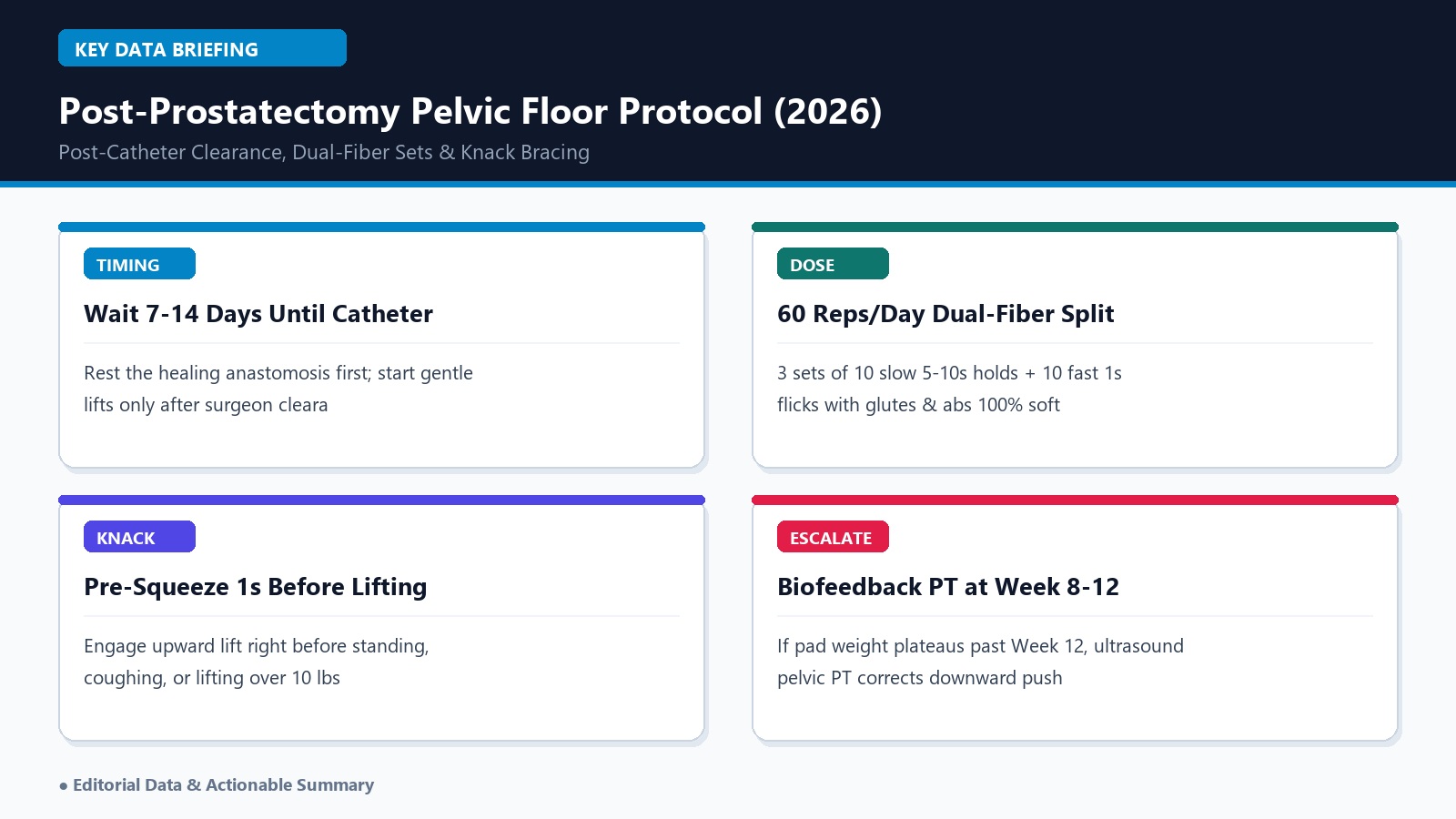
Figure 1: Pelvic Floor Exercises for Men After Prostate Surgery — Post-Catheter Clearance, Dual-Fiber Dosing & Functional Bracing
2. 4-Step Execution Protocol: How to Perform Male Kegels Without Overtraining
Over 40% of men given only a printed handout initially push downward instead of lifting inward—a Valsalva mistake that delays continence by weeks. Follow these four anatomical cues in exact sequence every session.
STEP 01 — Empty Your Bladder First & Locate the Anterior Lift Cue
Always void completely before exercising so urine back-pressure does not cause discomfort. Lie on your back with knees bent, place two fingertips gently behind your scrotum (perineum), and imagine “lifting the base of the penis inward toward the belly button” or “stopping gas and mid-stream urine simultaneously.” Never practice repeatedly while urinating, as habitual stop-start voiding disrupts normal bladder emptying.
STEP 02 — Exhale on Every Squeeze & Keep Glutes 100% Soft
Holding your breath forces your diaphragm down against the healing bladder neck. Inhale smoothly through your nose for 2 seconds, then exhale softly through pursed lips as you draw the pelvic floor upward for 5 to 10 seconds. Keep one hand on your buttocks and inner thighs—if either muscle hardens, reduce effort to 50%–60% maximum contraction until neural isolation sharpens.
STEP 03 — Train Both Slow-Twitch Endurance & Fast-Twitch Reflexes
Your urethral sphincter relies on Type I slow-twitch fibers to keep you dry while walking for 30 minutes, and Type II fast-twitch fibers to snap shut in 200 milliseconds when you sneeze. Each morning, midday, and evening session should pair 10 slow holds (5–10 seconds on, 10 seconds completely relaxed) with 10 brisk 1-second pulses. Full relaxation between reps prevents hypertonic pelvic floor pain.
STEP 04 — Apply “The Knack” 1 Second Before Standing, Coughing, or Lifting
Isolated lying exercises rarely stop daytime leaks until you wire them into real movement. Starting in Week 4, pre-contract your pelvic floor 1 second before rising from a chair, swinging a golf club, coughing, or lifting anything over 10 lbs, hold the lift until the motion finishes, then release completely. Measure weekly progress by weighing damp pads in grams rather than guessing.
3. Home Kegels vs. Biofeedback Physical Therapy vs. Medical Options
If 24-hour pad weight barely drops after 8 to 12 weeks of diligent home sets, escalating early to a board-certified pelvic floor physical therapist cuts recovery plateaus dramatically. Compare evidence-backed post-prostatectomy options by recovery window and out-of-pocket cost below.
Figure 2: Dedicated Low-Distraction Floor Sessions Help Men Over 50 Coordinate Diaphragmatic Breathing With Pelvic Floor Lift
4. Bladder Irritants, Overtraining Traps & Urgent Urology Red Flags
Clinical Guardrails: Protect Healing Tissue & Avoid Muscle Fatigue
1. Cap Daily Repetitions at 60–90 Squeezes: Performing 200+ Kegels per day exhausts the external sphincter by 4:00 PM, causing heavy late-afternoon dribbling and perineal cramping. Stop immediately if you develop pelvic ache or testicular soreness and take 24 hours of rest.
2. Cut Bladder Irritants & Straining Constipation for 8 Weeks: Caffeine above 100 mg/day, carbonated drinks, alcohol, and artificial sweeteners stimulate detrusor urgency—and hard bowel straining slams pressure onto the healing pelvic floor. Keep fiber at 25–30 g/day and fluids steady at 1.8–2.2 L/day; never dehydrate yourself to avoid pads, as concentrated urine irritates the bladder wall.
3. Immediate Urology Call Triggers: Contact your surgical team promptly per PubMed post-prostatectomy safety standards if you experience sudden inability to urinate, fever above 100.4°F, worsening weak stream (possible bladder neck contracture), or visible blood clots.
5. Frequently Asked Questions: Pelvic Floor Exercises for Men After Prostate Surgery
Q1. How soon after prostate surgery can I start pelvic floor exercises?
If your urologist taught you pre-operative Kegels, pause all contractions once surgery is complete and wait until the urinary catheter is removed—usually 7 to 14 days post-op—and your surgeon confirms it is safe to begin gentle 3-to-5 second holds.
Q2. Why do I leak more in the afternoon and evening than in the morning?
Afternoon leakage is classic skeletal muscle fatigue in your external urethral sphincter. Just like training legs after bed rest, your pelvic floor holds up cleanly after overnight sleep and tires after 6–8 hours upright. Space your 3 short Kegel sets across morning, midday, and early evening, and add a 15-minute horizontal rest break mid-afternoon during Weeks 2–6.
Q3. Do pelvic floor exercises for men also help erectile dysfunction after prostatectomy?
Yes. Engaging the ischiocavernosus and bulbospongiosus muscles increases pelvic blood flow and supports venous occlusion needed to trap blood inside penile tissue during nerve recovery—especially when paired with urologist-prescribed PDE5 rehabilitation and Zone 2 cardiovascular conditioning.
Q4. How long does it take to stop wearing pads after radical prostatectomy?
Roughly 50%–65% of men regain pad-free or single-liner daytime control by Month 3, rising to 85%–93% by Month 12. If daily pad weight shows zero downward trend by Week 12, schedule a formal pelvic physical therapy evaluation with real-time ultrasound biofeedback rather than simply doubling home reps.
Related Clinical Protocols & Evidence Guides
Medical Disclaimer: This article is written by the WellnessHub Editorial & Clinical Research Team for educational purposes only and does not substitute for personalized surgical or urological advice. Always obtain catheter-removal clearance from your urologist before starting post-operative exercises. View our Medical Disclaimer & Privacy Policy.