
EDITOR’S 1-MINUTE BRIEFING · COQ10 BUYER’S DECISION MATRIX
❤️ Ubiquinol vs. Ubiquinone CoQ10 After 40: 3-Point Clinical Verdict
- Why Age 40 Changes the Rules: Endogenous CoQ10 synthesis in the human heart peaks at age 20 and drops by 30% to 40% by age 50; simultaneously, the NQO1 enzyme that converts oxidized Ubiquinone into active antioxidant Ubiquinol slows down—giving Ubiquinol softgels a 2x to 3.3x higher plasma bioavailability in adults over 45.
- The Statin Depletion Factor: Prescription HMG-CoA reductase inhibitors (atorvastatin, rosuvastatin, simvastatin) block the mevalonate pathway, slashing blood CoQ10 levels by 40% to 54% within 30 days; supplementing 100–200 mg of Ubiquinol daily reduces statin-associated muscle soreness by up to 53% in randomized trials.
- 1-Second Buying Rule: Avoid dry powdered CoQ10 capsules (under 5% absorption); choose 100–200 mg of oil-solubilized Ubiquinol (Kaneka QH®) or crystal-free lipid-solubilized Ubiquinone taken with breakfast or lunch.
Every single beat of your heart—roughly 100,000 contractions per day—depends on Coenzyme Q10 (CoQ10) shuttling electrons across the inner mitochondrial membrane to generate adenosine triphosphate (ATP). Yet CoQ10 is one of the most poorly absorbed molecules in human nutrition: because raw CoQ10 has a high molecular weight (863 g/mol) and forms insoluble crystals at body temperature, swallowing a cheap $12 dry-powder capsule sends over 95% of the dose straight through your digestive tract unabsorbed.
When shopping for a clinical-grade CoQ10 supplement after age 40, you face an immediate fork in the road: Ubiquinone (the oxidized form) vs. Ubiquinol (the reduced, electron-rich active form). Below is the clinical absorption comparison, statin recovery protocol, and 4-step label checklist to make sure your heart and muscles actually absorb what you pay for.
1. Ubiquinol vs. Ubiquinone CoQ10: 6-Point Clinical Comparison (Table #1)
Inside a healthy 25-year-old body, Ubiquinone and Ubiquinol interconvert rapidly inside lymph and blood vessels. After age 40—or in the presence of oxidative stress, diabetes, or statin therapy—that enzymatic conversion bottlenecks, making the delivery form critical.
| Comparison Metric | Ubiquinol (Reduced Active Form · Kaneka QH®) | Ubiquinone (Oxidized Form · Standard CoQ10) |
|---|---|---|
| Biochemical State | Pre-reduced (carries 2 extra electrons; ready for immediate LDL & mitochondrial antioxidant defense) | Oxidized state (requires NQO1 & selenium-dependent enzymes to convert into ubiquinol) |
| Plasma Bioavailability (Adults 45+) | 2.0x to 3.3x higher peak plasma CoQ10 per mg vs. standard crystalline ubiquinone | Baseline (high only if formulated in crystal-free lipid-solubilized softgels like Q-Symbio) |
| Equivalent Daily Dose | 100 mg – 200 mg once daily | 200 mg – 400 mg daily (split into 100–200 mg doses) |
| Shelf Stability | Sensitive to oxygen/light; must be sealed in opaque air-tight softgels (turns orange/milky) | Highly stable against heat and oxidation |
| Best Clinical Match | Adults over 45, statin users with muscle cramps/fatigue, and fertility/longevity protocols | Adults under 40 or budget-conscious users buying verified lipid-solubilized softgels |
| Average 30-Day Cost | $22 – $34 / month (100–200 mg Kaneka Ubiquinol) | $14 – $22 / month (200 mg oil-based Ubiquinone) |
2. Which CoQ10 Form Should You Choose? 2-Way Persona Guide
Use your age, medication list, and budget to pick the clear winner below.
✅ Choose Ubiquinol (100–200 mg Kaneka QH®) If You Match Any of These:
- You Take a Daily Statin Medication: Atorvastatin (Lipitor), Rosuvastatin (Crestor), or Simvastatin (Zocor) users who experience heavy legs, calf stiffness, or slower post-workout recovery.
- You Are Age 45+ Seeking Single-Capsule Convenience: One 100–200 mg Ubiquinol softgel with breakfast achieves plasma levels above 2.5–3.5 mcg/mL without needing multiple daily doses.
- You Have Compromised Gut or Liver Conversion: Adults with type 2 diabetes, sluggish gallbladder bile flow, or NQO1 polymorphism absorb pre-reduced Ubiquinol far more reliably.
✅ Choose Lipid-Solubilized Ubiquinone (200–300 mg) If You Match Any of These:
- You Follow Clinical Cardiology Trial Protocols (Q-Symbio / KiSel-10): The famous Q-Symbio trial (which reduced major adverse cardiovascular events by 43%) used 100 mg of crystal-free oil-dissolved Ubiquinone three times daily (300 mg total) alongside meals.
- You Stack CoQ10 with Selenium or PQQ on a Budget: Provided the Ubiquinone is dissolved in MCT/olive oil with lecithin (never dry powder) and split between breakfast and lunch, it delivers excellent mitochondrial value.

3. Clinical CoQ10 Dosage & Timing Matrix by Health Goal (Table #2)
Because CoQ10 intestinal transporters saturate at roughly 100 to 150 mg per meal, swallowing 400 mg all at once wastes half the capsule. Match your health goal to the exact split-dosing schedule below.
| Clinical Health Goal | Recommended Ubiquinol Dose | Optimal Meal Timing | Synergistic Cofactor Stack |
|---|---|---|---|
| General Healthy Aging & Energy (40–55) | 100 mg / day | 100 mg with breakfast (alongside eggs or avocado) | Omega-3 Fish Oil (1,000–2,000 mg EPA/DHA) |
| Statin Therapy Muscle & Nerve Protection | 200 mg / day | 100 mg at breakfast + 100 mg at lunch | Vitamin D3 + K2 (low D3 worsens statin myalgia) |
| Blood Pressure & Endothelial Support | 150 – 200 mg / day | 100 mg morning + 100 mg midday | 200 mcg Organic Selenium + Magnesium Glycinate |
| Migraine Frequency Prevention | 200 – 300 mg / day | 100 mg 2–3x daily with meals for 12 weeks | 400 mg Riboflavin (Vitamin B2) + 300 mg Magnesium |

4. 4-Step Buyer’s Checklist to Maximize CoQ10 Absorption
STEP 01 · Never Buy Dry Powder Capsules
Insist on Oil-Suspended Softgels with Lecithin or D-Limonene
Insist on Oil-Suspended Softgels with Lecithin or D-Limonene
CoQ10 is strictly lipophilic (fat-loving) and forms large crystals at 98.6°F if packaged as a dry two-piece hard capsule. Always choose a hermetically sealed softgel suspended in MCT oil, olive oil, avocado oil, or sunflower lecithin so micelles can form in your small intestine.
STEP 02 · Check the Fermentation Source
Verify Bio-Identical All-Trans Yeast Fermentation (Kaneka®)
Verify Bio-Identical All-Trans Yeast Fermentation (Kaneka®)
Cheap synthetic CoQ10 manufactured from tobacco leaf solanesol contains synthetic cis-isomers that do not fit human mitochondrial enzymes properly. Look for the Kaneka Q10® or Kaneka Ubiquinol™ seal on the back label, which guarantees 100% bio-identical all-trans CoQ10 produced via natural yeast fermentation.
STEP 03 · Take With Omega-3s Before 2:00 PM
Avoid Bedtime Dosing to Prevent Cellular ATP Insomnia
Avoid Bedtime Dosing to Prevent Cellular ATP Insomnia
Taking CoQ10 at the same time as your daily Omega-3 fish oil softgel + a fat-containing meal doubles lymphatic uptake. However, because CoQ10 directly ramps up mitochondrial ATP production, taking 200 mg after 6:00 PM can cause late-night alertness or 3 AM awakenings. Take your full dose with breakfast and lunch.
STEP 04 · Monitor Blood Pressure & Warfarin
Check Home Blood Pressure Readings After 4 Weeks
Check Home Blood Pressure Readings After 4 Weeks
Because CoQ10 improves endothelial nitric oxide synthase (eNOS) efficiency, clinical meta-analyses show it can lower systolic blood pressure by 8 to 11 mmHg and diastolic pressure by 4 to 6 mmHg over 4 to 8 weeks. If you already take antihypertensive drugs or Warfarin (CoQ10 shares structural similarity with Vitamin K), monitor your home cuff readings with your physician.
5. Frequently Asked Questions (FAQ)
Q1. If I take my statin pill at bedtime, should I take CoQ10 at bedtime too?
No! Even if you take short-acting simvastatin or lovastatin at night, take your CoQ10 Ubiquinol in the morning with breakfast. CoQ10 does not need to be in your stomach at the same hour as your statin—it works by replenishing your systemic blood and muscle tissue pool over 24 hours without disturbing your sleep.
Q2. How long does it take for Ubiquinol to relieve statin muscle aches?
Plasma CoQ10 levels reach steady-state equilibrium in 14 days, while deep skeletal muscle fiber saturation takes 3 to 6 weeks. In clinical trials of statin-treated adults taking 100–200 mg/day, noticeable reductions in muscle heaviness and cramping typically occur between Day 18 and Day 30.
Q3. Can I get 100 mg of CoQ10 from food alone?
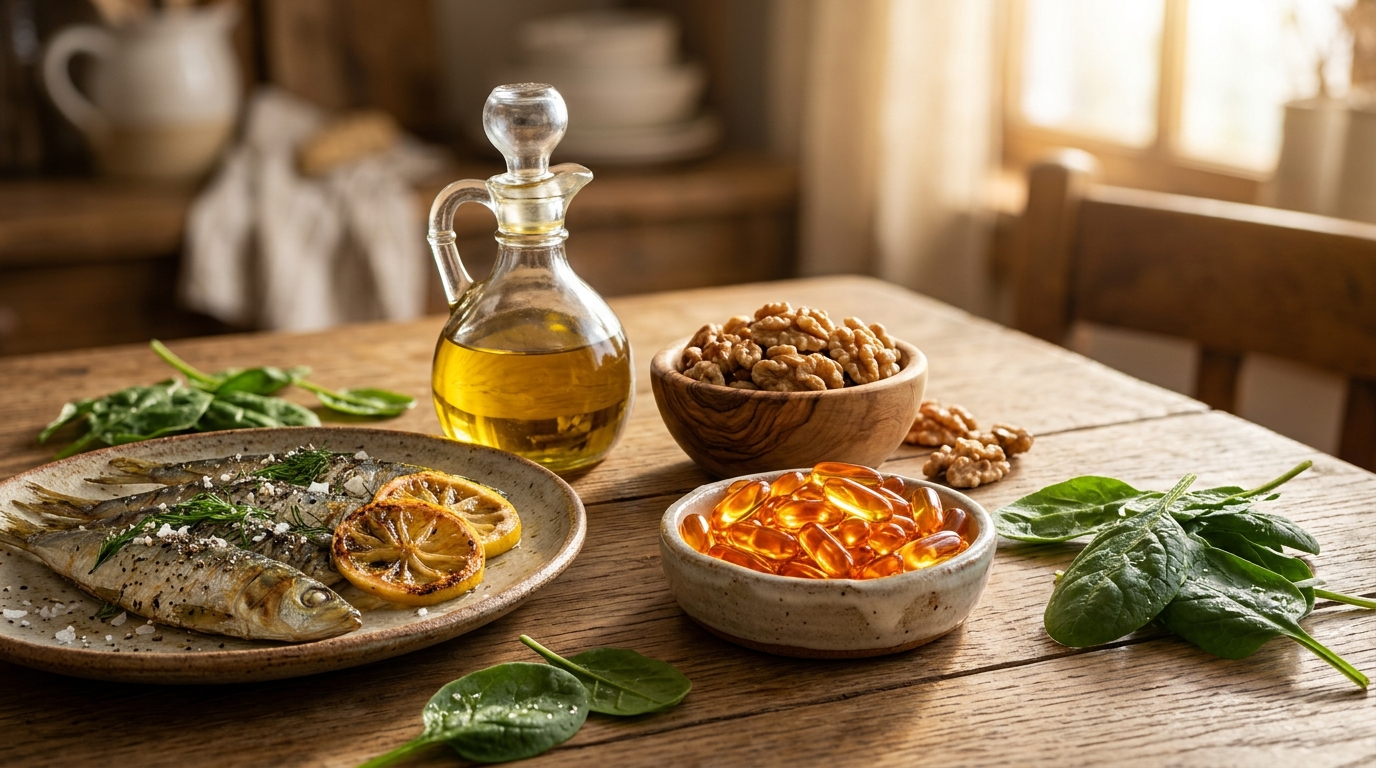
Practically speaking, no. The richest dietary sources of CoQ10 are beef heart and sardines, yet you would have to eat 3.3 pounds (1.5 kg) of sardines or 6.5 pounds of beef steak every single day just to obtain 100 mg of CoQ10. Food provides 3–6 mg daily, which is why targeted supplementation is necessary when endogenous production drops after 40.
Q4. Is PQQ (Pyrroloquinoline Quinone) worth adding to Ubiquinol?
While Ubiquinol optimizes energy production inside your existing mitochondria, 10 to 20 mg of PQQ activates the PGC-1α pathway to stimulate mitochondrial biogenesis (the creation of brand-new mitochondria). Stacking 100–200 mg Ubiquinol + 20 mg PQQ at breakfast is an excellent synergy for mental stamina and cardiovascular longevity.
Medical Disclaimer: This article is for informational and educational purposes only and does not constitute medical advice. Never stop or alter prescription statin, blood pressure, or anticoagulant medications without consulting your cardiologist or primary care physician.