

Preventive Cardiology Clinical Briefing
Atherosclerosis Diagnostic & Intervention Matrix
Atherosclerosis Diagnostic & Intervention Matrix
Calcium Score CAC Zero vs Non Zero Protocol: Executive Clinical Summary
1. The “Power of Zero” vs. Non-Zero Reality: A coronary artery calcium (CAC) scan uses ultra-low-dose non-contrast cardiac CT to quantify calcified fibroatheroma in coronary artery walls using the Agatston score. A true score of CAC = 0 provides a 10-year warranty with less than a 1% risk of cardiovascular events, often allowing patients to safely de-escalate or withhold lifelong statin therapy. Conversely, any non-zero score (CAC > 0) confirms established subclinical coronary artery disease, completely eliminating the “primary prevention” designation.
2. Agatston Risk Stratification: Scores are divided into four clinical tiers: 0 (Zero Burden), 1 to 99 (Mild Calcification), 100 to 399 (Moderate Plaque Burden), and ≥ 400 (Severe Disease / High Obstruction Risk). A score > 100 or > 75th percentile for age and sex warrants immediate initiation of moderate-to-high intensity lipid-lowering therapy targeting Apolipoprotein B (ApoB) < 60 mg/dL and LDL-C < 70 mg/dL.
3. The 4-Step Clinical Protocol: Navigating the calcium score cac zero vs non zero protocol requires: comprehensive advanced lipid testing (ApoB, Lp(a), hs-CRP), metabolic syndrome clearance (fasting insulin < 6 μIU/mL), arterial stabilization with Vitamin K2 (MK-7, 180 to 200 μg/day) to activate Matrix Gla Protein (MGP), and maintaining resting blood pressure strictly under 120/80 mmHg.
When adults over 40 seek modern cardiovascular risk assessment, standard cholesterol panels frequently leave them stranded in clinical ambiguity. Millions have moderately elevated LDL cholesterol yet feel completely healthy, while nearly 50% of heart attacks occur in individuals with standard lipid profiles within “normal” lab ranges. When patients receive their cardiac CT results, understanding the calcium score cac zero vs non zero protocol becomes the single most critical crossroad in their preventive health strategy.
The coronary artery calcium (CAC) scan, popularized by landmark studies such as the Multi-Ethnic Study of Atherosclerosis (MESA), cuts through statistical guesswork. Instead of calculating 10-year probabilistic risk from population tables, a CAC scan takes an actual anatomical radiologic picture of your coronary vascular tree. Whether your Agatston score is zero or non-zero completely re-engineers your medical roadmap.
According to consensus guidelines from the American College of Cardiology (ACC), American Heart Association (AHA), and the Society of Cardiovascular Computed Tomography (SCCT), adopting an evidence-based calcium score cac zero vs non zero protocol prevents both dangerous undertreatment of hidden arterial plaque and unnecessary lifelong pharmacological overtreatment. Here is the comprehensive clinical guide to mastering your cardiac CT scan results in 2026.
1. The CAC Master Comparison: CAC = 0 vs. CAC > 0 Decision Matrix
The fundamental distinction in any calcium score cac zero vs non zero protocol is binary: do you have detectable calcified atherosclerotic plaque in your coronary arteries, or is your arterial wall free from hydroxyapatite deposition? The table below outlines the core clinical differences between a zero and non-zero reading.
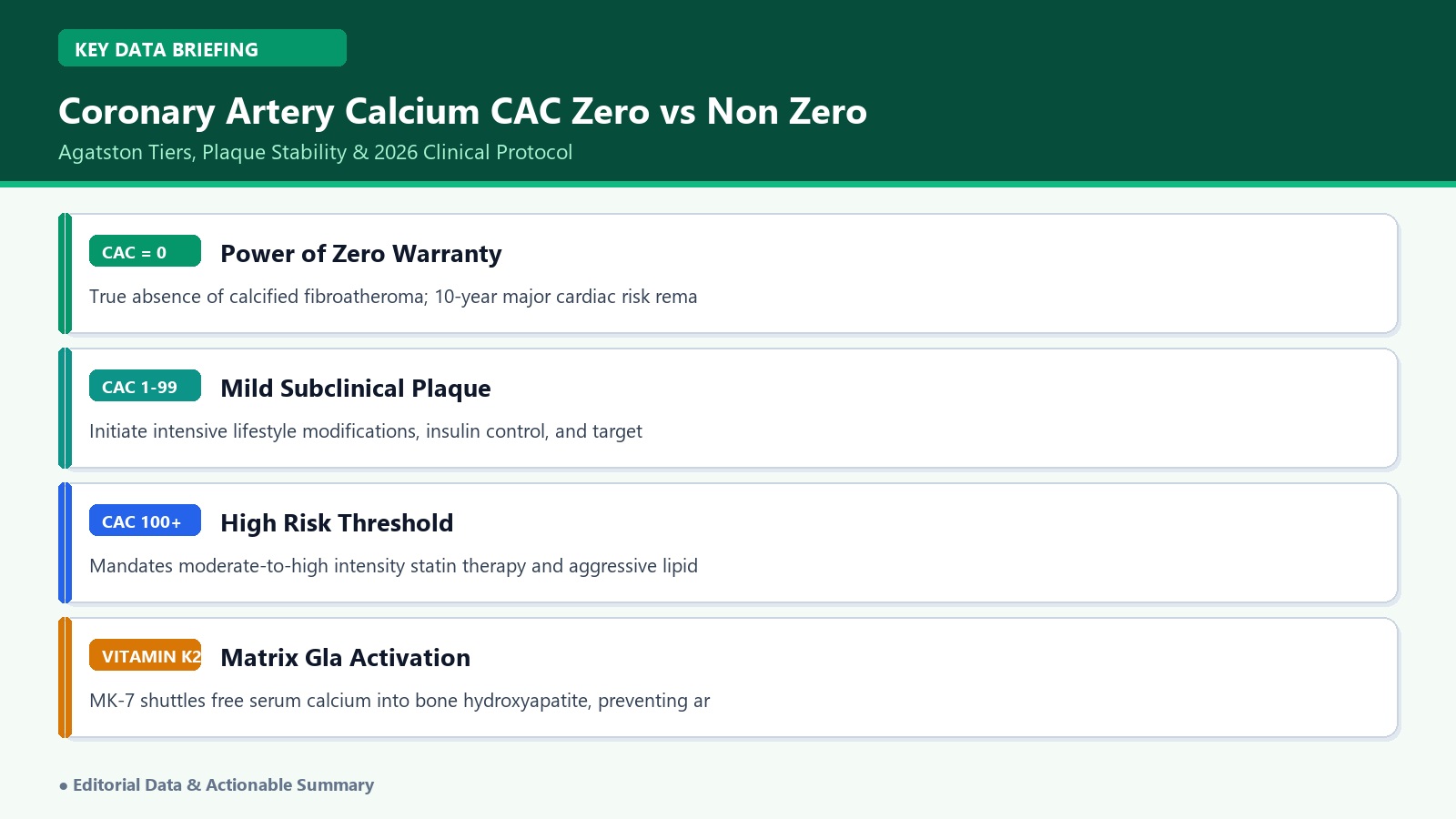
Figure 1: Agatston Score Tiers, Plaque Stabilization Dynamics & Preventive Protocol | 2026 Clinical Standard
2. Deciphering the Agatston Score: The 4 Non-Zero Severity Tiers
If your scan reveals a non-zero number, do not panic. Calcium itself is not the poison; calcium is the mineralized scar tissue that the body produces to stabilize inflamed, soft, lipid-rich atherosclerotic plaques. Understanding where your reading lands across the four clinical tiers of the Agatston scale is crucial for the calcium score cac zero vs non zero protocol:
TIER 0
CAC = 0: Minimal Plaque / Low Risk
CAC = 0: Minimal Plaque / Low Risk
A zero score represents an absence of detectable calcified plaque. However, younger individuals (under 45) or those with acute familial hypercholesterolemia can harbor “soft” non-calcified plaque. Therefore, if family history is positive, check circulating Apolipoprotein B (ApoB) and Lipoprotein(a). If those biomarkers are low, CAC = 0 provides a 5-year clean warranty.
TIER 1
CAC 1 to 99: Mild Plaque Burden
CAC 1 to 99: Mild Plaque Burden
A score between 1 and 99 indicates early subclinical disease. The disease process has begun, but luminal stenosis is generally absent. This is the optimal window for aggressive lifestyle intervention, carbohydrate restriction to resolve insulin resistance, blood pressure control under 120/80 mmHg, and discussion of low-dose statin therapy (e.g., Rosuvastatin 5 mg) or Ezetimibe to arrest plaque progression.
TIER 2
CAC 100 to 399: Moderate Plaque Burden
CAC 100 to 399: Moderate Plaque Burden
Scores between 100 and 399 confirm significant coronary atherosclerosis. The 10-year risk of major adverse cardiac events jumps significantly. Clinical guidelines mandate moderate-to-high intensity statin therapy targeting LDL-C < 70 mg/dL, low-dose daily aspirin (81 mg), comprehensive stress testing if symptomatic, and strict elimination of systemic vascular inflammation (targeting hs-CRP < 1.0 mg/L).
TIER 3
CAC ≥ 400: Extensive Plaque / High Cardiovascular Event Risk
CAC ≥ 400: Extensive Plaque / High Cardiovascular Event Risk
A score ≥ 400 signifies severe coronary calcification and carries an annual cardiovascular event rate exceeding 3% per year. There is a high probability of at least one hemodynamically significant stenosis. Cardiologists typically recommend non-invasive CT coronary angiography (CCTA) or a functional nuclear perfusion stress test, aggressive combination lipid lowering (Statin + Ezetimibe + PCSK9 inhibitor) targeting ApoB < 50 mg/dL, and structured cardiac rehabilitation.
3. The Statin Paradox: Why Your CAC Score May Increase After Treatment
One of the most confusing clinical scenarios encountered during the calcium score cac zero vs non zero protocol is the so-called “Statin Calcification Paradox.” When patients with a non-zero CAC score begin statin therapy and re-scan 2 years later, their Agatston score frequently rises by 15% to 25%. Many patients believe the medication failed them.
In reality, the opposite is true. Unstable, vulnerable atherosclerotic plaques consist of a necrotic core of cholesterol, dead foam cells, and inflammatory cytokines enclosed by a fragile, thin fibrous cap. These soft plaques are invisible on a non-contrast CAC scan but are the primary cause of sudden rupture and thrombosis (myocardial infarction).
When statins deplete cholesterol and reduce inflammatory macrophage activity, they promote macro-calcification of the fibrous cap, turning fragile soft plaque into hard, rock-solid, calcified hydroxyapatite. This process actually stabilizes the plaque, dramatically reducing the risk of acute rupture. Because a standard CAC scan measures mineralized calcium volume and density, the Agatston number rises even though total vascular risk plummets. This is why guidelines recommend against repeating serial CAC scans once statin therapy has commenced.
4. The 4-Step Clinical Protocol for Calcium Score CAC Zero vs Non Zero
Whether your scan resulted in a clean zero or revealed calcified plaque, follow this structured 4-step clinical runbook to protect your vascular endothelium:
STEP 01
Order Advanced Particle Testing: ApoB and Lipoprotein(a)
Order Advanced Particle Testing: ApoB and Lipoprotein(a)
Standard total cholesterol and calculated LDL-C miss discordance. Request an Apolipoprotein B (ApoB) blood test and a one-time Lipoprotein(a) [Lp(a)] test. ApoB quantifies the exact number of atherogenic particles (LDL, VLDL, IDL) that penetrate the arterial endothelium. If CAC = 0, keep ApoB < 80 mg/dL. If CAC > 0, work with your physician to lower ApoB under 60 mg/dL (or < 50 mg/dL if CAC > 100). If Lp(a) exceeds 50 mg/dL (125 nmol/L), aggressive vascular protection is mandatory regardless of CAC score.
STEP 02
Eradicate Metabolic Syndrome & Endothelial Glycation
Eradicate Metabolic Syndrome & Endothelial Glycation
Atherosclerosis requires two elements: atherogenic particles and an injured, inflamed arterial endothelium. High circulating glucose and insulin trigger advanced glycation end-products (AGEs) that degrade the protective endothelial glycocalyx. Test fasting insulin (target < 5 to 6 μIU/mL), HbA1c (target < 5.4%), and high-sensitivity CRP (target < 0.8 mg/L). Eliminate industrial seed oils, refined flours, and high-fructose syrups that fuel vascular oxidative stress.
STEP 03
Deploy the Vitamin K2 (MK-7) Calcium Paradox Protocol
Deploy the Vitamin K2 (MK-7) Calcium Paradox Protocol
The “Calcium Paradox” describes how calcium leaches out of bones (causing osteoporosis) and deposits into arterial walls (causing vascular calcification). Matrix Gla Protein (MGP) is the most potent inhibitor of soft-tissue arterial calcification known in human physiology. However, MGP is completely inactive without adequate Vitamin K2. Supplement 180 to 200 μg of Vitamin K2 in the all-trans Menaquinone-7 (MK-7) form alongside Vitamin D3 (2,000 to 5,000 IU) and Magnesium Glycinate (300 to 400 mg elemental) to direct calcium into bone mineral matrix rather than vascular walls.
STEP 04
Enforce Strict Nitric Oxide & Blood Pressure Optimization
Enforce Strict Nitric Oxide & Blood Pressure Optimization
Mechanical hydraulic shear stress from elevated systolic blood pressure tears endothelial tight junctions, creating the entry point for ApoB particles to enter the subendothelial space. Maintain home blood pressure strictly under 120/80 mmHg. Support endogenous endothelial nitric oxide synthase (eNOS) through 150 minutes of weekly Zone 2 aerobic exercise, dietary nitrates from arugula and beetroot, and avoiding antiseptic chlorhexidine mouthwashes that destroy oral nitrate-reducing bacteria.

Figure 2: Heart-Healthy Mediterranean Whole Food Nutrition & Active Lifestyle Protecting Endothelial Function
5. Frequently Asked Questions (FAQ) About CAC Scoring
Q1: Can a CAC score of zero guarantee I will never suffer a heart attack?
A CAC score of 0 provides the lowest 10-year risk profile of any cardiovascular biomarker, but it is not an absolute 100% guarantee. A standard CAC scan only detects calcified plaque; it does not detect early soft, non-calcified fatty streaks. In young individuals (under age 45), active cigarette smokers, or patients with untreated familial hypercholesterolemia, soft plaque can develop and rupture before micro-calcification occurs. If your CAC is 0 but you have high ApoB (> 100 mg/dL), elevated Lp(a), or strong early family history, maintain aggressive lifestyle measures and consider follow-up testing in 3 to 5 years.
Q2: How much radiation is involved in a coronary artery calcium scan?
Modern gated cardiac CT equipment delivers an extremely low radiation dose, typically between 0.8 and 1.5 millisieverts (mSv). To put this into perspective, average background environmental radiation in North America is approximately 3.0 mSv per year, and a standard mammogram delivers about 0.4 mSv. The diagnostic clinical benefit of identifying life-threatening subclinical atherosclerosis vastly outweighs this minimal radiological exposure.
Q3: Can taking calcium supplements for bone density increase my CAC score?
Large-scale observational studies and meta-analyses published in Heart and JAHA indicate that high-dose isolated calcium carbonate or calcium citrate supplements (exceeding 1,000 mg/day without cofactors) transiently spike serum calcium, which may accelerate soft-tissue vascular calcification. Conversely, dietary calcium consumed from whole food sources (dairy, sardines, leafy greens) carries no increased risk. If supplementing for osteopenia, always pair with Vitamin K2 (MK-7, 180 μg) and Magnesium to ensure calcium incorporates into bone hydroxyapatite rather than arterial walls.
Q4: If my CAC score is over 400, does that mean I need an immediate stent or bypass?
No. A high CAC score indicates extensive atherosclerotic plaque burden throughout your coronary arteries, but it does not specify whether that plaque is causing critical flow-limiting blockage (ischemia). Many patients with CAC scores over 1,000 have wide, positive arterial remodeling and experience zero symptoms or ischemia during exercise. A high score mandates consultation with a cardiologist for functional evaluation (such as a stress echocardiogram, nuclear perfusion scan, or CCTA) and aggressive medical plaque stabilization, rather than automatic invasive revascularization.
Clinical Evidence & Medical Disclaimer: The clinical insights in this article reflect consensus recommendations from the American College of Cardiology (ACC), the American Heart Association (AHA), the Society of Cardiovascular Computed Tomography (SCCT), and peer-reviewed trials indexed in the National Institutes of Health (NIH) PubMed database. This educational guide does not substitute for personalized medical diagnosis or prescription therapy. Always discuss your coronary calcium scan, lipid targets, and medication regimen with a board-certified cardiologist or preventive physician.
Related Clinical Protocols & Evidence Guides